品

Corea든 Korea든, 품격이 먼저다
Whether Corea or Korea, dignity comes first.
Whether Corea or Korea, dignity comes first.
Now
지금
751 Diaspora
Heritage
유산
Humanity
인문
Mirengsi
未冷尸
Politics
정치
Media
언론
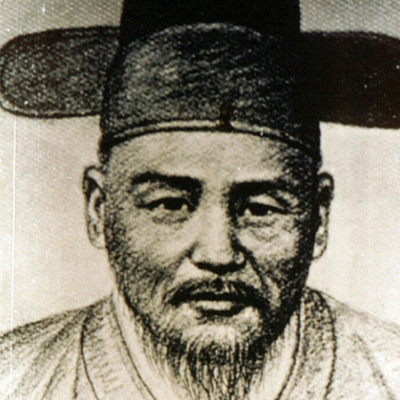
운강(雲崗) 이강년(李康秊, 1858~1908)은 1858년 12월 30일(음력) 경상북도 문경군 가은면 상괴리 도태마을에서 이기태(李起台)와 의령남씨(宜寧南氏) 남복영(南福永) 사이에서 태어났다.

의병역사
칼럼
古韻書生
Un-gang (雲崗) Yi Kang-nyeon, a symbol of the anti-Japanese righteous army struggle in the late Joseon Dynasty

0
2026. 11. 11
- Un-gang Yi Gang-nyeon was born into the chaos on the eve of national collapse, and despite being a descendant of the imperial family, he abandoned a comfortable life to dedicate himself to righteous army activities.
- His life goes beyond mere anti-Japanese struggle, filled with questions about the fate of an era, individual choices, and the contradictions and truths inherent in historical records.
- The article follows Yi Gang-nyeon's life, shedding light on his struggles, while also posing profound philosophical questions about Saju Palja, the reliability of historical records, and colonial historiography.
- In particular, it reveals a critical perspective by pointing out that contemporary records only superficially address the reasons for punishing pro-Japanese collaborators and highlight the ambiguity of historical facts, such as the timing of the abolition of the Seonjeongwan Office.
- Ultimately, Yi Gang-nyeon's martyrdom demonstrates a noble will to protect national sovereignty even amidst the sorrow of a fallen nation, urging us, who live in the present, to reflect on history and identity.
Un-gang (雲崗) Yi Kang-nyeon (李康秊, 1858~1908) was born on December 30, 1858 (lunar calendar) in Dotae Village, Sanggoe-ri, Gaeun-myeon, Mungyeong-gun, Gyeongsangbuk-do, to Yi Gi-tae and Nam Bok-yeong of the Uiryeong Nam clan. His 본관 (bon-gwan, ancestral seat) is Jeonju, his 자 (ja, courtesy name) is Nagin (樂寅), and his 호 (ho, pen name) is Un-gang (雲崗). He was a 19th-generation descendant of Hyoryeongdaegun (孝寧大君) Yi Bo (李補), the second son of King Taejong of Joseon. It is said that when he was born, his mother dreamed of swallowing the sun, so his childhood name was Chulyang (出陽). To have the sun that illuminates the whole world within one's body is a conception dream for a child who will harbor great ambitions and bring light to the world. Compared to the petty conception names of precious newborns today, its spirit is truly grand.
However, for someone born in the perilous period on the eve of national ruin, is an auspicious conception dream a blessing or a misfortune? For all those born during the decline of the nation, there are only two choices. One can, like Un-gang Yi Kang-nyeon, rise up indignantly and, knowing it's futile, raise an army of righteous warriors to sacrifice one's life for the restoration of national sovereignty. Or, one can accept the changed world early on and live as a collaborator for the invaders, seeking personal glory. Yi Kang-nyeon's eldest son, Yi Seung-jae (李承宰, 1873~1910), also joined the righteous army with his father, making his life inherently unfortunate just by facing the possibility of his family and nation being annihilated. So, were the 사주 (saju, four pillars of destiny) of all those born in the 19th century who lived through the era of national ruin all harsh? Conversely, did the collaborators who enjoyed wealth and honor in exchange for treason have good 사주 that led them to such lives? I believe this is a question worth reflecting on in modern times, where humans live a dog's life even if it's not visible to the eye.
While it's rare to see imperial descendants join the anti-Japanese front, Lee Kang-nyeon and his son chose a path of hardship and sacrifice instead of a life of wealth and luxury. That a family of imperial lineage chose such a difficult, life-threatening path shows that colonial hegemony is a terrible force that can overcome one's destiny and even swallow the sun in the sky. Saju (four pillars of destiny) can be seen as a kind of barcode issued at the moment a human is conceived, a culmination of science and humanities, but as an ignorant person, I cannot fully explain its principles. Why did a country with so many experts who could easily interpret saju fall into colonial subjugation and have its genes exploited? What can saju, which reads an individual's fortune, explain in the face of the era's destiny that swallowed them whole?
Lee Kang-nyeon was intelligent enough to understand Chinese characters in a dictionary from the age of three, but after losing his father at seven, he learned classics (經史) and military strategies (兵法) from his grandfather. However, his father, Lee Gi-tae (李起台), is recorded in the royal genealogy, <Seonwon Sokbo (璿源續譜)>, as Lee Jong-tae (李鐘台), who died on the 3rd day of the 9th lunar month in the Eulchuk year (1865). The Seonwon Sokbo was overseen by the Jongchinbu (Office of the Royal Clan) with King Cheoljong's permission in 1860 (Cheoljong 11), and its compilation was completed in 1867 (Gojong 4), but it was published in 1900 (Gwangmu 4). If we take just one step back from the colonial historical perspective, the period from Jeongjo to Sunjo, Heonjong, Cheoljong, Gojong, and Sunjong was an era where history became entirely fictional. If it was fictional from Jeongjo's time, then the preceding eras and ancient history are no different. If a nation devastated by colonialism sheds the colonial historical perspective, the actual events of the past and recorded history might differ, potentially leading to a chaotic state where politics, administration, society, and culture descend into madness. This is why training to gradually approach the differences between facts and reality is necessary. If we can doubt the fact that the Seonwon Sokbo was published at the peak of national decline, then who would have republished the imperial genealogy during a time when yangban aristocrats were dying off?
In 1879, at the age of 22, Yi Gang-nyeon passed the Jeongsi (court examination) for military officials, ranking 51st in the Byeong-gwa (third class), and was appointed Jeolchungjanggunhaengyongyangwibusagwa, becoming a Seonjeongwan. The Seonjeongwancheong (Office of Seonjeongwan) was a military organization directly under the king, responsible for delivering royal commands and guarding the king. If compared to a modern institution, it would be closer to the Presidential Security Service, but it also had the function of delivering military orders, so its duties were immense. Should the statement in the 『Hanguk Hanjja-eo Sajjeon』 (Korean Hanja Dictionary) compiled by Dankook University's Institute of Oriental Studies, which claims this institution disappeared in 1866, be considered a simple error? The habit of recording the shameful parts of history is not the responsibility of historians, but of individuals born with their own destinies. When one person can assert a single doubt, the true history of a nation with a twisted destiny is revealed.
Records mostly indicate that the abolition of the Seonjeongwancheong occurred during the Gabo Reform, which abolished many traditions (meaning it eliminated the country). However, the Seonjeongwancheong was primarily a military office (97%), with a separate position (3%) for civil officials to concurrently serve as Seonjeongwan. When military officials held this concurrent position, they were called Musin-gyeom-Seonjeongwan (military official concurrently serving as Seonjeongwan), or simply Mugyeom, and the office they belonged to was the Mugyeomcheong, which is known to have been abolished in 1882. If a military institution is replaced by a civil institution, who will protect the king?
Yi Gang-nyeon, angered by the political turmoil of the Imo Incident in 1882 and the Gapsin Coup in 1884, as well as the actions of pro-Japanese factions, abandoned his official position and returned to his hometown. When the Eulmi Incident and the Haircut Edict occurred in 1895, Yi Gang-nyeon organized his assets and raised an army of righteous volunteers at the Dotaejangteo market in Gaeun, Mungyeong, on January 11, 1896. He bid farewell to his mother before leaving for Dotaejangteo, meaning his mother was still alive at that time. On February 25, at the Nongam market, he arrested and beheaded three individuals: Andong Governor Kim Seok-jung, and 순검 (patrolmen) Yi Ho-yun and Kim In-dam.
This record is very important. If pro-Japanese collaborators were to be punished in 1896, it would mean that their collaboration activities began earlier than this point. The nation must have been divided before 1866, when the Seonjeongwancheong (Office of Royal Decrees) was abolished, as mentioned earlier. Who would have known that a more dramatic life awaited the entire populace when Yi Gang-nyeon, a tall man of 8 cheok 2 chon (approx. 248 cm) with a dignified and imposing presence that overwhelmed others, and who also showed outstanding talent in martial arts, military strategy, and painting, became a murderer at the age of forty?
The problem is that historical records state that the main reasons for the execution of the three men were forced short haircuts, suppression of righteous armies, and extortion from the people. Maechon Yarok and Ungang Seonsaeng Changui Illok recorded it that way. Maechon committed suicide at the moment of national ruin, and Ungang was arrested and executed. Who published the records of a suicide victim and an executed person who could not endure the fall of their nation? Critiquing historical sources is easier than critiquing the owner of the sources. If we do not doubt the historical records of imperial Japan, the history that even the owners of the sources have distorted cannot be revealed.
After executing the pro-Japanese collaborators, he went to Jecheon to find Ryu In-seok and became his disciple. He was appointed as a guerrilla commander in Ryu In-seok's righteous army unit and was active in Mungyeong, Pyeongcheon, Joryeong, and other places. In April 1896, when Ryu In-seok, who was defeated in a battle against government forces led by Jang Gi-ryeom in Jecheon, fled to Liaodong, Yi Gang-nyeon also disbanded his righteous army and followed Ryu In-seok to Liaodong. Three years later, in 1899, he returned to Korea and lived in seclusion in Geumchaedong, Danyang, dedicating himself to scholarship.
In 1907, as Japan's invasion became more overt, Emperor Gojong was forced to abdicate due to the Hague Secret Emissary incident, and the Korean army was disbanded by the Eulmi Seven Articles Treaty. Lee Kang-nyeon then re-established a righteous army in Yeongchun. At this time, he called himself 'Hoja Uibyeongjang' (Commander of the Hoja Righteous Army), signifying that his force was a successor to the 'Hoja Changui-gun' (Hoja Righteous Army) led by his teacher Ryu In-seok during the Eulmi Righteous Army period. The Hoja Uijin (Hoja Righteous Army Unit) was composed of Lee Kang-nyeon as the Hoja Uibyeongjang, Kim Sang-tae as the Junggunjang (Central Commander), Yoon Gi-yeong as the Jeongunjang (Front Commander), Lee Yong-ro as the Jwagunjang (Left Commander), Lee Jun-bong as the Ugungjang (Right Commander), Baek Nam-gyu as the Useonbong (Right Vanguard), Ha Han-seo as the Jwaseonbong (Left Vanguard), Lee Man-won as the Dokjeonjang (Battle Supervisor), and Lee Se-yeong as the Gamgun (Army Inspector).
Starting with a battle against the Japanese army in Jecheon on July 7, 1907, they achieved significant victories in places like Ssaritjae on September 16, Juknyeong on September 27, Goripyeong on October 5, and Baekjadong on October 23. In December, when righteous armies from across the country gathered in Yangju with commanders from various provinces to form the 13-Province Allied Righteous Army to attack Seoul, he participated as the Hoseo Changui Daejang (Commander of the Hoseo Righteous Army).
Even after the failure of the 13-Province Righteous Army's Seoul offensive, Lee Kang-nyeon did not give up. From the spring of 1908, he encouraged his officers and soldiers to engage in fierce battles with the Japanese army in the northeastern Gyeonggi region. He achieved successive victories in the Yongso-dong Battle on February 17, the Galgi-dong Battle on February 26, the Baekdamsa Battle on March 12, and the Andong Seobyeok Battle in March, greatly threatening the Japanese imperialists.
Lee Kang-nyeon's righteous army activities primarily spanned Gangwon-do, Chungcheong-do, and Gyeongsangbuk-do. Those who served under him, such as Kim Sang-tae, Lee Man-won, Baek Nam-gyu, Ha Han-seo, Kwon Yong-il, and Yoon Gi-yeong, were all from these regions. They were familiar with the local geography and maintained strict military discipline within the righteous army, earning them absolute support from the local populace. Consequently, they were one of the righteous army forces most feared by the Japanese army.
As the Japanese army's continuous attacks led to a depletion of his forces, Lee Kang-nyeon decided to retreat to the Hoseo and Yeongnam regions to secure a new base where he could operate stably. After spending the winter in Gapyeong-gun and passing through Yeongwol, he was moving south towards Cheongpung when, on June 4, 1908, during a decisive battle with the Japanese army at Jakseong in Cheongpung, he was shot in his left ankle and captured by the Japanese forces.
At the time of his capture, Lee Kang-nyeon expressed his bitter feelings in the following poem:
The bullet is so heartless, 丸子太無情
My ankle is injured, I cannot move, 踝傷止不行
If only it had struck my heart, 若中心腹裏
I would have gone to heaven without disgrace, 毋辱到瑤京
Immediately after his capture, when the Japanese army tried to treat his wound, Lee Kang-nyeon resolutely refused, and also rejected food provided by the Japanese, showing his will to resist. He was detained at the Japanese garrison in Suwon, then transferred to the Japanese Military Police Headquarters in Seoul on July 8, 1908, and again to Pyeongriwon for trial. When interrogated at the Japanese military headquarters, he declared, “The only one I wish to see is Itō Hirobumi. I will not speak with you ugly ones.” When asked at Pyeongriwon why he raised an righteous army, he replied, “My righteous cause was to first condemn the Five Traitors and Seven Traitors, eradicate the Japanese invaders, thereby avenging the nation's sworn enemy above, and saving the suffering populace below.”
On September 22, 1908, he was sentenced to death by hanging for so-called treason at the Gyeongseong Appellate Court. Before his execution, he left a will to his eldest son, Lee Seung-jae, saying, “Your father harbored blood loyalty his entire life, wishing to die for his country. Now that my wish has come true, what regrets could I have?” He also left a farewell message (Gogyeolmun) to the righteous armies across the country, stating, “My wish for my comrades is that you do not abandon your original intentions because the enemy's power is strong, but rather press forward with greater righteousness and await the bright day.” He was executed by hanging at Seodaemun Prison at 10 AM on October 13, 1908, becoming the first martyr after the prison's establishment.
Lee Gang-nyeon was a prominent righteous army commander who fought against the Japanese army in over 30 battles as a righteous army leader for 13 years. He experienced both the Eulmi and Jeongmi righteous armies, personally embodying the entire process of the righteous army resistance at the end of the Korean Empire. With the Hwaseo school's ideology of Jonhwa Yangi (revering China and expelling barbarians), he sought to restore national sovereignty through the nation's independent capabilities, leading the righteous army unit most feared by the Japanese based on strict military discipline and popular support. While the Japanese imperialists turned royal descendants, noblemen, and aristocrats into human waste, it was we ourselves who adopted that culture. Now that we can no longer accurately interpret Jonhwa Yangi, who will protect the king?
References
Park Min-young, <The Life and Thought of Ungang Lee Gang-nyeon>
National Institute of Korean History, <Korean History> 47
李康秊, <雲崗集>
댓글
( 0 / 500 )
marinboy
8
이강년 의병장의 삶은 개인의 안위보다 나라와 민족의 존엄을 먼저 생각했던 시대정신의 표본입니다. 망국의 순간에도 굴복하지 않고 끝까지 항전한 그 뜻을 오늘의 정치와 사회가 얼마나 이어받고 있는지 돌아보게 됩니다. 역사는 영웅을 기리는 데서 끝나는 것이 아니라 그 정신을 실천하는 데서 완성됩니다.
( 0 / 500 )
pixel89
6
이강년 부자의 선택이 더욱 가슴 아프게 다가옵니다. 한쪽에는 나라를 되찾기 위해 목숨을 바친 사람들이 있었고, 다른 한쪽에는 침략자의 권력에 기대어 부귀영화를 누린 사람들이 있었습니다. 시대가 어려울수록 인간의 진면목과 선택의 가치가 드러난다는 사실을 다시 생각하게 합니다.
( 0 / 500 )
AI720
5
역사를 제대로 이해하려면 영웅의 업적뿐 아니라 그 시대의 모순과 기록의 한계까지 함께 들여다봐야 합니다. 특히 독립운동가와 친일 부역자의 삶을 같은 역사적 기준에서 평가해야 합니다. 나라를 위해 죽은 사람은 기억하고 침략에 협력해 영달을 누린 사람은 엄정하게 책임을 묻는 것이 올바른 역사 정의의 출발입니다.
( 0 / 500 )
모란
5
사주와 운명에 관한 이야기를 역사적 현실과 연결한 관점이 흥미롭습니다. 개인의 운명은 타고난 조건만으로 결정되는 것이 아니라 자신이 살아가는 시대와 그 안에서 내리는 선택에 의해 만들어지는 것인지도 모르겠습니다. 이강년 장군의 삶이 바로 그 사실을 보여줍니다.
( 0 / 500 )
최보현
4
흥미로운 것은 이강년 장군이 왕실의 후손이면서도 왕실의 권위나 개인의 영달에 기대지 않고 직접 의병을 이끌었다는 사실입니다. 혈통보다 중요한 것은 어떤 시대에 어떤 선택을 했느냐는 것입니다. 후손들에게 남긴 것은 가문의 명예가 아니라 나라를 위한 책임과 희생의 정신이라고 생각합니다.
( 0 / 500 )
민주
4
나라가 위기에 처했을 때 누가 권력을 지키고 누가 백성을 지켰는가 하는 질문이 오래 남습니다. 이강년 장군은 패배와 죽음이 기다리는 길임을 알면서도 의병의 길을 선택했습니다. 오늘날에도 국가와 국민을 위한 충성이 무엇인지, 권력과 사익을 위한 충성과 어떻게 다른지 깊이 생각하게 하는 역사입니다.
( 0 / 500 )
홍민성
3
이강년 장군의 생애를 읽으며 나라를 잃는다는 것이 단순히 주권을 빼앗기는 일이 아니라 한 민족의 역사와 정체성, 삶의 터전까지 무너지는 일임을 다시 느낍니다. 그 절망 속에서도 끝까지 항전한 의병들의 희생을 결코 잊어서는 안 되겠습니다.
( 0 / 500 )
mam88
2
역사는 승자의 기록이라는 말이 있지만, 그렇다고 모든 기록을 무조건 부정해서도 안 될 것입니다. 기록의 작성 시기와 편찬 주체, 당시의 정치적 이해관계를 함께 살펴야 진실에 가까워질 수 있습니다. 이강년의 생애를 통해 우리 역사에 남아 있는 의문들을 다시 살펴보게 하는 의미 있는 글입니다.
( 0 / 500 )
최유미
0
최근에 근현대사를 관심있게 바라보면서 많은 생각이 들었습니다. 18세기 말 정조 때부터 조선은 사회 전반에서 변화에 꿈틀대며 근대 국가로 전환하고 있었다는 것을요. 일제가 일방적으로 그들의 시각으로 조선의 이미지를 무의식적으로 받아드리고 조선말 부패만을 확대 해석했다는 사실을요. 조선에서 많은 사람들이 개혁과 혁명이 있었고 세계 제국주의에 빠르게 편승한 일제에 농락당한 나라를 구하기 위해서 수많은 사람들이 자신의 영달을 버리고 나라를 구하기 위해 애쓰셨다는 사실을요. 근대사를 들여다보면 슬프지만 한편으론 우리 선조에 대한 깊은 존경심도 듭니다.
( 0 / 500 )
신고내용
신고내용을 선택해주세요
회원비난/비하/욕설글 및 댓글도배성 게시물저작권 침해/불법자료 유출허위사실유포개인정보 유출.사생활 침해무단광고/홍보음란물 및 도박 불법 광고물범죄행위 관련 글불법행위 관련 소개물품 판매 및 사기글악성코드 및 스파이웨어 유포기타 사유 및 운영진 판단


비밀번호를 잊으셨나요?
Sign in with Google


All information provided by us is free of charge and is for the public good.