品

Corea든 Korea든, 품격이 먼저다
Whether Corea or Korea, dignity comes first.
Whether Corea or Korea, dignity comes first.
Now
지금
751 Diaspora
Heritage
유산
Humanity
인문
Mirengsi
未冷尸
Politics
정치
Media
언론
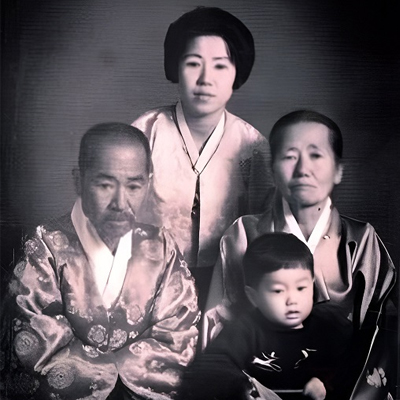
서른 여섯에 사형 당한 조운식은 사진이 없다. 대신 생존한 동료 한봉수의 가족 사진이라도 올린다.

의병역사
칼럼
PinkPepper
Jo Un-sik (趙雲植), the righteous army commander who sought to reclaim the nation

0
2026. 10. 13
1910년 趙雲植 교수형 판결문.pdf

조운식 판결문 198-203.pdf
During the Japanese colonial period, countless righteous army commanders sacrificed their lives for independence. It's easy to say, but in a world where people would line up to lead the way in betraying their country, Jo Un-sik (趙雲植, 1873~1910, aged 36) was active as a righteous army soldier in Gyeongsangbuk-do and Chungcheongbuk-do before being captured due to a tip-off and hanged.
If anti-Japanese armed righteous army commanders had continued their activities for decades across the Korean Peninsula, from Russia and Manchuria to Jeju, during the Japanese colonial period, and if they had united tightly in each region, and if their activities had not ceased even as generations changed, it would be normal to feel that the reason they all died and there were almost no victorious battles remaining in history is even more suspicious. A narrative posture full of negative consciousness and concealment, designed to prevent curiosity about the past, is neither respectful to those who risked their lives for the country nor factual.
Do you think it remained a painful history of defeat and tragedy because there were no weapons, no funds, and many spies? While it might be faster to find the history of the Illuminati's secret activities in the downfall of Joseon than to delve into that past of shame and humiliation, we must make at least one more righteous army soldier known to explain that the place of their death was outside the Korean Peninsula. However, there are people currently positioned in the three powers of the Republic of Korea who do not want their deaths to be outside the Korean Peninsula. In fact, since the legislative, executive, and judicial branches began with legal systems created for the West to legitimize colonial rule, the day will come when the three powers themselves will need to be reformed with the help of AI. If things continue as they are, current human civilization will perish. Minimizing past wrongs, turning victims into perpetrators, and perpetrators acting as victims has become a kind of privilege, to the point where society as a whole has become accustomed to such an ecosystem, making it a world where human individuals themselves are a threat to each other.
Jo Un-sik was born in 1873 in Dolchiri, Hwabuk-myeon, Sangju-gun, Gyeongsangbuk-do. Sangju was traditionally a region where scholarship flourished, producing many scholars. Although there are no specific records of his childhood and youth, it was an era when much that was warm and auspicious disappeared, even if it remained. Considering his organizational skills and leadership in righteous army activities, as well as his ability to direct the writing of goyumun (告諭文: a recommendation for righteous army activities, similar to today's posters or manifestos that urged struggle, while goyumun were admonitions and persuasive texts), it can be inferred that he possessed considerable academic knowledge and had a wide network of contacts, given that he communicated and cooperated with righteous army commanders from various regions.
In the early days of the anti-Japanese struggle, personal connections served as excellent messengers for verbally establishing communication networks from person to person. However, as time passed, weapons, funds, and food needed for resistance activities became scarce, the war situation turned unfavorable, and an environment where numerous spies ran rampant was created, leading to internal traitors actively working. Just like today, the world transformed into one where those who saw national crises as opportunities for personal gain flocked to flatter and cater to the power of Japanese imperialism. In that sense, Jo Un-sik, as well as all righteous army commanders, can be seen as the last scholars who upheld their beliefs with their lives before entering an era where betrayal was used as a stepping stone for advancement. The writer and activist took up arms and practiced the spirit of a scholar through action, even while anticipating death. Although their resistance could not prevent colonization, it is important to recognize that the time of resistance against invasion allowed for the overcoming of this level of colonial past. In Africa, India, and various regions of Southeast Asia, which were under the rule of Western powers centuries before Korea, the deep scars of colonial exploitation remain, and one can find instances where the value of life was determined by memories of human dignity being violated.
Jo Un-sik's full-fledged righteous army activities began in 1909. This was after the Eulsa Treaty of 1905, when Japan's control over Korea became overt, and immediately after the Korean army was disbanded by the Jeongmi Treaty of 1907, a time when late-period righteous army activities were actively unfolding nationwide. Historically, this period can be seen as the second phase of the anti-Japanese movement, as many patriots had already sacrificed their lives and burned with anti-Japanese fighting spirit even before the national sovereignty was seized.
Jo Un-sik carried out his righteous army activities by utilizing the rugged mountainous terrain in the border region of Gyeongsangbuk-do and Chungcheongbuk-do, near his hometown. Just as battles fought in familiar geographical areas have a better chance of success, spies also reported and earned money within their 'turf.' However, the border region between Gyeongbuk and Chungbuk on the Korean Peninsula is not the only rugged area. Can righteous armies only hide there? Even if the Sobaeksan and Mungyeong Saejae areas are rugged, Sobaeksan is only about 1,400 meters high. Colonialism is exploitation and fabrication. While people's perceptions may shrink to fit when weights and measures are changed under a reign of terror, one must put a hand on one's heart and ask oneself: Were there really so many righteous army commanders and righteous soldiers who chose the path of death following them on the Korean Peninsula?
Jo Un-sik prepared for a righteous army uprising by contacting Han Bong-su (韓奉洙, 1883-1972, also written as 韓奉西, 韓奉瑞), Park Hwang-seong (朴璜成), Lee In-man (李仁萬), and Kim Yong-tae (金龍泰), who were righteous army leaders from Cheongju, Chungcheongbuk-do, in 1909. Their alliance had significance beyond simple regional solidarity. The fact that righteous army leaders from different regions united under a single goal meant that the righteous army movement had developed into a nationwide resistance movement transcending regional boundaries. Around July of that year, Jo Un-sik formally raised a righteous army with Han Bong-su, Park Hwang-seong, and others deep in the mountains of Punggi-gun. At this time, Han Bong-su and Park Hwang-seong joined with a righteous army unit of about 500 men armed with 495 Western-style rifles, 1,000 rounds of ammunition, and 5 matchlock guns, forming a considerable-sized righteous army. However, the Independence Hall of Korea's entry for Han Bong-su describes his unit in early 1908 as 20-30 men armed with matchlock guns and clubs, so the exact number of 495 Western-style rifles and their procurement route need to be verified. Hundreds of Western-style rifles are not a small number of weapons, and it is unknown whether this number was inflated later for an alibi. It might have been personally embarrassing to confess that they mercilessly killed people who intended to defend the country with clubs.
They embarked on systematic organizational structuring, establishing a command system with Han Dong-hae (韓東海) as the Right Wing Commander, Park Han-seong (朴漢成) as the Left Wing Commander, Lee In-woo (李仁禹) as the Military Commander, and Kim Yong-tae (金龍泰, unknown birth and death dates) as the Training Commander, and Jo Un-sik was elected as the Commander-in-Chief of the righteous army. There were approximately 160 righteous army leaders across the 8 provinces, and about 16 righteous army leaders in areas outside the Korean Peninsula, such as Primorsky Krai, Manchuria, and Gando, as claimed by colonial historians. However, during the Korean War, the total number of key commanders from both North and South Korea and the US was about 30. Millions of civilians were killed under these 30 commanders; how many subordinates of the 160 righteous army leaders and the civilians who helped them should be calculated as having been killed? It is a nonsensical inversion of priorities to pretend to know the scale and full scope of the righteous army's base without truly knowing it, and to spend taxpayer money searching for descendants of veterans dispatched from overseas. It would be more appropriate to help the descendants of Koryo-saram instead.
The fact that the agency's projects, which avoid the obvious and choose to do what should not be done, are the role of faithful implementers of colonial historical views, must be improved. The government should also stop helping the colonial historical narrative by only bestowing useless honors that confuse the truth of the incident, and instead give even a small part of that budget to me. I will reveal who truly engaged in anti-Japanese movements and who only pretended to, and thus expand and reproduce the full scope of colonial history.
Jo Un-sik, who became the leader of the righteous army, focused above all on clarifying the cause and purpose of their activities. He had Jeong Chi-ok (鄭致玉, dates unknown) under his command explain the purpose of the righteous army and write a proclamation. This proclamation stated that 'it is the duty of a subject to restore the national body, strengthen the imperial family, and restore national sovereignty,' which was based on traditional loyalist and patriotic ideology. The crisis of a not-so-strong imperial family was conveyed to Punggi, but then what were they doing inside and outside the palace?
Righteous army leaders, including Jo Un-sik, developed their activities based on modern nationalism, traditional loyalist ideology, and a spirit of resistance against foreign powers. For them, resistance against Japanese imperialism was not merely repelling foreign invasion but a moral duty to practice loyalty to the king. However, modern Korean society often disparages, ignores, and criticizes the political prestige of the president, who holds the position of the nation's leader, and there are various machinations to physically assassinate or drive them to suicide, and these machinations are sustained by an invisible hand. In contrast, at the beginning of the last century, their descendants, completely unaware that they would spit at their nation's leader, risked their lives to write and distribute these proclamations to various places, using them as basic documents for recruiting righteous soldiers. Through this, Jo Un-sik's righteous army continuously expanded its influence, extending its scope of activity to Boeun and Cheongsan in Chungbuk, and Sangju in Gyeongbuk, until 1910.
The activities of the righteous army led by Jo Un-sik can be largely divided into fundraising, eliminating spies, and engaging in battles with the Japanese army. First, fundraising was an essential process for sustaining the righteous army's activities. On July 9, 1909, according to the lunar calendar, Jo Un-sik visited Lee Sang-rak, the head of Deokdong, Tanbu-myeon, Boeun-gun, Chungcheongbuk-do, and demanded a large sum of 100,000 nyang. In September and October of the same year, he also engaged in fundraising activities by showing a proclamation to Jin Pil-oh, the head of Cheongcheon-myeon, Cheongju-gun, Hong Mo, the head of Sanwoei-myeon, and Shim Seung-bok of Baekhyeon-ri, Sokri-myeon, Boeun-gun.
Second, the execution of pro-Japanese spies holds fundamental and significant meaning in the activities of the righteous army. This is because a world had arrived where one's own people, colleagues, relatives, and children could become spies. Around August 1909, according to the lunar calendar, Jo Un-sik executed pro-Japanese spies Jeong Hwa-chun and Kim Gyeong-mo in Jodong, Yonghwa-ri, Hwabuk-myeon, Sangju-gun, Gyeongsangbuk-do. This demonstrates his recognition of the importance of information security in righteous army activities and his firm response to traitors.
Third, direct clashes with Japanese authorities were also frequent. On September 17, 1909, according to the lunar calendar, he planned an attack on Taejeon Station in Hoedeok-gun, Chungcheongnam-do, but it failed due to a lack of personnel. On the 19th of the same month, during the abduction of Kim Han-gi and Jeon Hong-gi in Cheongsan-gun, Chungcheongbuk-do, he clashed with villagers, injuring Jeon Eung-yu and Jeon Gyeong-hwa.
What is particularly noteworthy about Jo Un-sik's righteous army activities is that he pursued solidarity with overseas independence movement forces with an international perspective. On October 13, 1909, according to the lunar calendar, he received an important proposal from Yi Beom-jin, who was engaged in righteous army activities in Russia. Yi Beom-jin proposed a large-scale joint operation: 'All righteous armies in Korea should gather in Russia, organize their military forces, and then resist simultaneously starting in March of that year.' The fact that Jo Un-sik received such a proposal from Russia indicates that he had considerable combat capabilities. This proposal was a strategic plan to overcome the limitations of righteous army activities at the time, aiming for the righteous armies, who had been operating individually in Korea, to integrate around overseas bases and develop a more systematic and effective resistance. Jo Un-sik actively accepted this proposal and dispatched four commanders—Han Bong-seo, Park Hwang-seong, Lee In-man, and Kim Yong-tae—along with about 350 subordinates, armed, to Russia where Yi Beom-jin was.
However, Jo Un-sik's grand plan was not realized. On October 15, 1909, according to the lunar calendar, he was arrested by Japanese police at the Yeongdong Police Station in Chungbuk along with Park Chi-ryang and Lee Ja-seong. This occurred while he remained in Korea to recruit additional righteous army members, and it is presumed to be the result of information provided by a spy or intensive pursuit and investigation by the Japanese imperialists. After his arrest, Jo Un-sik was sentenced to death by hanging for insurrection at the Cheongju Branch of the Gongju District Court on February 14, 1910. Jo Un-sik appealed this verdict, but it was rejected by the Gyeongseong Court of Appeals on March 12, 1910, and his sentence was finalized. On April 20, 1910, Jo Un-sik died by hanging in Gyeongseong Prison at the age of 37.
His death occurred just four months before the forced annexation of Korea by Japan. Although he died without witnessing Korea become a complete colony of imperial Japan, he must have known better than anyone that the nation's downfall was imminent. However, he probably could not have imagined this reality where, a hundred years later, descendants completely disregard the nation's representatives. The fact that the nation is so divided despite a hundred years of struggle by our ancestors implies that there has been a serious mutation in the Korean gene.
This country, where indigenous Japanese collaborators have taken root, has the ability to assassinate anyone who isn't a pro-Japanese, anti-nationalist genetic type, or to turn them into their subordinates. This technique is so well-known that even a child knows it's a deception, but Koreans have a naivety that prevents them from understanding the true intentions of those who deceive. It's not that they deserved to fall, but rather that if you provide weapons of mass destruction until they fall, you end up like Korea. Even now, there are countries on Earth playing that game, but because they deceive until people become naive, there are now citizens on this land, blinded by money, who insult their leaders and expose their own vulnerabilities to others, living as voters and neighbors. If you want to see how dirty and ugly humans can become, just watch the Truman Show of North and South Korea.
Jo Un-sik's righteous army activities are a valuable example showing the nation's will to resist in the early period of Japanese colonial rule. Even in desperate circumstances, he never gave up his will to restore national sovereignty and sacrificed his life to fight for Joseon's independence. Although his plan failed, his will and spirit of sacrifice for the liberation of his homeland were passed on to the next generation of independence activists, but the South Korean government dismissed it with the comedy of the Order of Merit for National Foundation.
References
Lee Yong-cheol, <A Study on Jo Un-sik's Righteous Army Struggle during the Korean Empire>
Ministry of Patriots and Veterans Affairs, <Records of Meritorious Services of Independence Activists> Vol. 9
Institute for Korean Independence Movement Studies, Independence Hall of Korea
댓글
( 0 / 500 )
東方不敗
7
조운식 의병장의 삶을 읽으며 나라를 지킨다는 것이 무엇인지 다시 생각하게 됩니다. 꽃다운 나이에 목숨을 걸고 국권 회복을 위해 싸운 분들이 있었기에 오늘의 대한민국도 존재할 수 있습니다. 이제라도 이름 없는 의병들의 활동과 희생을 더 깊이 조사하고, 그들이 싸웠던 현장을 찾아 역사의 진실을 복원해야 합니다.
( 0 / 500 )
orion
6
의병들의 패배를 단순히 무기와 자금이 부족했기 때문이라고 설명한다면 역사의 절반만 보는 것입니다. 누가 그들을 도왔고, 누가 밀고했으며, 어떤 세력이 항일의 대열에서 이탈했는지까지 살펴야 합니다. 승자의 기록만으로 역사를 이해하지 말고, 목숨을 바친 사람들의 관점에서 당시의 현실을 다시 조명해야 한다는 말씀에 공감합니다.
( 0 / 500 )
dongjoo
5
조운식 의병장이 동료들과 연합을 추진하고 해외 항일 세력과 연결하려 했다는 대목이 특히 인상적입니다. 의병 활동을 고립된 지역의 산발적 저항으로만 볼 것이 아니라, 서로 연결된 독립전쟁의 관점에서 연구할 필요가 있습니다.
( 0 / 500 )
jongman69
5
조운식 의병장의 죽음은 한 개인의 비극으로 끝나지 않습니다. 독립을 위해 싸운 수많은 사람의 희생이 오늘날 어떤 역사 인식으로 계승되고 있는지 묻게 합니다. 다만 의병의 규모와 활동 경로, 해외 파견 계획 등은 사료를 통해 하나씩 확인할 필요가 있습니다.
( 0 / 500 )
papa
4
기록이 부족하다면 연구를 포기할 것이 아니라 국내외 사료를 교차 검증해 감춰진 연결고리를 찾아내야 합니다. 과거를 제대로 밝히는 일은 오늘의 민주주의를 바로 세우는 출발점입니다.
( 0 / 500 )
happynam
4
나라를 위해 목숨을 바친 사람은 역사 속에서 정당한 평가를 받아야 하고, 나라를 팔아 자신의 이익을 챙긴 사람은 그에 합당한 역사적 책임을 져야 합니다. 그런데 우리는 독립운동의 희생을 기리는 일에 비해 친일 협력의 구조와 그 이후의 권력 승계 문제를 얼마나 깊이 파헤쳐 왔을까요?
( 0 / 500 )
8502park
3
역사는 승자의 전유물이 아닙니다. 패배했다고 해서 의병들의 투쟁이 무의미했던 것은 결코 아닙니다. 그들은 국권이 무너지는 순간에도 굴복하지 않았고, 자신이 옳다고 믿는 길을 목숨으로 증명했습니다. 이제는 전투의 승패만으로 항일운동을 평가하지 말고, 그 저항이 우리 민족의 존엄과 독립 의지에 어떤 의미를 남겼는지 깊이 살펴야 합니다.
( 0 / 500 )
textan
3
역사적 사실을 엄밀하게 밝히는 작업이야말로 순국선열의 희생을 진정으로 존중하는 길이라고 생각합니다. 개인의 영웅담을 넘어 당시 사회 전체의 모습을 복원하는 연구가 필요합니다.
( 0 / 500 )
고고준
2
의병을 무장한 사람들의 전투 기록으로만 바라보면 역사의 중요한 부분을 놓치게 됩니다. 의병에게 식량을 제공하고 정보를 전달하며 은신처를 마련해 준 이름 없는 백성들의 희생도 함께 조명해야 합니다. 반대로 밀고와 배신이 어떤 방식으로 저항의 기반을 무너뜨렸는지도 밝혀야 합니다.
( 0 / 500 )
신고내용
신고내용을 선택해주세요
회원비난/비하/욕설글 및 댓글도배성 게시물저작권 침해/불법자료 유출허위사실유포개인정보 유출.사생활 침해무단광고/홍보음란물 및 도박 불법 광고물범죄행위 관련 글불법행위 관련 소개물품 판매 및 사기글악성코드 및 스파이웨어 유포기타 사유 및 운영진 판단


비밀번호를 잊으셨나요?
Sign in with Google


All information provided by us is free of charge and is for the public good.