品

Corea든 Korea든, 품격이 먼저다
Whether Corea or Korea, dignity comes first.
Whether Corea or Korea, dignity comes first.
Now
지금
751 Diaspora
Heritage
유산
Humanity
인문
Mirengsi
未冷尸
Politics
정치
Media
언론
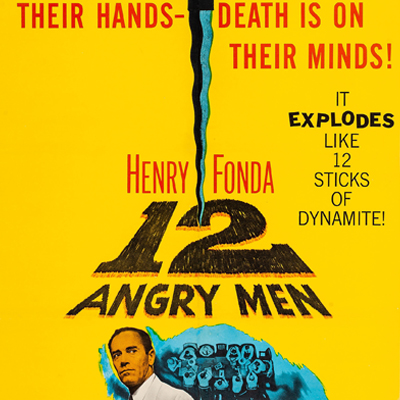
1957년 시드니 루멧 감독의 《12인의 성난 사람들》

문화평론
칼럼
Atom
12 Angry Men and the Special Prosecutor for Fabricated Indictments

0
2026. 11. 21
- The film "12 Angry Men" illustrates how one individual's reasonable doubt can lead to justice amidst the prejudices and pressures of the majority, serving as a powerful analogy and warning for the current 'manipulated indictment special prosecutor law' situation in Korean politics.
- The current special prosecutor law debate in Korean politics, much like the jurors in the film, is dominated by partisan preconceptions that interpret evidence based on predetermined conclusions, reflecting a reality where political interests take precedence over truth-finding.
- The structure allowing a party involved in a case to intervene in the appointment of a special prosecutor, and a special prosecutor law covering multiple cases related to the individual, risks violating the natural justice principle that 'no one can be a judge in their own case,' thus the public must maintain reasonable doubt about the process itself.
- The 'reasonable doubt' emphasized by the film is not merely asserting innocence, but a continuous questioning of whether there is sufficient evidence for a guilty verdict and whether that evidence has been distorted by prejudice, reminding us of the importance of reason and conscience against majority opinion in Korean politics.
- Ultimately, if we lack the courage to confront our own biases and re-examine evidence as political confrontation intensifies, we express deep concern that we will be sitting in a deliberation room with a predetermined conclusion, distorting justice and eroding trust in the entire system.
Sidney Lumet's 1957 film "12 Angry Men" is set in a jury room where 12 jurors deliberate on a case involving a young man accused of murdering his father. The evidence presented in court initially seems clear. The boy is from a slum, witnesses claim to have seen him wielding a knife, and the timeline fits. In the first vote, 11 jurors declare him guilty. This majority opinion is a mix of a desire to rush home, class prejudice, racial and origin-based preconceptions, and personal anger stemming from their own pasts. Only one person, Juror No. 8, raises his hand, stating, "We haven't talked yet." He doesn't assert innocence. He merely argues that a guilty verdict cannot be rendered as long as "reasonable doubt" remains.
Through the clash between one person's stubbornness and the resistance of the other eleven, the film shows how prejudice and preconceptions distort justice. Juror No. 3 projects his anger, stemming from conflict with his son, onto the defendant, and Juror No. 10 dismisses evidence with a collective label of "those kinds of kids." The shape of the knife, the witness's eyesight, and the consistency of the time of the incident are dismantled one by one. However, more important than the scenes where evidence crumbles is the inner world of the jurors revealed in that process. As Juror No. 8 says, "It's always difficult to completely exclude personal prejudice. And wherever you encounter prejudice, it obscures the truth." He doesn't claim to know the truth. He merely emphasizes that "reasonable doubt is a very valuable thing in our system" and that "you cannot declare guilt if you are not certain."
It's no coincidence that this scene resembles the deliberation room of Korean politics today. In November 2026, the so-called 'Manipulated Prosecution Special Prosecutor Act' passed the National Assembly, went through the State Council, and received presidential approval. Its stated purpose is to investigate allegations of manipulated investigations and prosecutions by the prosecution, National Intelligence Service, and Board of Audit and Inspection during the Yoon Suk-yeol administration. Six of the 12 investigation targets are cases related to President Lee Jae-myung himself (Daejang-dong, Wirye, Baekhyeon-dong development, Ssangbangul's remittance to North Korea, Seongnam FC sponsorship, etc.). Each of the Democratic Party of Korea, People Power Party, and Rebuilding Korea Party recommends one special prosecutor candidate, and the president appoints one of them. The opposition parties refuse to recommend, calling this law the 'Lee Jae-myung Escape Act,' while the ruling party claims it is a restoration of justice that corrects the past atrocities of political prosecutors.
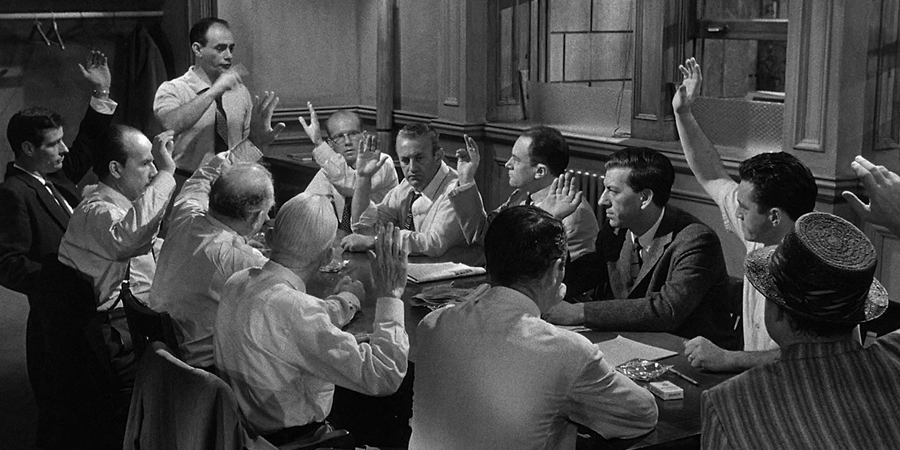
In the deliberation room of '12 Angry Men,' the majority had already reached a conclusion. The same is true for the majority in Korean politics today. On one side, the dominant frame defines the past investigation process itself as 'manipulation,' while on the other side, the current government and ruling party's act of designing a special prosecutor related to their own cases using their majority seats is seen as a conflict of interest and a violation of the rule of law. In either case, prejudice precedes evidence. Just as the jurors in the movie first thought of the image 'that kid is that kind of person' before re-examining the knife's purchase route or the witness's glasses, today's political judgments are also first shaped by partisan affiliation, past experiences, and narratives repeatedly instilled by the media.
The film emphasizes the individual's conscience and reason against the majority opinion. Juror No. 8 is initially isolated. Despite ridicule and pressure, he reconstructs the evidence piece by piece and raises questions. As a result, other jurors are forced to confront their own biases. The problem is how much similar 'isolated questioning' is possible in current South Korean politics. Even within the ruling party, concerns have been raised about the structure of the special prosecutor appointment and potential conflicts of interest, and legal and academic circles point out the unconstitutionality, citing the principle of natural justice that "no one can be a judge in their own case." However, these voices are easily marginalized within the majority opinion of the party and the framework of public opinion. Conversely, the opposition party's outright rejection also reduces the room for reflective examination of problems in past investigative processes.
The issue of reasonable doubt and moral responsibility is even sharper. In the movie, Juror No. 8 did not try to prove the boy's innocence. He asked whether there was enough evidence to convict, that is, whether it went beyond reasonable doubt. The same applies to clarifying political responsibility. It is necessary to clarify whether there was political bias or excessive application in the past investigation and prosecution process. However, when the entity designing that process has a close interest in the parties involved in the case, reasonable doubt must also be maintained regarding the "manipulation" allegations raised by that special prosecutor. Conversely, an attitude of unconditionally rejecting the special prosecutor itself can also be another form of prejudice that ignores the possibility of past abuse of power.
The film ultimately ends with a unanimous not-guilty verdict, but that verdict does not signify absolute truth. As Juror No. 8 himself admits, "we might be gambling on probabilities." What is important is that in the process, the jurors confronted their own biases, re-examined the evidence, and did not make a decision involving a person's life carelessly. The same applies to the deliberation room of Korean politics today. The act of a majority of seats passing a law and the president approving it may have formal legitimacy. However, when that law includes a structure where the parties involved in a case intervene in the appointment of a special prosecutor, and half of the investigation targets are cases related to the individual, the public has the right to maintain reasonable doubt about the entire process. At the same time, assuming that past investigation processes were completely fair is another prejudice.
"12 Angry Men" remains a classic because it doesn't represent a specific ideology. It shows how prejudice distorts justice, how powerful the pressure of the majority opinion can be, and how difficult it is for an individual to uphold conscience and reason. The film rejects the dichotomy of guilt and innocence, instead constantly asking whether the evidence is sufficient and whether that evidence has been distorted by prejudice. In the context of Korean politics in November 2026, this film is not just a metaphor but a warning. Regardless of party affiliation, both the media and citizens must constantly ask themselves what preconceptions they hold in their own deliberation rooms, and whether those preconceptions are obscuring the evidence.
Whether the cases under investigation by the special prosecutor were abuses of power in the past, or a process by which the current power is using its majority seats to reframe its own cases, cannot be determined by a partisan framework alone. The moment rational doubt is abandoned, the majority can distort justice, and that distortion ultimately erodes trust in the entire system. Just as one person's question becomes more valuable as the air in the deliberation room heats up, the more intense political confrontation becomes, the more desperately we need to re-examine the evidence. The spot where Juror No. 8 stood alone is still empty today. That spot can be filled not by a partisan majority, but by reason and conscience with the courage to confront their own biases. Without that courage, we will once again sit in a deliberation room where a conclusion has already been reached, merely ignoring the evidence.
댓글
( 0 / 500 )
전원일기
7
《12인의 성난 사람들》을 단순한 영화가 아니라 오늘날 한국 정치와 사법 현실을 비추는 거울로 읽어낸 점이 인상적입니다. 정의는 다수의 확신에서 나오는 것이 아니라, 소수의 질문과 증거에 대한 끈질긴 검증에서 출발한다는 사실을 다시 생각하게 합니다
( 0 / 500 )
박인훈
8
가장 경계해야 할 것은 진영의 확신이 사실 확인보다 앞서는 정치입니다. 조작기소였다는 주장도, 정치적 보복이라는 주장도 증거로 검증해야 합니다. 수사기관의 독립성과 특검의 중립성을 제도적으로 담보하지 못한다면 정의를 회복하겠다는 법률조차 또 다른 불신의 출발점이 될 수 있습니다.
( 0 / 500 )
백남희
5
8번 배심원의 역할은 무조건 반대하는 사람이 아니라 모두가 당연하다고 여기는 결론에 질문을 던지는 사람이었습니다. 지금 우리 정치에 필요한 것도 그런 사람입니다. 여야를 막론하고 자기 진영의 잘못까지 지적할 수 있는 양심과 용기가 민주주의를 지탱합니다.
( 0 / 500 )
여름
5
이 글의 핵심은 특검 찬반을 넘어 정의를 판단하는 기준에 있다고 생각합니다. 과거 검찰의 잘못도 밝혀야 하고, 현재 권력의 이해충돌도 엄격하게 감시해야 합니다. 권력이 스스로를 심판하는 구조를 경계하는 것, 그것이야말로 《12인의 성난 사람들》이 오늘 우리에게 던지는 가장 중요한 질문입니다.
( 0 / 500 )
Kang726
3
민주주의에서 다수결은 의사결정의 방법이지 진실을 보증하는 면허가 아닙니다. 다수 의석으로 법을 만들 수는 있어도 그 법의 공정성까지 자동으로 확보되는 것은 아닙니다. 권력일수록 스스로에게 더 엄격한 잣대를 적용해야 합니다.
( 0 / 500 )
이준호
3
영화 속 8번 배심원이 위대한 이유는 자신만이 옳다고 확신해서가 아니라 다른 사람들에게 다시 생각할 기회를 주었기 때문입니다. 우리 정치에도 상대 진영을 설득하기 전에 자기 진영의 오류부터 검증하는 용기가 필요합니다.
( 0 / 500 )
jonghoon
3
과거 검찰권의 남용을 바로잡는 일과 현직 대통령의 이해관계가 얽힌 특검의 공정성을 확보하는 일은 별개의 문제입니다. 어느 한쪽의 명분이 다른 쪽의 의문을 덮어서는 안 됩니다. 법치주의는 누구에게나 동일한 기준을 적용할 때 비로소 의미가 있습니다.
( 0 / 500 )
moonlight
2
결국 국민이 원하는 것은 이재명의 무죄도, 야당의 정치적 승리도 아닙니다. 권력과 정치적 유불리를 떠나 진실이 밝혀지는 것입니다. 영화가 보여주듯 정의는 목소리 큰 다수가 아니라 끝까지 증거를 확인하고 의심을 견디는 사람들에 의해 지켜집니다.
( 0 / 500 )
신고내용
신고내용을 선택해주세요
회원비난/비하/욕설글 및 댓글도배성 게시물저작권 침해/불법자료 유출허위사실유포개인정보 유출.사생활 침해무단광고/홍보음란물 및 도박 불법 광고물범죄행위 관련 글불법행위 관련 소개물품 판매 및 사기글악성코드 및 스파이웨어 유포기타 사유 및 운영진 판단


비밀번호를 잊으셨나요?
Sign in with Google


All information provided by us is free of charge and is for the public good.