品

Corea든 Korea든, 품격이 먼저다
Whether Corea or Korea, dignity comes first.
Whether Corea or Korea, dignity comes first.
Now
지금
751 Diaspora
Heritage
유산
Humanity
인문
Mirengsi
未冷尸
Politics
정치
Media
언론
시사문화평론가 김성수

문화평론
칼럼
김성수
Why entertainment is more necessary for our society than a six-term politician

0
2026. 10. 27
- <Our Ballad> is a project that increases its chances of success by combining the niche genre of ballad with the 1020 generation and retro sensibility, in an entertainment landscape dominated by trot and K-POP.
- The format where 150 non-celebrity jurors, 'Top Baek Gwi', cast one vote each, is freshly received as it reflects the zeitgeist of the prosumer era and popular sovereignty.
- However, to compensate for the potential boredom due to the limited scope of the ballad genre, the production team attempted an unconventional direction, positioning the Top Baek Gwi as the true protagonists of the stage.
- The stage, a Coliseum-like structure that surrounds the contestants 360 degrees, creates tension, but in reality, it functions as a communal play space that maximizes empathy and solidarity among the Top Baek Gwi, blessing the participants.
- The article traces the historical context of ballad music evolving into 'our' love songs through Korea's turbulent times, interpreting <Our Ballad> as containing a provocative message urging this generation to foster empathy and responsibility with the next generation.
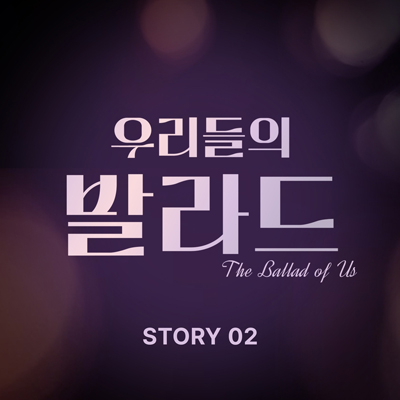
<Our Ballad (hereinafter referred to as OB)> is a project that deserves attention in many ways, but it was also a project that had to be buried for a long time. First of all, in the entertainment industry where trot-related projects, K-POP-related projects, and retro-related projects are rampant, OB is a project that creates an audition show with ballad music that has the same empathy as trot and retro sensibility, starring 1020 talented people who will lead the next generation of K-POP. Isn't it a fresh yet guaranteed success project that has all the elements of successful previous works? Moreover, the setting that 150 jurors (referred to as Top 100) including non-celebrities each cast one vote to decide the winner is a project that accurately reads the era of prosumers and is also a choice suitable for the era of popular sovereignty, so it is bound to receive good reviews.
However, the reason why it had to be kept in a drawer for a long time is also clear. Fun in entertainment is based on diversity and twists. First of all, “ballad” as a genre is a popular concept whose boundaries with other genres are quite ambiguous, like “trot,” so its inclusiveness is wide, but it is a lyrical and slow-tempo musical tendency that is definitely narrower than “trot.” If trot is a concept that embraces everything from folk-style elegies like “Mokpo's Tears” to EDM like “Amor Fati,” ballad is also a vessel that can contain rhythm music like bossa nova or reggae, but it is difficult to contain songs that go above 100 BPM. Therefore, the first concern that comes to mind when doing an audition limited to ballads is the 'tedium' similar to the 'boredom' felt when singing only ballads at a karaoke bar. The moment viewers feel this emotion, the entertainment show fails.
So the production team makes a bold choice. They put all the Top 100 on stage. To conclude, the stage of <OB> is not a stage that makes the contestants participating in the audition the main characters. To exaggerate a bit, it is rather a stage that makes the Top 100 the main characters.
The stage of <Woobal> has a unique structure, unlike any other audition. Reminiscent of musical vibrations spreading in concentric circles, 150 chairs, each with its own light, are arranged around a central circular stage, rising upwards from the stage floor like a ramp. This seating arrangement allows the Top 100 to focus more deeply on the circular stage. On the other hand, the moment a contestant steps onto the stage, they are surrounded by 300 eyes watching from all 360 degrees, LED lights placed at each of the 150 seats, and numerous cameras. Unlike other audition stages where audiences or cameras are only in front, allowing contestants to easily avoid gazes by turning away, this stage feels like a judgment seat with nowhere to escape. It's a structure that can easily intimidate less experienced contestants. Conversely, the Top 100 are separated from the contestants on the circular stage but are virtually connected by the platform that runs along the edge of the stage. Furthermore, when they look at the stage, they can naturally see the expressions and emotions of other Top 100 members beyond the stage, maximizing their sense of solidarity. The stage of <Woobal> is precisely the space where a 1-on-150 battle unfolds.
Also, when a contestant stands on stage, the lowest position is the Top 100 Ghost seat, which naturally becomes the front because it's the beginning of the Top 100 Ghost seat. The participant stands and looks down at that spot, but there are quite large chairs symbolizing authority, and the lighting is focused, especially with a microphone placed there. Only those who occupy the first 8 seats among the 150 judges can ask questions to the contestants and comment on their stories and songs. This kind of arrangement is reminiscent of the emperor's seat in the Colosseum, and within the extension of that symbolism, the pass/fail lights of the Top 100 Ghosts that turn on one by one while the music is playing are truly the 'thumbs up' signal from Roman citizens deciding the life or death of a gladiator. For reference, the Roman emperor was perceived as the first citizen delegated power by the citizens, so he sat in a distinguished position and exercised special authority, but ultimately could not kill a gladiator without the consent of the citizens (often symbolized by a thumbs-up signal).
The stage of <Woobal> is thus designed to create a kind of suspense in its very structure. Naturally, this program is an audition variety show, and it must create a narrative of growth and victory through a fierce competitive process. Competition is ruthless, and growth is impossible without setbacks. As a space where success and failure, win and loss are divided, the stage of <Woobal> is perfectly suited as a battleground between judges who previously scorched audition variety shows with harsh criticism and prosumers who indiscriminately encouraged voting with their fan hearts. However, the production team of <Woobal> created such a suspenseful stage and then devised a script, directing approach, and judging method to function in the complete opposite way. They turned the Colosseum into a traditional Korean outdoor play stage.
The production team abandoned the successful methods repeatedly used in previous audition programs, such as the scathing criticisms from authoritative judges and "devil's editing." Methods to expand fandom, such as online voting or real-time text voting, were also used restrictively only once in the final. They exclusively selected passionate consumers, eager to hear live singing, through an open call based on their personal stories and history of consuming music. Rather than people who would give musical evaluations based on sound quality, rhythm, and arrangement characteristics, they gathered "true ballad" enthusiasts who would reflect their feelings and memories upon hearing a song in their evaluations. They even considered various age groups and genders when selecting 140 non-celebrity participants, attempting a kind of social mix. Furthermore, when recruiting the celebrity "Top 100 Ears," up to Season 1, out of a total of 9 celebrities including MC Jeon Hyun-moo, 5 were singers, ensuring musicians were the majority. However, in Season 2, among the 8 celebrities excluding the Season 1 winner and runner-up, only 3 were singers. Instead, the actor team was further strengthened (with Cha Tae-hyun, Moon Geun-young, and Joo Woo-jae joining) to broaden the scope of emotional empathy.
They sit in a circle and listen to the songs of aspiring singers, who are like their own children. Each time a contestant comes on stage, the Top 100 judges check their youthful faces and ages, first feeling curiosity and doubt, wondering, 'How can these young people understand such songs?' However, as they hear each person's story, they find themselves unknowingly drawn in. Especially when they hear stories like 15-year-old Yesung, who shows her empty refrigerator in her solitary studio apartment, or Roy, who had to become independent at 16 due to bullying, or Jinseo, who travels five hours round trip from Dangjin to Seoul with her mother to study singing, they suddenly feel like parents, aunts, or uncles. Moreover, listening to the stories of Soyeon, who lost her father last December and is filling that void with her grandparents' love, or Sua, who has been moving from one semi-basement room to another with just her father since birth and has now moved alone to a youth shelter with the help of Gyeonggi-do officials, is heartbreaking. The ballads they sing initially make you feel like you're time-traveling back to the day you first heard the song, but soon the children's pain washes over you like a wave, making you feel as if you were with them at that very moment. If you find yourself reaching out to those friends who have inadvertently entered your memories, you have already stepped into their lives.
The Top 100, who are experiencing special encounters during their time travel, are frequently caught on camera as they are the true protagonists of this stage. When they press the button, the light of acceptance illuminates their expressions, and instead of 'devil's editing,' their faces, bathed in warm pink light, are shown in various close-ups as the cuts transition. Viewers are more deeply moved by the breadth and depth of empathy each face conveys. It's a truly rare scene in audition entertainment to see people who were in the position of judges become so engrossed in the contestants that they regret having nothing more to give than applause and lights of acceptance. These lights spread further in solidarity, and the moment the number of people pressing the button exceeds one hundred, they sublimate into a cascade of fireworks. This beautiful moment symbolizes the Top 100's blessing upon the contestants. Even after giving so much, the Top 100 express their regret by stamping their feet and asking questions: Why did we allow these children to experience so much pain? Have we truly lived properly all this time? Is this society we created truly okay?
Perhaps the reason for such a special experience should be sought in the unique characteristics of ballad music. The musical trend of ballads was completed in the 80s, blossomed in the 90s, and evolved globally beyond the millennium, representing a significant musical achievement. In the 70s, the popular music scene was divided into three main categories: band music from the US Eighth Army stage, symbolized by Shin Joong-hyun's rock; trot, which became a symbol of popular music by blending folk songs and enka; and folk, which inherited the spirit of the 1968 revolution, importing the spirit of resistance along with jeans and acoustic guitars. The successors of Kim Min-ki, who tried to capture Korean emotions in folk music, and artists who followed Shin Joong-hyun to indigenize American commercial music, had to endure politically motivated demonization through censorship and accusations of decadence, solely with their musical challenges and achievements. They poured out desperate elegies, featuring a narrator whose lover was taken away, and these songs penetrated the hearts of young people who had to live through a dark era. The public called these songs ballads, regardless of their musical characteristics.
Freedom of expression expanded further in conjunction with the growth of the democratization movement, and the vast musical trend called ballads established its identity as K-ballads through artists like Lee Young-hoon, Yoo Jae-ha, and Boohwal. Ballads emotionally documented the turmoil of the 80s and 90s and were consumed explosively. Evolving more creatively and diversely with idol music through the millennium, 'Our Ballads' even changed the flow of songs on the radio from Western pop to Korean popular music. Now, it's common for famous overseas singers to cover or remake 'Our Ballads.' Rose's <number one girl>, for example, is a representative ballad embodying the identity of K-ballads, even making history by charting on Billboard for an impressive nine weeks. The generations who consumed and developed ballads created 'our' love songs suitable for a healthy community where 'we' can live together, and succeeded in making it a globally beloved song genre.
It seems that the production team of <Woobal> intended to create a completely different audition variety show based on this history. The idea of seating people who have endured over 30 years of hardship by actively consuming 'Our Ballad' as judges is perhaps the highest respect for their struggle, a delicate comfort for their pain, and a will to empathize with their lives to the fullest. However, from another perspective, it is also a kind of provocation. This is because, through the framework of an audition variety show, it demands that the generation that has lived with ballads empathize with the next generations. That empathy is not a simple mediation. It is a sharp rebuke that they must take responsibility for the next generations.
Just as hip-hop somehow became uncool, the generation that created and empathized with ballads also somehow became uncool. They somehow forgot the Gwangju spirit, perhaps because it wasn't enshrined in the constitution, and under the symbol of 'us,' they neglected efforts to care for each other, condoning and defending even tremendous injustices if committed by their own side. They shouted and still shout for democracy and justice, but they became 'kkondae' (old-fashioned, authoritarian people), enemies of democracy, and lived by shouting 'as long as it's not me' rather than making righteous choices, and they still live that way. That's why they still haven't come to their senses, even after making our children experience a civil war that they should never have to experience again.
While the main perpetrators of the rebellion are making a mockery of the law, a former chairman of the Legislation and Judiciary Committee, who served six terms as a member of the National Assembly and became a metropolitan governor thanks to the female quota, unilaterally cut even fire department budgets, claiming the province was in a financial crisis. After attempting to rationalize the cuts by talking about a "financial straw," he is now proclaiming the national burden of firefighters' labor costs, which should be resolved through legislation, as his own pledge. He knows full well that although he has no authority as he is not a member of the National Assembly, he has enough power to shift the burden to the government and the National Assembly. He gained attention for cutting even the cost of sanitary pads for women and adolescents and allowances for infant and toddler care teachers, and it is said that he plans to reduce the 12.7 billion won budget allocated to 880 rights-based jobs for severely disabled people to 0 won in next year's budget. Because of this, Seo Eun-hye, a writer with Down syndrome who remarkably played the role of Han Ji-min's twin sister in the drama <Our Blues>, has been shedding tears of blood every day since hearing the news. She says that although she can sufficiently support herself, she cannot live if disabled people lose their jobs and their community is destroyed. Why does this intelligent and highly educated governor, who is a woman and whose husband is disabled, lack the empathy that she possesses? Su-a, who successfully passed the first round in <Our Ballad 2>, may also not be able to continue her music studies. This is because support for out-of-school youth and out-of-home youth has already been reduced or is planned to be reduced. In the first competition episode, Su-a sang Yoon Sang's "Love Is," and said, "I sang it thinking of the children who are living like my old self." Hearing this news, it felt like my heart was being torn out, as if she was singing about that situation with a sense of contemplation. Is the empathy of this former judge and six-term National Assembly member, who was infinitely generous to his own children, not allowed for other people's children? Indeed, the head of the metropolitan government in Bitgoeul, the birthplace of the Gwangju spirit, also cut 44 days' worth of meal expenses for elementary, middle, and high school students, claiming there was no 16.9 billion won. Did he think that much was understandable? Did he think that much was acceptable, like skipping a meal for a diet?
Politics is still more backward than entertainment. Politics is still worse than drama. So, for generations that have lived with ballads, shouldn't we fix this backward and rotten politics? The audition entertainment show <Our Ballad 2> doesn't have parents singing instead of their children, or parents or their friends judging. It doesn't tell people to find someone to sing for money. It certainly doesn't tell people to self-satisfy by spouting sophistry like, 'Su-a's misfortune will actually be a motivation for winning.' If pressing the 'pass' button and clapping until your palms hurt isn't enough, it's telling you to deeply feel the heart of Su-a, who has already entered our lives and become our family. If there's a politician consumed by greed who is destroying our community, it's telling you to pull them down, even if it means that, and to step up and protect our Su-a so she never gives up on her dreams. If you are indeed sitting in the circular stage that looked like a Colosseum but was actually a communal folk play stage, then just like in the old days when you 'refused to refuse' by mortgaging your youth, when the folk play ends, you should link arms and go out into the streets, shout, fight, and set things right. For 'our' community. For the dreams of 'our' children.
댓글
( 0 / 500 )
Mickey
8
《우리들의 발라드》를 단순한 오디션 예능이 아니라 우리 사회의 공감 능력을 시험하는 무대로 해석한 점이 인상적입니다. 어린 참가자들의 노래에 감동하고 박수를 보내는 것으로 끝나는 것이 아니라, 그 아이들이 겪는 고통을 만들어 낸 사회의 책임까지 돌아보게 한다는 것이 이 글의 핵심이라고 생각합니다.
( 0 / 500 )
Jane
7
공감은 감정이 아니라 행동으로 완성되어야 합니다. 젊은 세대에게 위로를 건네는 일보다 그들이 상처받지 않고 살아갈 사회를 만드는 일이 더 중요하다는 말씀에 깊이 공감합니다.
( 0 / 500 )
hanna_Kim
6
김성수 평론가님, 《우리들의 발라드》를 단순한 음악 예능의 분석에 그치지 않고 세대의 기억과 사회적 책임, 민주주의의 본질까지 연결하신 통찰이 인상적입니다. 아이들의 노래에 감동하는 것과 아이들이 살아갈 세상을 바꾸는 것은 별개의 일이 아니라는 말씀을 깊이 새기게 됩니다.
( 0 / 500 )
kangsora
6
가장 아픈 대목은 우리 사회가 아이들의 불행마저 경쟁과 성공의 서사로 소비한다는 지적입니다. 가난과 학교폭력, 가족의 상실을 딛고 노래하는 아이들에게 감동하면서도 그들의 삶을 지탱할 공적 지원을 줄인다면, 그것은 위선에 가깝습니다
( 0 / 500 )
정의사회
5
발라드가 우리 세대의 아픔과 청춘의 기억을 담아 온 음악이라는 해석에 공감합니다. 과거에는 노래를 통해 불공정한 세상을 견뎠지만, 어느새 우리는 다음 세대의 고통을 외면하는 어른이 되어 버린 것은 아닌지 돌아보게 됩니다.
( 0 / 500 )
나비
4
김성수 평론가님, 한 시대의 발라드를 함께 듣고 부르며 살아온 세대가 이제는 다음 세대의 삶을 책임져야 한다는 말씀에 마음이 무거워집니다. 과거에 민주주의와 정의를 외쳤다는 사실만으로 오늘의 책임까지 다한 것은 아닐 것입니다. 아이들의 꿈을 지키는 일이야말로 우리가 물려받은 민주주의의 가치를 다음 세대에 전하는 길임을 일깨워 주셔서 감사합니다.
( 0 / 500 )
Alexander
4
《우리들의 발라드》가 우리에게 묻는 것은 누가 더 노래를 잘하느냐가 아니라 우리가 어떤 세상을 물려주고 있느냐는 질문인 듯합니다. 민주주의와 정의를 외치면서도 내 편의 잘못에는 침묵하고 약자의 고통을 외면한다면 그 정신은 이미 껍데기만 남은 것입니다.
( 0 / 500 )
백진철
3
글을 읽으며 공감이란 무엇인지 다시 생각하게 됩니다. 무대 위 어린 참가자들에게 박수를 보내면서도 그들의 삶을 지탱하는 복지와 교육의 기반을 외면한다면 그 감동은 어디까지 진실할 수 있을까요? 노래가 우리에게 건네는 위로를 사회를 바꾸는 실천으로 이어 가야 한다는 문제의식에 공감합니다.
( 0 / 500 )
光鐵
2
오디션 무대의 합격불 하나가 정치의 책임을 묻는 질문으로 이어지는 발상이 참신합니다. 아이들의 사연에 눈물을 흘리면서도 정작 그 아이들의 생존과 교육, 일자리를 위협하는 정치에는 무관심하다면 그 감동은 얼마나 진실한 것일까요? 공감한다고 말하는 것과 실제로 누군가의 삶을 지키는 것은 전혀 다른 일입니다.
( 0 / 500 )
신고내용
신고내용을 선택해주세요
회원비난/비하/욕설글 및 댓글도배성 게시물저작권 침해/불법자료 유출허위사실유포개인정보 유출.사생활 침해무단광고/홍보음란물 및 도박 불법 광고물범죄행위 관련 글불법행위 관련 소개물품 판매 및 사기글악성코드 및 스파이웨어 유포기타 사유 및 운영진 판단


비밀번호를 잊으셨나요?
Sign in with Google


All information provided by us is free of charge and is for the public good.