品

Corea든 Korea든, 품격이 먼저다
Whether Corea or Korea, dignity comes first.
Whether Corea or Korea, dignity comes first.
Now
지금
751 Diaspora
Heritage
유산
Humanity
인문
Mirengsi
未冷尸
Politics
정치
Media
언론
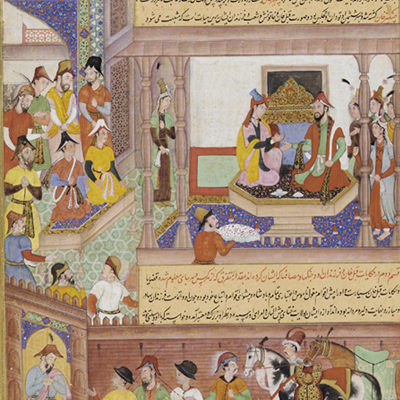
Kublai Khan and His Empress Enthroned, from a Jami al-Twarikh(『集史』) (or Chingiznama)

문집총간
칼럼
bunny365
The Anguish and Literature of Intellectuals Amidst National Crisis: <Dongangeosaji>

0
2026. 11. 09
- Korean history researchers are criticized for overlooking periods of peace and prosperity and only highlighting times of chaos due to the influence of colonial historiography, suggesting that past misconceptions continue to hinder true historical understanding.
- It is pointed out that existing interpretations of Lee Seung-hyu's life and writings were distorted or downplayed by the Japanese, emphasizing that a thorough critique and cross-verification of historical sources, including the discovery of literati from periods of peace, are necessary to uncover the hidden truths about his life and works.
- The reality of not even knowing the birth and death years of Goryeo royal figures reveals a lack of historical awareness among Koreans, while the fact that Lee Seung-hyu's 'Jewang Ungi' is called a masterpiece but its content is abridged, and chronological discrepancies between 'Dongangeosajip' and other historical sources, demonstrate the limitations and complexities of current historical research.
- It is asserted that a deep exploration into Lee Seung-hyu's life and writings to correct distorted history, and adopting a mindset that accepts one's own history from a global perspective, are necessary tasks for Koreans.
Yi Seung-hyu (李承休, 1224~1300) was a prominent literary figure and historian who lived during the tumultuous late Goryeo period, marked by the 'chaos of the military regime and Yuan intervention.' It's questionable whether it's a coincidence that almost all the original Goryeo authors in the 'Munjiptonggan' we've examined so far belong to this era. They generally lived through a period where Goryeo, having endured Mongol invasions and Yuan intervention, began to decline in the mid-14th century, suffering from large-scale Wokou invasions. So, were there no literary figures from peaceful times in Goryeo? That can't be true.
However, the situation of not questioning a history that doesn't discuss periods of peace and merely repeating existing colonial historical theories that claim a dynasty fell because it deserved to is not just outdated historical understanding; it's like being caught in the wheels of an old-fashioned political system. Politics cannot progress into the future if we live in the present without untying the wrong knots of the past. The task of sifting through the crushed flesh and bones from this dilemma is the restoration of history. It's a process of clearly identifying the subject of 'deboning,' gathering the flesh, and painstakingly reassembling it to restore the original form. The splattering of blood and the pervasive stench of decay are unavoidable.
Every dynasty, without exception, experienced periods of peace and prosperity. If we were to honor figures from peaceful times, the culture of those golden ages would be revealed. And by shedding light on those eras, we would inevitably ask why such beautiful and peaceful times had to end, leading to a change of dynasty. However, Koreans never question this obvious point in their minds: the logic that 'it was good, but ultimately it fell.' This is because their minds are filled with historical records that skip the process and simply categorize events as the natural flow of time. Why is there no critical examination of these records, no suspicion that primary sources might be contaminated? It is precisely the result of colonial subjugation that has prevented us from even imagining such a significant narrative. Roughly a hundred years have passed, filled with those who conformed to the ruling system and achieved success within that secured 'safety.' With such a hardened historical sensibility, one cannot truly claim to know Yi Seung-hyu; even if one knows, it is not true knowledge.
To truly understand Yi Seung-hyu, it is also necessary to seek out literati from times of peace and prosperity. It requires an endless repetition of trial and error, stepping on and re-stepping on the landmines of fake history planted by imperial Japan. With a national character that only guarantees success and demands results in the face of current issues, we cannot even confront the history of historical distortion. The saying, 'The more haste, the less speed,' is truly what is needed in this era.
Yi Seung-hyu's courtesy name was Hyuhyu (休休), and his pen name was Dongangeosa (動安居士). He was from Gari-hyeon (加利縣) in Gyeongsan-bu (京山府) (present-day Seongju-gun, Gyeongsangbuk-do). At the age of 12, he laid the foundation of Confucian classics under the renowned Confucian scholar Shin Seo (申諝, birth and death dates unknown) at the residence of Gyeongji (鏡智, birth and death dates unknown), a monk and former Goryeo prince who became Wonjeongguksa (圓靜國師). However, the legitimacy of Buddhism, where a Goryeo prince became a monk, was marred by the corruption of the Buddhist community, characterized by decadence, pleasure-seeking, and tax-exempt privileges. This led to its perception as a religion that contributed to the downfall of Goryeo, deeply embedding a serious stereotype in the Korean psyche.
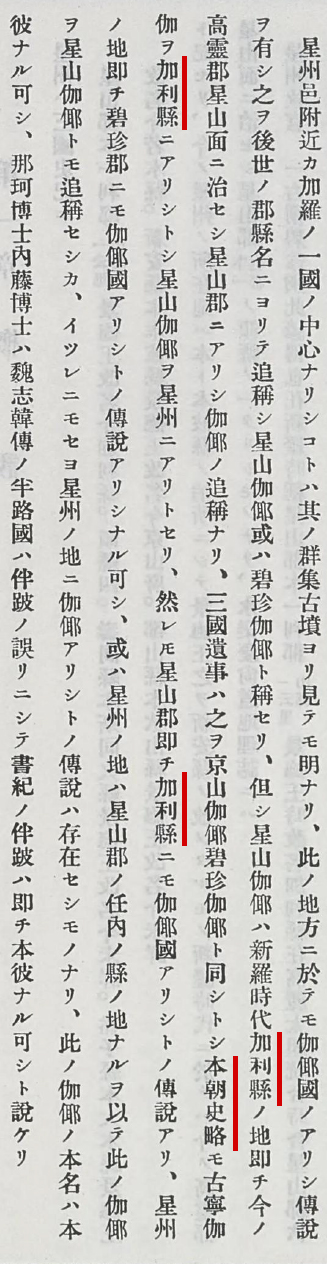
朝鮮考古資料集成 15 (古蹟調査報告 大正6年度)
Imanishi Ryu, who dedicated himself to the colonial view of history on the Korean Peninsula, stated, '...Seongsan Gaya was the land of Gari-hyeon (加利縣) in the Silla period, which is now Seongsan-myeon, Goryeong-gun... There was a Gaya kingdom in Gari-hyeon, Seongju... 『本朝史略』 states that the old Gyeongsan Gaya was in Gari-hyeon.' Why should a historical text like Honchō Shiryaku, whose existence Koreans don't even know, be arbitrarily reinterpreted by the Japanese?
If Yi Seung-hyu is simply placed on a theatrical stage, omitting the origins and research history of the scriptures, without explaining how he entered Wonjeongguksa's chamber and studied 『Chunqiu Zuozhuan』 and 『Zhouyi』 under the Confucian scholar Shin Seo, and if even the birth and death dates and origins of Wonjeongguksa and Shin Seo are unknown, then that stage cannot be authentic. One cannot depict the Goryeo imperial family without even knowing the birth and death dates of a monk who was a Goryeo prince. The emotional connection of Koreans, where a basic understanding of history is below average by default, is like a house built on sand. Is it not the reality that ignoring history and dreaming of a brilliant future with a stiff neck fills the very foundation of Korean identity?
In 1252, at the age of 29, Yi Seung-hyu passed the civil service examination administered by Choe Ja (崔滋, 1188~1260), who served as Jigonggeo (知貢擧: chief examiner), and Hwangbo Gi (皇甫琦, ?~1285), who served as Dongjigonggeo (同知貢擧; deputy examiner). However, due to the war caused by the Mongol invasion at the time, he stayed in Samcheok (三陟), his mother's hometown, and was unable to enter public office for a long time. During this period, he entered Yonggye (龍溪) in Gudong (龜洞) on Dutasan (頭陀山) to farm and support his mother. The Mongol invasion and Yi Seung-hyu's life as a farmer are too grand a narrative to be presented on a single stage. Modern Koreans cannot imagine Yi Seung-hyu and the Mongol invasion in the same frame. During the Japanese colonial period (in fact, Japan's distortion of Korean history goes back to the Edo period, but let's focus on the colonial period for now), historical records that necessarily included Mongol interference now appear as an excessive mise-en-scène from today's perspective.
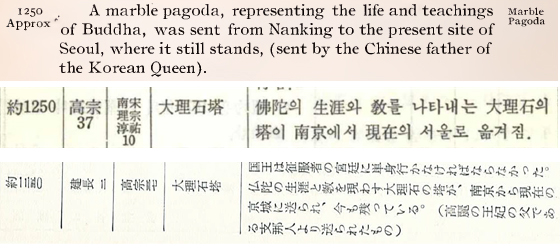
There are many stories in Horace Newton Allen's (1858~1932) chronology that are beyond the common sense of modern people. While it cannot be said that the ten-story stone pagoda at Wongaksa Temple Site is the pagoda sent by Kublai Khan, Emperor Shizu of Yuan, to Princess Jegukdaejang, his daughter who married King Chungnyeol of Goryeo in 1250, Allen's suspicious death is equally perplexing. The Korean language deliberately omits this erratic chronology. Therefore, modern people are fools.
The history that unravels the political history of the Mongol invasion of Goryeo and its interference in state affairs as a global narrative has today transformed into a culture where one-tenth of the 3.5 million population has experienced life in Korea and speaks Korean, making it difficult to even imagine past narratives. It is an awkward situation to explain the imagined Sadaejuui (servitude to a great power) that Japan so painstakingly depicted. In this situation, Korea, where the philosophy to penetrate this predicament has disappeared, I believe it is time for a conscious marionette to cut its own strings.
In 1263, at the age of 40, Yi Seung-hyu went through a difficult period, including composing 122 stanzas of 'Byeonggwasi (病課詩)' while caring for his family during an epidemic. However, what has been confirmed is 242 lines and 121 stanzas of five-character verse. It is unknown whether one stanza was removed, and it is also unknown whether the remaining content is the original form. It is unknown whether an epidemic spread in a family of public officials or whether a national crisis occurred. If one does not know, one should be frustrated, and isn't it normal for a thinking human to be curious about Japan, which caused this thirst, and the central figures behind it?
In 1264, at the age of 41, he became a Dongmunwon Suje (同文院修製) and, through the recommendation of Yi Jang-yong (李藏用, 1201~1272) and Yu Gyeong (柳璥, 1211~1289), was appointed as Gyeongheungbu Panguan Gyeomseogi (慶興府判官兼書記), thus beginning his official career. His diplomatic capabilities shone in 1273, at the age of 50. He was dispatched as a Seojanggwan (書狀官) in the envoy celebrating the enthronement of the Yuan Empress and Crown Prince. With his outstanding literary skills, he impressed Yuan Emperor Kublai Khan, was granted three audiences, and elevated Goryeo's status. Based on these experiences, he compiled a collection of travel poems, <Binwangrok (賓王錄)>, during his lifetime.
Why is there no historical drama about Yi Seung-hyu of Goryeo meeting Kublai? Is it shameful that he was an envoy who paid tribute to Kublai Khan? No, it's not. Is it because a world-historical hero met a Goryeo subject three times, which is too overwhelming? That's probably not it either. It's because the limitations of an extremely inaccurate perception mean there's no mindset to accept our own history as it approaches world history. The curse of place names, where Yi Jang-yong is recorded as being from Incheon and Yu Gyeong from Hwanghae-do, makes us petty in the face of this poverty, this gaping hole in historicity, where we cannot imagine a page of world history within the short distance that can be traversed from one end of South Korea to the other in half a day.
Yi Seung-hyu's upright character could not endure the turbulent political situation of his time. From a modern perspective, it is enviable that there was an era when such an upright figure was in politics. He served as Usagan (Right Censor) and Annyeomsa (Inspector), impeaching corrupt officials, but in 1280, at the age of 57, he was dismissed for advising King Chungnyeol to stop his hunting and entertainment. The downfall of all dynasties on the Korean Peninsula is attributed to the king's dereliction of duty. It's a strange reality that narratives of shedding tears over the fall of a dynasty are not depicted except for Danjong. Afterwards, he returned to his hometown of Samcheok and began a reclusive life, using the pen name 'Dongangeosa'. During his reclusive period, he deeply studied Buddhist scriptures for over 10 years and authored the great work <Jewang Ungi (Songs of Emperors and Kings)>, which describes history from Dangun onwards, greatly contributing to the promotion of national consciousness. However, the remaining Jewang Ungi varies in length from about 70 pages to over 300 pages depending on the edition. The title of a great work does not fit. The content has been erased and reduced, so is it Yi Seung-hyu's fault or his descendants' fault?
The <Dongangeosajip>, named after his pen name, is a collection of Yi Seung-hyu's poems and prose, consisting of a total of 5 volumes in 1 book, a woodblock print, including 1 volume of 'Japjeo (Miscellaneous Writings)' and 4 volumes of 'Haengnok (Records of Conduct)'. This collection is the first edition published by Yi Yeon-jong, Yi Seung-hyu's son, who collected and arranged his father's posthumous works. The publication period can be estimated to be around 1360, given that Yi Saek wrote the preface in 1359 and <Jewang Ungi> was re-published in Gyeongju the following year.
Volume 1 of Japjeo mainly consists of Yi Seung-hyu's later works. It is said that most of his writings were lost when he abandoned his official position and returned to his hometown, and only about 10 pieces were recovered. These include 'Chongeo Jagaemun (Self-Admonition for Rural Living)', which contains his feelings about his reclusive life, and Buddhist-related works such as 'Bogwangjeonggi (Record of Bogwangjeong Pavilion)' and 'Ganjangsa-gi (Record of Ganjangsa Temple)'. In particular, 'Chongeo Jagaemun' has the character of family precepts given to his children, making it an important resource for understanding the culture and thought of Goryeo society at the time.
Volume 4 of Haengnok is entirely a collection of poems, including poems of inspiration, poems exchanged with literati, and travel poems. Among these, 'Binwangnok' (賓王錄), recorded in Volume 4, is an envoy's record (使臣錄) documenting Yi Seung-hyu's experience as a junior envoy visiting Dadu (大都) in the Yuan Dynasty. This record details the circumstances between the two countries at the time, including the customs and culture of the Yuan Dynasty, imperial banquets, and diplomatic reception ceremonies, making it highly valuable as a historical source. 'Binwangnok' includes the author's detailed autobiography (自序) and annotations, giving it the character of a diary-style travelogue and providing a vivid account.
In 1298, at the age of 75, he was appointed as Sarim Sidok Jwa Ganeui Daebu (詞林侍讀左諫議大夫) but submitted a letter of resignation. At 77, he retired (致仕) as Miljik Busa Gamchal Daebu (密直副使監察大夫) and passed away in 1300. From birth to death, and from building his career to his resignation, the timeline is clear. However, the problem is that this compilation was not completed by a Korean's own hand.
Fewer than 30 collections of literary works from the Goryeo Dynasty exist today. Even including the collections of Goryeo monks, there are only about 50 individuals, so Yi Seung-hyu's collection is undoubtedly a valuable resource reflecting the times. However, isn't it outrageous to generalize Goryeo with just fifty people? In some records, inconsistencies with other historical sources have been found, requiring additional review and research. A prime example is the record of when Yi Seung-hyu met Wonbu (元傅, 1220~1287). According to Dongangeosajip, Yi Seung-hyu won first prize in a poetry contest hosted by Wonbu in Chungju at the age of 17 (1240). However, according to Wonbu's epitaph, Wonbu was appointed as Jungwonmok Sarok (中原牧司錄) in Chungju when he was 24 years old (1243). This is where a three-year chronological discrepancy occurs between Dongangeosajip and Wonbu's epitaph regarding the same event.
While the death record and birth year of Wonbu are highly reliable as they align with the tomb inscription and the Goryeosa records, this particular record in Yi Seung-hyu's collected works relatively contains the possibility of error. The fact that the tomb inscription and Goryeosa align does not mean there is no possibility that the tomb and Goryeosa were fabricated. When repeatedly cross-verifying, there are more than a few times when one's mind goes blank trying to figure out what the true past was. The chronological discrepancy in the records suggests the need for a critical approach, cross-referencing with other historical sources rather than simply accepting the records in Dongangeosajip. However, as repetitive work accumulates, one starts to distrust even reliable records, and what one thought one knew no longer feels certain.
댓글
( 0 / 500 )
나라사랑
7
이승휴라는 한 인물의 생애를 통해 고려 후기의 정치와 문화, 몽골과의 관계까지 새롭게 바라보게 됩니다. 역사는 왕조의 흥망만으로 설명할 수 없습니다. 평화롭던 시절의 성취와 그 시대가 무너진 과정까지 함께 살펴야 비로소 온전한 역사가 될 것입니다.
( 0 / 500 )
arc55
6
우리 역사에 대한 무지는 단순히 지식의 부족이 아니라 역사를 바라보는 관점의 문제라는 생각이 듭니다. 일본이 남긴 기록을 무조건 부정할 필요도 없지만, 그렇다고 검증 없이 받아들이는 것은 더 큰 문제입니다. 이제는 우리 스스로 사료를 읽고 해석하는 역량을 키워야 합니다.
( 0 / 500 )
nasora2
5
고려가 왜 멸망했는가를 묻기 전에 고려가 무엇을 이루었고 어떤 문화적 역량을 축적했는지부터 살펴야 합니다. 쇠퇴와 멸망만 강조하는 역사에는 한 시대의 삶과 성취가 빠져 있습니다. 역사 복원은 바로 그 잃어버린 부분을 찾아내는 일이라고 생각합니다.
( 0 / 500 )
jongman69
5
이승휴가 쿠빌라이 칸을 세 차례나 접견했다는 사실만으로도 고려의 외교적 역량과 당시 국제질서를 다시 생각하게 됩니다. 우리는 고려를 너무 좁은 민족사적 시각으로만 바라보고 있는 것은 아닌지요. 세계사의 한복판에서 활동했던 고려인의 모습을 복원할 필요가 있습니다.
( 0 / 500 )
alpha_k
4
특히 사료의 연대가 서로 맞지 않는 부분을 지적한 대목이 인상적입니다. 역사 연구에서 중요한 것은 기존 기록을 많이 인용하는 것이 아니라 서로 다른 기록을 대조하고 모순을 찾아내는 과정입니다. 불편한 의문을 제기하는 것부터 역사 연구의 진정성이 시작된다고 봅니다.
( 0 / 500 )
gongjoo
4
태평성대의 역사도 제대로 조명해야 한다는 주장에 공감합니다. 왕조의 몰락만을 중심으로 역사를 서술하면 그 이전에 존재했던 문화와 제도, 사람들의 삶은 자연스럽게 지워집니다. 무엇이 번영을 만들었고 무엇이 그것을 무너뜨렸는지 함께 살펴야 역사가 미래의 교훈이 됩니다.
( 0 / 500 )
moran
3
이 글이 던지는 가장 중요한 질문은 우리가 알고 있다고 믿는 역사가 과연 얼마나 온전한가 하는 점입니다. 모르는 것을 모른다고 인정하고, 기록의 공백을 의문으로 남겨두는 태도가 필요합니다. 역사는 정답을 외우는 과목이 아니라 끊임없이 질문하고 검증하며 진실에 접근하는 작업입니다.
( 0 / 500 )
sooil
1
식민사관의 잔재를 극복하려면 단순히 일본의 역사 해석을 비판하는 수준을 넘어야 합니다. 우리 기록의 형성과 전승 과정, 누락과 변형 가능성까지 검토하는 독자적인 연구가 필요합니다. 감정적인 민족주의가 아니라 치밀한 사료 비판으로 역사의 주도권을 되찾아야 합니다.
( 0 / 500 )
신고내용
신고내용을 선택해주세요
회원비난/비하/욕설글 및 댓글도배성 게시물저작권 침해/불법자료 유출허위사실유포개인정보 유출.사생활 침해무단광고/홍보음란물 및 도박 불법 광고물범죄행위 관련 글불법행위 관련 소개물품 판매 및 사기글악성코드 및 스파이웨어 유포기타 사유 및 운영진 판단


비밀번호를 잊으셨나요?
Sign in with Google


All information provided by us is free of charge and is for the public good.