品

Corea든 Korea든, 품격이 먼저다
Whether Corea or Korea, dignity comes first.
Whether Corea or Korea, dignity comes first.
Now
지금
751 Diaspora
Heritage
유산
Humanity
인문
Mirengsi
未冷尸
Politics
정치
Media
언론
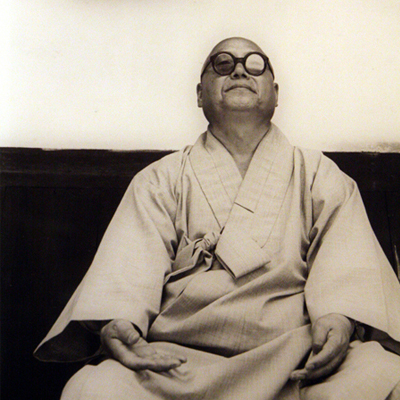
십 대에 사서삼경을 통달하고 주역을 500번 읽고 유불선을 회통(會通)했다는 탄허 스님은 어떤 인생을 살았길래 한민족의 미래를 예언할 수 있었던 것일까.

小說
칼럼
bunny365
Narrative Tanheo Monk 1

0
2026. 10. 15
- Korean society, consumed by academic competition and economic growth, has neglected self-reflection and philosophical inquiry, and within this inner void, Tanheo's prophecies offered fatalistic fantasy and comfort.
- Tanheo's prophecies, in an oppressive era, offered a hopeful vision of the Korean Peninsula becoming the world's center, providing solace to a weary populace, though based more on divination and religious interpretation than scientific verification.
- Ghibli-esque "cozy doomsday" animations, as part of predictive programming, spark suspicion that forces exist to predetermine or know the trajectory of human civilization, thus fueling conspiratorial thinking.
- Modern Korean history saw dictatorial regimes under Syngman Rhee, Park Chung-hee, and Chun Doo-hwan use anti-communism to suppress the populace and undermine national autonomy, illustrating the paradox of power, like "going to find a mummy and becoming one."
- Tanheo's prophecies offered solace to a public yearning for national greatness amidst feelings of helplessness, but they also carry a warning that autonomous thought can be paralyzed and history reshaped by external forces.
No matter how much the college entrance exam market dominates the entire lives of Koreans, life is about facing a moment of reality at some point. After experiencing colonization and war, we have run at an unbelievable speed of rapid economic development, but our inner self is always hungry. Why do I work, and what kind of person do I pursue? What is the difference between humans and beasts? Koreans have run like beasts for the past hundred years, fundamentally castrated from such philosophical questions. For us, who have lived glancing at these instinctive questions without resolving them, the existence of Ven. Tanhe provides a strange fantasy about human fatalism or the creation of a new world.
What kind of life did Ven. Tanhe live, who mastered the Four Books and Three Classics in his teens, read the Book of Changes 500 times, and integrated Confucianism, Buddhism, and Taoism, that he could predict the future of the Korean people? And is that prophecy within the category of events that our generation, conflicted by ideology and mixed with Japanese invaders by race, can witness with our own eyes during our lifetime? Also, the time has come to consider whether his prophetic ability was a secret technique unique to him, or a prophecy possible for all people who cultivate themselves.
The historical plot before and after Tanhe
The reason I decided that an approach to Ven. Tanhe's prophecy is needed now is that I recently discovered AI animations of a genre called 'cozy apocalypse' on YouTube, and it made me wonder if there are forces that know or determine the direction of human civilization in advance, and if so, what they have in mind. These animated videos made by the Japanese animation production company STUDIO GHIBLI INC. and a dozen similar channels technically depict the apocalyptic world poorly - perhaps intentionally, I don't know. The low quality of the videos raises more doubts, and it's unclear whether it's the next generation genre of The Simpsons, which has served as 'predictive programming,' or a 'counter-conspiracy.'
These Ghibli-esque apocalyptic videos consistently convey a message of hope that I and my family can survive safely amidst the fear and anxiety of everyday life collapsing, and are primarily set against the backdrop of Japanese, Indian, Southeast Asian, and Western cultures. The scenes of securing emergency food, medicine, and firewood, and lighting a fire to prepare a meal amidst storms symbolizing apocalyptic disasters and zombie hordes appearing due to climate or environmental changes, are even heartwarming. As one encounters the accelerating pace of video development, a chronic normalization and daily routine of conspiracy theories accumulate in the mind to the point where one is no longer surprised by any sabotage, but there is no clear solution to applying and discerning conspiracies in reality.
However, 'Ghibli' is the Japanese pronunciation of the word 'ghibli,' which refers to the hot desert wind in North Africa. Koreans have no grasp of when the Japanese went to Egypt, witnessed the world, and developed their worldview while experiencing the hot wind blowing from that North African desert. Koreans, who filled the historical void with colonial brainwashing and anti-communist ideology before and after liberation, have a different understanding of conspiracy theories, and due to the deep chasm of brainwashing and ideology, it is not easy to distinguish between friend and foe. Therefore, it is a simplistic interpretation to think that no matter how much the Japanese, who decided to become 'lapdogs' of the West, depict a soft landing of the apocalypse, it will not be easy to review the past of historical destruction where both cartoons and reality have disappeared beyond recognition.
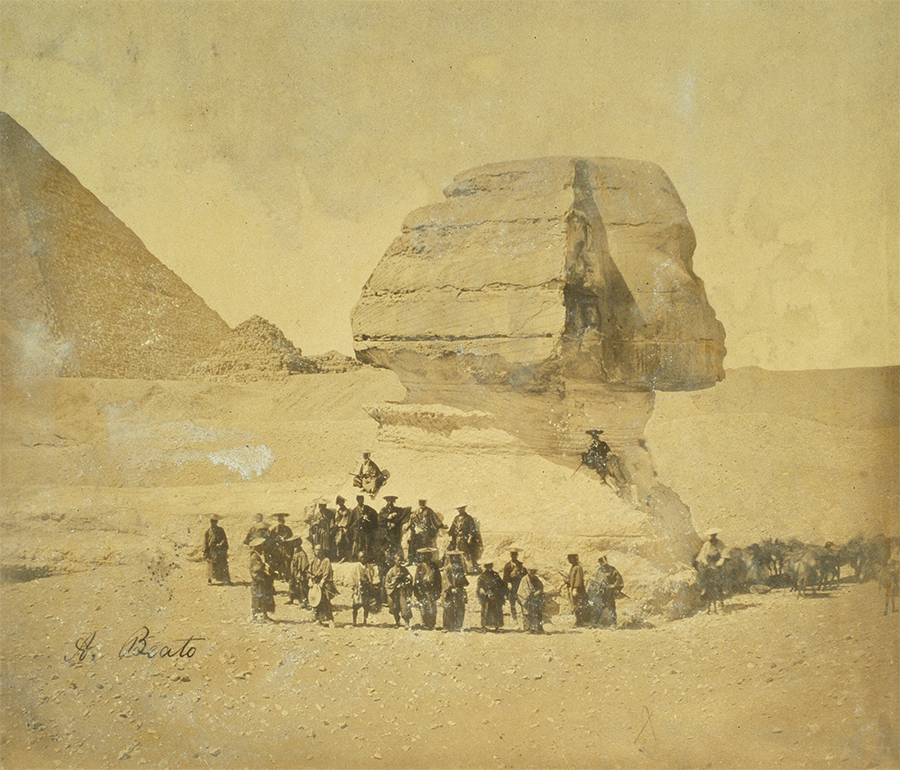
In 1864, a photograph taken by Antonio Beato of Ikeda Nagaoki and his delegation, who were on their way to France to negotiate the closure of Yokohama Port, in front of the Great Pyramid of Giza in Egypt, next to the Sphinx. Koreans do not know why Japan was negotiating with France to close Yokohama, which Perry had opened. If even some of the journalistic 'five Ws and one H' were fake, could it still be called fact? How can public education, which is partly fact and partly fiction, explain and guarantee the politics of each country and the value of human coexistence?
The reason conspiracy theories are frightening hypotheses is that, whether one realizes their impact on reality or not, whether one suffers direct or indirect harm or not, events appear coincidentally between doubt and confirmation, making it difficult to grasp their full scope. When it's hard to distinguish what is coincidental from what is intentional, we find it difficult to dismiss it as a mere conspiracy theory or to definitively conclude it's an actual conspiracy. If this doubt has accumulated over generations, oscillating between superimposed hypotheses, facts, and established theories, then human learning might need to reset all existing public systems to align with the technological singularity that the current AGI era will bring. In that regard, the prophecies of Tanhe Sunim, based on Eastern thought, foresaw an era of spiritual awakening that also resonated with the New Age movement of the 1970s in the West.
Tanhe's Plot of the Times
Public education and government policies cannot explain how to process the privileged information of an impending doomsday prophecy, which suggests that humanity must accept a future where the framework of the existing social order collapses, and individuals and groups should prepare themselves. This is because politicians, whose lives are focused on power corruption blinded by self-interest and the subsequent handling of their actions, cannot possibly care about the future of humanity. However, this situation is not unique to Korean politics; global politics is also in a state of disarray, and as the illusory tower built by humanity reveals its foundations, the convergence of technological singularity and the collapse of political systems cannot be interpreted as a good omen.
한국의 경우, 1960년 3·15 부정선거를 계기로 일어난 4·19혁명은 미국의 개 노릇을 하던 이승만을 퇴진시키긴 했지만, 기존 관료 조직과 군부의 부패, 권위주의적 관행에 식민지 정치를 청산하지 못한 누적된 원죄와 함께 부정선거 가담과 부정부패의 책임을 묻는 정군운동(整軍運動)으로 비화했고 결국에는 1961년 5.16쿠데타로 박정희가 권력을 장악하기에 이르렀다. 이승만 독재에 협력했던 군 지휘부를 쇄신하라는 요구에서 출발했으나, 군 개혁을 넘어 이승만을 뛰어넘은 정권 장악에까지 이른 것은, 미라 구하러 간 사람이 미라가 된다(ミイラ取りがミイラになる, The mummy hunter becomes a mummy.)는 일본 속담처럼, 타락한 권력을 바로잡겠다던 사람이 끝내 그 권력의 논리에 사로잡히는 상황이라 할 수 있다.
As shown in the picture above, the Japanese who went to Egypt in the 1860s must have learned about the relationship between mummies and humans, and the business potential of ancient ruins and artifacts. The interpretation that people who went to the desert to find mummy-related medicinal ingredients, known as rare medicines, became stranded and turned into mummies themselves, is an improbable explanation. It is a deceptive act, like the historical narrative that France was involved in closing Yokohama, which was opened by the United States. Although people lived near mummies and near Yokohama, the history recorded by the media cannot be trusted as being based solely on facts, so all of human history is a record that has undergone the power of fabrication and thus cannot be trusted, but this falls into the category of conspiracy theories.
Park Chung-hee appears to have been a figure who only sought to consolidate power through the Anti-Communist Law, the first revolutionary pledge he enacted, and had no intention or qualification to undertake anti-national politics or liquidate colonial remnants. Park Chung-hee reinforced the governing method of suppressing opponents under the banner of anti-communism, complementing the political loopholes exposed by the collapse of the Syngman Rhee regime. The revolution he championed, under the banner of liquidating past power structures, led to their more robust reorganization. The Anti-Communist Law was enacted and promulgated on July 3, 1961, and came into effect on the same day. It was abolished when Chun Doo-hwan, who seized power through the May 18th incident in 1980, comprehensively revised and absorbed it into the National Security Act.
The mummy is a symbol of grave robbing, invading the peace of the dead for power and profit. Just as the pyramids and sphinxes remaining in Egypt today do not mean that modern Egyptians built them, the mere fact that a nation inherits past laws and institutions does not guarantee their legitimacy. If laws created under the pretext of protecting the people are repeatedly strengthened in the hands of those in power and begin to oppress their own citizens, it is a reversal of roles where the state, which should exist for the people, lords over them.
If read as the analogy, 'You go to find a mummy and become a mummy yourself,' it reveals the self-contradiction where the justification of protecting the nation ultimately destroys the freedom and lives of its people. The anti-communist rule of the Rhee Syngman regime was further organized around the military and intelligence agencies during the Park Chung-hee regime, and the new military, including Chun Doo-hwan, seized power through a military coup and the bloody events of May 18th. Even after the Anti-Communist Law was abolished, its main contents were absorbed into the National Security Act, meaning that the mechanisms of oppression continued even as rulers changed. In that sense, Rhee Syngman, Park Chung-hee, and Chun Doo-hwan form a lineage of dictators in modern Korean history who used anti-communism as a means of legitimizing power and repeatedly engaged in state violence.
At a time when Japan might have been trading mummies in Egypt, in that land, the Japanese imperialists and their sympathizers branded anti-Japanese and anti-foreign figures as 'disobedient Koreans' (不逞鮮人). It was a process of 'near vermilion, turns red' (근묵자흑), where the closer one got to colonial power, the more one became tainted by its logic of oppression. Yoon Suk-yeol, who became Moon Jae-in's successor, seizing power, declaring martial law, and carrying out an insurrection, was an unexpected situation that did not fit the pattern of corruption of previous presidents. From the perspective of the 'mummy-hunting' logic, it is an unexpected variable that deviates from the lineage. Instead of following the path of inheriting and covering up the contradictions of previous powers while maximizing private gain, we must infer the reason why he chose the extreme option of martial law. Yoon Suk-yeol was the last runner at the end of this 'near vermilion, turns red' process.
The situation where a prostitute sat in the highest position of power in the institutional politics of a country and an era, as a human being, was a moral and biological singularity for the species. Yoon Suk-yeol would have had to either agree to a parliamentary system transition by forces trying to overcome the limits of declining power corruption, or put forward Yoo Si-min, who would cover up Moon Jae-in's and his own sins, to fit this theory, but he did not and self-destructed. I believe this is because the dark intentions of the South Korean military, which carries the spirit of the Japanese military, the political ambitions of the First Lady, a former prostitute who manipulates Yoon Suk-yeol, and the lack of smooth communication between Hong Jang-won, the US, and Japan, who were behind these two, were not aligned. That night, Kim Eo-jun, Yoo Si-min, Choo Mi-ae, Han Dong-hoon, Choi Min-hee, and other 'watermelons' (traitors) must have been busy calculating what tangible and intangible benefits they would gain at the last moment. They are people who calculated their private interests instead of the blood and scattered flesh of voters that would result from a rebellion.
Tanheo's ontological plot
The background to Tanheo's establishment as a byword for prophecy is the discourse that connected Korea's future with the unfolding of the post-heavenly world, namely 『The Challenge of East Asia: Korea's Impact and Challenge』 in 1975. At that time, Korea was an era of dictatorship that controlled its people under the Anti-Communist Law and guilt by association, and brutally suppressed intellectuals and opposition forces. Power demanded conformity while suppressing critical thinking. In such a reality, the post-heavenly world and Korea's future preached by Tanheo had the potential to be accepted as an optimistic outlook that transcended the oppressed present, and was a much-needed blueprint for comfort for the exhausted people.
At the core of that vision was the post-heavenly transformation ideology that 'the Korean Peninsula will become the center of the world.' The explanations supporting this were largely twofold. One was that the Earth is tilted '23 degrees and 7 minutes,' and this distorted order, linked to the leap degree, would be corrected. The other connected the 'two heavens and seven earths' of Jeongyeok to the internal fire of the Earth, explaining that this energy would surge into the Arctic Ocean, melting the ice and setting the Earth upright. While this is a dynamic and religious interpretation that should be distinguished from hypotheses verified by modern science, it must have been a fresh shock to Koreans accustomed to the concepts and knowledge of Western civilization. However, while this prophecy was a hope for some, it might have sounded like a very subversive or unsettling claim to others.
Fifty years ago, Tanheo's story of the Arctic was thrown at Korea by Trump today. Looking at resource development and international politics surrounding the Arctic, Trump's intention to draw Korea into his Alaska development plan is unpleasant. While securing energy and critical minerals, checking China and Russia, Arctic military and security strategies, and LNG exports to Asia all require Korea's capital and technology to be mobilized for his plan, not only the business profits but also the costs, risks, and even the initiative in decision-making are uncertain. The current Korean government is the first not to eagerly accept the development plan offered by the United States. U.S. intelligence sources are restless. However, if the Arctic Ocean surges, developers, Korea, and Koreans will die first. There is no need to die by being dragged along by America's bad habit of encouraging mirage hunting.
The decline in semiconductor stock prices due to foreign selling or the difficulties in individual negotiations cannot be immediately bundled together as a single strategy to corner Korea. The suspicion that the U.S. is pre-calculating a disaster in the Arctic and trying to expose Korean engineers to danger also remains a mere conjecture if there is no evidence to support it. What we should be wary of is not the conjecture itself, but failing to examine through what conditions unequal negotiations and the transfer of risk are actually carried out. Lee Jae-myung, who experienced human cruelty early in his life due to poverty and harsh working conditions, is more sensitive to the evil nature of humans behind the promises and opportunities offered by power. Because he is a person with a sense of caution gained from experience rather than complacent optimism or blind faith, he is quietly cleaning up the mess made by Yoon Suk-yeol, who protected Moon Jae-in, the traitor who killed Roh Moo-hyun.
However, he is not Superman. He needs time to distinguish how the motives of domestic and foreign forces opposing him operate, whether as political interests, policy disagreements, prejudice, or hostility, as he silently endures even the prejudice of being a politician who fears assassination. Perhaps he possesses a universal human compassion, hoping that others do not miss the opportunities he lost due to poverty. With what sense of mission and philosophy do people who easily trust the good intentions of others and rely on the promises of power endure hardship? Where have all the people who awaited Tanheo's prophecy gone, and why has the world become filled with beasts who are jealous of those who are skilled at reading world affairs and possess strong will?
Returning to Tanheo's prophecy, there is even an explanation that the Korean Peninsula will act like a lever during the process of the Earth's axis being corrected, making it a relatively stable and advantageous land for survival. Considering how the prophecy of a comic book about the sinking of the Japanese archipelago became a hot topic, there is also a sense of urgency that the time will come to pay the price for hegemonic expansion. The problem becomes even more complex when it comes to predictions that the continental shelf of the West Sea will rise, creating land twice the size of the Korean Peninsula, and that Liaodong, Manchuria, and the Maritime Province will become Korean territory. Such stories are easily interpreted as a promise of national territorial expansion beyond mere survival in disaster.
However, land uplift and the expansion of a nation's territory are separate issues. The emergence of new land does not automatically make it Korean territory, nor is the attribution of surrounding areas determined solely by natural phenomena. It involves the lives and will of the residents, inter-state relations, and political order. The moment we accept another country's catastrophe as our prosperity, the prophecy of salvation risks turning into another imagination of domination.
Yet, why are these prophecies constantly repeated? While the people were only encouraged to believe in the history of Dangun's descendants living on the Korean Peninsula, on the other hand, there was Tanheo, who promised a lost vast territory and future restored power. The greater the sense of powerlessness in reality, the more comfort a grand past and a brilliant future provide. For those deprived of dignity and a voice under dictatorship, the story of a nation that would become the center of the world might have been a compensation that helped them endure reality.
탄허의 전망을 해외에 소개한 것으로 언급되는 한기식(韓己植) 교수의 영문 기사 「What Comes Before & After 1999?—Buddhist Monk Tannho Foresees」는 국내에서 인정받지 못한 민족적 서사를 해외로 발신하려는 욕구로 볼 수 있다. 독재 정권은 민족을 내세우면서도, 그 민족의 이름으로 권력의 책임을 묻는 목소리는 억눌렀다. 이런 상황에서는 현실의 역사와 정치를 비판하는 일보다, 먼 과거나 아득한 미래를 통해 민족의 위대함을 말하는 일이 더 쉬웠을 수 있다. 그러나, 『환단고기』가 이에 앞서 일본에서 일본인에 의해 재유통되었듯이, 한국은 독재 정치로 국민의 자주성, 역사 해석의 자율성을 잃었다. 종말은 한국 사회의 자율성이 마비된 정신문명에 대한 갈급함이 없으면 인식이 어려울 수 있다.
The culmination of Western conspiracy theories is the ongoing completion of Zionism. If the killing for preemption continues to determine who will hold hegemony after the reset of global civilization, there is also an intention to bury the past where certain forces dominated and reshaped history, including how human civilization has evolved and which forces have held sway and developed. Tanhe was a person who knew this. However, given that our spiritual awakening has descended to the level of animals, to the extent that we cannot fathom his academic depth, what can we prepare for?
댓글
( 0 / 500 )
inchul
8
역사는 권력이 기록하고 교육이 전달한다고 해서 언제나 온전한 진실이 되는 것은 아닙니다. 과거의 독재와 식민지 잔재를 제대로 청산하지 못한 사회가 미래를 정확히 내다볼 수 있을지 돌아보게 됩니다. 다만 역사적 사실과 음모에 대한 추정은 구분하면서 진실을 추적하는 태도도 필요하겠습니다.
( 0 / 500 )
CJY
6
탄허 스님의 세계관과 오늘날의 인공지능, 기후 위기, 국제정세를 연결한 시도가 흥미롭습니다. 문명의 전환기에 필요한 것은 맹목적인 예언에 대한 믿음도, 모든 가능성을 비웃는 냉소도 아닐 것입니다. 인간이 가진 지혜를 회복하고 권력의 이해관계를 비판적으로 살피는 것, 어쩌면 그것이 우리가 준비해야 할 진정한 후천개벽일지 모르겠습니다.
( 0 / 500 )
Xman5
5
탄허 스님의 예언을 단순히 미래를 맞히는 신비한 능력으로 볼 것이 아니라, 당대의 현실을 넘어 문명의 방향을 성찰하게 하는 사상으로 읽어야 한다는 말씀에 공감합니다. 물질적 풍요를 이루고도 삶의 의미를 잃어가는 오늘날, 우리가 무엇을 위해 살아가는지 다시 묻게 하는 글입니다.
( 0 / 500 )
angel
6
한반도가 세계의 중심이 된다는 말의 참된 의미가 있다면, 그것은 더 넓은 땅을 차지하는 데 있지 않고 갈등하는 세계가 공존의 길을 찾도록 기여하는 데 있어야 하지 않을까요. 진정한 개혁은 사람을 바꾸는 데서 끝나지 않고, 권력이 스스로를 정당화하는 구조와 그 구조를 떠받치는 사회의 인식까지 바꾸는 일이어야 합니다.
( 0 / 500 )
임필립
4
한국 사회는 식민지와 전쟁, 산업화와 민주화를 거치면서 놀라운 성취를 이루었지만, 그 과정에서 역사와 인간에 대한 근본적인 질문을 충분히 다루지 못했습니다. 탄허의 예언을 계기로 과거의 상처와 미래의 불안을 함께 돌아보자는 문제의식이 인상 깊습니다.
( 0 / 500 )
zoom88
5
종말을 예언하는 이야기에서 정작 중요한 것은 재앙이 언제 닥치느냐가 아니라, 재앙 앞에서 인간과 사회가 어떤 선택을 하느냐일 것입니다. 민족의 영광이나 영토 확장에 대한 기대보다 인류가 함께 살아남을 지혜를 찾는 일이 진정한 문명적 각성이 아닐까요.
( 0 / 500 )
sun
5
식민지 청산의 실패에서 군사독재와 현대 정치의 모순까지 이어지는 역사적 맥락을 탄허의 예언과 연결한 문제의식에 공감합니다. 과거의 권력을 무너뜨리겠다고 나선 사람이 오히려 그 권력의 논리를 답습하는 역사는 한국 현대사에서 반복되었습니다. 미라를 찾으러 갔다가 자신이 미라가 된다는 비유는 개혁의 이름으로 기득권을 재생산하는 정치의 자기모순을 날카롭게 드러냅니다.
( 0 / 500 )
hurricane
3
탄허 스님의 예언을 단순한 길흉화복의 문제가 아니라 문명의 전환과 인간 의식의 한계라는 관점에서 접근한 점이 인상적입니다. 인류는 과학기술로 자연을 지배할 능력을 키웠지만, 그 능력을 어디에 써야 하는지에 대해서는 여전히 답을 찾지 못하고 있습니다.
( 0 / 500 )
Chul74
1
필요한 것은 의심을 금지하지 않되 증거를 요구하고, 권력의 이해관계를 추적하되 검증되지 않은 추정을 사실로 굳히지 않는 지적 절제입니다. 어쩌면 이것이야말로 예언과 현실 사이에서 우리가 지켜야 할 현대적 수행의 자세일 것입니다.
( 0 / 500 )
신고내용
신고내용을 선택해주세요
회원비난/비하/욕설글 및 댓글도배성 게시물저작권 침해/불법자료 유출허위사실유포개인정보 유출.사생활 침해무단광고/홍보음란물 및 도박 불법 광고물범죄행위 관련 글불법행위 관련 소개물품 판매 및 사기글악성코드 및 스파이웨어 유포기타 사유 및 운영진 판단


비밀번호를 잊으셨나요?
Sign in with Google
All information provided by us is free of charge and is for the public good.