品

Corea든 Korea든, 품격이 먼저다
Whether Corea or Korea, dignity comes first.
Whether Corea or Korea, dignity comes first.
Now
지금
751 Diaspora
Heritage
유산
Humanity
인문
Mirengsi
未冷尸
Politics
정치
Media
언론
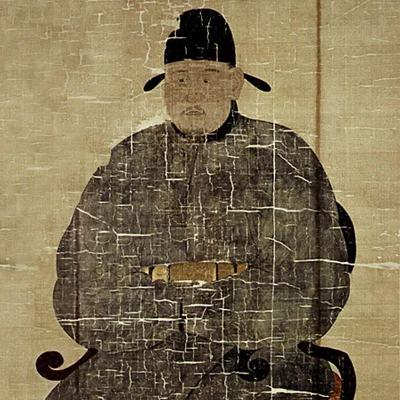
정몽주(鄭夢周, 1338~1392), 호는 圃隱 자는 達可

小說
칼럼
bunny365
Should I laugh or cry, Jeong Mong-ju

0
2026. 06. 20
- This article translates a post-liberation Japanese magazine piece on Jeong Mong-ju's life, connecting it to the trivialization of the May 18th Uprising to criticize the trivialization of history.
- The Jeong Mong-ju article reflects the trends in Korean history research in Japan at the time and the perspective of a Zainichi writer, offering a different nuance from the Jeong Mong-ju Koreans are taught.
- The article portrays Jeong Mong-ju not merely as a loyal subject, but meticulously highlights his facets as a diplomat, scholar, and politician amidst a complex historical backdrop.
- It objectively describes his relationship with Yi Seong-gye and his assassination at Seonjukgyo, while also pointing out how later historical evaluations changed, revealing history's irony.
- Ultimately, it shows that history can be recorded and interpreted from the victor's perspective, emphasizing history's contradictions through the fact that Yi Bang-won, who killed Jeong Mong-ju, later became King Taejong, who honored him.
In an effort to compensate for the recent era in which coffee mocking the May 18 massacre was consumed, I am translating and introducing an article published in the Japanese magazine <親和> after liberation. This magazine, published from 1953 to 1977, gathered the lingering effects of the pre-World War II history wars in the Japanese publishing world to overcome (?) the chaotic period after our liberation and their defeat. Although it is one of the sophisticated 'normalization of relations' magazines that outwardly promoted the normalization of private relations, there is surprisingly little information about the author of the article, 金熙明 (1903~1977). Kim Hee-myung is known as a Zainichi literary figure and anti-imperialist who began his activities in the Japanese literary world in the 1920s. Although there are dissertations about him, research by Zainichi Korean or Zainichi Korean humanities scholars cannot be said to be active. The article he wrote about the life of Jeong Mong-ju (鄭夢周, 1338~1392) is relatively easy as it is in modern Japanese, but I wonder how much it would align with current historical common sense if a modern Korean were to read it. The sources Kim Hee-myung referenced for his article on Jeong Mong-ju are as follows.
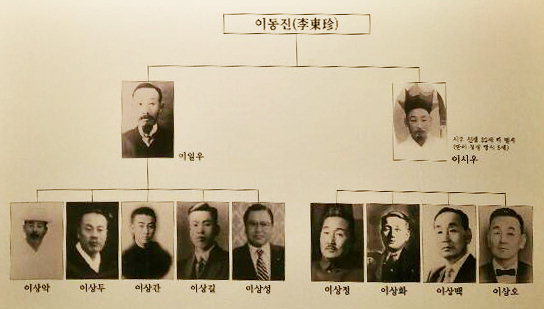
He stated that he referenced <高麗史> by Lee Sang-baek, <朝鮮通史> by Hayashi Taisuke, and <朝鮮史話> by Shidehara Tan. Lee Sang-baek's (李相伯, 1904~1966) Chinese character name uses the character for 'eldest son' (맏 백), but standard personal names use the character for 'one hundred' (일백 백). It's somewhat amusing to avoid characters symbolizing status or position in a name. I didn't realize that Korean society, which is so ignorant of basic things, was so sensitive to hierarchy. Lee Sang-baek is the third son of Lee Si-woo, the second son of Lee Dong-jin, who founded Uhyunseoru (友弦書樓) and nurtured anti-Japanese independence activists. His eldest brother is General Lee Sang-jeong, and his second brother is the poet Lee Sang-hwa.
Hayashi Taisuke (林泰輔, 1854~1922) is one of the pioneers in the study of Joseon history during the Meiji era. The lineage of Japanese researchers of Korean history, from pioneers to those who completed their work, is intricately intertwined like a spiderweb, numbering well over several hundred. Shidehara Taira (幣原坦, 1870~1953) was also one of them, a historian, bureaucrat, and educator. History is humanity's greatest act of caricature, completed through attack, plunder, research, and education. Here is a history more interesting than tank coffee.
As this is a magazine article, please enjoy seeing how much of what we learned about Jeong Mong-ju aligns with and can be inferred from the content.
The Life of Poeun Jeong Mong-ju – A Great Confucian Scholar and Politician at the End of the Goryeo Dynasty by Kim Hee-myung
1. Historical Background
Jeong Mong-ju (鄭夢周, 1338~1392), whose pen name was Poeun (圃隱) and courtesy name was Dalga (達可), was born in Dongu-hang-ri, Yeongcheon-gun, Gyeongsang-do, in the 12th month of the 6th year of King Chungsuk's restoration to the throne in Goryeo (1337). His childhood name was Mongnan, later Mongnyong, but after his coming-of-age ceremony, it was changed to Mongju. He died at the age of 56. This was on April 4, 1392, the 4th year of King Gongyang, the last king of the Goryeo Dynasty, making it 573 years ago from now. This corresponds to the year (the year of accession to the throne) when the Three Sacred Treasures were passed from Emperor Go-Kameyama to Emperor Go-Komatsu in the 9th year of Genchū in Japan.
Mongju passed the minor civil service examination at age 21 and the major civil service examination with excellent grades at age 24. In 1362, at the age of 26, he began his career path as a Royal Librarian (Yemungwan Geomyeol).
He later became a scholar renowned as the 'Great Ancestor of Eastern Neo-Confucianism' and a politician who received the posthumous title of Munchung. His life was truly tumultuous and a symbol of sacrifice as a martyr.
Thirty years later, Goryeo fell, and he died just before its collapse. The period of his activity began in 1362 and ended in 1392, which means it was during the reigns of King Gongmin (11-23 years), the deposed King U (1-14 years), the deposed King Chang (1 year), and King Gongyang (1-4 years), placing it close to the end of the Goryeo Dynasty.
It was an era when invasions by Japanese pirates and internal political disorder reached their peak. Goryeo constantly had to fight militarily and mentally against surrounding nations such as the Jurchens, Khitans, Mongols, and Japan. In the late Goryeo period, wars with the Yuan and Liao dynasties continued, and there were invasions by Japanese pirates. It would not be an exaggeration to say that the Liao and Japanese pirates were direct causes that hastened the downfall of Goryeo.
Around the end of the 13th century, the Yuan Dynasty saw intensified struggles for the throne, internal strife, and power struggles. In addition, the poor political policies against the Han people, who had been oppressed for a century, continued, leading to the Han people's anti-Yuan resistance movement.
In January 1368, the Ming Dynasty was founded with Zhu Yuanzhang, King of Wu, as its emperor. In August, the armies of Xu Da and Chang Yuchun entered Dadu (Beijing) to attack and conquer it. At that time, Kaifeng was renamed Beijing, and Jinling was changed to Nanjing. Yuan Shun Emperor, unable to withstand the intensified attacks since April, surrendered Dadu and fled to Kaiping in the north. The Yuan Dynasty fell and became the Northern Yuan. When the balance between these two powers was reversed, specifically around 1368, the Goryeo Dynasty inevitably experienced a major political upheaval. The court was in turmoil, and the conflict between the pro-Ming, anti-Yuan faction and those who opposed them intensified. The era name, which had been used previously, changed to that of the Ming, then back to the Yuan, and then again to the Ming. With each change, military actions occurred, and the opposing faction was either convicted or annihilated.
Furthermore, taking advantage of the weakened national power of both Yuan and Goryeo, the so-called Wokou (Japanese pirates) began to rampage across various parts of Goryeo. This occurred in the 5th year of Shohei in Japan, the year after Ashikaga Motouji (1340-1367) became Kanto Kanrei and Emperor Sukō of the Northern Court ascended the throne. Although the Wokou were not originally a Japanese shogunate and their invasions were not necessarily military and organized, their scale was large, lasting for 40 years, with some regions suffering multiple attacks in a single day. In addition to plundering grain, textiles (cloth and silk), and treasures, they committed arson, murder, and abducted livestock and women. This type of piracy spread to various northern regions. The capital, Kaesong, was even invaded, leading to a commotion about moving the capital to Cheorwon. The Wokou continued for a considerable period even after this dynasty, but later, trade relations between the two countries began to normalize.
Since Goryeo served the Yuan as a great nation, Yuan's oppressive rule was harsh, and the national power was greatly depleted. Powerful officials plundered farmers for personal gain, and the land system was exploited by the privileged class for their selfish desires. Seafood from coastal areas was taken by outsiders. Due to their rampant actions, even cultivation was difficult to maintain. The debauchery, luxury, and extravagance of princes, the plunder by military aristocrats, and the annexation of temples caused chaos in the government. The instability of people's lives became increasingly severe, leading farmers and slaves to launch resistance movements everywhere. Furthermore, wars against several powerful nations continued endlessly, military expenses steadily increased, and the annual tribute to the great nation was harshly levied. Both the people and the government were impoverished, the national finances collapsed, and it was a time of existential crisis.
However, for a person to live as a politician in a chaotic era, one cannot ignore factions and other interpersonal relationships in addition to the historical background. In the last issue, I wrote about Yi Seong-gye, the founder of the Joseon Dynasty, and his era, and a significant portion of it is dedicated to Jeong Mong-ju, the protagonist of this manuscript.
Jeong Mong-ju was two years younger than Yi Seong-gye, and he entered government service later than Yi Seong-gye. At the age of 22, Yi Seong-gye was already appointed under his father, Yi Ja-chun, and played a significant role. Initially, Jeong Mong-ju was under Yi Seong-gye's command, and in fact, whenever he worked in the northern border, he was always under Seong-gye's leadership. However, ultimately, if Yi Seong-gye was a military official, Mong-ju was a civil official.
At the time, the major political issues that determined the nation's fate were, externally, whether to be pro-Yuan or pro-Ming, and whether or not to take military action against Yuan or Ming. This opposition was a critical problem. Internally, the issues were the reform and rationalization of the land system, the rejection of political dominance by Buddhism, and a movement to establish political guiding principles primarily based on Confucian ideals. However, the anti-Buddhist movement was not simply about rejecting Buddhism and promoting Confucianism; its underlying nature was intertwined with political issues such as pro-Ming policies and land reform. Therefore, this movement gradually expanded and strengthened, eventually becoming a cause for a change in government. This innovative proposal, advocated by the new political figures of Yi Seong-gye's faction, did not end as a mere theoretical or academic debate. Instead, it truly denounced the expansion of temple economies and the unproductive nature of an excessive number of monks, and raised the issue of national finance, which was of utmost concern to the emerging forces. In this complex environment, the high-ranking officials, divided into two factions, were in a situation where they were either taking or losing each other's lives.
Jeong Mong-ju and Yi Seong-gye were beings born under a fateful star, destined to coexist on this solemn stage of destiny, each having to swim through the swirling currents.
2. Achievements
In January 1363, the 12th year of King Gongmin's reign, at the age of 27, Jeong Mong-ju fought against the Yuan army in the north, following Han Bang-sin's forces. He met and annihilated 10,000 enemy troops led by the rebel Choi Yu, who had crossed the river from the north. In February of the same year, he attacked and defeated the Jurchens who had invaded areas such as Samseon and Samgae. Afterward, he also contributed to defending against Hobaldu's invasion, following Yi Seong-gye. He also bravely fought to repel Japanese pirates. In the 6th year of King U's reign, 1380 (the 6th year of Tenju in Japan), Yi Seong-gye's fame was established when he participated in the Battle of Hwangsan in Unbong-gun, Jeollabuk-do, annihilating over 10,000 Japanese invaders and achieving brilliant military feats.
In the 18th year of King Gongmin, 1369, in April, Mongju went as an envoy to Ming with Hong Sa-beom and others as scribes. They encountered a great storm at sea, and Hong drowned, but Mongju survived and was able to go to Ming alone. His mission upon arriving in Ming was to congratulate Emperor Taizu of Ming on his victory in pacifying Shu and to arrange for promising Goryeo youths to study in Ming. He completed all his missions consistently, but he failed to achieve the goal of importing Ming musical instruments to Goryeo.
In the 3rd year of King U, 1377 (3rd year of Tenju in Japan), in September, he came to Japan as an envoy with the mission of requesting a ban on foreign trade. In November 1366 (21st year of Shohei in Japan), Kim Il went to Japan for the same purpose, and several other individuals were dispatched to Hakata, but negotiations did not take place. Some were detained and died in Japan, and some were murdered, so in Goryeo, envoys going to Japan were said to be going to hell, and no one wanted to go. However, he resolutely took on that difficult role.
At that time in Japan, Ashikaga Yoshimitsu had Ouchi Yoshihiro welcome Emperor Go-Kameyama of the Southern Court to Kyoto to achieve the unification of the Northern and Southern Courts. The shogunate met with Goryeo envoys and negotiated a ban on foreign trade on several occasions, most of which involved Imagawa Ryoshun, Ouchi Yoshihiro, and Shibukawa Michiyori of Kyushu directly taking on the negotiation mission. When Prince Kaneyoshi, who was called Seisei Shogun-gu and held power in the Hakata region, died, all his power was transferred to Imagawa Ryoshun, the Kyushu Tandai.
Without a doubt, the person Mongju met in Hakata in September of the 3rd year of Tenju in Japan was Imagawa Ryoshun. Because Mongju very earnestly explained the benefits of normal neighborly trade with peace as the main theme, the two parties unconsciously deepened their friendship and reached an agreement. Ryoshun respected Mongju's harmonious personality and profound scholarship and thanked him for his visit to Japan. In addition to deciding to repatriate 300 captives, he also presented many local products. There is a poem Mongju wrote at that time.
Written when I went to Japan
水國春光動 섬나라에 봄빛이 이미 감돌건만
A wanderer from the ends of the earth cannot return.
草連千里綠 봄풀은 천 리를 연이어 푸르르고
The moon shines on two villages together. The moonlight shines equally on a foreign land and my hometown.
遊說黃金盡 유세하느라 황금 모두 바닥나고
Thoughts of returning home turn my hair white
男兒四方志 사나이 사방을 유람하려는 뜻
不獨爲功名 It's not just for resonance
and sang about the politician's stance,
On a mission, traveling through the land of Japan
Asking people about the local customs
Only by dyeing your teeth will they truly be precious.
脫履始爲恭 신발을 벗어야 비로소 공경함이라 하네
Willow enters the new year green
Flowers are red, just like in my homeland.
My life as a sojourner is extremely lonely.
I am delighted to hear the sound of footsteps.
He described the customs of Japan at that time.
In the 8th year of King U, 1382, in July, Mongju attempted to enter Liaodong as a tribute envoy but was denied entry. Subsequently, he went to Liaodong as a request-for-posthumous-title envoy with gifts, but was again rejected and returned. The reason, needless to say, was that Liaodong perceived an impression of duplicity from Goryeo, as some members of the Goryeo royal family and high officials followed the Ming Dynasty while seemingly having a dual stance towards Liaodong. In fact, the Goryeo court had a conflict of opinions between the old and new factions regarding how to deal with Liaodong.
In the 10th year of King U, 1384, in February, Mongju was sent as an envoy to Nanjing in the Ming Dynasty. At that time, Goryeo had worsened the feelings of Emperor Hongwu of the Ming Dynasty, making relations between the two countries very strained, and no one wanted to go to Nanjing. This was because a Ming envoy had previously visited Goryeo, and an unfortunate incident occurred where a low-ranking official killed that envoy. Additionally, Goryeo had been delinquent in paying the annual tribute (歲貢) to Ming for five years. Ming even considered prohibiting diplomatic missions and mobilizing troops. Due to these circumstances, even though Chen Pingzhong was ordered to go, he used illness as an excuse and left for medical treatment. The King pleaded with Mongju, saying, “You are well-versed in the affairs of both countries, past and present, so please agree to go to Mingjing in place of Chen Pingzhong.” Mongju immediately accepted, saying, “The command of the sovereign and father cannot be avoided, even if it means facing fire and water.” Upon arriving in the Ming capital (Nanjing), he celebrated the birthday of Ming Taizu and requested a posthumous title for King U. He also presented 1,000 horses as tribute. As Goryeo's national treasury was impoverished at the time, officials up to the 6th rank all contributed their gold and silver, and all gold and silver artifacts owned by Princess Ruguo were collected and offered as tribute. Ming Taizu was very pleased with Mongju's visit, praised his extensive knowledge, and especially welcomed him with comforting and courteous treatment. The following year, a Ming envoy came, and all the requests from his visit were granted as petitioned, making his diplomacy a great success. However, in the 12th year of King U, 1386, in August, at the age of 50, he went again as an envoy to Ming. This time, the purpose was to petition for the establishment of informal attire for the King of Goryeo and court attire for his retainers, and to have the tribute amount reduced and paid once every three years. He also presented 5,000 good horses to Taizu. Perhaps because Taizu was deeply impressed by his familiar face and his petition, he granted the requests on the spot. Furthermore, he bestowed the favor of completely waiving the five years of unpaid tribute.
In the 14th year of King U of Goryeo, 1388, when Mongju was 52 years old, an envoy dispatched from Liaodong arrived in Goryeo. The envoy reported that Liaodong was hastily preparing to send troops to Goryeo to conscript virgins, talented scholars, and eunuchs. Although he found it strange, Munha Sijung Choi Young (崔瑩, 1316~1388) was greatly enraged and prepared for battle. As a result of a meeting of high-ranking officials, it was decided to send Mongju to Liaodong to investigate the truth of the matter first. He tried to enter Liaodong under the pretext of a diplomatic mission, but Liaodong did not permit his entry. This was his second failure in Liaodong diplomacy. This indicates Liaodong's distrust of the Goryeo dynasty at the time.
Mongju was a highly intelligent and capable diplomat. His character must have been gentle and mild.
3. Scholarship and Posthumous Works
Jeong Mongju's scholarship was entirely self-taught. He had no notable teachers. However, from a passage in the <Po-eun-jip>, it is known that he received education from a scholar named Kim Deuk-bae. When Mongju was 26, Kim Deuk-bae, despite having achieved merit in defeating the enemy, was murdered by treacherous officials, and his head was displayed in the streets of Sangju. Mongju, due to his connection as a student, respectfully buried him.
Mongju hid in Samgaksan Mountain and studied Daehak and Jungyong. He did not highly value poetry and prose, but was solely devoted to Neo-Confucianism. This is also clear from the record that Min Ja-bok later told Jeong Do-jeon. At the age of 31, he became a Jeongrang of the Ministry of Rites and a Seonggyun Baksa, lecturing on the classics. However, his lectures surprised many people because they were unique, pointing in a different direction than the Zhu Xi's commentaries that were popular at the time. Later, when Hu Bingwen's <Saseotong> was introduced from China, it was first proven that his logic was not a coincidence, but 'Cheng-Zhu learning'. In the late Goryeo Dynasty, there were three scholars called Sam-eun, whose pen names included the character 'eun'. They were Yi Mok-eun (Saek), Jeong Po-eun (Mongju), and Gil Ya-eun (Jae). Yi Saek was a great political scholar, a mentor to Mongju in the late Goryeo Dynasty. He was a leader of the movement to reject Buddhism and promote Confucianism. Ya-eun was a high disciple of Mongju and a scholar who played a major role in transmitting Neo-Confucianism to later generations. Mok-eun praised him, saying, 'Mongju's logic, whether horizontal or vertical, is nothing but reasonable, and he is indeed the ancestor of Eastern Neo-Confucianism.'
Mongju's poems and prose were quite numerous, but most of them were scattered and lost. His son, Jeong Jong-seong, later collected some of his poems and prose and published <Poeunjip>. The poems he wrote when he went to Japan as an envoy, and the dozens of poems that remained in his relative's house, are all that is left. It is also said that the poems and prose he wrote when he went to Ming as an envoy at the age of 50, as well as his diary, were barely preserved by his disciples.
There are three types of <Poeunjip>: the Singye edition, the Gaeseong edition, and the Gyoseogwan edition. The Singye edition is the oldest, and the Gyoseogwan edition is the most detailed. In the 17th year of King Seonjo, 1584, <Poeunjip> was printed by royal command, and Yu Seong-ryong (1538-1607, 37th year of King Jungjong, 40th year of King Seonjo, Yeonguijeong) proofread it. At this time, fragments and scattered writings were collected, supplemented (missing texts were added later), and published in Yeongcheon. Unfortunately, it was scattered and lost due to the Japanese invasions of Imjin (1592, 1st year of Bunroku in Japan) and Jeongyu (1597, 2nd year of Keicho in Japan). There was also a time when it was published in Bongseong in the 10th year of King Hyojong (1659, 2nd year of Manji in Japan). Jeong Chan-hui, an 11th-generation descendant of Mongju, collected various materials, compiled a supplement, and published it along with the main collection. Until before liberation, the woodblocks of Poeunjip, which existed in Seonggyungwan in Gaeseong, consisted of 4 volumes in 2 books for the main collection and 3 volumes in 1 book for the supplement. Now, it is unknown what happened to them beyond the 38th parallel.
In addition, he established five academies, built local Confucian schools, and created Uichang (public granaries) to facilitate grain transportation. In February of the year he died, he selected a new legal code based on the Great Ming Code. He is a historical figure recognized for his contributions to culture.
4 Died at Seonjukgyo Bridge
Jeong Mong-ju generally aligned with Yi Seong-gye's faction on issues such as the anti-Yuan, pro-Ming policy, land reform, the rejection of Jo Min-su (who opposed the succession of Changwang after the dethronement of Uwang), and the enthronement of Gongyangwang. However, this does not mean he absolutely supported Yi Seong-gye's faction. He once faced impeachment by the Ministry of Justice and was temporarily removed from office for opposing the Yi Seong-gye faction's imposition of capital punishment for unclear offenses. He also cooperated with the Yi Seong-gye faction in enthroning Gongyangwang and was granted the title of Chunguijeon as one of the nine meritorious subjects. When discussions on land reform began, he maintained a neutral stance, not having special ties with any old or new power. However, after the declaration of the 'Five Crimes' resolution, he could not tolerate the Yi Seong-gye faction's excessive behavior of not following royal decrees and forcing the execution of old officials. This led to a hostile relationship with the Yi Seong-gye faction due to his opposition.
What are the 'Five Sins'? In the 3rd year of King Gongyang, May 1391, private land reform was implemented. This signified the victory of Yi Seong-gye's faction, and with it, the conflict between the old and new factions finally intensified and became more complex. The king, exhausted and weary, in June, in a cabinet meeting, pleaded with Yi Seong-gye to prohibit petitions and strong statements. However, Yi Seong-gye, feeling dissatisfied and indignant at the king's attitude, resigned his post and expressed his intention to retire to the northeastern region. At this time, the main charges brought by Yi Seong-gye's faction against the old faction were: 1. Their efforts to enthrone King Chang. 2. Their attempt to restore King U. 3. Their dispatch of Yun Yi and Yi Cho to Ming China to request military intervention in Korea. 4. Their complicity in Kim Jong-yeon's conspiracy in connection with that incident. 5. Their plotting of treason by secretly raising the former king's grandson (Ikbu). These were the five sins. In July of the same year, King Gongyang, believing Jeong Mong-ju's arguments to be the most correct and appropriate, made a final decision on the disputed issues based on his statements. That is, the families of the already deceased Jo Min-su and Byeon An-yeol were annihilated, Ji Yong-gi and Park Ga-heung were 'reinstated to their former positions,' U In-yeol, Wang An-deok, and Park Jang were 'sent to the provinces at their convenience,' and all others were 'sent to the capital or provinces at their convenience.' It was also decided that any further discussion of this matter would be subject to charges of false accusation. This inevitably created a rift between Yi Seong-gye's faction and Mong-ju.
In March 1391, the 3rd year of King Gongyang, Crown Prince Seok returned from Ming China, and Yi Seong-gye went to Hwangju to greet him. On the way back, while hunting in Haeju, Seong-gye fell from his horse and was seriously injured. Jeong Mong-ju's faction saw this as a fortunate turn of events sent by heaven and planned to annihilate Yi Seong-gye's forces in one fell swoop. First, Kim Jin-yang, the Left Sangi Sangsi, along with Right Sangsi Yi Hwak and others, submitted a petition to the king, impeaching Yi Seong-gye's confidants, Jo Jun, Jeong Do-jeon, Nam Eun, Yun So-jong, Nam Jae, and Jo Bak, for advising and instigating national unrest. The following month, these individuals were exiled far away. (According to historical chronologies, this was around March 1392.)
Yi Seong-gye's faction was in a great crisis. However, Yi Bang-won (later King Taejong of this dynasty), Yi Seong-gye's fifth son, was a man with keen foresight, and he seized the opportunity to overcome this situation and, conversely, destroy Jeong Mong-ju's faction. What was a misfortune turned into a blessing.
Bang-won met his father, Seong-gye, in Byeokrando and explained the details of the incident. Seong-gye, who had rushed back to Gaeseong day and night, was dumbfounded upon hearing Bang-won's plan to assassinate Jeong Mong-ju, but he said nothing. The arrow had already left the bowstring. "Everyone knows that we are loyal to the royal family. If we are now in danger because of Mong-ju and bear the stigma of disloyalty, who will explain this to future generations?" The Yi Seong-gye faction, including Bang-won, Bang-gwa (Seong-gye's second son, who became King Jeongjong of this dynasty), and Jo Yeong-gyu, sighed as they spoke these words.
다음 해 4월 정몽주는 정보를 통해 어렴풋이나마 이런 계획이 있다는 것을 알았다. 그러나 그는 일찍이 이방원으로부터의 초대도 있고 성계 문안을 겸해서 이성계 저택을 방문하기로 했다. 酒宴에 참석해 그는, “此身死了死了 一百番死了 白骨爲塵土 魂魄有無也 向主一片丹心 寧有改理歟”라는 노래를 지었다. 방원 일행이 권하는 대로 그 자리에서 만든 것이다. 이 노래가 그의 죽음을 재촉했다고 한다. 이 단심가에 놀라 방언 일행은 몽주 살해를 즉각 결행하기로 했다.
As Mongju left Lee Seong-gye's residence, bidding farewell, and was on his way back, he was assassinated by Yeo Bu, led by Jo Yeong-gyu, near Seonjukgyo Bridge. (Yeo Bu is a word that is interpreted as a wrapping cloth in the form of furoshiki, and there is no word "Yeo Bu" used alone. It is unclear what it symbolizes.) He fell from his horse and died in the middle of Seonjukgyo Bridge. Some say that stains still remain there, and others say that blood-stained black bamboo grows there. This is to praise the loyalty of a loyal subject.
After Mongju's death, the dynasty changed completely. Dozens of people, including Seol Jang-su, Yi Mu, and U Hyeon-bo, who were seen as Mongju's faction, were exiled, and Yi Seong-gye's faction, who had been guilty, all revived. There was no one to oppose Yi Seong-gye's faction. Even if it was Wang-ssi, it was nothing more than useless spoils. Seong-gye's power was so great that it could make even a flying bird fall. However, according to historical records, 'From this time on, the Yi Party (using the character 黨 for 'barbarian') became arrogant and unrestrained, and their words overturned black and white, right and wrong, and the practice of calling a deer a horse became severe. Now, looking at the memorial of Dae Sa-heon Min Gae, within a few months, he praised Seong-gye, who replaced Wang-ssi, as '秉心忠直' (loyal and upright in heart), and referred to Mongju, who sacrificed himself for Wang-ssi and took on the duty of defending the state, with '精忠赫赫' (shining with utmost loyalty) as if he would pierce the sky, saying, '欲以專權, 自恣植黨謀亂, 萬一得成其計, 專擅國柄, 則不唯濁亂朝廷, 必將傾危社稷, 禍在不測' (He desires to monopolize power, arbitrarily form factions and plot rebellion. If his scheme succeeds and he seizes control of the state, he will not only corrupt the court but also surely endanger the state, and the calamity will be immeasurable). How did such an overturned situation come about? If one were to evaluate Mongju with words referring to Seong-gye, and Seong-gye with words praising Mongju, that would be closer to the natural order of things.' Thus, it points out that the sequence of events was reversed and severely criticizes the corruption of Yi Seong-gye's faction.
As mentioned earlier, Mongju died on April 4th at the age of 56. Four months after his death, in July, the Goryeo dynasty came to an end. During the reign of King Taejong of Joseon (1401-1418), a stele was erected at Seonjukgyo Bridge in Gaeseong to commemorate his loyalty. He was posthumously appointed Yeonguijeong and given the posthumous title of Mun-chung. Who was Taejong? He was Yi Bang-won, the very person who murdered Mongju. History is an unknowable entity.
댓글
( 0 / 500 )
sarang88
7
정몽주를 ‘충신’으로만 기억해 왔는데, 이 글을 읽고 보니 그는 단순한 절의의 상징이 아니라 고려 말 국제정세를 헤쳐 나간 외교관이자 정치가였다는 점이 새롭게 다가옵니다. 특히 명나라와 일본을 오가며 국익을 위해 활동한 모습이 인상적이네요.
( 0 / 500 )
Qumran
9
흥미로운 점은 일본 잡지가 해방 이후 정몽주를 어떻게 해석했는지 보여준다는 것입니다. 우리가 배운 역사와 닮은 부분도 있지만, 일본 학계와 출판계가 고려 말을 어떤 시선으로 바라봤는지 엿볼 수 있어 사료 자체로도 가치가 있어 보입니다.
( 0 / 500 )
안병주
7
이 글은 정몽주 개인보다도 고려 말 사회의 혼란상을 잘 보여줍니다. 친원·친명 갈등, 토지개혁, 왜구 침입, 불교와 성리학의 대립까지 오늘날의 정치적 갈등과도 묘하게 겹쳐 보입니다.
( 0 / 500 )
joon73
6
정몽주를 둘러싼 평가가 시대마다 달라진다는 점이 흥미롭습니다. 고려의 충신, 조선의 충절의 상징, 근대 민족주의의 인물, 그리고 일본 잡지 속 역사 인물까지. 결국 역사 인물은 과거에만 존재하는 것이 아니라 현재의 시선 속에서 계속 재해석되는 존재라는 생각이 듭니다.
( 0 / 500 )
jongsoo88
6
마지막 대목이 참 아이러니합니다. 정몽주를 죽인 이방원이 훗날 그의 충절을 기리고 비석을 세웠다는 사실은 권력과 역사 서술이 얼마나 복잡한 것인지 생각하게 만듭니다. 역사는 선악의 문제가 아니라 해석의 문제라는 말이 떠오르네요.
( 0 / 500 )
Daxie
4
"역사는 공격하고 빼앗고 연구하고 교육으로 완성되는 인류 최고의 희화화 작업"이라는 문장이 특히 인상 깊었습니다. 우리가 당연하게 믿는 역사 상식도 누가 기록하고 해석했는지에 따라 얼마든지 달라질 수 있다는 점을 다시 생각하게 만드는 글입니다.
( 0 / 500 )
Sylvia
4
이 글을 읽으며 가장 눈에 띈 것은 정몽주의 일본 사행 기록입니다. 왜구 문제로 적대적 관계에 있었음에도 대화를 통해 포로 송환과 교류의 기반을 마련했다는 점에서, 그는 군사보다 외교의 힘을 믿었던 인물로 보입니다. 오늘날 한일관계를 생각해도 시사하는 바가 적지 않습니다.
( 0 / 500 )
Augustine
4
정몽주와 이성계의 관계를 단순히 ‘충신 대 역성혁명가’로 이해했던 기존 인식이 조금은 달라졌습니다. 오랫동안 같은 정치적 목표를 공유하다가 마지막 순간 국가의 미래를 보는 관점이 갈라지면서 비극으로 이어졌다는 점에서 더욱 인간적으로 느껴집니다.
( 0 / 500 )
古道
2
글 전반에 흐르는 일본 저자의 시선은 분명 비판적으로 읽어야 하지만, 동시에 외부자의 눈으로 본 고려 말의 모습이 신선하게 다가옵니다. 우리 역사도 다른 나라 사람들의 기록과 비교해 볼 때 더 입체적으로 이해할 수 있다는 생각이 듭니다.
( 0 / 500 )
pyo2000
1
선죽교에서의 죽음은 너무나 유명하지만, 이 글을 읽고 나니 그 장면보다도 정몽주가 살아온 30년 가까운 정치·외교 활동이 더 크게 보입니다. 한 편의 단심가로 기억되기에는 너무 많은 일을 했던 인물이라는 사실을 새삼 느끼게 됩니다.
( 0 / 500 )
신고내용
신고내용을 선택해주세요
회원비난/비하/욕설글 및 댓글도배성 게시물저작권 침해/불법자료 유출허위사실유포개인정보 유출.사생활 침해무단광고/홍보음란물 및 도박 불법 광고물범죄행위 관련 글불법행위 관련 소개물품 판매 및 사기글악성코드 및 스파이웨어 유포기타 사유 및 운영진 판단


비밀번호를 잊으셨나요?
Sign in with Google
All information provided by us is free of charge and is for the public good.