品

Corea든 Korea든, 품격이 먼저다
Whether Corea or Korea, dignity comes first.
Whether Corea or Korea, dignity comes first.
Now
지금
751 Diaspora
Heritage
유산
Humanity
인문
Mirengsi
未冷尸
Politics
정치
Media
언론

小說
칼럼
bunny365
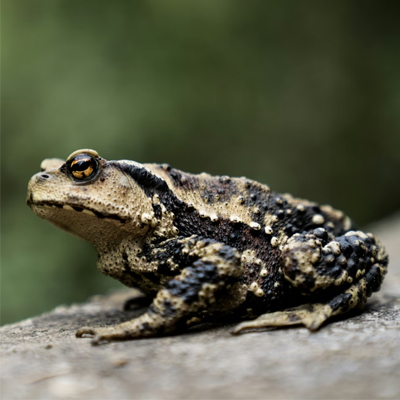
Toad, toad, why did you come to my house?

0
2025. 11. 28
"Hey Toad, hey Toad, I'll give you my old house, give me a new one."
I don't remember all the lyrics, but it feels like only yesterday that I played, calling out to the toad and firmly building a sandcastle on the back of my hand, not even noticing the sun setting. But it's time to admit the limits and errors of human memory. The following lyrics are,
"Hey Toad, hey Toad, fetch water, I'll build you a house. Hey Toad, hey Toad, your house is on fire, come with a pitchfork."
It's a bit strange, but we were young, so we could memorize anything and sing along. Modern Koreans who interpret this song as originating from observing toads that detect natural disasters are a distorted self-assessment of a forced Korean society that has been massaged with memories of colonial rule, dictatorship, and state corruption, a squalid destruction of humanity. Upright and graceful minds are riddled with grotesque and low-quality simplicity, and both children and adults are gradually losing their humanity.
The following lyrics are the development of a deal in which a toad takes over an old house from someone and is offered a new house. Even a toad wouldn't be bad at calculating. Perhaps the toad was deceived by someone and gave up the long-standing home of his ancestors to strangers. Their new house may only be a new house in name, and a cramped house like a shack.
I didn't think about it and played. Why would they ask the toad, who lives in the meadow or by the water, to leave to fetch water and offer to build a new house in the meantime? This time, they throw "Your house is on fire" at the toad who doesn't budge. Since the house they lived in is on fire, they can't keep their butts stuck there. Next, they tell them to follow with a pitchfork, a rake used to level the ground. They set the fire and it's all burned down, so they plan to demolish the burned area and cultivate new land. This is a complete toad deception tactic.
Our genes, ingrained with the words deception, agitation, and brainwashing, have indirectly created songs about the circumstances of having our possessions forcibly taken away and given to others, so the reason why the lyrics of this song cannot be cheerful and bright lies in this historical background. However, not a single media outlet confidently rebukes our sick society, where this sad history remains in children's games. In a world where merely mentioning the colonial era brands you as a leftist, pro-communist, or red, the absurdity of perceiving others with a censored identity is repeated through success and advancement, continuing the toad game through generations.
Regardless of who the construction entity is, the toad caught in the house does not appear as a benevolent creature. The toad, deceived by its naivety, may have resented the overthrow of the system and been their hidden toad worker, diligently moving the pitchfork for reclamation. In times of revolution, everyone is both a victim and a perpetrator. Creatures in a time of war who cannot distinguish between reality and fact are all unhappy. Koreans did not suddenly have their homes taken away one day. It has been gradually eaten away little by little over a very long period. It is a war accompanied by scholarship, religion, art, and literature. This centuries-long toad deception has transcended time and space to reach the modern era, mocking the ignorance of Koreans who still do not recognize themselves reflected as a toad in the shop window.
Born in 1901 in Heukseong-ri, Gwacheon, Gyeonggi Province, the phrase "Dukkeop-a, Dukkeop-a" that appeared in the 1935 novel "Sangnoksu" by writer Shim Hun is the lyrics of a song sung by the protagonist Young-shin, recalling her childhood. It became known to the world with the scene "Dukkeop-a, Dukkeop-a, I'll give you an old house and you give me a new house" while building a castle with sand. Children of that era, who grew up watching adults offering devotions, played by building altars with shards of glass and pebbles and building castles with sand. These days, children may go to motels, destroy other people's families, and play games of violence and betrayal. Choi Yong-shin, known as the real-life protagonist of Young-shin, was born in Dunam-ri, Hamgyeongnam-do, a port city that was developed earlier than Wonsan. She was a female rural enlightenment activist and anti-Japanese activist who became aware early on of her father's passion for education, believing that education was the only way to save the country. However, after only three months of studying in Japan, she returned home due to illness and passed away in 1935, one year before Shim Hun, at the young age of 25 in Saemgol, now known as Suwon, without even reaching her hometown.
The unfortunate people born in the 20th century, especially intellectuals, were hungry, sick, and had short lives due to severe illnesses. There were countless lives who deliberately became disabled because they could not live with a sound mind. That was the case with Sowol Kim Jeong-sik (金廷湜, 1902~1934). He became mentally ill after being hit in the head by the Japanese, endured the pain with opium, and died young at the age of 33. Poet Yi Sang (李箱, 1910~1937) and poet Yun Dong-ju (尹東柱, 1917~1945) also passed away in the same way. Nowadays, people use drugs for different reasons, but a hundred years ago, those with a humanity that made betrayal and defection difficult because the country was ruined either committed suicide or pretended to be crazy and spent a short life. Many commoners became rich by betraying the nation, but the noblemen died on the front lines, but were branded as traitors by ignorant defectors. If you think about whether intellectuals were needed under colonial rule, the answer comes out.
Soil is the nourishment of all breathing life that grows with its feet on the ground. The souls who used to handle the soil of that land created each heartbreaking scene of the massacre likened to a toad in such precious lyrics, but the spirit of that people is wandering around in the afterlife after being sacrificed like this. If you doubt whether the toad's metaphor is the destroyed Joseon people or the native Japanese pirates who shared a boat with pro-Japanese factions, let's listen to "Why did you come to my house."
"Why did you come to my house?
Why did you come to my house, why, why, why?
I came to find flowers, came, came, came.
What kind of flower did you come to find, did you come to find?
I came to find such-and-such flower, I came, I came
Rock, paper, scissors”
The humiliation of this game is that if you are not chosen by the other side, you always just sing and have no special mobility, and victory lies with the side that takes all the flowers with rock-paper-scissors. It's like being a servant who dresses up to make the main character shine, with friends and foes reversed. The content of the game is shocking, as the main characters are children being sold as prostitutes.
The origin of this game is clear. It is one of the Japanese nursery rhymes, ‘Hana Ichimonme (花一匁)’. The Chinese character 匁 (monme) is a Chinese character created by Japan, and it is a unit of weight corresponding to our jeon (錢), and a currency unit of silver (銀). One silver monme is about 20,000 won in current value, and the Chinese character 花 (flower), which corresponds to a flower, is slang for a young girl or prostitute. This nursery rhyme was popular in the early Showa era of Japan, around 1925, when Japan was openly hunting humans in China. The Edo period, when silver was Japan's key currency, is a past that we cannot even imagine now, but the custom of trading daughters with the currency unit of that time remained as a song until modern times. It is the power of a formidable oral tradition.
In 2019, the Korean Ministry of Education investigated this song and concluded that the suspicion that 'Why Did You Come to My House' originated from the Japanese children's song Hana Ichimonme (花一匁) was not true. This was to block the public sentiment of associating children's songs with comfort women and human trafficking. However, in 2021, the Yeongi Local History Museum and Danon Nol-i raised objections and submitted research papers, ultimately confirming that the game originated in Japan.
During the forced occupation of imperialist Japan, the recruitment of comfort women was a clear historical fact that was consistently advertised in various newspapers. However, even then and now, criticizing the Japanese colonial period tends to be taboo, as if committing a great sin, and there are psychological and political factors in the forced interpretation of Koreans suppressing the shameful past. The first is the need to hide the fact that human trafficking and comfort women recruitment were illegal acts. The newspapers that carried the advertisements were pro-Japanese colonial media, and the sentiment of war that sold children as sex-entertaining prostitutes should not be connected to modern society as much as possible. Because the power at that time is still power now, destroying the cartel is absolutely disadvantageous to the vested interests. That's why New Right ideology and Libax School exist.
Second, there is the issue of comfort women recruitment advertisements and the places where human trafficking took place. Were only women who saw the official newspaper advertisements and went there selected as comfort women? Absolutely not. Women from Joseon, China, Manchuria, Japan, Southeast Asia, and even Westerners in Southeast Asia were all dragged into becoming comfort women for the Japanese military. This issue of placeness goes beyond limited knowledge of the territory of Joseon. A power that betrays history cannot withstand the repercussions of spatial expansion becoming larger and more blatant.
It goes without saying that "Why Did You Come to My House?" is a Japanese imperialist nursery rhyme. At that time, many Japanese nursery rhymes contained sexually suggestive and cruel content that was difficult to even mention. It's almost startling to see what kind of emotions the Japanese used to raise their children. The children of the empire were raised as comfort women, soldiers, policemen, and judges. Among them were Joseon people disguised as Japanese, and after liberation, Japanese seeds who bought Joseon family registers and settled down are still living as vested interests in the country.
Why do we reject the fact that Japan, which had its civilization bloom with the upheaval of the universe, struggled with the revolution of moving away from Asia and getting closer to Western Europe, while actually selling children as laborers and prostitutes? Like a shimmering haze rising up, shouldn't we wake up from the hypnotic "Red Sun" that has been applied to the entire Korean society, as if a toad suddenly woke up from hibernation and regained its senses?
Even if I want to end it, I can't. Finally, I dedicate 심훈's poem to the readers.
When that day comes, when that day comes,
삼각산(三角山) will rise and dance with joy
The day when the Han River overturns and gushes forth
If only it would come before this life is cut short
I, like a crow flying in the night sky
Would strike the Jongno bell with my head and make it ring.
Even if my skull is shattered into pieces
I would die happily, so what regret would remain?
When that day comes, oh, when that day comes
Even if I cry, run, and roll on the wide road in front of 육조(六曹)
If my heart feels like it's bursting with overflowing joy
I would take a knife and peel off the skin of this body
I will make a large drum, carry it on my back,
and lead your procession.[6]
If I could just hear its resounding sound even once,
I would close my eyes even if I fell over right there.
When that day comes, 1930
댓글
( 0 / 500 )
jung1004
10
어린이 놀이 하나까지 식민의 그림자가 드리워져 있었다는 사실을 이제야 직시하게 됩니다. 우리가 무심코 흥얼거리던 노래들이 이렇게 무거운 역사적 의미를 품고 있었다니 충격입니다.
( 0 / 500 )
maria
9
이런 끔찍한 역사를 아이들 놀이에까지 숨겨놓고도 지금까지 아무도 제대로 책임지지 않았다니, 진짜 분노가 치밀어 오른다. 왜곡하고 덮어버리기만 하는 이 나라의 ‘기억 정치’가 가장 역겹다.
( 0 / 500 )
hansansoo
6
‘우리 집에 왜 왔니’가 일본의 ‘하나이치몬메’에서 유래했다는 연구결과는 알고 있었지만, 그 배경을 이렇게 생생하게 풀어낸 글은 처음 봅니다. 잊지 말아야 할 역사란 이런 것이겠죠.
( 0 / 500 )
風雲兒
7
어린이 노래 속에 숨어 있던 폭력의 전통을 이렇게 직설적으로 드러낸 글은 처음입니다. 이제는 순진한 향수로 포장된 기억들을 다시 뜯어볼 때인 것 같습니다.
( 0 / 500 )
big_brother
6
두꺼비를 속여 집을 빼앗는 장면을 지금 한국 사회의 현상과 연결시키는 부분이 특히 날카롭네요. 역사적 기만이 현대의 기만과 다르지 않다는 말, 뼈아팠습니다. 아이들 노래 하나까지 더럽히고, 인간의 삶과 기억까지 송두리째 짓밟아버린 게 일제였다니… 생각할수록 피가 거꾸로 솟네요.
( 0 / 500 )
grand_k
4
지식인 죽이고, 아이들 팔아넘기고, 정신까지 식민지화한 제국주의 일본을 미화하려는 세력들이 지금도 존재한다는 게 더 분노가 치민다. 우리에게 남긴 상처를 생각하면 일제는 영원히 용서할 수 없다.
( 0 / 500 )
아리
5
두꺼비 놀이가 단순한 동요가 아니라 기만과 약탈의 은유라는 해석이 강렬합니다. ‘레드 썬’ 같던 사회적 최면에서 깨어나야 한다는 마지막 경고가 오래 남네요. 이렇게 교묘하게 우리 정신을 훼손한 게 가장 치가 떨립니다
( 0 / 500 )
madness
4
‘쇼윈도에 비친 두꺼비가 자신인 줄도 모르는 한국인’이라는 표현이 잊히지 않네요. 현실을 외면하고 살아가는 우리의 모습이 너무 정확해 섬뜩했습니다.
( 0 / 500 )
Oh YoungOlivier
4
출애굽기의 40년처럼, 식민 잔재와 노예 의식을 완전히 벗어나는 것은 단 한 번의 혁명이 아니라 세대와 세대를 잇는 지속적인 성찰과 투쟁이 있어야 되지 않을까요?
이는 역사적 진실을 감추지 않고, 교육을 통해 정의를 구현하며, 개개인의 지적, 도덕적 주체성을 확립하는 '의식의 광야'를 끊임없이 걷는 투쟁 과정이 요구되고 있지요.
( 0 / 500 )
sunmin
2
교육부가 진실을 덮으려 했다는 대목에서 한숨이 나옵니다. 역사를 바로잡겠다면서도 불편한 사실 앞에서는 눈을 감으니, 기만은 지금도 계속되고 있군요.
( 0 / 500 )
李秀
2
놀이의 주인공이 사실은 팔려가는 아이들이었다니, 전통이라는 이름으로 우리가 얼마나 잔혹한 과거를 미화하며 살아왔는지 새삼 깨닫게 됩니다. 나라를 빼앗고 사람들을 끌고 가고, 심지어 어린애들 놀이까지 인신매매 은유로 더럽혀 놓았다니 일제가 저지른 죄악은 끝이 없습니다. 분노를 넘어 역겨움이 느껴진지는건 저만일까요?
( 0 / 500 )
조기호
1
소름 돋네요. 어릴 때 아무 생각 없이 불렀던 동요들이 이런 아픈 역사를 담고 있었다니...
( 0 / 500 )
弘益人間
2
우리가 얼마나 많은 걸 모르고, 아니 모르려고 살아왔는지 돌아보게 됩니다. 과거를 제대로 직시하지 못하면 미래도 없다는 걸 새삼 깨닫네요.
( 0 / 500 )
신고내용
신고내용을 선택해주세요
회원비난/비하/욕설글 및 댓글도배성 게시물저작권 침해/불법자료 유출허위사실유포개인정보 유출.사생활 침해무단광고/홍보음란물 및 도박 불법 광고물범죄행위 관련 글불법행위 관련 소개물품 판매 및 사기글악성코드 및 스파이웨어 유포기타 사유 및 운영진 판단


비밀번호를 잊으셨나요?
Sign in with Google
All information provided by us is free of charge and is for the public good.