品

Corea든 Korea든, 품격이 먼저다
Whether Corea or Korea, dignity comes first.
Whether Corea or Korea, dignity comes first.
Now
지금
751 Diaspora
Heritage
유산
Humanity
인문
Mirengsi
未冷尸
Politics
정치
Media
언론

小說
칼럼
bunny365
Leaving Asia Theory: Has Japan Truly Escaped Asia?

0
2025. 09. 11
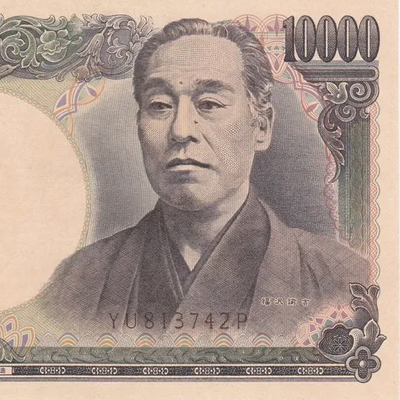
Fukuzawa Yukichi (福澤諭吉, 1835-1901), who first appeared on the 10,000 yen bill, the highest denomination of Japanese banknotes, in 1984 and has been on it for 40 years, is one of the symbols of modern Japanese intellectuals and is a modern figure mainly studied in Korea in metaphysics such as Western modern philosophy and pedagogy.
However, not many people know that one of the reasons why his portrait was selected for Japanese banknotes is that he was handsome in terms of aesthetics. The fact that the standard of beauty of internationalized Japanese people is laid at the very bottom of the enlightenment thought of Japanese people, and that the admiration for surprisingly simple external handsome men and beautiful women was a fantasy of Westernization at the base of modern Japanese thought, can be a perspective for Asians looking at modernity.
In that sense, I would like to suggest some implications for modern Koreans' impressions of Japan through the article 'Datsu-A Ron (脫亞論),' or On 脱亜論, known to have been written by him, which aimed for a Japan and Japanese people that had left Asia. First of all, 'Datsu-A Ron' is an article published in the March 16, 1885 issue of the newspaper 'Jiji Shinpo,' and originally there was no signature indicating who wrote it. In 1933, about 30 years after Fukuzawa's death, this Datsu-A Ron was included in the second volume of 'Fukuzawa Complete Works Sequel' edited by Ishikawa Kanmei (石河幹明, 1859-1943), then editor-in-chief of the Shisa Shinpo, and since then, Datsu-A Ron has been regarded as written by Fukuzawa.
Like most Japanese intellectuals who sympathized with the Western demands for reform and opening, Fukuzawa diligently traveled to Europe and the United States, and in 1868, he transformed the existing Western studies institute, Rangaku, into Keio Gijuku, leaving him as the person who created the predecessor of today's Keio University. Keio is the era name immediately before the Meiji era, from 1865 to 1868 when the Meiji Restoration began, a period when the usurpation of Asian civilization and the destruction of tradition continued, or conversely, it symbolizes a revolutionary era in which new changes occurred. At the intersection of that destruction and creation, Fukuzawa created Keio University, and then in 1882, he even created a newspaper called Shisa Shinpo, which published the Datsu-A Ron manuscript, creating a huge media power, education, and ideology, and the power that grew Japan. Moreover, with his handsome image, he added to the image of a proud Japanese person in the international community.
However, the intention to naturally explain the necessity of establishing a parliament and a government-sponsored newspaper for shaping public opinion, which are the foundations of modern Japanese politics underlying the establishment of the Sisa Shinbo, seems to be an unreasonable setting for Fukuzawa to solely claim modernity. In the midst of the downfall of early politicians around 1880 and the successive emergence of new figures, it is impossible to fully understand the hidden meaning of Datsu-A Ron with only the image that excludes the political aspect of how Fukuzawa survived politically and came to represent modern Japan in terms of education or thought in later generations. Considering the subsequent flow of international affairs, Fukuzawa's symbolism of establishing Western educational institutions and launching public relations newspapers, which preceded the Meiji Restoration, cannot hide the unnaturalness of the unfolding of world history, which modern Koreans are completely unaware of, being described with a focus on a small number of figures.
Hirayama Yo (平山洋, 1961~), a postwar Japanese historian, analyzed that no literature mentioning De-Asianization theory was found before the defeat, and the first literature was 'The Sino-Japanese War and Yukichi Fukuzawa' published by historian Shigeki Toyama (遠山茂樹, 1914~2011) in November 1951. Therefore, it was even later in the late 1960s that the theory of De-Asianization became known to the general public and became famous. The meaning of this is that postwar Japan inflated the image of Yukichi Fukuzawa in order to beautify the image of the former colonial empire of Japan for political and social unity and external 'face' during a period of rapid economic growth. There is no generation of Japanese war that does not know that the driving force behind Japan's postwar economic development was the 6.25 War, which solidified the division of the Korean Peninsula, and the development of the Vietnam War munitions industry. It means that there is no Japanese war generation that does not know that Japan became rich even after the defeat thanks to the cutting of Korea's waist and the numerous killings caused by Korean veterans.
However, there are not many elderly Japanese people who openly talk about this fact in front of Koreans. The development of modern history, where someone has to die for me to live, is thanks to the training they have received to not mention 'race' or 'ethnicity'. Slaughter and genocide were clearly committed, but education and scholarship have been used as mechanisms to block those words. It is a contradiction and limitation of humanity. The content of the 脱亜論 (Datsu-A Ron, "Leaving Asia" theory), which is about 6 sheets of 400-character manuscript paper, is an even greater contradiction. While discussing whether Japan should leave Asia or not, the gist of the article is the argument that Joseon (Korea) must perish. If Fukuzawa wrote it as it is known, he argues that the spread of Western civilization is like the spread of measles, and instead of preventing it, he argues that 'it is important to help the prevalence of Westernization and to quickly immerse the people in that spirit'.
In that respect, Japan praised itself as 'having embraced Western civilization, not only breaking away from Japan's old customs alone, but also becoming a new axis in all of Asia, breaking away from Asian values. In other words, it is the only country that has achieved De-Asianization.' However, since this article was published in a newspaper in 1885, there are physical and temporal limitations to seeing it as having completely achieved De-Asianization. We need to think about why such direct and strong expressions were possible. The Current Affairs Review was one of the newspapers published in Tokyo at the time, and considering the characteristics of the time when newspapers with completely different names were published in Osaka and Tokyo when viewed as a national area, it is too early to discuss Japanese integration or De-Asianization, but on the contrary, there is an ambivalence that can be considered.
In addition, he predicted that it was unfortunate that Qing and Joseon were neighbors, and that it would be difficult to maintain independence due to the trend of Western勢東漸 (Western powers encroaching on the East) because the two countries refused modernization and were only focused on outdated systems such as Confucianism, and that they would perish and be divided within a few years from now. At the same time, he praises the Gapsin Coup. However, one of the characteristics of Japanese historical descriptions is that if Japan's harsh criticism is interpreted as the autonomous behavior of the Korean people, and Japan's favorable comments are interpreted as strategic evaluations that are different from or contrary to the facts, it will be closer to the truth. Of course, this is a very subjective evaluation criterion. Originally, as a descendant of a nation that was subjected to colonial rule, complying with the records of the perpetrator is an error in the historical view that violates the academic spirit, but it is an inevitable reality that it is a major trend. In order to overcome this erroneous reality, interpreting the opposite of what Japanese history describes is seen as a trick to reading this 脱亜論 (Datsu-A Ron - argument for leaving Asia).
Leaving Asia Theory
The world's transportation routes have become convenient, and the wind of Western civilization is heading east, and there is no place where plants and trees do not lie down in this wind wherever it goes. Western figures are not much different now than they were in the past, but the reason why their activities were slow in the past and are active now is only because they take advantage of the momentum by using transportation. Therefore, recently, if we think about the people who have countries in the East, it is good to resist the momentum of this civilization advancing to the East and be prepared to stop it. However, there is no other way but to go up and down the sea of civilization together according to the changes in the world, ride the waves of civilization, and share the joys and sorrows of civilization. Civilization is like the epidemic of measles and chickenpox. Currently, measles in Tokyo is spreading from Nagasaki in the western region to the east, gradually spreading with the warm spring air. At this time, even if you hate the harm of the epidemic and try to prevent it, will there really be a way? The author guarantees that there is absolutely no way. Even an epidemic that is entirely harmful cannot resist its momentum. Moreover, civilization, which has both benefits and harms and always has more benefits, is even more so. It is the task of intellectuals not only not to prevent this, but also to help its spread and to quickly imbue the people with its spirit.
Modern Western civilization entered our country, Japan, with the opening of the country in the Kaei era as its starting point. The people finally realized that they had to adopt it, and a gradually vibrant spirit arose, but there was the shogunate, an old waste product blocking the path of progress, and there was nothing they could do about it. If you try to preserve the shogunate, civilization can never enter. Because modern civilization is incompatible with Japan's old system, and if the old system is reformed, the shogunate will be destroyed at the same time. However, if they tried to block civilization and prevent its invasion, Japan's independence could not be maintained. Because the chaotic state of world civilization did not allow the isolated island of the Orient to sleep. Therefore, the leaders of our country, Japan, based on the great cause of valuing the country and belittling the shogunate, and fortunately relying on the dignity of the sacred imperial family, resolutely overthrew the old shogunate and established a new government. Without distinction between the government and the private sector, the whole country adopted Western modern civilization in all matters, and only reformed Japan's old laws. Throughout Asia, the only thing that establishes a new axis and makes it a principle is the two letters of "脱亜" (Datsu-A, "Leaving Asia").
Our country, Japan, is located at the eastern end of Asia, but the spirit of its people has already escaped the old customs of Asia and is moving towards Western civilization. However, what is unfortunate here is that there are neighboring countries, one called China (支那) and the other called Korea (朝鮮). The people of these two countries, like the people of our country, Japan, have been raised in Asian-style politics, religion, and customs since ancient times. However, whether it is because of the special origin of the race, or because there is a difference in inherited education while being in the same politics, religion, and customs, if Japan, China, and Korea are placed side by side, China and Korea are much more similar compared to Japan. The people of these two countries do not know the path of reform or progress, either for themselves or for their countries. In a world where transportation is convenient, they cannot help but see and hear the things of civilization, but the knowledge of their ears and eyes does not move their hearts, and their clinging to old habits is the same as it was a thousand years ago. Currently, in the arena of civilization that is being renewed every day, when discussing education, they say it is Confucianism, and what should be taught in schools is benevolence, righteousness, propriety, and wisdom, and from beginning to end, they are only obsessed with outward formalities, and in reality, they cannot distinguish between truth and principle. Moreover, morality has disappeared as if sweeping the ground, and cruelty and shamelessness have reached their extreme, and they seem to be arrogantly unaware of their own faults. When I look at these two countries, in the current situation of civilization advancing eastward, there is no way to maintain independence. Fortunately, if a patriot appears in the country and seeks a major reform of the government, like our Meiji Restoration, as the beginning of the country's enlightenment and progress, and there is activity to reform politics and at the same time renew the people's hearts, that is another matter. If that is not the case, there is no doubt that it will become a ruined country in a few years and its territory will be divided into the civilized empires of the world. This is because, while encountering the epidemic of civilization and enlightenment like measles, both China and Korea turn their backs on the natural law of infection, forcibly try to avoid it by confining themselves indoors, blocking the circulation of air, and suffocating. 'Lips and teeth support each other' is a metaphor for neighboring countries helping each other, but the current China and Korea are of no help to our country, Japan, even as much as a strand of hair. Moreover, in the eyes of Western civilized people, because the three countries are geographically close, they sometimes equate the three countries and judge our country, Japan, by the evaluation of China and Korea. For example, if the governments of China and Korea are as autocratic as before and the laws are unreliable, Westerners will suspect that Japan is also a country without laws. If the people of China are deeply immersed in superstition and do not know anything about science, Western scholars will think that Japan is also a country of yin-yang and the five elements. If the Chinese are humble and do not know shame, the chivalry of the Japanese will be buried in its shadow, and if there are cruel punishments in Korea, the Japanese will also be presumed to be ruthless. If you count the examples, you can't count them all. To use an analogy, when the people in a village or neighborhood with houses lined up are foolish, lawless, and moreover cruel and ruthless, even if someone in a certain house in that village tries to act justly, it is buried in the misdeeds of others. The fact that this influence is actually appearing and indirectly becoming an obstacle to our country's diplomacy is truly not small, and it must be said to be a great misfortune for our country, Japan.
Therefore, considering the current strategy, our country cannot afford to wait for the neighboring country to rename itself and develop Asia together. Rather, we must break away from that group, move forward with the civilized countries of the West, and when approaching Joseon, we should treat it just as Westerners do, without any special consideration for it as a neighboring country. He who keeps company with bad friends will not escape a bad reputation. I, in my heart, am rejecting the bad friends of East Asia.
On Datsu-A (Leaving Asia) (Showa Edition, "Fukuzawa Complete Works Continued" version)
With the paths of global transportation becoming convenient and the winds of Western civilization gradually reaching the East, there is not a blade of grass or a tree that does not bend to this wind. It is not that Westerners are greatly different from those of ancient times, but their actions, once slow and dull, are now lively and vigorous, simply because they take advantage of the convenient tools of transportation and ride the momentum. Therefore, when considering what is best for those governing countries in the Orient today, if they are resolved to resist and completely prevent this eastward advance of civilization, that may be acceptable. However, those who observe the current state of the world and understand that it is impossible in reality have no choice but to move with the times, float or sink together in the sea of civilization, raise the waves of civilization together, and share in the joys and sorrows of civilization. Civilization is like the spread of measles. Currently, measles in Tokyo are spreading eastward from the Nagasaki region in the west, gradually蔓延 with the warmth of spring. At this time, even if one hates the harm of this epidemic and tries to prevent it, can one really do so? We斷じてcertify that there is no such method. Even with a流行病epidemic that is entirely harmful, one should not resist its momentum. How much more so with civilization, which brings both advantages and disadvantages but always offers more benefits? Not only should one not prevent it, but one should strive to help its蔓延spread and allow the people to quickly bathe in its atmosphere. This is what a wise person should do. The recent civilization of the West entered Japan with the opening of the country in the Kaei era as its starting point, and the people gradually learned what to adopt and gradually developed a lively spirit. However, the path of progress was blocked by the old-fashioned government, which could not be dealt with. If the government is to be preserved, civilization can never enter. This is because recent civilization cannot coexist with Japan's old ways, and if the old ways are abandoned, the government will also perish at the same time. If one tries to prevent civilization and stop its invasion, Japan cannot be independent. This is because the喧嘩繁劇bustle and hustle of world civilization will not allow the isolated island of the Orient to sleep alone. Therefore, based on the great cause of valuing the country and belittling the government, and relying on the sacred and inviolable nature of the Imperial Family, the samurai of Japan resolutely overthrew the old government and established a new government. Without distinction between the court and the common people, the entire nation adopted the recent civilization of the West, not only abandoning Japan's old ways but also establishing a new axis in all of Asia. The principle we uphold lies solely in the two characters of Datsu-A (脫亞Leaving Asia).
Although my Japanese homeland is located on the eastern edge of Asia, the spirit of its people has already escaped the stubbornness of Asia and moved to Western civilization. However, unfortunately, there are countries in the neighborhood, one called China and the other called Korea. The people of these two countries have also been nurtured in the politics, religion, customs, and manners of the Asian style since ancient times, not different from us Japanese people, although their origins are different, or perhaps there is something in the same politics, religion, customs, and manners that is not the same in the spirit of hereditary education. The states of China, Japan and Korea are relatively similar, and the state of China and Korea is closer than Japan, and these two countries do not know the way of reform in themselves or in their countries, and they have not heard or seen the things of civilization in this age of convenient transportation, but the hearing and seeing of the ears and eyes is not enough to move their hearts, and their feelings of attachment to their old customs and habits are no different from those of a hundred or a thousand years ago. If we discuss education in this lively theater of civilization and daily renewal, we call it Confucianism, and the school's teachings are called benevolence, righteousness, courtesy, and wisdom, and from one to ten, we only deal with outward embellishments, and in reality, we not only lack knowledge of truth and principles, but even morality sweeps the ground, and we go to the extreme of cruelty and shamelessness, and we are still arrogant and have no sense of self-reflection. If we look at these two countries, it is impossible for them to maintain their independence in the face of the current trend of Eastern civilization. Fortunately, if patriots appear in those countries and, as a first step in opening up national affairs, undertake a major reform of their governments, such as our Restoration, and first reform politics and renew the minds of the people, that would be exceptional, but if that is not the case, in a few years they will become ruined countries, and their territories will be divided among the civilized countries of the world, and there is no doubt about that. This is because, while suffering from the epidemic of civilization and enlightenment, which is similar to measles, China and Korea are resisting their natural infection and trying to avoid it by closing themselves in a room and cutting off the circulation of air, thus suffocating themselves. Helping each other like cart and lips and teeth is a metaphor for neighboring countries, but the current China and Korea are not only of no help to our Japan, but also, from the perspective of Western civilized people, the three countries are sometimes regarded as the same because of their geographical proximity, and it is not without meaning that they judge our Japan by the price of evaluating China and Korea. For example, if the governments of China and Korea are old-fashioned and despotic and there are no laws to rely on, Westerners will suspect that Japan is also a country without laws; if the scholars of China and Korea are deeply deluded and do not know what science is, Western scholars will think that Japan is also a country of Yin-Yang and the Five Elements; if the Chinese are humble and do not know shame, the chivalry of the Japanese will be obscured by this; and if there is cruelty in punishing people in Korea, it will be presumed that the Japanese are also ruthless. If we count these examples, there is no time to enumerate them all. To give an analogy, when the people in a village or town where houses are lined up next to each other are foolish, lawless, and yet cruel and heartless, even if one family in that town pays attention to proper personnel matters, it will be obscured and buried by the ugliness of the others. The fact that this influence manifests itself and indirectly causes problems in our diplomacy is truly not insignificant and can be said to be a great misfortune for our Japan. Therefore, in planning for today, our country should not hesitate to wait for the enlightenment of neighboring countries and revive Asia together. Rather, it should break away from their ranks and advance and retreat together with the civilized countries of the West, and the way to deal with China and Korea should not be based on special interpretations simply because they are neighboring countries, but should be dealt with in the same way that Westerners deal with them. Those who associate with bad friends cannot escape bad names together. I reject the bad friends of Eastern Asia in my heart. (March 16, 1885)
댓글
( 0 / 500 )
byoungkook
6
역시 탈아론은 일본 제국주의의 사상적 뿌리를 보여주는 대표적인 글이네요. 조선을 문명화해야 한다는 논리는 결국 침략의 정당화였던 셈이죠.
( 0 / 500 )
hyuksoo
9
흥미로운 건 후쿠자와 본인이 직접 썼는지조차 불확실하다는 점입니다. 결국 ‘전후 일본’이 필요해서 후쿠자와의 이름을 붙이고 과장한 것일지도 모르겠네요.
( 0 / 500 )
papaHAN
7
문명개화를 전염병에 비유한 건 참 기묘합니다. 시대착오적일 수 있지만 당시로서는 서양화가 ‘피할 수 없는 운명’이라고 본 거겠죠.
( 0 / 500 )
李秀
8
탈아론을 보면 일본이 조선을 ‘발전이 불가능한 나라’로 규정하고 손절하는 듯하지만, 실제로는 침략하기 위해 그렇게 규정한 거죠. 냉정하게 계산된 담론입니다.
( 0 / 500 )
puma
4
일본 근대화에 대해 많은 것을 알게 되었네요. ^^
( 0 / 500 )
Montmartre
8
지금 와서 보면 ‘조선이 근대화를 못해서 망했다’라는 자기 합리화 프레임의 원형 같네요. 패자의 기록을 그대로 받아들이면 안 된다는 지적에 공감합니다.
( 0 / 500 )
expressK
6
청과 조선을 무능하고 낡은 나라로 묘사하면서, 일본을 서양과 나란히 세우려는 정치적 선전물 그 이상도 이하도 아닌 듯합니다.
( 0 / 500 )
monalisa
7
후쿠자와가 만든 게이오 대학이나 시사신보 같은 기관들이 일본 근대화를 상징한다는 점은 인정해야겠지만, 그 기반이 아시아 멸시 위에 세워졌다는 건 부정할 수 없네요.
( 0 / 500 )
호동왕자
6
읽다 보니 결국 이 논리 구조는 지금도 일본 우익 담론에 그대로 살아있다는 생각이 듭니다. 한국과 중국을 ‘민주주의가 안 되는 나라’로 비하하면서 자기 우월을 주장하는 모습 말이죠.
( 0 / 500 )
Poseidon
3
전후 일본이 탈아론을 다시 끄집어내서 ‘일본은 아시아와 다르다’는 이미지를 부각시킨 맥락이 흥미롭습니다. 경제 성장기의 자기 정당화였군요.
( 0 / 500 )
최유미
3
일본은 서양인과의 혼혈로 민족 세탁을 하고 싶어했어요. 나치가 독일청년과 북유럽 여성 사이에 혼혈로 금발의 파란 눈의 민족 세탁을 하고 싶어한 것처럼요.
( 0 / 500 )
신고내용
신고내용을 선택해주세요
회원비난/비하/욕설글 및 댓글도배성 게시물저작권 침해/불법자료 유출허위사실유포개인정보 유출.사생활 침해무단광고/홍보음란물 및 도박 불법 광고물범죄행위 관련 글불법행위 관련 소개물품 판매 및 사기글악성코드 및 스파이웨어 유포기타 사유 및 운영진 판단


비밀번호를 잊으셨나요?
Sign in with Google
All information provided by us is free of charge and is for the public good.