品

Corea든 Korea든, 품격이 먼저다
Whether Corea or Korea, dignity comes first.
Whether Corea or Korea, dignity comes first.
Now
지금
751 Diaspora
Heritage
유산
Humanity
인문
Mirengsi
未冷尸
Politics
정치
Media
언론
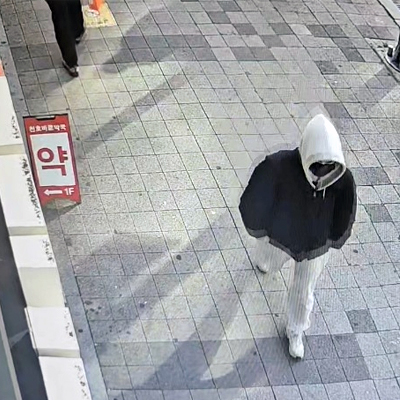
2026년 11월 19일 서울 강동구 천호동 한 모텔 객실에서 94년생 AI 부정행위 사기꾼 이진우가 자살했다는 뉴스가 떴다.

회고回顧/懷古
칼럼
Riz_au_curry
Confession 6. The Death of a Perfect LSAT Scorer

0
2026. 11. 21
- On the day of the 2026 Suneung, the suicide of Mr. Lee, known for his perfect LEET score, amidst AI cheating allegations, starkly exposed the intense competition and moral hazard in Korean society.
- His death goes beyond individual deviance, revealing systemic contradictions rooted in a pervasive desire for upward mobility and calculated attempts to circumvent rules, alongside the failure of systems to properly filter these issues.
- His choice to escape a disadvantageous situation through death was a selfish act by an individual devoid of guilt, interpreted as a tragic outcome of lost social empathy and rampant materialism.
- This incident coldly records an act that undermined exam fairness and social trust, warning that we must confront the moral vacuum in our competitive society and establish measures to prevent recurrence.
On November 19, 2026, while the Suneung exam was in full swing, news broke that Mr. Lee (rumored to have changed his name twice from Lee Tae-hoon to Lee Hee-chan and Lee Jin-woo), a 1994-born AI cheating scammer, committed suicide in a motel room in Cheonho-dong, Gangdong-gu, Seoul. It was expected. He was called a perfect scorer on the LEET (Legal Education Eligibility Test) for being the first in 19 years since its introduction to get all 30 questions in Language Comprehension and all 40 questions in Reasoning and Logic correct. He had also sold tens of thousands of copies of his self-help books. The world witnessed the foolishness of Koreans, whose ability to judge people is optimized for entrance exams, as they elevated a scammer. The flaws of a society that failed to filter out a scammer have now entered our daily lives.
Cracks in a competitive society and a moral void
At a similar time on the same day, news emerged that Korea had achieved 1 trillion dollars in exports. This makes it the fourth country in the world, following the United States, Germany, and China. It's a record that even the tiresome colonial ruler, Japan, failed to achieve. However, with the Suneung day suicide of a national exam cheater, the question arises: what kind of nation will Korean society, which failed to filter out this suspicious individual, become in the future, having produced humans obsessed with materialism in an exam-driven republic? Will it even survive as a nation? The government is now facing a situation where it must address all the negative consequences, including subsequent problems that will be discovered, rooting out past exam cheaters, and dealing with the aftermath, countermeasures, and side effects. First, given that Suneung cheating was foreseen, the actions of the incompetent and bizarre Minister of Education must be resolved with his resignation, and we must reflect on the structural contradiction where education itself invites crime.
He publicly declared that he would confront the cheating allegations head-on by solving the 2027 Suneung Korean language section in real-time for public verification, but he did not appear at the venue, and his cell phone had been turned off since the previous day. This incident does not end with the sudden death of an individual. His background dramatically illustrates how Korea's extreme competitive structure, desire for upward mobility, and calculated attempts to circumvent rules intersect. He himself revealed that he received 6th to 8th grades in all Suneung subjects in 2013 and only a 7th grade in Korean in the 2018 Suneung.
In June of that year, he was investigated by prosecutors on charges of exposing his genitals and performing obscene acts on an intercity bus. It was reported that other passengers witnessed this, but the case was concluded with a prosecutorial disposition of suspension of indictment. The law of the Republic of Korea covered up the tendencies of this act itself, which do not belong to the normal category, and it has continued to this day. It is no different from the life of an unqualified person who became a prosecutor general and then president in a country, only to initiate a state of emergency and end up in prison. It is no exaggeration to say that the Republic of Korea's future depends on whether incidents where various types of criminals, driven to extremes, threaten society's basic safety net will come first, or whether judicial reform to overhaul the judiciary will come first.
The period when he claimed his 'study brain awakened' after walking across the country for three weeks without a smartphone after a business failure was 2022, the same year he received a suspended sentence and actual prison time for an extortion case. He was reportedly incarcerated for about a year from May 2022 and released in 2023. During this period, he intentionally caused traffic accidents for three months and demanded settlement money, for which he received a fine and a suspended sentence. Seeing this person's crimes, I once again realize why adults used to say that a needle thief becomes an ox thief. It's equally pathetic for the older generation to have to classify young people, who are like their own children, as types of criminals based on their faces.
He was admitted to Korea University's Department of Political Science and International Relations through the 2024 Suneung, and then accepted into Seoul National University's Department of Dentistry with only one question wrong in Life Science II on the 2026 Suneung. From sex offender to extortionist, from admissions fraudster to publishing company CEO, lies beget lies; he even claimed to be attending Sungkyunkwan University while in the military. The universities he mentioned, through his own words, reveal a state of total national crisis, akin to the Shincheonji-tainted Democratic Party and the internal rebellion and corruption of the party of internal rebellion.
He packaged this dramatic turnaround into books and lectures, creating a narrative of 'analog awakening.' However, after he achieved a perfect score on the LSAT, suspicious traces were found on the exam paper he released. It was pointed out that the answers he initially marked and then erased from questions 25 to 29 matched the correct answers for the immediately preceding questions, 24 to 28. This was interpreted not as a mistake made while solving problems in order, but rather as evidence of having obtained the correct answers beforehand and then writing them down shifted by one space before correcting them. The suspicions quickly spread because it came right after the top scorer of the tax accountant exam confessed to cheating using AI. Practicing lawyers filed complaints on charges such as obstruction of official duties and obstruction of business, and the police assigned the case to the Financial Crime Investigation Team.
His AI cheating overlaps with his criminal record. He has a history of accumulated intentional traffic accidents (2021), and when a taxi driver asked him to get out due to low battery, he assaulted the driver and even the responding police officer, resulting in a 7 million won fine (2024). These are not one-time mistakes. He exposed his genitals in public, revealing a mental defect (2014, a country where a lawyer can open a practice in Seocho-dong, Seoul, despite a similar prior offense by Kim Soo-chang, Chief Prosecutor of Jeju District Prosecutors' Office), and built a criminal career through a repeated pattern of exploiting others' weaknesses for financial gain and confronting public authority. What has society done to allow someone with such a history to climb the highest academic ladder, achieving top scores at Korea University, Seoul National University, and the LSAT?
Reasons for choosing to cheat on a national exam
Public verification was his last card. He announced that he would prove fairness by mobilizing metal detectors, endoscopes, and radar, but he did not appear. If the verification had proceeded, the authenticity of his skills would have been revealed, and if cheating were confirmed, his Suneung and LEET scores would be invalidated, his admission to Seoul National University would be canceled, he would face criminal punishment, and the entire 'Awakening Study Brain' narrative he had built would collapse at once. With a prior criminal record, additional investigation was highly likely to lead to re-arrest. It is also significant that the memo found in the motel left only fatigue, not admission or apology. He felt no guilt for his crime. It seems to be an escape chosen under pressure that was no longer bearable. It is highly probable that it was a choice to avoid verification, avoid investigation, and avoid physical and mental fatigue, rather than fearing social stigma. Death became the completion of silence, not an explanation. He reached a point where he could no longer calculate in the face of pursuit by public authority and public opinion.
In Korean society, Suneung and LEET are not simple exams. They are public forums where effort and ability are proven, and almost the only official ladder for upward mobility. The narrative of a 32-year-old man with low past scores simultaneously achieving admission to Seoul National University Dental School and a perfect LEET score is a powerful success story. In the mid-2020s, when AI technology became commonplace, it is true that the calculation of 'I'm the only one who loses if I don't do it' spread among some test-takers. However, in his case, that calculation went beyond temptation. His criminal record shows that he already had experience distorting rules for personal gain. This is why it is suggested that the same logic—the act of securing answers in advance and filling them in to achieve a perfect score—may have operated in the exam room. He degraded the public value of fairness into an object of personal calculation on the ladder of upward mobility.
Anger at the moral insensitivity and loss of empathy of Ilbe men
Here, anger and surprise intersect. Some online young male cultures, referred to as Ilbe, have long repeated a rejection of empathy, cynicism, and the logic that 'the world is unfair anyway.' This logic often mocks the suffering of others and frames actions that circumvent rules as 'smart' or 'realistic.' His actions show in an extreme way how that culture can operate in reality. From extorting settlement money through intentional traffic accidents, assaulting police officers, leaving traces of answers on exam papers, then promising public verification before disappearing, there is no minimal sense of guilt for actions that harm others. There was no apology even in the memo that became his will. In a competitive society where upward mobility is extremely demanded, the sentiment that moral sense itself is considered a cost, and only one's own calculations remain in a state of lost empathy, goes beyond normal brain activity.
It's not just them who made this society that way. The collective atmosphere that mythologizes perfect exam scores, consumes dramatic comeback narratives, and says 'only I lose out' whenever AI cheating is exposed, is also an accomplice. It is natural to feel anger at the choice to climb a ladder believing one can succeed even by breaking rules, and then escaping through death when on the verge of being caught. That death is easily packaged as a self-immolation or protest against society. The memo at the suicide scene was not a language of protest but of fatigue and escape, and the scene where someone who broke order disappeared themselves from an order that became unfavorable to them, seems to be the result of only personal calculations remaining in a state of lost empathy. The interpretation that their dissatisfaction with the society they created was expressed as self-immolation is, rather, read as another form of shirking responsibility.
His death is regrettable. However, if his death obscures allegations of misconduct and a criminal record, and is dismissed with a single line stating he was 'exhausted,' then all that remains is a stark record of those who undermined the fairness of the examination and public trust. In an increasingly competitive society, maintaining a sense of morality is becoming more difficult. His case should serve as a warning of how far that difficulty can go. Between the sense of deprivation felt by those who played by the rules and failed, and the silence left by someone who circumvented the rules, society must choose which it will hold more accountable.
If the ladder of upward mobility can be achieved at the cost of abandoning fairness, then the efforts of countless people at the bottom of that ladder become meaningless. If the choice to break the rules, unable to endure that meaninglessness, is repeated, then the social order itself will slowly erode. His death merely dramatically exposed one point of that erosion. The remaining task is not to reduce that point to a personal tragedy, but to confront it as a problem of competitive structures and moral vacuum.
댓글
( 0 / 500 )
파란곰탱이
10
한 개인의 일탈로 치부하기에는 드러난 문제가 너무 많습니다. 시험의 공정성을 무너뜨린 행위도 문제지만, 검증되지 않은 성공 신화를 만들어내고 이를 무비판적으로 소비한 사회 역시 책임에서 자유로울 수 없습니다. 교육과 경쟁의 본질을 다시 생각해야 합니다.
( 0 / 500 )
정영무
8
노력보다 결과를 숭배하고 과정의 정당성보다 화려한 성공담에 열광하는 사회가 만들어낸 씁쓸한 단면입니다. 죽음은 안타깝지만, 그렇다고 부정행위 의혹과 그로 인해 훼손된 공정성까지 덮을 수는 없습니다.
( 0 / 500 )
2000ksh
6
이 사건의 핵심은 한 사람의 비극이 아니라 우리 사회의 도덕적 기준이 얼마나 허술해졌느냐는 데 있습니다. 학벌과 시험 성적 앞에서는 사람의 인격과 행적조차 제대로 살피지 않는 풍토부터 바꿔야 합니다.
( 0 / 500 )
polipoli
5
AI 시대에는 지식의 양보다 그것을 사용하는 사람의 윤리의식이 더욱 중요해집니다. 시험의 허점을 이용하는 능력을 실력으로 착각하고, 타인을 속이는 일을 영리함으로 포장한다면 교육이 사회를 바로 세우기는커녕 무너뜨리는 도구가 될 수도 있습니다.
( 0 / 500 )
남일준
5
이 글은 한 사건을 통해 한국 사회의 경쟁 만능주의와 도덕적 공백을 함께 짚고 있습니다. 다만 개인의 범죄 이력과 특정 온라인 문화 전체를 동일시하기보다는, 그런 행위를 용인하고 성공담으로 소비하는 사회적 구조를 더 엄중하게 돌아볼 필요가 있습니다. 죽음에 대한 최소한의 인간적 존엄과 부정행위에 대한 엄정한 평가는 별개의 문제입니다.
( 0 / 500 )
Phily
5
우리 사회가 언제부터 사람의 됨됨이보다 시험 점수와 학벌을 먼저 평가하게 되었는지 돌아봐야 합니다. 화려한 성공담에 열광하면서 그 과정의 진실을 확인하지 않는 사회라면 제2, 제3의 이런 사건은 언제든 반복될 수 있습니다.
( 0 / 500 )
kangnam
4
AI가 인간의 능력을 대신하는 시대일수록 인간에게 요구되는 것은 지식이 아니라 양심과 책임입니다. 아무리 뛰어난 지능을 가졌더라도 도덕적 기준이 무너지면 그 능력은 사회에 도움이 되기는커녕 위험한 도구가 될 수 있습니다.
( 0 / 500 )
백진철
4
한 사람의 죽음을 놓고 비난만 하는 것은 문제의 본질을 놓치는 일입니다. 그렇다고 죽음이 모든 책임과 의혹을 지워주는 것도 아닙니다. 사실은 사실대로 규명하고, 시험제도의 허점과 AI 부정행위 방지책, 성공만을 숭배하는 사회의 가치관까지 함께 점검해야 합니다.
( 0 / 500 )
나무77
3
우리 사회의 더 큰 문제는 범죄와 거짓으로 쌓아 올린 성공 신화가 대중에게 통했다는 사실입니다. 사람을 평가하는 기준이 성적과 학벌에 갇혀 있는 한 교육개혁도 공염불에 그칠 것입니다. 이제는 무엇을 가르칠 것인가보다 어떤 사람을 길러낼 것인가를 고민해야 합니다.
( 0 / 500 )
xp56
1
공정하게 경쟁한 사람들의 땀과 노력을 짓밟는 부정행위는 결코 개인의 요령이나 영리함으로 미화될 수 없습니다. 죽음은 안타깝지만, 공정한 사회를 지키기 위해 무엇을 바로잡아야 하는지는 분명히 해야 합니다.
( 0 / 500 )
신고내용
신고내용을 선택해주세요
회원비난/비하/욕설글 및 댓글도배성 게시물저작권 침해/불법자료 유출허위사실유포개인정보 유출.사생활 침해무단광고/홍보음란물 및 도박 불법 광고물범죄행위 관련 글불법행위 관련 소개물품 판매 및 사기글악성코드 및 스파이웨어 유포기타 사유 및 운영진 판단


비밀번호를 잊으셨나요?
Sign in with Google
All information provided by us is free of charge and is for the public good.