品

Corea든 Korea든, 품격이 먼저다
Whether Corea or Korea, dignity comes first.
Whether Corea or Korea, dignity comes first.
Now
지금
751 Diaspora
Heritage
유산
Humanity
인문
Mirengsi
未冷尸
Politics
정치
Media
언론
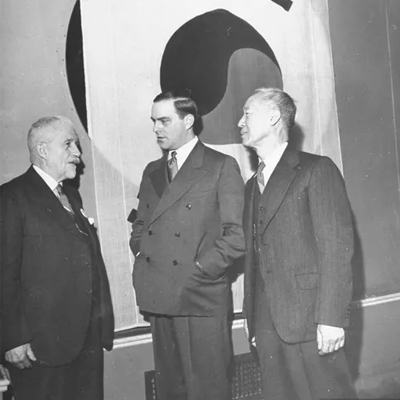
1942년, 워싱턴 D.C. 에서 열린 한인 자유 대회. 왼쪽부터 호머 헐버트, 아메리칸 대학교 총장 폴 더글라스 , 대한민국 임시정부 구미위원부 의장 이승만

회고回顧/懷古
칼럼
PinkPepper
Nostalgia 165. Those who block漢字 education are those who block the restoration of history.

0
2026. 11. 16
- The opposition movement against the promotion of Chinese character notation in elementary school textbooks is a contradictory argument, ignoring the reality of declining literacy and the proportion of Sino-Korean words, hiding behind the pretext of 'saving our language.'
- The exclusive use of Hangeul policy, linked to the colonial view of history during the Japanese colonial period, severed our unique historical record script, Hanmun, and distorted Koreans' historical awareness.
- The current literacy crisis and cultural confusion in Korean society are the result of the historical discontinuity caused by the exclusive use of Hangeul policy, which is not unrelated to the incompetent policies of past governments.
- Despite the vastness of historical records, the public's inability to experience their own culture is due to ignoring the Chinese character-based written language, which created a generation of 'illiterates' unable to even question colonial discourse.
- Organizations advocating for the exclusive use of Hangeul rely on government subsidies and fail to justify their existence, and their arguments disrupt the yin-yang harmony of language, exacerbating the overall crisis in society.
The father of Hangeul is
There are times when political revolution is needed, and times when culture needs to be reformed, depending on the era. If now is that time, it is timely, even if it is a belated realization. On November 14, 2026, an event was held in the 2nd Grand Conference Room of the Seoul Metropolitan Council on Sejong-daero, Jung-gu, Seoul. Choi Gyo-jin, Minister of Education, and about 80 educators and Hangeul activists attended the 'Yi O-deok Hanmadang' event, which commemorated the late Yi O-deok, a Korean language preservation activist and true educator.
At this event, Lee Dae-ro, co-representative of the Our Language Preservation National Association, characterized the National Education Commission's push to include Chinese characters in elementary school textbooks as “an act that disgraces President Lee Jae-myung and Minister Choi Gyo-jin.” He criticized it as a reversal of the policy of creating textbooks solely in Hangeul since liberation, calling it “a very wrong act that tramples on our language” and “a sin that harms Hangeul second only to King Yeonsan.”
Kim Ok-seong, permanent representative of the Education Hope Network, also demanded an immediate halt, asking, “Are they narrowing the space for our language with foreign languages, and now they want to add Chinese characters to children's textbooks, claiming it will improve their reading comprehension?” The 'Headquarters for the Struggle Against Chinese Character Notation in Elementary School Textbooks,' which includes about 70 organizations such as the National Movement Headquarters for Grand Education Reform, the Hangeul Society, the Hangeul Culture Association, the King Sejong Memorial Society, and the Oesol Society, announced a press conference in front of the Cheong Wa Dae fountain and stated they would ask for the President's opinion. They consider even footnote-style Chinese character notation a “trick” that encourages private education and ruins education.
The future of education in Korea is not bright enough for the minister to make an appearance at various events and discuss educational issues. I wonder if Choi Kyo-jin, the Minister of Education, is struggling to perform his duties properly, much like former Minister of National Defense Ahn Gyu-baek, who had to take responsibility for defense reform. First, it is pathetic that, under the pretext of an event honoring Lee O-deok, the history of exclusive use of Hangeul, which has been a leverage of colonial historiography since liberation, was ignored. It is absurd that all institutions outwardly complain in front of the reformist president, only to resort to substandard threats. The argument that Chinese character notation brings shame to the president and the Minister of Education is similar to the logic of defense reform opponents who claim that our security cannot be maintained without the ROK-US alliance. Chinese character education is a result of President Lee Jae-myung's empathy with the proposal to strengthen Chinese character education in the early days of his administration, leading to the formation of a special committee on literacy. This issue was discussed in past administrations but never came to fruition. Unlike in the past when institutional power plays were effective, this is due to the desperate reality of a historical disconnect between increasingly uneducated children and adults.
In the current era, where it's common for parents to voluntarily send their children to English kindergartens, these children grew up enjoying Western ghost festivals and making memories. I wonder what the organizers of the 'struggle' against Chinese character education claimed regarding the incident where that generation collectively passed away in Itaewon. While they have nothing to say about the abundance of black-haired foreigners who only speak English, why did they label the government-led Chinese character education policy as a 'trick'? The organizations listed above that participated in the events, various alliances, business associations, academic societies, and headquarters, are groups that should be put on the operating table, as they receive hundreds of millions to billions of won in government subsidies. Wouldn't it be more meaningful to discuss the authenticity of Oesol Choi Hyeon-bae's conversion statement, the introduction of Lee O-deok's writing in his own words, and Kwon Jeong-saeng's death due to medical malpractice? I believe that the incompetent tyranny of organizations whose hearts are not in the chanting but only in the offerings, and whose survival depends on subsidies, trying to brand Lee Jae-myung as the president who abuses Hangeul next to Yeonsangun, goes beyond the contradiction of the Hangeul-only argument and fails to prove the reason for each organization's existence. It is also the spirit of the times to reorganize such meaningless organizations.
Their arguments advocate for the purity of Hangeul and the reduction of the burden on public education, but within that logic lies a serious contradiction. First, there is a disconnect between the justification of 'saving our language' and the linguistic reality. Chinese characters account for an absolute proportion of Korean vocabulary. According to an analysis by the National Institute of Korean Language, the proportion of everyday vocabulary entries that include Chinese characters is about 50.6%, and in specialized terms such as medicine and science, it reaches 74.6%. Simply writing in Hangeul does not automatically convey the meaning. If you only know the sound and not the meaning, the word remains a symbol. Cases of misunderstanding '심심한 사과' (deep apology) as '지루한 사과' (boring apology), hearing '시발점 (始發點)' (starting point) as a curse word, mistaking '금일 (今日)' (today) for Friday, '족보 (族譜)' (family tree) for a jokbal bossam set, and '중식 (中食)' (lunch) for jajangmyeon are repeatedly reported in classrooms.
A survey by the Korean Federation of Teachers' Associations found that 91.8% of teachers believe students' literacy has declined compared to the past, and 67.1% reported that over 21% of students cannot understand difficult words or Chinese characters. In an era flooded with new words and internet slang, if students cannot even grasp basic conceptual terms, their sentence comprehension and language proficiency will further weaken. Moreover, in the AI era, the argument to preserve 'our language' while excluding Chinese characters is tantamount to abandoning the meaning of vocabulary that makes up more than half of our language. It is a blind adherence to the contradiction—a contradiction learned from Japanese imperialism—of self-deprecating the depth of language under the guise of language purification. Why was the term 'purification' used for language? If the Korean society, which has ignored that history, is facing a comprehensive crisis, and if generational conflict and ideological warfare are all events completed in this era of exclusive Hangeul use, then they are indeed events.
Bach is the father of music, Handel the mother, Mozart the prodigy, and Beethoven the master. Who is the father of Hangeul? If you answer King Sejong, that is excellent, but it is time to confront the fact that a history of distortion, where Japan's narrative has been adapted, is hidden within the exclusive use of Hangeul and language purification.
If we disregard the memorized definition, the Gabo Reform of 1894 began as a civilization reform driven by military force and weapons, confiscating thousands of years of historical records and initiating a policy of mixed use of Chinese characters and Hangeul. If the Gabo Reform was a true reform, it should not have led to colonial rule. All the knowledge we have learned, which prevents us from forming proper arguments, is contained in history books written in Hangeul, and as a result, we do not question the strange outcome that the Gabo Reform led to colonial exploitation. However, if traditional historical writing systems were banned, it would be normal to suspect that 1895 was an unofficial year of national ruin. But in my opinion, I suspect that the generation that wrote history in Chinese characters was eradicated much earlier, perhaps a generation before that.
It would be easy to eradicate the noble class who used Chinese characters. The father of Hangeul spacing was the American Homer Bezaleel Hulbert (1863-1949) in 1896. The first modern Hangeul book was the Hangeul woodblock print <Seonggyo Yori Mundap> published in 1864 before the opening of ports, and after the opening of ports, it was <Joseoneo Chobo, Corean Primer>, a Hangeul textbook for missionaries published by John Ross (1842-1915) in Shanghai in 1877. The first Hangeul text was the Bible, specifically the Gospel of Luke, <Yesu Seonggyo Nugabokum Jeonseo>, co-translated by John Ross and others, published in Shenyang in 1882.
They wish us to open our eyes wide and look far.
It may be difficult to admit, but the country with the most extensive and longest historical records relative to its land area on Earth, even when considering by ethnicity and race, is Korea. The phrase 'cultural powerhouse' is not just an empty saying, but the reason why the public doesn't feel it and it sounds hollow like an empty can is because those historical records are based on Chinese characters. Since the history from the Dangun era to the end of the Japanese colonial rule due to the atomic bombs dropped on Japan was all recorded based on Chinese characters, four post-war generations are illiterate, unable to even touch colonial discourse that could be questioned if they knew even common Chinese characters, let alone classical Chinese.
There is no unfortunate historical distortion that doesn't span from Dangun to the atomic bombing of Japan. It is time for us to reflect on ourselves, soaked in brainwashing from language to writing, from records to ideology, and the fact that exclusive use of Hangeul is a language of concealment that hides that history. I believe Sejong – if that is his correct name – wished for his descendants to open their eyes wide and look far. A long history relative to land area is difficult to exist. Shouldn't Korean history, which omits parts about territory from historical records, and records and territory be proportional to be normal?
Just as the essence of the four pillars of destiny is yin and yang, human civilization can be seen as an organism formed by the intertwining and interaction of yin and yang. The balance of yin and yang does not arise from one side always maintaining the same position, but rather, the order of civilization has been formed and changed through the constant adjustment of the relationship between the two forces, controlling and complementing each other. However, the heritage of our ancestors has been monopolized for almost a hundred years by the genes of Koreans who settled in Japan and Japanese people, and the purity and innocence of Korean women, violated by the hands of a harsh man, have spread the seeds of that harsh man in this land. Now, at the apex of gender conflict, radical feminists, politicized, have tasted the power of the establishment. Therefore, it is easier to understand the political and historical context of exclusive Hangeul use by viewing one axis of politics as the inversion of yin and yang, and the other axis as the language of that inverted civilization being encroached upon by low-quality Hangeul.
Japan is also currently facing limitations in Japanese language use due to the triple nature of hiragana and katakana, based on kanji. There is a clear correlation between the decline of civilization, where the complex writing system of Japanese and the excessive worship of its own culture lead to Japan's economic limitations, but Koreans find it difficult to notice this fact. In the AI era, Hangeul has the advantage of being easier to decompose and reassemble its constituent elements according to certain rules compared to Japanese writing. There is sufficient need to research why Hangeul is suitable for Japanese people, both biologically and linguistically. Wouldn't someone need to answer the question of why Hangeul is popular in Japan now, in order to prepare policies and alternatives?
The newspaper <Hansung Sinbo> (published from February 17, 1895, to July 31, 1906), published by Adachi Kenzo (安達謙藏, 1864~1948), who was involved in the assassination of Empress Myeongseong and served as its president, serialized 'Napareonjeon (拿破崙傳: The Biography of Napoleon, serialized from 1895 to 1896)' in a mixed Korean-Chinese script. One generation later, Danjae Shin Chae-ho (申采浩, 1880~1936), in <Joseon Sangosa>, cited Napoleon and Hong Gyeong-rae, expressing a historical perspective that could be interpreted as Napoleon being none other than Hong Gyeong-rae. Danjae was an atheist and a pure nationalist historian.
In the general overview of Joseon Sangosa, completed in 1924, the social roles of historical figures were used as examples. Just as Wonhyo and Toegye might have become different philosophers if they had been born in Greece or modern Europe, Napoleon and Hong Gyeong-rae were mentioned together, hypothesizing that if Napoleon had been born near Dosan Seowon in Joseon, he might have become a figure like Song Si-yeol or Hong Gyeong-rae. The interpretation that the same talent manifests differently depending on the society one is born into is a simple explanation that is easy for Koreans, who find self-directed learning almost impossible, to grasp, but it becomes an incomprehensible problem when delved into further.
The general overview, which begins with Danjae's famous theory of historical agency, 'History is the struggle between 'I' (我) and 'Not-I' (非我),' interprets 'I' as the subject viewing history and the nation, and 'Not-I' as the opposing force, an invader. Danjae argued that facts should not be altered to suit the historian's purpose, using the example of a painter depicting Yeon Gaesomun and Gang Gam-chan. Just as a portrait loses the actual person if the painter changes their appearance with the intention of altering their evaluation, history should not alter facts to suit the author's intent. This passage is interpreted as a protest against the colonial power that was already revising history, and such revised history is, in effect, a portrait of 'I' painted by 'Not-I.' This analogy is seen as a life-threatening one in a system where invaders had seized and monitored not only history but all records. It would be good to imagine the era of surveillance where the claim 'We have not only lost our country, but our territory, script, and people are being massacred' could not be written down and disseminated in reality.
Asking what autonomy an individual, formed within society, possesses in history, and merely hypothesizing what Napoleon would have been like in Joseon society, doesn't provide an answer. Both figures defied the existing order, but one was recorded as a hero, and the other as an enemy leader (敵魁), a rebel leader. What was the reason for presenting these figures as historical personalities? Historicity changes according to the reader's judgment, and the future changes.
The policy of exclusive use of Hangul and the institutions that support it have followed the same historical trajectory as gender issues becoming entrenched. Just as the harmony of yin and yang is broken, an educational policy that forgets the historical policy of language results in losing everything if history is lost. Who would believe that the humiliation and abuse our ancestors suffered over the past hundred years were a tragedy that led them to forget their own culture, and part, or even the goal, of the process that made them ignorant of, abandon, and turn away from Chinese characters?
Who has been abolishing the exclusive use of Chinese characters/Hanja? Politics. Politics has incited people to ignore historical written characters in all aspects of society, culture, education, and art. Forgetting this history and playing childish games with only Hangul, which is the phonetic sound of Chinese characters, has led to a world where people like Yoo Hong-jun publish and sell books like <Hyunsan Eobo> as <Jasan Eobo> and even get paid for their own garden walls as cultural heritage. When the public's standards are at rock bottom, public officials who champion culture get excited. When I asked a former director of a national museum what he thought of Yoo Hong-jun, he replied, “He deserves to be arrested.”
The reason Yoo Hong-jun was able to commit historical fraud is likely because he was solely inclined towards research that simply and stereotypically presented Japanese colonial-era studies in easy-to-read Hangul. With all due respect, a scholar who has conducted proper research would inevitably lose hair and suffer sleepless nights due to the obscure nature of history. It's a history for Koreans where what is known is not truly known, and what is unknown is not truly unknown. The time has come for 'reform' to evolve individual capabilities to the next level.
댓글
( 0 / 500 )
bigChoi
8
한글을 사랑하는 것과 한자를 배척하는 것은 전혀 다른 문제입니다. 우리 조상들이 수천 년 동안 남긴 기록을 제대로 읽지도 못하면서 민족의 정체성과 역사적 주체성을 논하는 것은 모순입니다. 한자 교육은 과거로 돌아가자는 주장이 아니라 역사와 단절된 현실을 바로잡자는 제안입니다.
( 0 / 500 )
youngsoo
7
역사를 되찾겠다고 말하면서 정작 조상들이 남긴 기록을 읽을 능력을 후손에게 가르치지 않는다면 그것이야말로 역사적 모순입니다. 한글을 지키는 일과 한자를 배우는 일은 양립할 수 있습니다. 문자에 대한 이념적 집착이 역사에 대한 무지를 정당화해서는 안 됩니다.
( 0 / 500 )
萬福
5
한글의 우수성을 인정한다고 해서 한자의 교육적 가치를 부정할 이유는 없습니다. 한글은 우리말을 표현하는 훌륭한 문자이고, 한자 교육은 우리말 속에 축적된 의미를 이해하는 도구입니다. 어느 한쪽을 선택하라는 식의 이분법부터 버려야 합니다. 진정한 우리말 사랑은 배척이 아니라 이해에서 출발합니다.
( 0 / 500 )
想像
5
교육단체들이 대통령과 장관을 향해 압박성 구호를 외치는 것보다 먼저 해야 할 일은 아이들의 문해력 위기를 해결할 실질적인 대안을 제시하는 것입니다. 한자 교육을 둘러싼 논쟁을 기득권의 방어전으로 만들어서는 안 됩니다. 정부도 눈치 보기보다 교육적 효과를 검증하고 필요한 개혁을 책임 있게 추진해야 합니다.
( 0 / 500 )
푸른바다
5
한글 사랑이라는 명분이 한자 교육을 반대하는 절대적인 면허가 될 수는 없습니다. 교육단체라면 이념적 구호나 조직의 이해관계보다 학생들의 문해력과 역사 이해 능력을 먼저 고민해야 합니다. 한글을 지키면서 한자도 가르칠 수 있습니다. 이제는 낡은 문자 논쟁에서 벗어나 실질적인 교육 개혁에 나서야 합니다.
( 0 / 500 )
Jeong Byeon_72828
3
한국어 교육에 필수 과정이 한자어를 배우고 가르치기 라고 늘 생각합니다
( 0 / 500 )
kang79
5
문해력 저하가 심각한 사회적 문제로 떠오른 지금도 한자 교육을 사교육 조장이라는 낡은 논리로 막으려는 것은 시대착오적입니다. 아이들에게 필요한 것은 문자에 대한 편견이 아니라 정확하게 읽고 이해하고 판단하는 능력입니다. 교육계부터 변화해야 합니다.
( 0 / 500 )
Dubai72
4
학생들이 교과서에 등장하는 기본적인 한자어조차 이해하지 못하는 현실을 언제까지 외면할 것입니까? 한자 몇 글자 가르치는 것이 사교육을 조장한다는 주장은 지나친 기우입니다. 오히려 어휘의 뿌리와 의미를 이해하도록 돕는 것이 공교육의 역할입니다. 교육계의 기득권보다 아이들의 미래가 우선입니다.
( 0 / 500 )
弘益人間
4
우리 역사와 문화가 단절되어 가는 현실을 바라보는 작가의 깊은 고뇌가 느껴집니다. 단순히 한자 교육의 필요성을 주장하는 글이 아니라, 후손들이 조상들의 기록조차 제대로 읽지 못하는 현실에 대한 안타까움과 역사적 책임감이 담겨 있습니다. 불편한 진실일수록 외면하지 않고 끝까지 질문을 던지는 작가의 문제의식에 깊이 공감합니다.
( 0 / 500 )
poly
3
번역된 역사만으로는 원문에 담긴 시대정신과 정확한 의미를 온전히 이해하기 어렵습니다. 조선왕조실록과 수많은 문집, 비문과 고문서를 남긴 선조들의 지적 유산을 후손들이 직접 읽지 못한다는 사실부터 부끄러워해야 합니다. 한자 교육은 문화유산에 접근할 권리를 되찾는 일입니다
( 0 / 500 )
相思一念
1
한 글자 한 글자에 담긴 것은 문자 논쟁을 넘어 잃어버린 역사와 문화적 정체성을 되찾고자 하는 절박함이라고 생각합니다. 우리가 무엇을 알고 무엇을 잃어버렸는지조차 깨닫지 못하는 현실을 향한 작가의 고뇌가 묵직하게 다가옵니다. 역사를 기억하지 못하는 민족에게 미래를 설계할 힘도 없다는 사실을 다시 생각하게 하는 글입니다.
( 0 / 500 )
joongsub
0
우리 역사에 대한 진정한 주권 회복은 선조들이 남긴 기록을 직접 읽을 수 있을 때 시작됩니다. 한글로 번역된 역사책만 읽으면서 역사를 안다고 자부하는 것은 위험합니다. 원문을 읽지 못하면 해석을 남에게 맡길 수밖에 없습니다. 한자 교육은 단순한 문자 교육이 아니라 역사적 자주성을 회복하는 출발점입니다.
( 0 / 500 )
신고내용
신고내용을 선택해주세요
회원비난/비하/욕설글 및 댓글도배성 게시물저작권 침해/불법자료 유출허위사실유포개인정보 유출.사생활 침해무단광고/홍보음란물 및 도박 불법 광고물범죄행위 관련 글불법행위 관련 소개물품 판매 및 사기글악성코드 및 스파이웨어 유포기타 사유 및 운영진 판단


비밀번호를 잊으셨나요?
Sign in with Google
All information provided by us is free of charge and is for the public good.