品

Corea든 Korea든, 품격이 먼저다
Whether Corea or Korea, dignity comes first.
Whether Corea or Korea, dignity comes first.
Now
지금
751 Diaspora
Heritage
유산
Humanity
인문
Mirengsi
未冷尸
Politics
정치
Media
언론
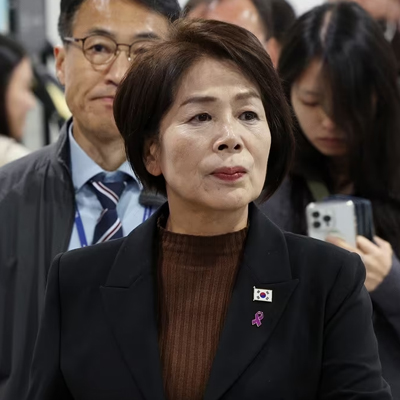
“이 대통령도 처음엔 윤석열 탄핵에 반대했었다. 사퇴 방향으로 가고 한덕수와 함께 일하자고 했다. 대통령 판단도 항상 옳지는 않다”라고 한 발언한 최민희.

회고回顧/懷古
칼럼
PinkPepper
Nostalgia 164. Hyena Choi Min-hee (Choi Jeong-sim)

0
2026. 11. 14
- Rep. Choi Min-hee is at the center of controversy after her remarks criticizing President Lee Jae-myung's past decisions at a private party members' meeting were leaked, interpreted as an attempt to undermine the party leadership's authority.
- After the remarks were leaked, she offered an insincere explanation of "confusing the timing" and a belated apology, displaying a repeated pattern that amplifies internal party conflict and provides fodder for external attacks.
- The author strongly criticizes Rep. Choi Min-hee's actions, describing them as a "naked marionette" manipulated by certain forces, alongside issues of her personal character and the historical background of Korean women.
- Furthermore, it is pointed out that the Democratic Party's tolerance of such internal sniping and factional behavior is a "rotten practice" that undermines the party's democratic operation and erodes public trust, urging fundamental reform.
Although it was a female politician who took the bait,
Choi Jeong-sim, whose name was changed to Choi Min-hee, made a statement at a private party member meeting in the Namyangju constituency in mid-October 2026, saying, “President Lee initially opposed Yoon Seok-yeol’s impeachment. He suggested moving towards resignation and working with Han Duck-soo. The President’s judgment is not always right.” This statement became known to the media in early November, putting her actions under scrutiny. Someone must have reported the contents of the meeting at the time, but if they had remained silent, Namyangju, which seems to have many Shincheonji followers, might have continued to be triumphant and joyful. The more you look at Choi Jeong-sim, the more trouble she causes. Contrary to her name, she is rumored to have a terrible personality and might be an essential figure for Shincheonji, but she is an unpopular politician among the public.
Why do the people of South Korea have to feel frustrated by casting the same vote as those who side with those who caused an insurrection, and why do politicians still receive excessive treatment even when they are involved in the practice of deceiving the world with cults? There are cult members among the people, and corrupt politicians emerge from among the people, but like a Möbius strip, no one can provide the impetus to uproot this rotten practice. The people elected Lee Jae-myung to play that role, but this false promise seems to be a joint effort. In fact, it is not easy for women to earn money. Excluding the very small percentage of qualified women, it is not easy for women to earn money and live the life they want in this world, so there is a system called 'marriage for financial security.' This is not to disparage women, but whether it is a characteristic of the species or a result of education, women have limitations in physical and intellectual labor. Perhaps it is a problem with the system that has not been able to find other uses for women in modern society where the instinctive functions of conception and childbirth are atrophying.
However, as the patience of the people passes its breaking point, Korean women refuse to open their eyes to their naive nature and try to grasp an invisible illusion, fueled by a force that encourages them to continue with an absurd fantasy. This is the history of female exploitation underlying modern Korean history. Choi Min-hee may mistakenly believe that she is an elite who has escaped that structure of exploitation and can say whatever she wants. Nearly two years into the Lee Jae-myung administration, Choi Min-hee, who has never seen a shadow from the shadows, took the bait.
The Blue House immediately expressed strong regret, calling it 'groundless,' and Chairman Kim Min-seok immediately ordered an investigation by the party's ethics inspection team. Choi Min-hee's remarks and actions go beyond mere slips of the tongue or emotional outbursts; they are a continuous and organized attempt to check and undermine the Lee Jae-myung administration and the Democratic Party leadership. The sentiment within the ruling party that allows someone to calmly set fire to and rob the organization they belong to, is like a landmine field created by the party members, the public, that has allowed this woman, who has the characteristics of a party of rebellion, to remain in the Democratic Party leadership. The problem is that Choi Min-hee herself stepped on a landmine within the ruling party, a landmine that anyone could have stepped on, and it is judged that this has reached a point where her character issues reveal the history of Korean women's suffering—as products of exploitation during colonization and war.
In 1839, Catholic believers Kim Hyo-im (Columba), dozens of others, and French priests Imbert, Maubant, and Chastan were beheaded and their heads displayed. This incident, known as the Gihae Persecution, is only known as one of the government's suppressions of Catholicism recorded since the 18th century, but it is completely unknown how Western religion was introduced, spread like wildfire, and disrupted the national system. Modern Korean voters have reached the point where they must wonder about the male-female ratio of Shincheonji members within the Democratic Party and the extent of that ratio's ability to incite, due to Choi Min-hee's words and actions. According to the dictionary of missionaries to Korea, approximately 1,529 missionaries came to Korea. The history of missionary activities by married missionaries, their children, and successive generations of missionaries in Joseon is a completely hidden field. What do you think? It is time to consider how Western learning infiltrated the Korean mind and influenced modern society.
What is manipulating the naked Choi Min-hee from behind is
Choi Min-hee's remarks openly reveal an intention to undermine the current government's legitimacy and the leadership's authority by disparaging the President's past strategic judgments in front of party members. Even if she used the excuse of it being a private meeting, the very process of her attempting to resolve the situation with an apology after the content was leaked makes her sincerity questionable. Choi Min-hee uses the same pattern as Lee Jin-sook of the People Power Party, which is an act that hinders the public, and she should be prevented from ever acting as a politician again so that we can tighten the grip on those who pull the puppet strings. Choi Min-hee explained that she "confused the timing during the Q&A process," but this greatly deviates from the reported content that she made specific statements. If the naked Choi Min-hee, who conveyed remarks to party members that directly contradict the official stance of the Blue House and the party that the President consistently pursued and carried out impeachment after the rebellion, is allowed to continue to stand before the public as a supreme council member, it is a sin. To leave alone those who prioritized their own power, allowing the eyes, ears, and mouths of the people to be defiled, is an act of abandoning even the minimum responsibility. The error in perception that abusive language and actions are a politician's right is due to the role played by the ruling party, which upholds the will of the people, and if so, when the ruling and opposition parties switch, Choi Min-hee, who has not changed her clothes, should receive the same treatment.
Choi Min-hee was once classified as a strong supporter of Lee Jae-myung, having served as a media special advisor for his presidential campaign. However, around the time of the party convention, she closely aligned herself with the pro-Chung faction, led by former representative Chung Cheong-rae, and repeatedly held Representative Kim Min-seok accountable. At the intersection of residual pro-Moon sentiment and the organized solidarity of the pro-Chung faction, she willingly took on the role of the antagonist, ostensibly advocating for party pluralism and criticism, but in fact putting the brakes on key policy directions of the Lee Jae-myung administration—the speed and direction of prosecutorial reform, personnel appointments, party discipline, and attempts to expand to the center. This is more an exposure of her true identity than a strategy.
In the debate surrounding the allegations of joining the Shincheonji cult and the controversy over intervention in the party convention, he strongly demanded the disclosure of investigation results and the uncovering of the truth, directly challenging Kim Min-seok's announcement of 'no basis for a secret three-way alliance.' His continuous meddling in this issue, forgetting his own denial of direct involvement with Shincheonji, is nothing short of a naked Choi Min-hee's one-man show. Whoever orchestrated this political maneuver to demand transparency from the party leader and shake up the power structure and leadership, it cannot achieve any functional effect. It already clearly incites distrust among party members and provides an excuse for external attacks, which is far from the attitude of a responsible politician.
The remark about 'packs of hyenas' is an extension of this pattern. On November 5th, in a group chat for supporters, he disparaged parliamentary photo and video journalists by likening them to animals, saying they 'try to film divisive videos no matter what.' This was an unfiltered outburst of dissatisfaction in a closed space, stemming from his belief that the media was framing the internal party conflicts at the time—the Shincheonji controversy and the Supreme Council debate—as division. The apology only came after the leak, and it led to strong backlash and consideration of legal action from organizations like the Photojournalists Association, further damaging the party's image. Maintaining close relationships with specific YouTubers and media networks like Kim Eo-jun, and delivering messages to party members that differ from the party's official line, is seen as lacking basic human decency and responsibility, even before considering his role as a supreme council member of the ruling party. This dual behavior of amplifying internal party conflicts through external media and fostering distrust towards the president and leadership among party members in internal private spaces is an act that fundamentally undermines the democratic party operation of the Democratic Party, which urgently needs reform.
Rotten Democratic Party, smelly Choi Min-hee's internal sniping
It's difficult to conclude that Choi Min-hee's actions are systematically intended to obstruct all moves of the Lee Jae-myung administration due to her poor character and intellect, but they are effectively taking the bait. While she pretends to represent the concerns of some party supporters about reform setbacks or dissatisfaction with the leadership's style, she has actually focused on strengthening her political presence and factional position. Choi Min-hee, a truly hyena-like politician barely surviving, has repeatedly questioned accountability in the Supreme Council after the party convention, resisted in the controversy over the selection of youth supreme council members, and participated in a press conference related to Shincheonji. These actions can be sufficiently interpreted not as adherence to principles but as part of a power struggle. With the president elected and the government launched, a party supreme council member definitively stating that the president's past judgment was "wrong" in a private setting and trying to persuade party members is a serious problem that undermines the unity of the ruling party. The Blue House drawing a line and the party swiftly initiating an audit are minimal measures to prevent internal cracks caused by former party leader Jeong Cheong-rae's mess from burdening state administration. It's like the public service worldview, dominated by pro-Japanese politicians and collaborators who left a mess during the US military government after the end of the Japanese colonial period, coming back to haunt us.
Following the report on November 12, Choi Min-hee posted on social media, claiming, "It seems that the content of the private party meeting was distorted and reported to the media," attempting to shift responsibility externally. To prevent such an attitude, immediate party sanctions must follow. Even in a situation where the Blue House has drawn a line, stating it's groundless, and the party has begun an audit, the attempt to resolve the situation with excuses like "I got the timing confused" and perfunctory apologies is a tragedy of Korean politics, born from the arrogance of a puppeteer exploiting the naked foolishness of a female politician, who is truly an axis of evil.
Even with the hyena remark, an apology only came after the leak, and during the back briefing, he questioned the intent of the questions or showed discomfort. This is a recurring pattern. When remarks made in a private setting are leaked, they are framed as 'distortion' or 'mistake,' and a war of nerves ensues with reporters who doubt the sincerity of the apology. It is deplorable that such a deranged person holds a parliamentary badge and maintains the title of supreme council member. This reality not only demonstrates the Democratic Party's lack of internal control but also holds voters accountable for their choices. If we delve into it microscopically, South Korean politics, devoid of normal people, fundamentally only produces insane politicians. Politics that has grown in a historically completely corrupted soil is a poison that saps the strength to pursue substantial reforms under the Lee Jae-myung administration. For the Democratic Party to regain public trust, it must no longer tolerate such internal attacks and factional calculations, and it must remember that reform without removing past toxins is impossible.
댓글
( 0 / 500 )
윤희
9
최민희 의원의 가장 큰 문제는 자신의 언행이 당과 정부에 어떤 피해를 주는지조차 모르는 듯한 태도입니다. 대통령을 공개적으로 비판할 수는 있지만, 사실관계도 제대로 확인하지 않은 채 당원들 앞에서 대통령의 과거 판단을 왜곡했다면 책임을 피할 수 없습니다. 최고위원이라는 자리가 개인의 정치적 불만을 배설하는 자리는 아닙니다.
( 0 / 500 )
toxic820
5
당내 비판과 국정 흔들기는 엄연히 다른 문제입니다. 건강한 비판은 대안을 제시하지만, 반복적인 내부 저격은 불신과 분열만 키웁니다. 최민희 의원의 일련의 언행이 누구에게 이익을 주고 있는지 냉정하게 돌아봐야 합니다. 당원들이 원하는 것은 계파 싸움이 아니라 개혁의 완성입니다.
( 0 / 500 )
donghyug
8
집권 여당의 최고위원이라면 개인의 정치적 입지보다 대통령의 국정 운영과 국민의 선택을 먼저 생각해야 합니다. 비공개 자리에서는 대통령을 흔들고 공개적으로는 해명과 사과를 반복하는 행태가 과연 책임 있는 정치인의 모습인지 묻고 싶습니다. 민주당은 이제 내부의 독소부터 걷어내야 합니다.
( 0 / 500 )
Andrew91
6
최민희의원은 언제까지 남 탓과 변명으로 자신의 언행을 덮으려 합니까? 기자들을 하이에나라고 비난하더니 자신의 발언이 공개되자 왜곡을 주장하고, 대통령 관련 발언에는 시기 착오를 내세웁니다. 말에는 책임이 따르는 법입니다. 국민을 대표하는 정치인이라면 최소한의 자기 성찰부터 하십시오.
( 0 / 500 )
찬호74
5
대통령의 과거 판단을 문제 삼을 수는 있다. 그러나 사실관계가 틀렸다면 그것은 단순한 의견 차이가 아니라 정치적 책임의 문제다. 특히 집권 여당의 지도부라면 발언의 무게를 알아야 한다. 민주당은 감싸기나 형식적인 사과로 넘어가지 말고 명확한 진상 규명과 책임을 물어야 한다.
( 0 / 500 )
mok77
5
최민희 의원에게 묻고 싶습니다. 지금 누구를 위해 정치를 하고 있습니까? 이재명 대통령을 만들기 위해 노력한 당원들의 뜻은 외면하면서 자신의 계파적 이해와 정치적 존재감만 챙기려는 것입니까? 집권 여당의 최고위원이 대통령과 당 지도부를 흔드는 데 앞장선다면 그 직책을 유지할 명분이 없습니다.
( 0 / 500 )
푸르른
4
최민희의원 언론을 하이에나라고 비난하면서 정작 자신의 발언이 공개되자 왜곡과 시기 착오를 주장하는 모습은 설득력이 없다. 정치인은 자신에게 유리한 말만 할 권리가 있는 자리가 아니다. 말과 행동에 책임지는 것이 기본이다. 민주당이 국민의 신뢰를 회복하려면 이런 이중적 태도부터 바로잡아야 한다.
( 0 / 500 )
moonjoon
3
정치는 말재주로 버티는 직업이 아닙니다. 최민희의 거친 언사와 반복되는 논란으로 자신의 정치적 수준을 스스로 드러내고 있습니다. 비판에는 근거가 있어야 하고 사과에는 진정성이 있어야 합니다. 자신의 발언이 문제가 될 때마다 변명으로 빠져나가려는 정치인에게 국민이 더 이상 무엇을 기대하겠습니까?
( 0 / 500 )
automan
3
지금 민주당에 필요한 것은 계파의 생존이나 특정 정치인의 존재감 경쟁이 아니라 이재명 정부의 개혁 과제를 뒷받침하는 책임 있는 당 운영입니다. 대통령과 정부를 흔드는 내부 갈등이 반복된다면 그 피해는 고스란히 국민에게 돌아갑니다. 당원들이 부여한 권한을 사적인 정치투쟁에 이용하는 일은 더 이상 용납되어서는 안 됩니다.
( 0 / 500 )
Kang726
2
최민희의 가장 심각한 문제는 자신이 민주당과 이재명 정부에 얼마나 큰 부담을 주고 있는지 모른다는 점이다. 대통령의 국정 운영을 뒷받침해야 할 여당 지도부가 내부 분란의 진원지가 되어서는 안 된다. 당원들의 인내심도 한계가 있다. 책임을 질 줄 모른다면 최고위원직부터 내려놓는 것이 국민과 당원에 대한 최소한의 도리다.
( 0 / 500 )
radichelove
삭제된 내용입니다
( 0 / 500 )
신고내용
신고내용을 선택해주세요
회원비난/비하/욕설글 및 댓글도배성 게시물저작권 침해/불법자료 유출허위사실유포개인정보 유출.사생활 침해무단광고/홍보음란물 및 도박 불법 광고물범죄행위 관련 글불법행위 관련 소개물품 판매 및 사기글악성코드 및 스파이웨어 유포기타 사유 및 운영진 판단


비밀번호를 잊으셨나요?
Sign in with Google
All information provided by us is free of charge and is for the public good.