品

Corea든 Korea든, 품격이 먼저다
Whether Corea or Korea, dignity comes first.
Whether Corea or Korea, dignity comes first.
Now
지금
751 Diaspora
Heritage
유산
Humanity
인문
Mirengsi
未冷尸
Politics
정치
Media
언론
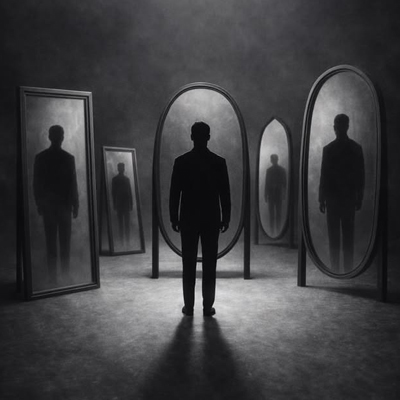
2026년 11월 9일 조계원 의원 주최 국회 소통관 기자회견에서 김성수 시사평론가는 청담동 술자리 수사 기록의 짜맞추기 구조를 구체화했다.

회고回顧/懷古
칼럼
Riz_au_curry
Regret 3: Persistent Pursuit of the Cheongdam-dong Drinking Party Allegations and the Truth

0
2026. 11. 10
- The 'Cheongdam-dong drinking party' allegations suggest that the principle of investigation without exception for those in power could be undermined, especially given the high potential for conflict of interest in the late-night contact between the Minister of Justice and lawyers from a major law firm.
- The police investigation results contain numerous physical and logical contradictions, particularly the unrealistic nature of the cellist's phone navigation records and evidence of 'fabricated' investigation records, raising questions about the fairness of the investigation.
- Then-Minister Han Dong-hoon strongly denied the allegations, even "staking his position," but did not disclose his specific whereabouts, and his consistent legal action and labeling of the allegations as 'fake news' only fueled distrust.
- If the gathering were true, it could lead to criminal liability for abuse of power and destruction of evidence, in addition to violations of public official ethics; the non-disclosure of his whereabouts is interpreted as a political survival strategy and self-preservation mechanism.
- The persistent pursuit by media outlets like Newstapa and civil society is a crucial public interest activity that monitors power and performs democracy's self-purification function, necessitating truth-finding through independent re-evaluation and disclosure of whereabouts.
The principle that those in power must also be subject to investigation and inquiry without exception is the most fundamental cornerstone of democracy. Public officials are not exempt from scrutiny of their actions, potential conflicts of interest, or the appropriateness of investigative processes simply because they have attained high positions. On the contrary, the greater their authority, the heavier their accountability should be. The allegation that then-President Yoon Suk-yeol and then-Minister of Justice Han Dong-hoon met with about 30 Kim & Chang lawyers in Cheongdam-dong from the night of July 19, 2022, until the early hours of the next day, is an example of how easily this principle can be shaken. Considering the investigative and prosecutorial powers inherent in the position of Minister of Justice, late-night contact with lawyers from a major law firm inherently poses a conflict of interest. Nevertheless, for over four years since the allegations were raised, the individuals involved have not disclosed their specific whereabouts, and the police investigation concluded as 'unfounded,' leaving several physical and logical contradictions. This is why suspicions that the weight of power can sway the direction of an investigation persist.
Newstapa was the most persistent in tracking this allegation. Reporter Kang Jin-gu and others have spent years analyzing investigative records and digital evidence, re-examining the foundation of the police's conclusions. The analysis, revealed at a National Assembly press conference in late October 2025, was shocking. A comprehensive review of over 1,200 navigation files extracted from the cellist's phone revealed numerous anomalies, including sections that would require travel at 588 km/h, teleportation records showing movement between cities over 200 km apart in just one minute, and unusual location information concentrated just before the seizure. The record of covering 9.8 km from Guryong Tunnel to Yangjae IC in one minute was deemed physically impossible, and expert opinion suggested this is a typical phenomenon when large data files are externally implanted. The police's identification of "Tike" as the location also contradicts court findings that Lee Mi-ki's store was a better fit, given the characteristics of the recording (grand piano, acoustics, capacity for over 30 people). Lee Seong-kwon and others, who were identified as being present, recanted, stating they "were not in Seoul that day," and the owner of Tike testified that Lee Se-chang's side asked her to corroborate the location. Furthermore, information disclosure confirmed that Han Dong-hoon's assistant and driver worked a total of 14 hours of overtime over two days, raising the possibility of a "late-night external schedule." This work is not merely an allegation but a result of directly comparing original investigative records and digital files, along with on-site inspections and expert evaluations.
On November 9, 2026, at a press conference held by Rep. Cho Kye-won at the National Assembly Communication Hall, political commentator Kim Sung-soo elaborated on the fabricated structure of the investigation records themselves. The police had already prepared a report identifying the location as 'Tyche' on November 9, 14 days before interviewing key figures. Another report written on the same day noted inconsistencies in statements but concluded that they 'matched.' Most of those present had their alibis cleared with a single phone call, and there was virtually no physical evidence (card payments, CCTV, witnesses) for the time of the drinking session. The record of Lee Se-chang sending a text message to Jung Jong-seung at 8:02 PM contradicts the conclusion that they were at the same table. Kim Sung-soo argued that the pattern of 'identifying the location first → matching statements → creating physical evidence → emptying verification records' was evident in the investigation records, and pointed out that Han Dong-hoon only took legal action without disclosing his whereabouts, which could be easily proven with Google Timeline, etc. He also cited as grounds for suspicion the fact that the prosecution indicted even parts where the police recommended non-indictment, and that the relevant investigators were promoted. This event with Rep. Cho Kye-won was significant in reconfirming the principle of exceptional scrutiny for those in power, by publicly addressing a topic that even within the Democratic Party had been avoided.
Han Dong-hoon's response directly contradicts these claims. At the National Assembly audit on October 24, 2022, he declared, "If I was at that place or within 1 km of it, I would stake any public office, including the position of Minister of Justice." He also added that he doesn't drink much and doesn't attend company dinners. However, even after four years, he has never disclosed his specific whereabouts that night. In the lawsuit, he tried to shift the burden of proof to the other party, and instead of directly refuting the records of his staff's overtime or the contradictions in digital evidence, he framed it as "fake news" and "Democratic Party level," responding by announcing civil and criminal actions. Although the first-instance judgment did rule it false, even that judgment did not fully resolve the issues of undisclosed whereabouts and evidence reliability, and in the criminal trial, the authenticity of digital evidence is still being disputed, with the adoption of National Forensic Service appraisals, etc. The coexistence of his declaration to "stake his position," undisclosed whereabouts, prior location specification in investigative records, physically impossible forensic results, and his staff's late-night overtime is not a difference of opinion but is read as a contradiction that evades accountability. In the face of the principle that those in power should be more transparent, the method of stifling criticism through legal action has, on the contrary, backfired by increasing suspicion.
If the meeting is true, the responsibility Han Dong-hoon could face stems from public official ethics and job-related regulations. It is highly likely that the then Minister of Justice having a late-night meeting with lawyers from a large law firm constitutes a conflict of interest. If a minister with investigative and prosecutorial powers had private contact with lawyers directly or indirectly connected to suspects or defendants, there is a possibility that it could be evaluated as a violation of the duty to perform duties fairly. If, afterward, he influenced the direction of the investigation or encouraged false statements to cover up the suspicions, criminal liability such as abuse of power, destruction or concealment of evidence, or subornation of perjury would also be subject to review. If false explanations and litigation strategies as a public official undermined public trust, it would be difficult to rule out not only political and moral responsibility but also the possibility of publishing false information under the Public Official Election Act or violating the Public Official Ethics Act. However, this is a possible legal framework under the assumption of 'if it is true,' and the final judgment can only be made through investigation and trial. The important thing is that the judgment process itself must be conducted fairly without the intervention of power.
Several realistic motives are presumed for his consistent legal response without revealing his whereabouts. First, it was a political survival strategy to completely block a scandal that could shake his power base in the early days of his inauguration. His strong denial, 'I will stake my position,' was effective in branding the suspicions as false, and subsequent lawsuits and litigation had the effect of intimidating critics while positioning himself as a 'public official who suffered damage.' Second, it was a defense mechanism to protect the early image of the Yoon Seok-yeol administration and his own political expansion (subsequent activities as party leader and lawmaker). Third, it was legal self-protection to avoid the possibility of objective data (timeline, performance records, security records, etc.) working against him. Regardless of the truth, his attitude of avoiding disclosing explainable whereabouts for four years, despite it being the most basic solution, is acting as a factor that undermines trust, whether the suspicions are true or not.
In this situation, the efforts of Newstamsa reporter Kang Jin-gu, critic Kim Seong-soo, and Assemblyman Cho Gye-won, who joined them, should be evaluated not as partisan attacks, but as public interest work aimed at realizing an uncompromising verification of those in power. The process of individually comparing over 1,200 digital pieces of evidence, cross-verifying the chronological order of investigation records and inconsistencies in statements, and repeatedly requesting information disclosure and on-site verification, requires considerable time and effort. Despite the risk of lawsuits and political pressure, proving physical impossibility based on original data and concretizing suspicions of pre-arranged investigation processes aligns with the inherent role of the media and citizen oversight. Regardless of how the truth is ultimately revealed, the act of persistently digging into situations where those in power hide their actions or when investigation processes are opaque, itself sustains the self-purifying function of democracy.
Currently, the authenticity of digital evidence is subject to forensic examination by the National Forensic Service in criminal trials, and civil appeals and demands for further investigation are ongoing. The physical contradictions and suspicions of pre-arranged investigation records raised by Newstamsa and recent press conferences will not disappear as long as Han Dong-hoon's declaration of 'I will stake my position' and the undisclosed nature of his actions leave a void. The principle that investigations and inquiries should be conducted without exception for those in power, and the efforts of those who unearthed original data and exposed contradictions to realize that principle, are inherently worthy of praise. This is why an independent re-evaluation, disclosure of actions, or reinvestigation is necessary, and only when this is achieved can suspicions be resolved and public trust in office be restored.
댓글
( 0 / 500 )
speaker
8
권력자에게도 예외 없는 검증이 민주주의의 출발점입니다. 청담동 술자리 의혹의 핵심은 단순히 술자리가 있었느냐가 아니라, 수사 과정에서 왜 수많은 의문과 모순이 발생했는가입니다. 원본 자료를 토대로 끝까지 추적하는 언론과 시민의 노력이 진실을 밝히는 출발점이 되기를 바랍니다.
( 0 / 500 )
hong_J
7
청담동 술자리 의혹은 시간이 흘렀다고 저절로 사라질 문제가 아닙니다. 당시 당사자들이 떳떳하다면 객관적인 기록으로 해명하면 됩니다. 권력자의 말보다 중요한 것은 증거이며, 수사기관의 결론보다 중요한 것은 그 결론에 이르는 과정의 정당성입니다
( 0 / 500 )
Bongcheon
6
한동훈이 정말 떳떳하다면 복잡한 법적 대응보다 그날의 행적을 객관적인 자료로 공개하면 될 일입니다. 직을 걸겠다는 호언장담보다 국민이 납득할 수 있는 구체적인 해명이 먼저입니다. 권력은 면책특권이 아니라 더 무거운 책임을 의미합니다.
( 0 / 500 )
박동혁
5
진실을 추적하는 언론의 역할은 권력의 눈치를 보지 않는 데 있습니다. 수사기관이 내린 결론도 얼마든지 검증의 대상이 될 수 있습니다. 뉴탐사가 제시한 자료와 의문점들이 객관적으로 검증될 수 있도록 국회와 사법기관이 책임 있게 나서야 합니다.
( 0 / 500 )
Rosemary
5
뉴탐사와 강진구 기자의 끈질긴 추적은 언론이 권력을 감시해야 하는 이유를 보여줍니다. 불편한 진실일수록 더 깊이 파고드는 것이 언론의 사명입니다. 정파를 떠나 증거와 기록으로 진실을 확인하려는 노력이 존중받아야 합니다.
( 0 / 500 )
expressK
3
의혹을 제기한 사람을 공격한다고 의혹 자체가 사라지는 것은 아닙니다. 특히 수사 기록과 디지털 증거에서 제기된 모순은 정치적 공방으로 덮을 문제가 아닙니다. 독립적인 재감정과 철저한 재검증을 통해 무엇이 진실인지 반드시 밝혀야 합니다.
( 0 / 500 )
Caesar79
4
이 사건에서 가장 우려스러운 것은 의혹의 진위만이 아니라 수사기관의 공정성에 대한 국민의 불신입니다. 권력자에게 유리한 방향으로 수사가 진행됐다는 의심이 있다면 처음부터 다시 검증해야 합니다. 법 앞의 평등은 구호가 아니라 실제 수사와 재판에서 증명되어야 합니다
( 0 / 500 )
에델바이스
2
국민이 원하는 것은 정치적 편들기가 아니라 진실이다. 경찰 수사 기록에 제기된 시간적·물리적 모순이 사실이라면 결코 가볍게 넘길 일이 아니다. 독립적인 감정과 재수사를 통해 의혹의 실체를 명확하게 밝혀야 한다.
( 0 / 500 )
최유미
0
뉴탐사 강진구 기자님을 오랫동안 신뢰해 왔습니다. 권력자와 공직자의 검증과 정의사회 구현을 위해 끈기있게 추척한 내용이 꼭 밝혀지기 바랍니다. 화이팅!
( 0 / 500 )
신고내용
신고내용을 선택해주세요
회원비난/비하/욕설글 및 댓글도배성 게시물저작권 침해/불법자료 유출허위사실유포개인정보 유출.사생활 침해무단광고/홍보음란물 및 도박 불법 광고물범죄행위 관련 글불법행위 관련 소개물품 판매 및 사기글악성코드 및 스파이웨어 유포기타 사유 및 운영진 판단


비밀번호를 잊으셨나요?
Sign in with Google
All information provided by us is free of charge and is for the public good.