品

Corea든 Korea든, 품격이 먼저다
Whether Corea or Korea, dignity comes first.
Whether Corea or Korea, dignity comes first.
Now
지금
751 Diaspora
Heritage
유산
Humanity
인문
Mirengsi
未冷尸
Politics
정치
Media
언론
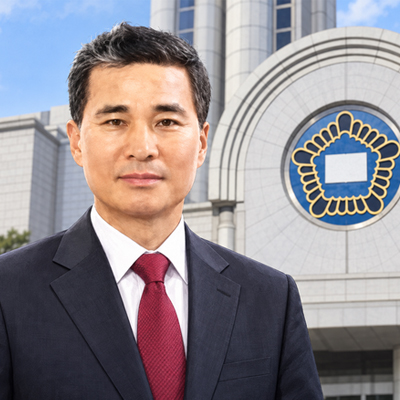
서울고등법원 형사7부 구회근 부장판사는 오세훈 서울시장의 ‘명태균 여론조사비 대납 의혹’ 사건 무죄를 선고

회고回顧/懷古
칼럼
PinkPepper
Nostalgia 161. Oh Se-hoon acquitted

0
2026. 10. 24
Courtroom Drama
On October 23, 2026, at 2 PM, in the Seoul High Court's Criminal Division 7, Chief Judge Gu Ho-geun acquitted Seoul Mayor Oh Se-hoon in the appellate trial of the 'Myung Tae-gyun Public Opinion Poll Expense Proxy Payment Allegation' case. He is a judge who rose to prominence in Gwangyang, Jeollanam-do, and had previously acquitted the seditionist Yoon Seok-yeol in the first trial. Kang Cheol-won, former Seoul Vice Mayor for Political Affairs, and his sponsor, businessman Kim Han-jeong, who were indicted together, were also acquitted. The public does not know the faces of Gu Ho-geun, Kang Cheol-won, or Kim Han-jeong. This stage is solely for Myung Tae-gyun and Oh Se-hoon.
Oh Se-hoon's first-instance conviction, which included a 10 million won fine and a 21 million won forfeiture, a sentence that would have resulted in the loss of his mayoral office, was completely overturned. The special prosecutor had sought a sentence of 1 year and 6 months in prison and a 33 million won forfeiture in the second trial, but the court did not accept it. The court ruled, 'The key direct evidence in this case is only Myung Tae-gyun's statement, but it is difficult to fully believe that statement, and the remaining fragmented facts are insufficient to acknowledge the charges, and rather, many contradictory circumstances are recognized.'
This trial was a show that operated within a staged courtroom drama setting from the beginning. The absurd judgment that criminal responsibility was not proven was transformed into a political absolution for Oh Se-hoon. Rather, this 'sin committed by the law,' which allows criminals to prosper, is merely a repetition of a boring pattern often seen in history. With this trial result, the facts will be buried forever, and if judicial reform fails as it is, modern South Korea could disappear into history as an 'incompetent' nation.
There are plenty of people who want to keep Myeong-gyun and Oh Se-hoon, who would have been beheaded in the past, alive and hide behind them politically to prolong their existence. There are cult organizations like Shincheonji and the Unification Church, and with no judicial reform currently underway, Moon Jae-in's faction, who fostered internal rebellion, and the People Power Party also see Oh Se-hoon as a necessary card. The most desperate is the judiciary itself, which condoned the rebellion. If this ruling is meaningful, it is the realization that Korea has no future as long as it fails to reform this system, which requires trials by a group of criminals. They are even ready to release Kim Myeong-shin, a former prostitute, stage name 'Julie,' and former first lady Kim Keon-hee. Since the law allows it, being a voter in South Korea is like a fish on thin ice, with limited choices. It's an irony of the human world.
History will be meticulously recorded by eloquent schemers who will make this absurd situation a fact and give it legitimacy, allowing them to run rampant again. If Judge Gu has a family, I wonder what criteria he would use to be a good father. The dirty judicial spirit prevalent in South Korea will transfer from judges' children to their entire generation, and safeguards will continue to evolve to protect institutions that defend criminals.
The history of Koreans has provided various motivations and bestowed positions of responsibility and authority to portray villains as famous and capable politicians, and politicians with good intentions and convictions as incompetent and crude figures. It is a great misconception to think that historical distortion only occurred during the Japanese colonial period through the administrative power of imperial Japan. The fact that their methods, like a living organism, are still rewriting the precious daily lives of Koreans through self-replication and evolution is a disheartening reality for voters.
How will future generations remember those who, from being third-rate phone salesmen, became successful cattle ranchers like Myung-gyun, and those who, like loaches, tried to extend their political lives by attaching their tentacles to Oh Se-hoon's back? A future where these individuals are considered to have lived successful lives will lead to a hatred of politics itself. Future generations will despise politics, find it difficult to form proper political views, become indifferent to politics, and their lives will become dry. This is exactly the life that imperial Japan desired.
While some risked their lives to save the country, wandering the continent as homeless beggars, others collaborated with the Resident-General and the Governor-General to climb the ladder of success. The most desirable profession was law; only legal tricksters knew the law and could solidify the colonial system through it. Thus, it is natural that law school graduates become politicians even in modern times. Judicial reform should be entrusted to AI judges who provide cheap and clear judgments. Dealing with law in Korea only amplifies the knots of history and fosters discord.
The pre-show hosts who initially reported the staged courtroom drama as Oh Se-hoon's political demise and reassured the public have now finished their role with Oh's acquittal. The audience, believing Oh Se-hoon's political career would end, comfortably stretched their legs and imagined Seoul Plaza returning to the citizens' embrace, only to self-criticize their mental laziness as foolish. They tremble at the wickedness of this society, where the cause is never attributed to others but always to their own inadequacy. When will this dirty cycle of history finally end?
Head of Hanyang
There are countless place names and institutional names that use '漢' (Han), such as Hangang, Hanyang, Hanseong, Hanseongbu, and Hanseong Sunbo. This can raise a question about historical subjectivity: whose country was the Han dynasty? However, the history of suppressing this question by law was initiated by imperial Japan, and later, we suppressed it ourselves. This means that those who became agents of imperial Japan erased their collaborationist past, and the core of this cannot be briefly explained, so it is omitted.
Was King Gojong, an incompetent monarch of a country that absolutely needed the intervention of neighboring countries, the same Gojong throughout his 44-year reign from 1863 to 1907? Things no one could even imagine happened due to Japanese colonial laws and interference. To discuss what happened, judicial reform must come first. Koreans might still be considered to be under Japanese colonial rule, and as long as their laws are considered divinely inspired, the president's life is at risk. The dirty blood of history planted by imperial Japan is designed to operate that way.
The Seoul High Court, which acquitted Oh Se-hoon, had the Gyeongseong Boksim Court as its predecessor, which was the appellate court for the Gyeongseong District Court, and the two courts once shared the same building. Imperial Japan established modern courts for the Joseon people who were suffering and in distress due to the inadequacy of the judicial system. No one wanted interference, but that's how they describe it. In 1895, the 32nd year of King Gojong's reign, the Hanseong Court (漢城裁判所), a modern judicial institution responsible for civil and criminal trials in Hanseongbu, was established. It was Law No. 1, the 「Court Organization Act」. In 1899, the 36th year of King Gojong's reign, the 3rd year of the Gwangmu era of the Korean Empire, in August, the High Court was reorganized into the Pyeongniwon, and provincial observers and supervisors were allowed to concurrently serve as judges. It was fully revised for the first time as Law No. 3. After the second revision in 1907 and the seizure of judicial power by Japan with Law No. 28 in 1909, the Korean Empire's 「Court Organization Act」 was abolished. However, since the subject of the law was the Korean Empire, it remained in history as if it were unrelated to imperial Japan.
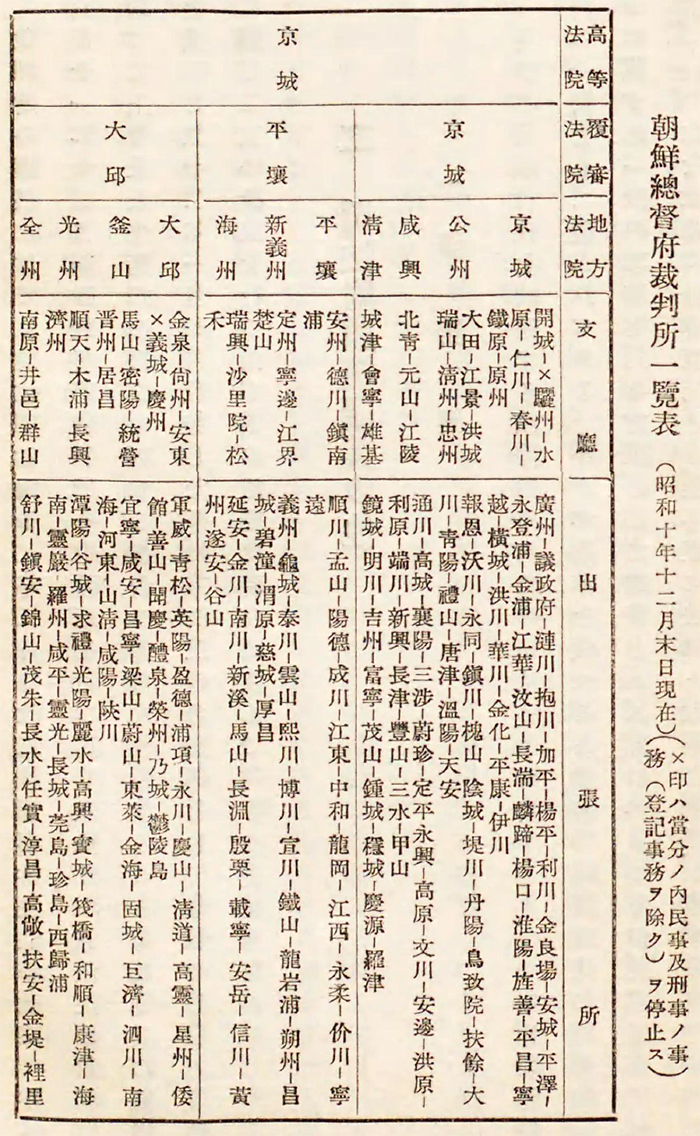
The name Gyeongseong remained in the names of courts at the time, such as the High Court, Boksim Court, and District Court, but it is only remembered as another name for Seoul. Not only are the names different, but Gyeongseong and Seoul also have different locations and different symbols. However, the nature of the humans who enforce the law remains the same. Therefore, I believe that imperial Japan set the distorted historical parameters, and Korea is playing the game.
In 1395, Seong Seok-rin, then Panhanseongbusa (判漢城府事), became the first head of what would be the equivalent of today's Seoul mayor. In 1466, during the 12th year of King Sejo's reign, the title was changed to Hanseongbuyun (漢城府尹), and in 1469, the first year of King Yejong's reign, it was changed again to Hanseongbu Panyun (漢城府判尹), consistently using the place name Hanseong. Until 1894, when the Gabo Reform changed Panyun (判尹) to Buyun (府尹), it was the title of the highest official governing Seoul. In 1896, amidst the chaos, the title Panyun was restored, only to be changed back to Buyun in 1907. During this period, Bae Guk-tae (裵國泰), the brother of the infamous Bae Jeong-ja, who was Ito Hirobumi's mistress and a Japanese spy, enjoying wealth and power while selling her own people to the comfort women corps (挺身隊), served as Hanseongbu Panyun from September 23 to October 16, 1904, a total of 24 days, including both start and end dates.
Amidst the nation's turmoil and rampant traitors, could King Gojong have remained safe? The law left no trace. Now, the acquittal of Oh Se-hoon foreshadows the safe end of Cho Hee-dae's term and the death of Lee Jae-myung. This is the current state of Seoul citizens, who grew from Joseon subjects to Daehan Empire subjects, then to colonial Japanese subjects as Kim Moon-soo confessed, and from cannon fodder in war to surrogates in left-right ideological conflicts, now voters of the Republic of Korea.
댓글
( 0 / 500 )
mama
7
무죄 판결 하나보다 더 두려운 것은 그 판결이 사회에 남기는 정치적 효과입니다. 법정에서 입증의 책임을 따지는 것과 정치적·역사적 책임을 묻는 것은 별개의 문제입니다. 사법부가 국민의 신뢰를 회복하려면 판결의 결론만큼이나 그 과정과 논리를 국민이 납득할 수 있어야 합니다.
( 0 / 500 )
sr84
8
1심에서 유죄 판단이 나왔던 사건이 항소심에서 완전히 뒤집혔다면 국민이 납득할 수 있도록 판결의 근거를 더욱 명확하게 설명해야 한다. 법관의 독립은 존중받아야 하지만, 사법부의 권위가 비판과 검증으로부터 면제되는 특권은 아니다.
( 0 / 500 )
최대호
6
친일 청산이 제대로 이루어지지 않은 역사가 오늘날 사법 불신과 어떻게 연결되는지 돌아보게 하는 글입니다. 권력에 협력한 자는 살아남고 저항한 자는 희생되는 역사가 반복된다면 민주주의는 껍데기만 남습니다. 사법 개혁은 특정 정치인의 유불리가 아니라 국가의 역사적 책임이라는 관점에서 접근해야 합니다
( 0 / 500 )
ins78
5
법은 권력자의 방패가 되어서도, 정치적 분노를 대신하는 칼이 되어서도 안 됩니다. 무죄 판결이 곧 모든 의혹의 해소를 의미하는 것은 아니지만, 판결에 대한 비판 역시 구체적인 증거와 법리에 근거해야 합니다. 사법부의 독립과 책임성을 함께 확보하는 개혁이 필요한 이유입니다.
( 0 / 500 )
萬松
4
서울고등법원의 판결을 한양과 경성의 역사까지 연결한 대목이 인상적입니다. 제도는 시대가 바뀌어도 그 안에서 권력을 행사하는 사람과 관행에 따라 과거의 그림자를 이어갈 수 있습니다. 역사를 바로 세우려면 기관의 이름을 바꾸는 데 그치지 말고, 권력과 법의 관계를 근본적으로 성찰해야 합니다.
( 0 / 500 )
Platon
4
법이 권력자에게는 정교한 방패가 되고 평범한 국민에게는 엄격한 잣대가 된다는 인식이 굳어지면 사법부에 대한 신뢰는 회복하기 어렵습니다. 이번 판결 역시 오랜 사법 불신을 해소하기보다 의문을 키웠다는 비판을 피하기 어려워 보입니다. 사법부는 국민의 의문에 책임 있게 답해야 합니다.
( 0 / 500 )
Jeong Byeon_72828
4
어쩌면 저렇게도 분별력이 없는 판결에 실망했습니다.
( 0 / 500 )
조기호
5
오세훈 무죄 판결로 법적 책임은 일단 벗어났을지 몰라도 정치적 의혹까지 저절로 사라지는 것은 아니다. 1심과 2심의 판단이 왜 이렇게 달라졌는지, 어떤 증거를 어떻게 평가했는지 국민이 이해할 수 있어야 한다. 법원의 결론만으로 모든 논란이 끝났다고 생각한다면 오산이다.
( 0 / 500 )
타미르
4
국민이 분노하는 이유는 오세훈 시장의 무죄 판결 자체만이 아니라, 권력과 사법부의 관계를 둘러싼 불신이 반복되고 있기 때문일 것입니다. 판결이 나올 때마다 국민이 결과를 의심해야 한다면 사법부의 존재 이유마저 흔들릴 수 있습니다. 사법부가 국민의 신뢰를 회복하려면 권위 뒤에 숨지 말고 공정성과 투명성을 판결로 증명해 주시기 바랍니다.
( 0 / 500 )
minjoo
4
무죄 판결을 내릴 수는 있다. 그러나 무죄라는 두 글자가 모든 의혹을 덮는 면죄부가 되어서는 안 된다. 검찰의 입증이 부족했다면 무엇이 부족했는지, 1심과 달리 판단한 핵심 이유가 무엇인지 분명히 밝혀야 한다. 사법부가 국민에게 설명할 책임까지 없어진 것은 아니다.
( 0 / 500 )
냥냥이님
1
국민이 정치에 기대를 접고 사법부를 불신하게 되는 순간, 민주주의의 가장 중요한 기반이 무너집니다. 다만 분노를 넘어 제도적 대안을 제시해야 역사의 반복을 끊을 수 있습니다. 판결에 대한 철저한 검증, 사법부의 투명성 강화, 과거사에 대한 정확한 기록이 함께 이루어져야 합니다.
( 0 / 500 )
신고내용
신고내용을 선택해주세요
회원비난/비하/욕설글 및 댓글도배성 게시물저작권 침해/불법자료 유출허위사실유포개인정보 유출.사생활 침해무단광고/홍보음란물 및 도박 불법 광고물범죄행위 관련 글불법행위 관련 소개물품 판매 및 사기글악성코드 및 스파이웨어 유포기타 사유 및 운영진 판단


비밀번호를 잊으셨나요?
Sign in with Google
All information provided by us is free of charge and is for the public good.