品

Corea든 Korea든, 품격이 먼저다
Whether Corea or Korea, dignity comes first.
Whether Corea or Korea, dignity comes first.
Now
지금
751 Diaspora
Heritage
유산
Humanity
인문
Mirengsi
未冷尸
Politics
정치
Media
언론
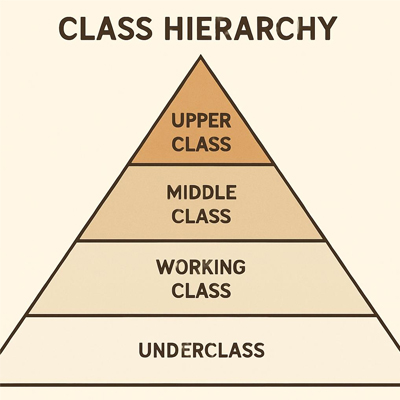
베버는 결혼을 신분 집단의 경계를 지키는 가장 강력한 수단으로 보았다. 같은 신분끼리만 혼인하는 동질혼의 규범은 신분 집단을 닫힌 집단으로 만든다.

회고回顧/懷古
칼럼
Riz_au_curry
Confession 1. The Sociology of Concubinage

0
2026. 10. 15
- Since the abolition of adultery laws, "concubinage" in modern Korean society has intensified into a new class issue mediated by money and status, resembling the Joseon Dynasty's practice of concubinage where wealthy and powerful men maintained relationships with multiple women, exchanging economic benefits.
- From Max Weber's perspective, marriage is an institution that defines inheritance and status through social approval. The norm of hypergamy exacerbates the isolation of top-tier women in the marriage market and enables top-tier men to form unions with multiple women, leading to imbalances in the marriage market even within modern Korean society's hierarchy of education, occupation, and assets.
- Contrary to their intentions, the abolition of adultery laws and the Special Act on Prostitution reduced the risks for upper-class men in extramarital affairs while criminalizing sex work for lower-class men, further polarizing access to sex and intimacy based on wealth. Technological advancements like smartphones facilitate the concealment of such extramarital relationships, encouraging moral hazard.
- The state should consider reinstating adultery laws or introducing punitive damages for these issues, or at the very least, correct the imbalanced structure by strengthening gift taxes and systematically tracking asset transfers by the National Tax Service to re-price asset transfers occurring in extramarital relationships.
One morning, I had a brief text conversation with Dr. Hong, an old acquaintance, and that's where this story began. We joked that if adultery was no longer a crime punishable by imprisonment, we should at least tax it, and we both laughed in exasperation. But the question that remained after the laughter was not light. Why is the relationship between men and women outside of the marriage institution increasingly becoming a class issue? We half-jokingly call this 'concubinage,' but it was chilling to realize that it has become a history and culture that dominates a pillar of modern Korean society and economy. The cases revealed in this article are used as a window to see the structure, not individuals.
While concubinage in the Joseon Dynasty had an official place within the order of family registries (族譜) and legitimate/illegitimate children (嫡庶), today's 'concubinage' is not registered in any system. Instead, its place is filled by money, status, and secret chat rooms on smartphones. Although the form has changed, the structure in which wealthy and powerful men have relationships with multiple women, and economic and social benefits are exchanged in return, is surprisingly similar. Furthermore, in a world where wealth even dictates same-sex relationships, the abolition of the adultery law, the 'small ball launched by the incompetent Park Geun-hye,' was, in hindsight, the opening of the gates to Hell Joseon.
This article follows three lines of inquiry. How did Max Weber understand marriage? How have the abolition of the adultery law in 2015, the Special Act on Prostitution in 2004, and the development of information technology changed the marriage market in Korea? If this change is a decline in morality, what can the state do? The last question brings to mind Jean-Jacques Rousseau's (1712~) old question. Has the progress of science and technology improved human morality? Rousseau, despite theorizing politics and philosophy as his profession, was a person who sent all five illegitimate children he had with his maid, Thérèse, to an orphanage. While there was a life and politics in Korea's modernization process that necessitated absorbing Western civilization, we failed to reflect on the 'Deception of humanity' of the West due to excessively absorbing it.1778
Sex is biology, marriage is society. In "Economy and Society," Weber clearly distinguishes between sexual union and marriage. The union of a man and a woman itself is a biological fact, but for it to become a marriage, kinship groups and status communities must approve the relationship as legitimate. The core of marriage is not the bedroom, but approval. This is because it is a social contract that determines whose children have inheritance rights, who carries on the family name, and where property flows. Therefore, many societies have set aside separate places for less legitimate unions outside of formal marriage. These include concubines, mistresses, and secondary spouses. These were mechanisms that allowed sexual relations but did not disrupt the order of inheritance and status. Concubinage was not so much a deviation from morality as it was an institutional form in which the status order compromised with sexual desire.
Weber viewed marriage as the most powerful means of maintaining the boundaries of status groups. The norm of homogamy, where people only marry within their own status group, makes status groups closed. This creates an asymmetry. In many societies, women could only marry men of the same or higher status. This is known as hypergamy. Marrying down was considered a disgrace to the family and meant social demotion for the individual. If this norm is pushed to its extreme, the outcome is clear. The pool of spouses for women in the highest stratum becomes extremely narrow, while men in the highest stratum can marry women of the same status as well as those of lower status. Candidates flock to upper-class men, and upper-class women become isolated in the marriage market. To borrow Dr. Hong's expression, women are structurally trapped in a polygamous dilemma.
Weber cited the 'Kulin Brahmin' of Bengal as an extreme example of this trap. Daughters of the highest-ranking Kulin families could only marry Kulin men, leading to a surplus of women at risk of missing their marriageable age. Consequently, a practice emerged where some Kulin men formally married dozens of women, received dowries and gifts from the brides' families, and then traveled around, occasionally visiting their wives' homes. Marriage became a document to maintain status, and marital life became a series of circuit visits. Weber pointed out that the hypergamy norm also led to soaring dowries and female infanticide in some regions. He did not explain this phenomenon by women's biological instincts. What he saw were norms and interests created by the status order. He argued that a system where marrying down would cause the entire family to lose status ultimately forced hypergamy. If it were instinct, there would be no solution, but if it's a structure, there is a solution.
The story of Bengal a century ago is not irrelevant to Seoul today. While the legal caste system in Korea disappeared with the colonial system, a new hierarchy based on education, occupation, and assets has taken its place. The tendency towards hypergamy in the marriage market also stubbornly persists. With highly educated middle-class women able to support themselves by graduating from university and working in professional fields or large corporations, the era when marriage was a condition for women's survival has ended. However, the criteria for choosing a spouse still often lean towards men with similar or better conditions than themselves. As women's educational attainment has caught up with and, in some age groups, surpassed men's, the number of men who meet those criteria has relatively decreased. The isolation of the highest-ranking women described by Weber has, in effect, expanded to the highly educated middle class as a whole.
The evolution of homogamy can also be seen in the South Korean entertainment industry, which served as a tool for the military dictatorship, a channel for sexual favors for those in power, and a means of controlling popular culture to divert public attention. This bizarre and oppressive remnant of colonialism was not easily eradicated, leading to a strange phenomenon where the broadcasting industry remained inherently conservative, while only certain parts of the film industry leaned left. Moving beyond the case of Seo Mi-kyung, who is known to have amassed a fortune starting as the mistress of Lotte's Shin Kyuk-ho, some celebrities go a step further, believing themselves to be upper-class and marrying within their own circles to solidify their power. Doctors marry doctors, lawyers marry lawyers, and chaebols build incredibly high walls and marry among themselves. In this respect, Korea is already a class society comparable to the Joseon Dynasty. It is unclear how long politics or the media can turn a blind eye to this, but given the underlying desire for upward mobility in class sociology, marriage is the most blatant manifestation of class politics.
Despite legal marriages, pregnancies, and childbirths, the reality that there are not a few cases in society where people abandon their children and divorce in search of better conditions and environments shows that the Korean desire for upward mobility acts as an energy that transcends instinct at the grassroots level of society. Although politicians may not be the brightest, they need to keep this in mind. If you go to a matchmaking site, everyone enters their age, height, education, assets, and even their parents' assets to get a score. The fact that it is quantified reveals that modern Korean capitalist society is a more hierarchical and more vicious class society than the Joseon feudal society.
This pressure flows in three directions. One is remaining unmarried. This is the case where one decides it's better to live alone than to lower one's quality of life by marrying someone of lesser standing. The second is economic independence after divorce. In these two cases, since it's not easy for a woman who biologically knows sexual pleasure to live like a nun to maintain economic superiority, various side effects occur. Korea, which most thoroughly and to the very end practiced monogamy as the greatest virtue in human society, implicitly acknowledged extramarital affairs, a product of that system, through colonization and war. Thus, our biological decline will return as an enormous social cost in about 100 years.
However, for women with economic power, divorce is no longer a downfall. The third is the subject of this article. It is a path where one does not enter into the formal contract of marriage but maintains a long-term relationship with an already married upper-class man. There is no place as a legal wife, but economic support, social networks, and sometimes even status itself are provided. This is what we called 'Modern-Day Concubinage.' The difference from concubines in the Joseon Dynasty is that it takes on the appearance of a highly calculated choice rather than a forced arrangement. Ultimately, even if it appears to be a complex mix of animalistic desires and rational calculation, it is undoubtedly a primitive culture that degrades human quality, reducing the possibility that a genius born from such an illicit relationship could save the country from crisis.
There is a case that made this structure visible to the entire Korean society. In December 2015, SK Group Chairman Chey Tae-won himself revealed his relationship with his cohabitant, T&C Foundation Chairwoman Kim Hee-young, and the existence of their child born out of wedlock, publicly announcing his intention to divorce. While an ordinary person could not have such audacity, he elevated an intimate private relationship to a public one. However, the self-loathing of those who work under Kim Hee-young finds no solace other than maintaining a collective identity. Money solves everything, but what is needed besides money is the social history of these extramarital affairs.
The lawsuit with Roh Soh-yeong, director of Art Center Nabi, his wife of many years, has been ongoing for several years. The divorce and 2 billion won in alimony were finalized by the Supreme Court. The property division, after the 1.3808 trillion won from the appellate court was overturned and remanded, was re-determined to be 944 billion won in the remand trial in July 2026. In the lawsuit filed by Director Roh against Kim Hee-young, the court also ruled that infidelity, the birth of a child out of wedlock, and public actions constituted responsibility for the breakdown of the marriage, and ordered them to jointly pay 2 billion won in alimony with Chairman Choi. This ruling was finalized in 2024 when the appeal was dropped. It was not that an additional 2 billion won was added, but rather that the two were to jointly bear the already recognized alimony.
This case is symbolic not because of privacy. It is because it publicly showed what legal consequences extramarital affairs have among the highest echelons of Korean society after the abolition of the adultery law. There are no criminal penalties; what remains is civil alimony. Even that alimony is more symbolic given the asset scale of the top business leaders. In a sense, the price of an extramarital affair was publicly set in court. Property division is a separate issue. It is the liquidation of assets formed during the marriage, not a fine for the extramarital affair itself.
On the other side of the same structure are low-income men. If upper-class men can monopolize the attention and time of multiple women, the opportunities available to men at the bottom of the marriage market are proportionally reduced. Various studies in Korea repeatedly show that the lower a man's income and employment stability, the significantly higher his unmarried rate. Dr. Hong and I half-jokingly called this a harsh animalistic situation. It means it resembles a structure where a few dominant males monopolize many females, and the remaining males are pushed out of reproduction.
If one considers the interpretation that one of the reasons humanity established monogamy as a social institution was to prevent this very situation, then what is happening now can be seen as a quiet unraveling of a civilizational mechanism. Whether the history of voters' choice leaning towards Park Geun-hye was truly history remains to be seen with time, but before that, the qualitative decline of Koreans has been severely manifested, and an unbridled colt will create strange customs by eroding genes without any means of salvation.
Two laws rewrote the rules of this market. On February 26, 2015, the Constitutional Court, with a 7-2 vote, ruled the adultery clause of the Criminal Act unconstitutional. Although the nuances of the unconstitutional opinions differed, the conclusion was clear: perceptions of marriage and sex had changed, and it was an overreach for state punitive power to intrude on an individual's sexual self-determination and privacy. The bedroom is no place for the state. However, the law not only prohibits but also assigns a price. When adultery was a crime, extramarital affairs carried the extreme cost of imprisonment. This risk was particularly high for upper-class men who had much to lose. After the unconstitutional ruling, that cost changed to civil damages. The prison disappeared, and only the bill remained. The bill is lightest for the wealthy. A law in the opposite direction contributed to a similar outcome.
The Act on the Punishment of Acts of Arranging Prostitution, etc. and the Act on the Prevention of Prostitution and Protection of Victims, which came into effect in September 2004, dismantled red-light districts and established a system that strongly punishes sex buying. The aim was to reduce sexual exploitation and protect women. The market does not disappear in the face of prohibition; it changes its form. As overt cash transactions became subject to crackdown, the exchange of money and sex shifted to the form of relationships. These are vague names like 'sponsor,' 'long-term support,' and 'living expense support.' While one-time prostitution is punished, living expenses, luxury goods, housing, and business opportunities exchanged within ongoing relationships are difficult to prove as prostitution. The Special Act on Prostitution made lower-class transactions risky and relatively safe for upper-class transactions. A man who pays cash for a night becomes a criminal, but a man who provides an apartment and a corporate title becomes a lover.
When the two laws are superimposed, the picture becomes clear. The abolition of the adultery law removed criminal risk from extramarital affairs for upper-class men. The Special Act on Prostitution criminalized sex buying by lower-class men. Access to sex and intimacy became more sharply divided by wealth. Legislators did not intend these results. One side sought to expand freedom, and the other sought to prevent exploitation. However, the outcome of policy is determined by the incentive structure, not by intent. Just as Protestant asceticism gave birth to the spirit of capitalism, the two laws for freedom and protection inadvertently wrote the rules for a new concubinage market.
If the law lowered costs, technology lowered risks. A generation ago, maintaining an extramarital affair involved significant physical costs. Home phones could be answered by family, letters remained, and meetings were difficult to hide from the eyes of the neighborhood and workplace. Secrecy was expensive, and thus rare. The risk of being caught served as a moral fence. Smartphones tore down that fence. Disappearing messages, end-to-end encrypted messengers, separate work devices, app folders locked with biometric authentication, payments that leave few records, even accommodation apps and ride-hailing. Technologies created for security are used directly for concealing private life.
Plato's Republic features the story of Gyges' ring. A shepherd who obtains a ring that makes him invisible whenever he puts it on seduces the queen, kills the king, and seizes the throne. Glaucon asks, if no one is watching, what difference is there between a just person and an unjust person? Is humanity just because it loves justice itself, or because it fears being caught? Modern information technology has mass-produced these rings and put them in our pockets. Once people could become invisible, many began to act differently in unseen places. Technology doesn't only work in one direction. Location records and credit card statements can also become evidence revealing extramarital affairs. However, in that struggle, the side with more resources for concealment wins, meaning technology, like law, is also skewed towards the upper echelons.
Let's recall a classic here. It's Rousseau's first essay, which directly posed the question, 'Has the progress of technology made humans more moral?' In the summer of 1749, thirty-seven-year-old unknown musician Rousseau was walking to visit his friend Diderot, who was imprisoned in Vincennes. He unfolded the Mercure de France on the street and saw an announcement for an essay competition from the Académie de Dijon. The topic was this: Has the revival of arts and sciences contributed to purifying morals? His answer went against the common sense of the era. No, he argued, arts and sciences have rather corrupted human morality. Now, in an age where even 'pigs and dogs' engage in art, it's worth reflecting on what each of us is aiming for.
Rousseau sets history as his witness. Rome conquered the world when it was a nation of simple peasant soldiers, and fell when it became a nation of poets and orators. Conversely, he argues that Sparta shone with virtue and courage even without scholarship. Which is superior: Athens, which produced orators, or Sparta, which produced heroes? The insight in this passage is the sharpest. Civilization, he claims, did not make humans better, but merely more polite. Refined manners became a deceptive veil that concealed true feelings. In the past, even if actions were rough, true intentions were revealed, allowing people to know each other. Now, everyone wears the same mask of etiquette, making it impossible to tell who is a friend and who is an enemy.
Rousseau then denounces the birth of scholarship. Astronomy, he claims, was born from superstition; rhetoric from ambition; geometry from greed; physics from vain curiosity; and even moral philosophy from arrogance. Scholarship is born from vice, fosters vice in turn, and accompanies luxury. When luxury spreads, people begin to judge each other by their wealth, not their virtue. However, he did not advocate burning all knowledge. He believed that ordinary people simply needed to listen to the voice of conscience engraved in their hearts.
Reading Rousseau again today, there is much exaggeration. His historical examples are selective, and his praise for Sparta ignores the fact that its society was built upon a slave class. However, his central intuition resonates more sharply. Technological progress enhances human capabilities, but it does not dictate how those capabilities should be used. As capabilities grow, the burden of morality actually increases. The veil of manners Rousseau spoke of has become the digital veil today. If wedding vows and family photos on social media are the outer surface of that veil, then beneath it flow encrypted messengers and double lives. Information technology has connected us more, but at the same time, it has allowed us to hide better. If Rousseau were asked the Dijon question again today, he would likely give the same answer with even greater conviction.
So what can the state do? The argument to revive the adultery law must resurface. If we are to maintain a proper civilization, the Constitutional Court's decision, which could be seen as a self-exoneration, must be overturned. It's time to stop hiding behind the phrase 'an era where the state monitors bedrooms' and acknowledge that the difference between animals and humans lies precisely here.
Dr. Hong and my conclusion are as follows: It would be best if we could send them to prison and impose astronomical punitive damages, but if not, let's at least collect taxes. It sounds like a joke, but there are precedents in Europe. Germany, with its 2002 Prostitution Act, recognized prostitution as legitimate labor, and its income became subject to income tax. The city of Bonn made headlines in 2011 when it started collecting a 6-euro per night tax using machines that looked like parking ticket dispensers. The Netherlands abolished its ban on brothels in 2000 and began managing them under a licensing system. Sex workers pay income tax and social insurance contributions, and establishments pay value-added tax. The logic of both countries is the same: if society cannot prevent a certain transaction, it will at least bring it into the open, tax it, and regulate it.
Korea is a country where prostitution is illegal (haha), so this model cannot be directly adopted. However, there are already tools available in tax law. The first is gift tax. Transferring apartments, cars, cash, and corporate shares to someone who is not a spouse is, in principle, subject to gift tax under the Inheritance Tax and Gift Tax Act. While there are significant deductions for gifts between spouses, there are no such deductions for partners in extramarital relationships. There is no need to create new taxes for modern concubinage. It is already in the law. The problem is enforcement. There are many loopholes, such as continuous support in the name of living expenses, houses and vehicles under corporate names, and salaries through foundation or affiliate titles, and tax authorities have little incentive to track them.
Therefore, the realistic form is not a new tax item but strengthened enforcement. This involves the National Tax Service systematically scrutinizing asset transfers repeatedly flowing out of the scope of related parties of high-net-worth individuals, denying housing, vehicles, and cards provided privately as corporate assets as non-business expenses while simultaneously imposing gift tax, and a mechanism to notify tax authorities if assets transferred to an extramarital partner are identified in divorce proceedings. The true meaning of the idea of "taxes instead of prison" is not punishment but price. If the abolition of the adultery law almost eliminated the criminal price of extramarital affairs, taxation is about reattaching a price tag to asset transfers associated with such relationships. This price tag, in that it becomes heavier the wealthier one is, is closer to a mechanism that somewhat corrects the current regressive structure. This is not a proposal to regulate sex. It is a proposal to re-apply the price tags that society already possesses to situations where wealth and status are quietly transferred through unapproved unions.
댓글
( 0 / 500 )
강창국
7
혼외 관계를 개인의 사생활이라는 말로만 덮기에는 그 안에서 움직이는 돈과 권력의 규모가 너무 큽니다. 같은 행동도 누구는 도덕적 비난을 받고 누구는 재력으로 책임을 감당합니다. 사생활의 자유를 존중하되, 경제력이 사회적 책임까지 사들이는 수단이 되어서는 안 됩니다.
( 0 / 500 )
Bernard_Choi
5
베버가 분석한 신분사회의 질서가 오늘날에는 학벌과 자산, 직업과 혼인 조건이라는 형태로 되살아났다는 지적이 인상적입니다. 신분제가 사라졌다고 계급까지 사라진 것은 아닙니다. 오히려 돈으로 사람의 가치를 매기는 사회가 더 정교하고 은밀한 차별을 만들어 내는 것은 아닌지 돌아봐야 합니다.
( 0 / 500 )
kasandra
5
간통죄 폐지와 성매매특별법의 서로 다른 취지가 현실에서 계층별로 다른 결과를 낳을 수 있다는 분석은 생각할 거리를 줍니다. 법은 선언한 목적뿐 아니라 실제 효과로 평가해야 합니다. 다만 도덕적 불쾌감을 곧바로 형벌로 연결하기보다는 재산 은닉과 탈세, 부당한 특혜를 엄정하게 밝혀내는 제도적 접근이 필요합니다.
( 0 / 500 )
영광
5
이 글이 던지는 질문은 결국 우리 사회가 무엇을 성공이라고 부르느냐는 문제로 이어집니다. 재산을 많이 모으고 높은 지위에 올랐다고 해서 타인에게 더 큰 권리를 행사할 자격까지 얻는 것은 아닙니다. 부유함이 존경의 기준이 되고 책임마저 돈으로 해결할 수 있다고 믿는 사회라면, 경제성장 못지않게 도덕과 공동체의 회복을 고민해야 합니다
( 0 / 500 )
김웅
5
루소가 던진 문명과 도덕의 질문은 오늘날에도 유효합니다. 스마트폰과 인공지능은 인간의 능력을 비약적으로 키웠지만, 그 능력을 양심적으로 사용할 것인지는 여전히 개인의 몫입니다. 기술이 발전할수록 인간의 책임도 커져야 합니다.
( 0 / 500 )
Philip
4
루소가 수백 년 전에 제기한 문명과 도덕의 문제를 오늘날의 스마트폰과 비밀 메신저에 연결한 시각이 흥미롭습니다. 인간은 더 많은 정보를 얻고 더 편리하게 소통하지만, 그것이 양심의 성장으로 이어지는 것은 아닙니다. 문명의 수준은 얼마나 정교한 기술을 가졌느냐보다 그 기술을 얼마나 책임 있게 사용하느냐로 판단해야 합니다.
( 0 / 500 )
해바라기
4
간통죄 폐지가 개인의 성적 자기결정권을 존중하기 위한 결정이었다는 점과, 그 결과가 계층별로 다르게 체감될 수 있다는 점은 구분해서 생각해야 합니다. 자유를 확대하는 일과 책임을 없애는 일은 다릅니다. 사생활은 보호하되 재산 은닉과 탈세, 권력형 특혜에는 누구에게나 동일한 법적 기준을 적용해야 합니다.
( 0 / 500 )
doom
4
최태원 회장 사례가 충격적인 이유는 단순히 재벌 총수의 혼외 관계 때문이 아닙니다. 천문학적인 재산과 사회적 지위를 가진 사람이 사생활을 공개적으로 선언하는 동안, 오랜 혼인 관계와 가족이 감당해야 했던 상처는 무엇으로 보상받을 수 있느냐는 질문이 남기 때문입니다.
( 0 / 500 )
Seeker557
4
혼인과 가족의 형태가 달라지는 시대라 해도 돈과 권력이 인간관계의 질서까지 결정하는 현실을 당연하게 받아들여서는 안 됩니다. 겉으로는 자유로운 선택처럼 보여도 그 이면에 경제적 종속과 불평등이 있다면 진정한 자유인지 물어야 합니다.
( 0 / 500 )
Jupiter74
2
경제적 약자에게는 엄격한 잣대를 들이대면서 부유층의 행태에는 관대한 사회라면 공정이라는 말은 공허해집니다. 누구의 사생활이든 존중하되, 누구도 재산과 지위로 법적 책임을 피해 갈 수 없도록 해야 합니다.
( 0 / 500 )
Roman99
1
일반인에게는 인생을 뒤흔들 금액도 재벌에게는 재산 규모에 따라 감당 가능한 비용이 될 수 있습니다. 최태원 회장 사건은 사적인 관계의 옳고 그름을 넘어, 경제력이 클수록 책임의 무게가 가벼워지는 사회는 공정한 사회라고 할 수 있는지 되묻게 합니다.
( 0 / 500 )
신고내용
신고내용을 선택해주세요
회원비난/비하/욕설글 및 댓글도배성 게시물저작권 침해/불법자료 유출허위사실유포개인정보 유출.사생활 침해무단광고/홍보음란물 및 도박 불법 광고물범죄행위 관련 글불법행위 관련 소개물품 판매 및 사기글악성코드 및 스파이웨어 유포기타 사유 및 운영진 판단


비밀번호를 잊으셨나요?
Sign in with Google
All information provided by us is free of charge and is for the public good.