品

Corea든 Korea든, 품격은 이름보다 먼저다
Whatever the name—Corea or Korea—dignity comes first.
Whatever the name—Corea or Korea—dignity comes first.
Now
지금
751 Diaspora
Heritage
유산
Humanity
인문
Mirengsi
未冷尸
Politics
정치
Media
언론
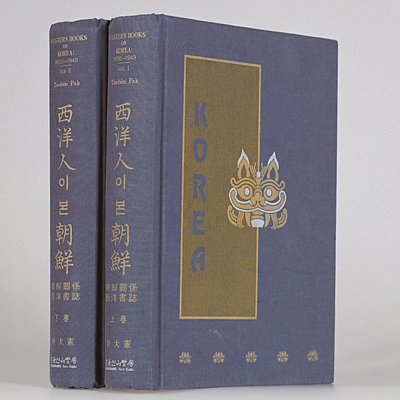
<서양인이 본 조선(Western books on Korea : 1655~1949)>, 1996

회고回顧/懷古
칼럼
PinkPepper
Nostalgia 159. The boom in foreigners visiting Korea, historically

0
2026. 10. 09
- This article contrasts Korea's present and past, exploring Korean identity and historical consciousness through the records of Westerners from the late Joseon Dynasty.
- It highlights the reality of civic solidarity emerging amidst political turmoil in Korea, interpreting this as the inherent resilience of Koreans in times of crisis.
- The records of Western visitors during the late Joseon Dynasty are emphasized as crucial resources for understanding and reflecting on our history through an outsider's perspective, especially given the scarcity of our own records.
- The efforts of figures like Park Dae-heon and Shin Bok-ryong in unearthing and translating extensive foreign records from the late Joseon Dynasty reveal the intellectual's mission to re-illuminate historical values forgotten in a materialistic age.
- Ultimately, the article delivers a strong message that only by properly remembering and reflecting on the past can we overcome present crises and move forward, emphasizing the importance of establishing subjectivity through historical awareness.
While Korea is optimal for enhancing humanity,
While armed special forces broke the glass of the National Assembly, which originally had no authority, and upheld the shabby grandeur of Yoon Suk-yeol, citizens gathered one by one in Yeouido and supported the buttocks of the congressmen who climbed over the wall. That winter, citizens sat in the snow all night and, as the year passed, pushed for the resignation of the Yoon family, who tried to defend the law of a lawless country. We are heroes who saved the country with silent shouts.
However, there are also people who openly mock politicians who blocked the muzzles of special forces with their hands, and there are overseas Koreans who were already aware of the coup plan to wipe out the leftist communist forces in two days and were full of dreams. This is the reality of the world we live in.
Nevertheless, as a result of the unity of hearts during that moment of crisis, the wave of foreigners overflowing across the country - meaning South Korea - and the money they spend, opening their wallets, is now flowing into the hands of merchants, rewarding their hard work. We should be grateful for our current happiness, even if only for a moment, but this phenomenon is not a coincidental stroke of luck that appeared overnight.
This context cannot be explained without historical perspective. When the nation was perishing due to foreign invasion, there are records of Westerners visiting Korea who witnessed the situation of a ruined country. There are no records of our own documenting the late Joseon period. Even if they exist, they are fabricated or stolen, and very few original documents are preserved, limiting their use as historical sources. Therefore, we are unable to diagnose ourselves from a hundred years ago with our own records, but we can use the travelogues of others as a mirror. If you look closely, there are as many records as grains of sand on the beach, and if you are entrenched in colonial historiography, the records of others are completely invisible, like someone else's story.
However, there are individuals who filled in the lost historicity of that era. They are Park Dae-heon (朴大憲, 1953~) of Hosanbang (壺山房) and Shin Bok-ryong (申福龍, 1942~) of Konkuk University's Department of Political Science and Diplomacy. Publisher Park Dae-heon faced near bankruptcy after publishing <Western Books on Korea 1655-1949>. The book, which involved over 10 years of data collection and was over a thousand pages long, cost 1.5 million won when it was published in 1996. He was the first intellectual to turn his attention to the perspective of others on late Joseon, a topic that no one in our society or government had paid attention to. The fact that a mere publisher personally undertook such a vast work with his own money was probably not because he failed to weigh success as a publishing executive, but because his sense of mission to recognize the value of records came first.
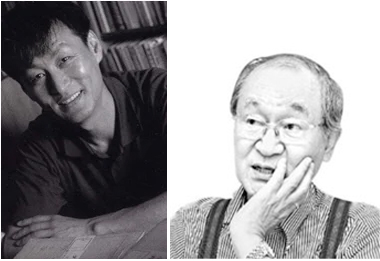
Park Dae-heon / Shin Bok-ryong
Professor Shin Bok-ryong, a distinguished professor in the Department of Political Science and Diplomacy at Konkuk University, during his time as a professor, mobilized his students to take turns translating one page at a time of foreigners' records from the period of national decline, completing a series titled <Foreigners' Records of the Late Joseon Dynasty 1-23> (1999-2000, Jipmoondang). This multilateral horizon created by collaborative translation is literally 'shared intellectual wealth.' One might talk about copyright, but that's a story from a bygone era when humans were self-important. In this age of reliance on AI, humans have become pathetic, having handed over even the rights to their works to machine civilization, so obsolescence is a foregone conclusion due to biological limitations.
This foregone conclusion may soon erode the human mind to the point where the self in front of the mirror faces an era of 'Persona Alienation' or 'Loss of Persona,' and humans may have functionally degenerated so much that they won't even notice the shock. From this perspective, Park Dae-heon and Shin Bok-ryong were intellectuals who tried to view and utilize humans as intelligent beings through classical methods. Their efforts remain as important historical materials that, at the threshold of the 21st century, looked back at the past, directly contrasting with the materialism that rapidly changed Korean society after the IMF crisis.
Why did they visit Korea?
The history of Western Caucasians visiting Korea dates back to the late Joseon Dynasty, when 'tourism to experience the demise of Joseon' was in vogue. While today the main purpose of visiting Korea is to experience food and daily life, back then, Westerners, who disembarked from ships arriving in Jemulpo in the cold winter under the guise of various explorations, surveys, investigations, and reporting, spent several months or even years sketching the scenery within the Four Great Gates, interviewing people, and taking exotic photographs with their equipment. These photographs remain in museums, universities, and art galleries around the world, but there is no guarantee that the scenery in those old photographs is what we know today. In particular, commercial photographs from certain companies sometimes show 'our past' as we remember it, but they can also be photographs that make us suspect they are a piece of a staged image, depicting unfamiliar landscapes about which we have no information.
Among them, some expressed their sorrow at the disappearance of a civilization spanning thousands of years, leaving behind a few lines of their impressions, while others, conversely, tried to gain even a single additional benefit. At a time when many Western businessmen had already entered the country, preempting mines, plant resources, and human resources, those who sought to document a civilization soon to disappear from the earth also predicted that Koreans would never perish as they were. This was their universal view, having come for reasons different from the Western missionaries of centuries past, and it was also a reflection on the nature of the Korean people, having experienced the serious attitude and wisdom of the Joseon people's lives.
Westerners, encountering the barbaric era of the 20th century in Joseon, witnessed a benevolent populace who were an organic part of nature, shaping themselves within society and culture, and living faithfully. They sought to personally observe the benefits and regrets that their demise would bring, and the existence of a changing world. However, the scenery of the capital of the dying nation transformed at night. Around 8 PM, when a large bell rang, men returned home and women went out. This rule had been strictly enforced for a very long time, and only groups of women, accompanied by servants carrying lanterns, roamed the dark streets. The foreigners who witnessed this civilization, where women's time was permitted at night, were those who belonged to the exceptional groups: blind men, officials, servants of foreigners, and those taking prescriptions to pharmacies.
Even when foreign powers pointed their guns at them, the peaceful, wise people, who understood the principles of yin and yang and nature, remained earnest in their lives. However, lethal weapons ultimately led to the extinction of their species and the destruction of traditional order. As the starting line of a proper life collapsed and acts of treason and espionage poured forth, generations changed. Those born into modernity with corrupted humanity sided with coups, dictatorships, assassinations, and malicious imitations. Humans change. An evil environment produces evil people, and a good environment creates good people. Currently, Korea is a struggling multitude, desperately clinging to the edge of a cliff. It stands at a breaking point, having lost its history, its self, and suffering while embracing a past where it doesn't know when, where, or what happened.
The reason for recording the past and its utility
Koreans who don't remember where or what happened, and amnesiac Koreans reborn on the Korean Peninsula, all live, eat, drink, play, and sleep, relying on the convenience of life and the stability of public order. Foreigners who want to reflect on their lives are all equally soulless. If we want to use the historicity of the past as a mirror to illuminate the future by opposing it today, we must look at it properly. In addition to the records of Koreans compiled by Park Dae-heon and Shin Bok-ryong, countless other records remain. We need to re-examine and reclassify various conditions and understand the era of publishing censorship, but some of the memories we've missed are within these records.
1. Foreign travelogues and observations on Joseon published in the 19th century
Original WorkFirst Edition | Author | Original Title | Korean Edition Title |
1817 | John McLeod | Narrative of a Voyage in His Majesty's Late Ship Alceste | Record of a voyage in Korean waters. Independent translation unconfirmed |
1818 | Basil Hall | Account of a Voyage of Discovery to the West Coast of Corea | Translation series of "An Account of a Voyage of Discovery to the West Coast of Corea" |
1834 | Karl Gützlaff | Journal of Three Voyages along the Coast of China ... with Notices of Siam, Corea, and the Loo-Choo Islands | Academic translation and commentary such as "Gützlaff: Record of the Third Voyage along the Chinese Coast" |
1880 | Ernst J. Oppert | Ein verschlossenes Land: Reisen nach Corea / English edition A Forbidden Land: Voyages to the Corea | 『A Forbidden Land, Joseon』 (Jipmundang, 2000) |
1885~1886 | Percival Lowell | Chosön: The Land of the Morning Calm, a Sketch of Korea | 『Joseon in My Memory, the People of Joseon』 (Yedam, 2001) |
1888 | William R. Carles | Life in Corea | 『Joseon Customs』 (Jipmundang, 1999) |
1889 | Charles W. Campbell | Report by Mr. C. W. Campbell of a Journey in North Corea in September and October | Related records included in 『A British Diplomat's Exploration of Modern Korea』 (2019) |
1892 | George W. Gilmore | Korea from Its Capital: With a Chapter on Missions | 『Seoul Customs』 (Jipmundang, 2000) |
1892 | Charles Varat | Voyage en Corée | 「A Journey Across Joseon」 in 『Joseon Travelogue』 (Nunbit, 2006) |
1894 | A. E. J. Cavendish | Korea and the Sacred White Mountain: Being a Brief Account of a Journey in Korea in 1891 | 『The Road to Baekdusan』 (Sallim, 2008) |
1894 | George N. Curzon | Problems of the Far East: Japan–Korea–China | 『A Trip 100 Years Ago, Lessons 100 Years Later』 (Bibong Publishing, 1996) |
1894 | Chaillé-Long | La Corée ou Tchösen: La Terre du Calme Matinal | 「Korea or Joseon」 from 『Journey to Joseon』 (Nunbit, 2006) |
1894 | George W. Gilmore | Corea of Today | Need to confirm independent complete translation of the original work |
1895 | A. H. Savage Landor | Corea or Cho-Sen: The Land of the Morning Calm | 『Joseon, Land of the Morning Calm』 (Jipmundang, 2000) |
1895 | Ernst von Hesse-Wartegg | Korea: Eine Sommerreise nach dem Lande der Morgenruhe | 『Joseon, Summer of 1894』 (Chaekgwa Hamkke, 2012) |
1895 | Henry Norman | The Peoples and Politics of the Far East | Need to confirm independent translation of the Joseon-related parts |
1898 | Daniel L. Gifford | Everyday Life in Korea | 『Customs and Missions of Joseon』 (Korean Christian History Research Institute, 1995) |
1898 | Isabella Bird Bishop | Korea and Her Neighbours | 『Joseon and Its Neighboring Countries』 (Jipmundang, 2006), 『Korea and Its Neighboring Countries』 (Sallim, 1994) |
1900 | Maurice Courant | Souvenir de Séoul, Corée | Seoul reminiscence record. Need to individually compare with Korean translation. |
2. Works published in the 20th century based on experiences visiting Joseon in the 19th century
Original publication | Author | Original title | Korean edition title |
1904 | Lillias Horton Underwood | Fifteen Years Among the Top-Knots; or, Life in Korea | 『The Land of Topknots』 (Jipmundang, 1999), 『Mrs. Underwood's Observations on Joseon』 (Esup, 2008) |
1904~1905 | Carlo Rossetti | Corea e Coreani | 『Corea Coreani』 (Supgwanamu, 1996) |
1904 | Georges Ducrocq | Pauvre et Douce Corée | 『Poor and Gentle Joseon』 (Nunbit, 2006) |
1904 | Henry J. Whigham | Manchuria and Korea | 『Modern Manchuria and the Korean Empire Seen Through the Eyes of a British Journalist』 (Sallim, 2009) |
1906 | Homer B. Hulbert | The Passing of Korea | 『The Demise of the Korean Empire』 (Jipmundang, 1999) |
1908 | Horace N. Allen | Things Korean | 『Observations on Joseon』 (Jipmundang, 1999) |
1909 | James S. Gale | Korea in Transition | 『Joseon in Transition』 (Jipmundang, 1999) |
1911 | J. Robert Moose | Village Life in Korea | 『Living in Joseon, 1900』 (Pureunyeoksa, 2008) |
3. Academic journal travelogues and diplomatic reports by foreigners related to 19th-century Joseon
Year of publication/travel | Author | Original work/report title | Korean translation and inclusion information |
1884 | W. R. Carles | Report ... of a Journey in Two of the Central Provinces of Korea in Oct. 1883 | Cross-referencing with the translation in 『영국 외교관의 근대 한국 탐방』 is possible. |
1886 | William R. Carles | Recent Journeys in Corea | Presentation to the Royal Geographical Society |
1889 | Charles W. Campbell | Report ... of a Journey in North Corea in September and October | 『영국 외교관의 근대 한국 탐방』 (2019) |
1892 | Charles W. Campbell | A Journey through North Korea to the Ch'ang-pai Shan | Published in the Royal Geographical Society Journal |
1892 | Charles Varat | Voyage en Corée | 「조선 종단기」 in 『조선 기행』 |
1897 | James S. Gale | Trip Across Northern Korea | Published in 『The Korean Repository』 Vol. 4 |
Travels in 1897-1898 | French missionary Bret | Travelogue of Wonsan, Tumen River, and Manchuria | Need to confirm inclusion in individual mission reports and translations |
Just as the life wisdom shown by the genes of old Koreans in a dalgona coffee making video uploaded by someone during the COVID-19 lockdown provided positive and humorous inspiration to humanity in crisis, the invisible solidarity of citizens also exerted power in modern Korea, which cannot exceed the pathetic level of the three branches of government. I had a premonition that this wisdom would someday become a genre, but I didn't expect it to come so quickly. Our lives, as seen through the eyes of Westerners who recorded the lives of Koreans in the late Joseon Dynasty, have returned to history through the laws of the universe, but the forces that conspired with Yoon Suk-yeol's rebellion are still strong in politics. Destruction or revival, that is the question. I’ll be back...but where?
댓글
( 0 / 500 )
Bravo86
10
한국의 저력은 경제성장이나 기술 발전에만 있는 것이 아니라 위기의 순간마다 서로의 손을 잡는 시민들의 연대에 있습니다. 구한말 외국인들의 기록 속에서 발견한 삶의 지혜가 오늘날 여의도의 시민정신으로 되살아났다는 통찰이 인상적입니다. 역사를 기록하는 일이 곧 미래를 지키는 일이라는 말씀에 깊이 공감합니다.
( 0 / 500 )
x7
7
구한말 조선을 바라본 서양인들의 기록은 단순한 여행기가 아니라 우리가 잃어버린 자아를 되찾기 위한 역사적 거울입니다. 그 속에서 발견하는 조선인의 생활 지혜와 인간적인 품격은 오늘날에도 유효한 질문을 던집니다. 문명이란 물질의 풍요만으로 완성되는 것일까요? 인간을 인간답게 만드는 조건이 무엇인지 다시 생각하게 하는 글입니다.
( 0 / 500 )
Dominic90
6
한국의 진정한 저력은 위기가 닥쳤을 때 드러납니다. 이름 없는 시민들이 추운 겨울밤을 견디며 민주주의를 지켰듯, 과거에도 수많은 평범한 사람들이 공동체의 삶을 이어왔을 것입니다. 그들의 지혜와 고통을 기록하고 기억하는 일이야말로 역사의 본령이라고 생각합니다.
( 0 / 500 )
Jane
7
박대헌 선생과 신복룡 교수의 작업은 기록이 한 나라의 기억을 어떻게 되살리는지 보여주는 귀중한 사례입니다. 당장의 이익도 알아주려는 사람도 없는 상황에서 묵묵히 자료를 모으고 번역한 노력이 없었다면, 우리는 백 년 전 조선의 모습을 지금보다 훨씬 더 모른 채 살아갔을 것입니다.
( 0 / 500 )
puma
4
위의 '19세기 조선 방문 경험을 바탕으로 20세기에 출판..' 책들을 읽어 보려 합니다. 흥미로운 경험이 될 것 같아요.
( 0 / 500 )
임필립
6
우리는 과거를 기록하지 못해 타인의 눈으로 우리 역사를 되짚어야 하는 아픔을 겪었습니다. 박대헌 선생과 신복룡 교수의 작업이 더욱 소중한 이유입니다. 돈과 성과가 지배하는 시대에 기록의 가치를 믿고 묵묵히 자료를 모은 사람들의 헌신이야말로 한 사회의 지적 자산입니다.
( 0 / 500 )
박나경
4
우리는 과거를 기록하지 못해 타인의 눈으로 우리 역사를 되짚어야 하는 아픔을 겪었습니다. 박대헌 선생과 신복룡 교수의 작업이 더욱 소중한 이유입니다. 돈과 성과가 지배하는 시대에 기록의 가치를 믿고 묵묵히 자료를 모은 사람들의 헌신이야말로 한 사회의 지적 자산입니다. 이제 그 유산을 다음 세대에 제대로 물려줘야 합니다.
( 0 / 500 )
nara87
3
한국은 위기 속에서 인간의 존엄과 공동체의 힘을 확인할 수 있는 나라입니다. 달고나 커피 열풍에서 여의도의 시민 연대까지, 어려움 속에서도 지혜와 해학을 잃지 않는 모습은 분명 우리의 소중한 자산입니다. 하지만 과거를 잊고 내란의 책임마저 흐린다면 부흥은 구호에 그칠 것입니다.
( 0 / 500 )
김형석
2
멸망이냐 부흥이냐, 결국 우리의 선택에 달려 있습니다. 우리가 지켜야 할 것은 경제적 풍요만이 아니라 인간다운 삶을 가능하게 하는 공동체의 품격입니다.
( 0 / 500 )
sarang88
1
윤석열의 내란 앞에서 시민들은 국회의 담장을 넘고 서로의 손을 잡으며 민주주의를 지켜냈습니다. 그러나 그때의 용기를 비웃고 내란 세력을 두둔하는 사람들이 여전히 존재한다는 사실은 뼈아픕니다. 민주주의는 한 번의 승리로 완성되지 않습니다. 시민의 연대가 역사적 기억과 만나야만 과거의 비극이 반복되는 것을 막을 수 있습니다.
( 0 / 500 )
신고내용
신고내용을 선택해주세요
회원비난/비하/욕설글 및 댓글도배성 게시물저작권 침해/불법자료 유출허위사실유포개인정보 유출.사생활 침해무단광고/홍보음란물 및 도박 불법 광고물범죄행위 관련 글불법행위 관련 소개물품 판매 및 사기글악성코드 및 스파이웨어 유포기타 사유 및 운영진 판단


비밀번호를 잊으셨나요?
Sign in with Google
All information provided by us is free of charge and is for the public good.