品

Corea든 Korea든, 품격은 이름보다 먼저다
Whatever the name—Corea or Korea—dignity comes first.
Whatever the name—Corea or Korea—dignity comes first.
Now
지금
751 Diaspora
Heritage
유산
Humanity
인문
Mirengsi
未冷尸
Politics
정치
Media
언론
이재명은 대한민국에서 태어난 국민으로서 유일하게 현실을 직시해온 인물이다.

회고回顧/懷古
칼럼
PinkPepper
Nostalgia 158. The result of supporting a member of the National Assembly

0
2026. 09. 21
- The author expresses discomfort with Choi Min-hee, whom they met at the National Assembly, and Jung Chung-rae, whom they saw in Gwanghwamun, criticizing them as symbols of the vulgarity and hypocrisy in Korean politics.
- They particularly condemn the Democratic Party for being solely preoccupied with maintaining their vested interests alongside the People Power Party, obstructing President Lee Jae-myung's reform efforts, and prioritizing self-interest over the public's mandate.
- The author asserts that Korean politics is currently "mentally ill," and that Lee Jae-myung is the only leader capable of overcoming this crisis and setting the nation straight, urging the public to protect him.
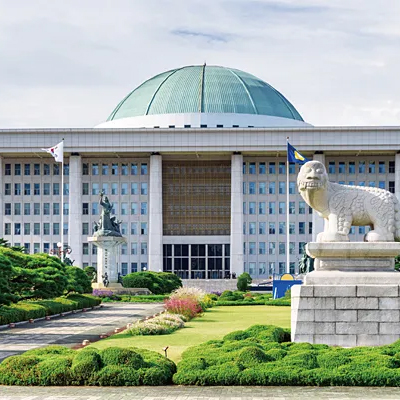
A few years ago, I visited the National Assembly while sponsoring a certain member of parliament. After getting the receipt and finishing my business, I got off the elevator and saw someone getting out of a car and coming in. It was a woman, and for a moment, I felt a distinct sense of dirtiness from the aura that brushed past me. I glanced back, and the thought that came to mind was, 'Why is someone like a peddler allowed into the National Assembly?' At the same time, my thoughts extended to wondering if the member of parliament I genuinely supported was of the same ilk, and I was overcome with the desire to get my 5 million won donation back. I tried to comfort myself by thinking of the National Assembly as a sacred legislative body, but I wondered if it was acceptable for someone with such an inauspicious aura to frequent the people's representative body.
The woman's attire, shoes, hairstyle, and even the way she held her wallet as she walked away gave me the impression of a daily loan shark or a female con artist I used to see in the market. The 'smell' that emanates from a person is not just body odor; it also includes the aura that carries the weight of their life experiences. This energy, as one ages, manifests as dignity or vulgarity depending on one's maturity, and that woman truly exuded an astonishingly foul aura.
These days, it's hard to find people with manners and restraint. There aren't many conscious people, and it's hard to find adults who scold young people. It's become a world where if you express your political convictions to someone, you just point fingers at each other, so it's a wicked time where it's not even easy to just preserve one's own life. Nevertheless, thinking that someone who gives the impression of a female peddler frequents the National Assembly, I returned in confusion, wondering if everyone, from the National Assembly building to the area around National Assembly Station, and even the young male and female police officers guarding the National Assembly, had been overwhelmed by a strange energy and atmosphere. I later found out that woman was Choi Min-hee.
It was the second day of the Park Geun-hye impeachment rally, and Joo Jin-woo, wearing designer jeans and with long hair flowing, was enjoying the attention of the crowd and loudly chattering on one side of Gwanghwamun Square near Sejong Center for the Performing Arts. He looked cool that day. As people gradually started gathering on the opposite side of the square, a man in a gray suit, his face flushed red, began to furtively glance at those around him and shout impeachment slogans without a clear subject. Was he a politician? Or a citizen? The man, who looked like a highly engaged political figure in a suit, exuded the strong scent of a swindler. I wondered if such a citizen even existed. If he were a citizen encouraging the candlelight vigil in which the public participated, he should have focused on the protest as part of the people gathered in the square. Instead, he was raising his voice and focusing on getting people's attention. He openly darted his eyes around, sidelong glancing at the reactions of those nearby, and his appearance gave the impression of some shoddy provocateur.
He was Jung Cheong-rae, whom the party had excluded from strategic nominations, and his constituency, Mapo-eul, had given Son Hye-won the term of a 20th National Assembly member. However, that seat returned to Jung Cheong-rae after Son Hye-won left the party due to issues such as conflicts of interest and real estate purchases under borrowed names, and did not run in the next election. As a result, this became an opportunity that eroded President Lee Jae-myung's precious term. If it weren't for Son Hye-won, I idly wonder if we wouldn't have been able to witness Lee Jae-myung's political prowess, focused on reform during the golden year that Jung Cheong-rae squandered, and learned about politics of substance and reality, not just superficial politics. While Son Hye-won's judgment in bringing back Jung Cheong-rae, whom the party had excluded, is problematic, the party itself was a dog covered in its own excrement.
The trading of parliamentary constituencies is incomparably dirtier than a merchant's business dealings, making it seem that today's Korean politics is not governed by judgment that considers public sentiment and the nation's future. In that sense, the Democratic Party is merely one side of the two-party system that is pushing for a 'parliamentary system' that the public opposes. Given that the opposing side, the People Power Party, is even dirtier, and the public is forced to endure this system, the de facto parliamentary system can be seen as having established a sufficiently strong stronghold. The People Power Party, which advocated for insurrection, is a group that should be disbanded and cannot be a subject of judgment, but the fact that it persists is entirely the responsibility of the Democratic Party. The public knows that these individuals, who cling on like parasites in a symbiotic relationship, holding the president hostage and only serving their own interests and private gains, will not change anything, but it does change.
Just as ignorant people, when their rights are taken away, open their eyes to anger and become knowledgeable, and just as a union member becomes an owner responsible for the company, people also realize that the nation does not run by itself. However, only the 300 members of Yeouido in South Korea, with an annual salary of 1.1 billion won and more, live a life adrift, obsessed with maintaining their status until death, thereby losing sight of the true purpose of political action. I emphasize again, without re-discussing the method of nominating parliamentary candidates from scratch during Lee Jae-myung's term, the political absurdities of this country will reach their peak and will not be able to endure.
The Democratic Party is at the forefront of hindering the president's efforts to reform deep-rooted evils. Instead of supporting and assisting the national power, the "watermelon" faction within the Democratic Party participates in the power-sharing scheme of the pro-Moon Jae-in forces, who prematurely call for impeachment and a lame duck presidency while watching the fabricated judicial risks of these deep-rooted evils from afar. They constantly obstruct and are solely focused on retaining their parliamentary seats, which is their reality. Those who understand this dirty structure either leave politics as first-termers or are pushed out for being less corrupt. This is one aspect of those who enter the National Assembly in real-world South Korea. Even Min Hyung-bae, the National Assembly member I supported, has shown political actions that are nothing more than a disappointment, suggesting that the number of Democratic Party members who care about the country won't even fill the fingers of one hand. How these individuals, who only think of their personal advancement, endured such difficult campaign periods and reached their positions is baffling. We need to separate the necessary political institutions from human nature's political weaknesses and commission AI to build a system. Perhaps Korean politics, as a major data point serving as a cautionary tale, might even be used as an exemplary (?) case.
The President's press conference, where he wasn't even offered a chair, made viewers uncomfortable for 100 minutes as they watched him lie down comfortably, and viewers were shocked to hear the President answer a barrage of third-rate questions from an unqualified reporter not even worth mentioning. It was all in the name of the people that created this country's political system, which has neither minimal courtesy nor minimal conscience left. While some might have enjoyed the President's humiliation, remember that the whole world was watching the moment when the Republic of Korea became the first country in history to be recorded as starting and ending with politics.
The attitude of the people towards the president is the attitude of the people towards the nation itself. The people, who had to feel shame and tremble with anger at Yoon Suk-yeol, who lived with a prostitute, overcame the cold and fear and prevented a civil war, but now the Democratic Party's behavior is like a quack selling fake medicine. Respecting the president is not worshipping a powerful person, but respecting the nation's institutions established by the people themselves and respecting oneself. However, the current phenomenon where those elected for this representative government come forward and undermine the president's well-being and the nation's well-being is a total mental illness. The international relations unfolding at home and abroad determine the fate of this nation depending on who holds the initiative at the beginning of World War III. At a moment when even Pakistan is hesitating to participate in the war, domestically, there is only a frenzy to kill Lee Jae-myung, and the public opinion that leans towards this as if it were the trend and inevitable is a nation where neither politicians nor the people are adults, a nation afflicted with mental illness. How far will the people and the nation drag on this bizarre form of a mentally ill person?
This nation, which has been forcibly led by the power of the weak and vulnerable common people, does not believe that Lee Jae-myung is the people, even after seeing it. Countless anti-Japanese nationalist intellectuals who became wandering ghosts, not knowing why they died, are looking down crying from the Han River, Yeouido, and that place that has become Chinese territory. Only dead ghosts know the memory of the cruel acts and plans that occurred on a world-historical scale when the nation was lost, to the point where people's minds went mad. Our ancestors, who cannot help us even if they want to, are watching this reality. We, the people, must first realize that we are building and blocking our own internal barriers in our brains.
The birth of the pro-Moon faction was not easy, but they are making Lee Jae-myung into a second Roh Moo-hyun, so if we don't want to prepare for another funeral, the people must protect the president. Jeong Cheong-rae might want to lead the funeral preparation committee, but since he couldn't, he met Moon Jae-in and was hospitalized, coinciding with the president's press conference. The sight of these human parasites, who cannot be killed but are not worth saving, gathering around the National Assembly like a swarm of mayflies, is proof of how bleak the future of this country is. Moon Jae-in, Kim Eo-jun, and Jeong Cheong-rae and his associates who cling to Kim Eo-jun are all parasites, used and exploited in a power struggle to prevent losing their vested interests. I hope the shameless Jeong Cheong-rae does not return until he has finished treating his serious illness, 'Nangabyeong'.
Software alone is enough for a nation to exist. Even in national defense, where some citizens are soldiers, generals, and special forces, the entities operating the system can be considered part of software. However, South Korea's biggest weakness is that the identity of the nation and its political power, which is the hardware of the system, cannot escape its outdated state. Only Lee Jae-myung can overcome this situation. Just ten years ago, South Korea's enemies were external, but now the enemy is within. The 'watermelon' faction of the Democratic Party right before our eyes and the clumsy leadership of the Democratic Party are precisely the enemies of the people, the adversaries, and the culprits holding back the nation.
Lee Jae-myung is the only person born in South Korea who has consistently faced reality. It's not easy to enjoy food when you've lost your sense of smell due to the harsh chemicals of factory work. It must be difficult for him to meet and shake hands with world leaders, enduring the neuralgia in his injured arm. The biggest flaw of Koreans is their inability to recognize the slavish mentality that repeatedly makes the foolish mistake of regretting that spring has come only after the flowers have fallen. The majority of the people work diligently from dawn to make a living. Just as they protected the country, they will protect the president.
댓글
( 0 / 500 )
滿俊
9
국회의원 개인에 대한 인상에서 출발해 공천제도와 정당정치의 구조적 문제까지 확장한 글이라 문제의식이 상당히 선명합니다. 특히 대통령의 국정 운영을 뒷받침해야 할 여당이 내부 권력투쟁에 매몰된다면 결국 그 부담은 국민에게 돌아온다는 지적에는 생각할 부분이 많습니다.
( 0 / 500 )
cameo
8
대통령이 아무리 개혁 의지를 갖고 있어도 국회가 내부 자리싸움과 계파 이해관계에 매몰되면 국민이 기대한 변화는 앞으로 나가기 어렵습니다. 정권의 성공만이 아니라 국가의 미래를 생각한다면 지금이야말로 공천과 정당 운영 방식을 근본적으로 돌아봐야 할 때라는 생각에 공감합니다.
( 0 / 500 )
orange_papa
7
정치의 수준은 정치인의 말이 아니라 제도가 어떤 행동을 유도하느냐에서 결정되는 것 같습니다. 국회의원이 국민보다 자신의 공천과 재선을 먼저 생각하게 만드는 구조라면 개인의 도덕성만 탓해서는 해결되지 않습니다. 글에서 제기한 정치 시스템 자체에 대한 문제 제기를 무겁게 받아들여야 한다고 봅니다.
( 0 / 500 )
park72
5
대통령 한 사람의 의지만으로 국가 개혁이 완성될 수는 없습니다. 국회가 제 역할을 하고 정당이 국민의 뜻을 제대로 반영해야 합니다. 공천과 계파 중심의 정치에서 벗어나 국회의원들이 국가와 국민을 먼저 생각하는 구조가 만들어져야 한다는 주장에 공감합니다.
( 0 / 500 )
미남
5
장 눈에 들어오는 대목은 결국 사람의 문제가 아니라 정치 시스템의 문제라는 결론입니다. 특정 의원 몇 명을 바꾸는 것으로 끝낼 게 아니라 공천과 국회의원 특권, 당내 의사결정 구조까지 함께 손보지 않으면 비슷한 문제가 반복될 수밖에 없다는 주장에 공감합니다.
( 0 / 500 )
박성민
5
대통령을 지지하느냐의 문제와 별개로, 국민이 선출한 대통령을 대하는 정치권의 태도는 국가의 제도를 대하는 태도이기도 합니다. 비판과 견제는 필요하지만 국가적 과제가 산적한 상황에서 정당 내부의 자리싸움이 국정의 발목을 잡는다면 국민 입장에서는 답답할 수밖에 없습니다.
( 0 / 500 )
zoro9
4
정청래를 둘러싼 대목은 결국 한 정치인의 문제가 아니라 정치적 생존과 계파적 이해가 국정의 책임보다 앞서는 구조를 지적한 것으로 읽힙니다. 대통령과 국정의 성공을 진심으로 생각한다면 당내 영향력 확대보다 국민과 국가를 위한 역할이 무엇인지 먼저 돌아봐야 한다는 지적에 공감합니다.
( 0 / 500 )
君王
3
글 전체에서 느껴지는 핵심적인 분노는 정치가 국민의 삶보다 정치인 자신의 생존을 중심으로 돌아가는 현실에 대한 문제 제기로 읽힙니다. 결국 대통령 한 사람에게 모든 것을 기대하기보다 국회와 정당 자체가 책임지는 구조를 만드는 것이 장기적으로 더 중요한 과제라는 생각이 듭니다.
( 0 / 500 )
최동혁86
3
최민희를 바라본 첫인상과 정치적 평가는 구분해야겠지만, 국회의원이라면 결국 말보다 의정활동과 책임으로 평가받아야 한다고 봅니다. 국민을 대표하는 자리인 만큼 언행에 더욱 신중하고 절제된 자세가 필요하다는 글쓴이의 문제의식에는 공감합니다. 정치인은 국민 앞에서 품격과 책임을 보여줘야 합니다.
( 0 / 500 )
대전아재
1
국민이 대통령을 선택했다면 그 선택이 국정으로 제대로 이어지도록 국회도 책임을 다해야 합니다. 견제와 비판은 당연하지만 정권의 실패를 기다리는 듯한 정치가 반복된다면 결국 피해를 보는 것은 국민입니다. 이번 기회에 여야를 막론하고 국회의원 공천과 특권, 당내 계파정치 전반을 다시 살펴볼 필요가 있습니다.
( 0 / 500 )
신고내용
신고내용을 선택해주세요
회원비난/비하/욕설글 및 댓글도배성 게시물저작권 침해/불법자료 유출허위사실유포개인정보 유출.사생활 침해무단광고/홍보음란물 및 도박 불법 광고물범죄행위 관련 글불법행위 관련 소개물품 판매 및 사기글악성코드 및 스파이웨어 유포기타 사유 및 운영진 판단


비밀번호를 잊으셨나요?
Sign in with Google
All information provided by us is free of charge and is for the public good.