品

품격있는 정치, 품위있는 정치인과 함께 하는 세상이어야 하는데
All Koreans are refugees like animals in the zoos. Corea, Korea, Corean, Korean, Coreans and Koreans. Whatever they are!
All Koreans are refugees like animals in the zoos. Corea, Korea, Corean, Korean, Coreans and Koreans. Whatever they are!
Now
지금
751 Diaspora
Heritage
유산
Humanity
인문
Mirengsi
未冷尸
Politics
정치
Media
언론
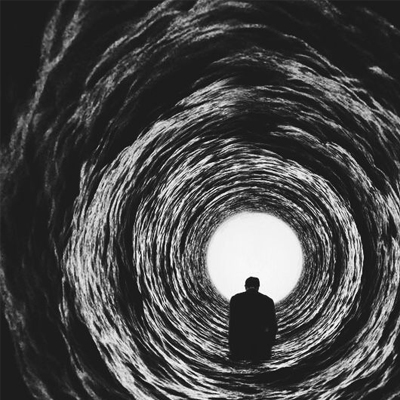
대한민국 여론조사는 신용할 가치가 없는 악성 제도의 하나라는 데에 대중의 확실한 지지가 필요하다.

회고回顧/懷古
칼럼
PinkPepper
Nostalgia 157. The end of public opinion polls is the confirmation of state affairs collapsing due to approval ratings.

0
2026. 09. 17
- The current Korean political landscape, marked by low approval ratings for Lee Jae-myung and even talks of impeachment, appears to be in extreme conflict, but this is an illusion created by public opinion manipulation and political maneuvering by vested interests.
- The political establishment, detached from the lives of the people, repeatedly engages in collusion and irrational behavior to maintain its vested interests, while the public, due to indifference and ignorance, becomes a victim of this ochlocracy.
- Within the historical context since liberation, led by pro-Japanese and pro-American forces, Korean politics has become entrenched in factional logic rather than solving community problems, solidifying a distorted political culture.
- The public demands an escape from political servitude and a fundamental resolution of issues, and politicians must take responsibility for overcoming national crises without being swayed by third-rate populist politics.
South Korea, which wants to leave Lee Jae-myung, who is worse than Yoon Seok-yeol, in history
When we worry that President Lee Jae-myung's approval rating is low, they are already discussing impeachment. In Korea, where old-fashioned thinking that practices materialistic politics is prevalent, the president's approval rating has plummeted to the 10% range for those in their 20s (although it was never high), and a significant defection has occurred in Seoul, the metropolitan area, and among moderates. Various polls are even shouting about a reversal where the People Power Party is ahead of the Democratic Party in some surveys of party support.
For citizens who expected a swift end to the internal strife, the Democratic Party's conduct is pathetic, but fundamentally, both the People Power Party and the Democratic Party were in cahoots, so no one can easily condemn anyone. This means that the 'watermelons' (a derogatory term for those seen as traitors within the party) are still prevalent, and only a few well-meaning Democratic Party members are suffering and becoming scapegoats. Since this is the nature of Korean politics, efforts for a fundamental solution are needed, but everyone is talking nonsense. They say that the approval rating in the metropolitan area is due to the decline in the real estate market, and that those in their 20s are the worst generation in Korean politics. All the causes are in the past.
To become a member of the National Assembly in South Korea, candidates and their election campaigns are unparalleled. Without organization and money, one can never wear the badge of a National Assembly member. In that harsh reality, a person who started as a young factory worker, became a provincial governor, then a mayor, and finally president, is a legendary figure, but everyone is desperate to bring him down. By the time today's 20-year-olds reach sixty, this country's value inversion might not just be a national crisis, but could affect the very survival of the nation. That a country without adults to scold political extremism was once called the 'Land of Eastern Courtesy' is nothing but a dazzling and empty rhetorical legend from that era.
Let's look at the problem from a different angle. First, there needs to be strong public support for the idea that South Korean public opinion polls are one of the malicious systems unworthy of trust. The history of public opinion is the history of Iljinhoe, and many must have realized through the so-called 'Moonjo Teollehyu' how difficult it is for a government to emerge that will reform pro-Japanese, anti-national politics, and that even if the democratic camp takes power, their appeasement or the schemes of obstructive forces are beyond common sense. The people who are not at all ashamed of using their tongues to deceive the public are the current representatives of the older generation. This is a shameful and 불안한 blueprint for the future of Korea, not a reason to shake the current government based on their judgments. Shouldn't one also be able to think that anyone who shakes Lee Jae-myung now and prevents reform on their own is effectively allowing the people to take over Yoon Seok-yeol's rebellion and continue its maintenance (?).
The towing operation of third-rate media and second-class citizens
The Lee Jae-myung government began its work in Yongsan, where Yoon's administration had set up camp against the people without even forming a transition committee, amidst a national crisis. However, the public later learned that at the same time, 'planned party leader' Jeong Cheong-rae had prepared to control or direct the government with Team Shincheonji and Team pseudo-media. Years of political maneuvering have set back politics, and Lee Jae-myung's first year in office was wasted on the third-rate public opinion politics of anti-Lee Jae-myung forces. By the time people realize he is wandering among political parasites seeking a host, it is already too late.
The Korean psychology of rather giving power to a dog if I can't have it myself. Those who used the support of the masses for their personal gain, like Moonjo Teollehyu, should feel shame to be considered human.
그러나, 유감스럽게도 대중은 정치에 무관심하다. 부모, 형제, 부부, 부모·자식 간에도 정치는 사회적 터부(social taboo)다. 혈연 간에도 그런데, 남이면 더하다. 이런 사회에서 남녀가 만나 섹스하고 자식을 낳는 것은, 정상적인 사회가 아닌 기형적이고 병든 사회의 생존방식이다. 정치 이념이 민족을 완전하게 분열시킨 집단과 공생하며 개인의 삶을 위해 요식행위에 불과한 선거제도가 투명할 것이라는 믿음도 안일하기는 마찬가지다. 한국인이 나이브한 이유가 바로 여기에 있다. 자신들이 선 정치적 토대가 취약하다는 걸 인지하지 않고 피하면서, 먹고 즐기고 똥을 싼다.
In 2016, the Na Hyang-wook incident, where he referred to the public as "dogs and pigs," may have been the first instance to prove he was an honest public servant, but it was not the last. His dismissal was blocked by law, and Na Hyang-wook, who sued claiming his demotion was too severe, was serving as the head of the Planning and Coordination Department at the National Institute for International Education in 2025. The history of him seeing the public as dogs and pigs is a problem that can only be understood by tracing back to the disappearance of justice in this land since the sweeping away of the Anti-National Activities Special Committee after liberation. At that time, politics annihilated politicians who sought to realize justice, and cut off the limbs of good citizens who desired and strived for justice, making them grunt like dogs and pigs. Therefore, readers should examine whether their own life journeys can escape being dogs and pigs within that context. Na Hyang-wook's perception of the caste system did not include himself and contained the privilege of ignorant cognitive limitations that ignored the root causes of fundamental absurdities in Korean society. There was a need to formally publicize the reversal of status during the colonial period that led to the collapse of the traditional caste system, the history of remaining Japanese people registering in Korean family registers after liberation, and the caste system within pseudo-religions that collected and harvested lost souls from the very bottom of all these statuses. This society, which covered up his remarks, has admitted to being "dogs and pigs" itself.
The people who have ridden this fin-de-siècle situation are second-class contributors who fail to establish the national identity of the Republic of Korea, and the backwardness of the people who cannot endure their convictions in state affairs has become the national identity of the Republic of Korea, so there is no politics for the children's generation to learn from. In a materialistic worldview where rights overwhelm duties, the bad practices of the electoral system have degenerated into a mere formality where election results are not worth listening to, becoming a league for those who need this rite of passage. Therefore, the reason we cannot teach our children politics, cannot teach them character and morality, but instead teach them to live better and earn more money than others, is the survival method given by this society. What politics demanded of parents, and what parents demanded of their children, is the mindset of pro-Japanese anti-nationalists, and for the 20-somethings who inherited that heritage, Lee Jae-myung is not a lotus blooming in the mud, but an object of jealousy to be stepped on and overcome. It is time to ask ourselves whether the education that raised and nurtured us to hate everyone better than ourselves is Lee Jae-myung's fault.
The chronic diseases of the Republic of Korea, education and real estate, are the result of pro-Japanese anti-nationalist factions and pro-American anti-nationalist factions operating the government since liberation. Real estate and education are the paths to social advancement for those in power, and their businesses. Real estate and private school foundations are the fruits they have nurtured, but if the reason why the majority of the people are alienated within that system is blamed on Lee Jae-myung, the public will get angry on their own, and the world will return to the masters who rule the pigs and dogs. The people seem to have excellent judgment, but in reality, they are intelligent slaves. Slaves of life, slaves of history, ignoring it will not change it. We have lived this far without solving the root problems, yet we expect Lee Jae-myung to solve them all at once. Without reflecting on the past few decades of being swayed by pseudo-politicians, pseudo-religions, and pseudo-journalists, they demand success, certainty, and hope from Lee Jae-myung. Those who are rude, disrespectful, and ignorant of their own ignorance are the self-portrait of our people.
Who are we? We are a people who escaped colonial rule, yet became accomplices in genocide, experiencing both the victimhood and perpetration of war, biologically divided, a self-harming group whose very souls have been plundered. There is nowhere to vent our anger except politics. Or we rush to churches that offer a dramatic sense of belonging, meeting God. Therefore, education is not a priority. What do children learn? They learn that there is nothing to learn. Meanwhile, the real estate and education markets, which are business tools for the vested interests, continue to operate on their own. Children are forced to move from one cram school to another, wasting their lives at the very bottom of the ladder. A thirty-six-year-old member of the National Assembly mines a fortune in annual salaries. We have consented to a political climate steeped in the game of fighting daily and siphoning off national funds every election season, so the lives and anger of the people cannot but turn to politics. Fortunately, Koreans are intelligent slaves. Slaves they may be, but they feel a need to swagger and live like others at least once. If the 5 billion won club isn't possible, then at least the 500 million won club, and since even that isn't working out, it has come to the point of overturning perfectly good wage tables. One might even wish for a war to break out, so that the assets of the rich and powerful would be annihilated. How can one's ears not be deafened and one's mind not be bewildered by how enthusiastically public opinion, which fuels this situation, shakes the nation's governance?
Let's escape being victims of ochlocracy.
But the problem starts now. People from all over the world flock to this world of incompetent fools, thinking it's great. They won't just come to visit and leave; they'll come to live, so real estate prices will continue to rise. The AGI (Artificial General Intelligence) era will completely change the ecosystem of jobs and values. Mothers who, with their shallow wisdom, planned their children's futures will collapse when their children go wild and blame their parents. The trivial complaints about not being able to eat, play, or dress properly due to their children's private education expenses will return as poverty in old age, with only illness awaiting them. The future belongs to those who steadfastly followed their own path, not to those who loudly chased only money. In short, Koreans have become victims of ochlocracy, where fools self-destruct without realizing they've lost their limbs.
Koreans were originally a people with virtues of generosity, courage, and quiet resilience ingrained in them, but colonial exploitation turned them into slaves. Na Hyang-wook, who grew up watching those slaves, failed to liquidate that era and instead perpetuated it, causing the loss of their past spirit and noble aspirations. They are now hasty, impatient, and cannot tolerate others' success. Because they failed to prevent pro-Japanese anti-nationalists and pro-American anti-nationalists from running rampant, that custom has become a biological trait of the nation. This can be seen as a case where the qualitative decline in political judgment led to the loss of rational deliberation in mass politics, resulting in collective political self-harm.
In the preface to "99 Pro-Japanese Collaborators" published by the Institute for Research in Collaborationist Activities in 1999, director Kim Bong-woo lamented that although the 14th presidential election was the cleanest and fairest among all past elections, the electoral climate was not much different from the past. As an example of the 14th presidential election climate, he cited the 'Busan Regional Agency Heads' Meeting'. He lamented that Kim Ki-choon, who served as Minister of Justice until the last cabinet of the Roh Tae-woo administration under Hyun Seung-jong, led this meeting and made remarks below common sense, such as "We must instigate regional sentiment, bribe the media, and fabricate violent incidents to ensure the election of Minja Party candidate Kim Young-sam." At the time, this incident was seen as a sign of the degradation of the political level and the function and role of law in Korean society, but looking back now, it seems rather quaint. Whether it's Kim Young-sam or anyone else, elections are about money and organization. Wouldn't the quality of politics improve if voters, who are caught up in money and organization, reflected on their choices? Kim Ki-choon's crimes were revealed during the Park Geun-hye administration, and the group involved in the state affairs scandal during Park Geun-hye's time, without exception, wore prison uniforms. The fact that the law changed after Park Geun-hye, leading to a reduction in the use of prison uniforms, is because there has been a shift in the readiness to commit crimes. It is even more absurd that Director Kim Bong-woo lamented and was angry even during the Kim Young-sam era.
The fundamental reason why democracy failed to properly take root in Korea after liberation is that the US military government and pro-Japanese forces combined to eliminate nationalist forces and establish a divided system. Pro-Japanese forces succeeded in establishing a sole government and seizing power by exploiting anti-communism and left-right confrontation, and continuously reproduced their dominance through the division structure. On this historical foundation, Korean politics transformed from a process of persuasion and compromise to solve community problems into a struggle for factional survival and the maintenance of power. As a result, approval ratings and factionalism replaced policies and principles, and even citizens came to accept a distorted political culture as a natural standard, minimizing the faults of their own faction and exaggerating the faults of the opposing faction.
The only thing the Democratic Party, which has not resolved a single past issue, can do now is to muzzle third-rate public opinion politics. And shouldn't voters realize that if the president's duty is reduced to managing approval ratings, all the negative consequences will fall on the people?
댓글
( 0 / 500 )
김범준
10
지지율이 국정의 성패를 판단하는 유일한 기준이 되어서는 안 된다는 글의 문제의식에 공감합니다. 개혁에는 시간이 필요하고, 여론의 등락에 따라 원칙과 방향까지 흔들린다면 결국 아무것도 바꾸지 못합니다. 정치가 인기투표가 아니라 국가의 미래를 설계하는 과정이라는 점을 다시 생각하게 합니다
( 0 / 500 )
xp56
8
여론조사는 민심의 한 단면을 보여줄 뿐이지 민심 그 자체는 아니라고 생각합니다. 특히 복잡한 역사적·구조적 문제를 대통령 한 사람의 지지율로 설명하려는 태도는 지나치게 단순합니다. 교육, 부동산, 정치문화까지 오랫동안 누적된 문제를 차분하게 들여다봐야 한다는 주장에 공감합니다.
( 0 / 500 )
koa
8
이 글에서 가장 와닿는 부분은 ‘지지율 관리자로서의 대통령’이라는 문제 제기입니다. 대통령이 개혁을 추진하면서 매 순간 여론조사 숫자만 바라본다면 장기적인 국가 개혁은 불가능합니다. 시민 역시 당장의 유불리만 따지기보다 어떤 정치와 제도를 다음 세대에 물려줄 것인지 고민해야 한다고 봅니다.
( 0 / 500 )
이정훈90
7
이 글은 여론조사 숫자에 가려진 정치의 본질을 생각하게 합니다. 조사 결과가 낮다고 해서 곧바로 국정 전체가 실패했다고 단정할 수는 없습니다. 중요한 것은 숫자에 일희일비하기보다 실제 정책이 무엇을 바꾸고 있는지, 구조적인 문제를 얼마나 해결하고 있는지를 살펴보는 일이라고 봅니다.
( 0 / 500 )
Hangi7
6
대통령 지지율의 오르내림보다 중요한 것은 왜 이런 정치문화가 반복되는가를 묻는 일이라고 봅니다. 정권이 바뀔 때마다 모든 문제를 새 정부 탓으로 돌리면 구조적인 원인은 영원히 남습니다. 이 글은 여론 뒤에 숨은 한국 정치의 오래된 병폐를 돌아보게 합니다.
( 0 / 500 )
sarang88
5
정치가 여론조사 숫자에 끌려다니는 순간 개혁의 동력은 약해질 수밖에 없습니다. 국민도 단기적인 인기와 정책의 장기적인 효과를 구분할 필요가 있습니다. 정권을 평가하더라도 지지율 하나가 아니라 실제 정책과 개혁의 내용, 그리고 그 결과를 함께 살펴봐야 한다는 주장에 공감합니다.
( 0 / 500 )
아리아리
5
교육과 부동산, 정치문화 같은 문제가 하루아침에 만들어진 것이 아닌데 대통령 한 사람에게 모든 책임을 묻는 것은 지나치게 단순한 접근입니다. 과거의 누적된 구조와 현재의 선택을 함께 살펴봐야 합니다. 특히 정치적 양극화가 숙의와 타협을 밀어내고 있다는 지적은 깊이 생각해볼 대목입니다.
( 0 / 500 )
hong64
4
정권이 들어서자마자 모든 문제를 해결하라고 요구하면서 조금만 시간이 지나면 지지율을 근거로 흔드는 정치가 반복된다면 장기 개혁은 출발조차 하기 어렵습니다. 국가의 방향을 바꾸는 일에는 시간이 필요하다는 당연한 사실을 우리 사회가 너무 쉽게 잊는 것 같습니다.
( 0 / 500 )
park_nadan
4
정치의 수준은 정치인만으로 결정되는 것이 아니라 유권자의 정치의식과도 연결되어 있다는 지적에 공감합니다. 선거 때만 관심을 갖고 평소에는 정치에서 멀어져 있다가 여론조사 숫자 하나에 따라 분노하는 방식으로는 건강한 민주주의를 만들기 어렵습니다. 시민 스스로 정치의 주체가 되어야 합니다.
( 0 / 500 )
한마음
2
여론조사는 참고자료일 뿐 국정의 방향을 결정하는 나침반이 되어서는 안 된다는 지적에 공감합니다. 숫자가 조금 오르면 잘하고, 내려가면 실패했다는 식의 정치가 반복되면 대통령은 국가 개혁보다 지지율 관리에 매달릴 수밖에 없습니다.
( 0 / 500 )
박병규
1
지금의 정치 갈등을 단순히 여야의 싸움으로만 보지 않고 역사와 제도의 문제까지 연결해서 바라본다는 점에서 생각할 거리를 줍니다. 당장의 지지율보다 왜 우리 사회가 이렇게 쉽게 진영으로 갈라지고 여론에 휘둘리는지부터 돌아볼 필요가 있다고 봅니다.
( 0 / 500 )
신고내용
신고내용을 선택해주세요
회원비난/비하/욕설글 및 댓글도배성 게시물저작권 침해/불법자료 유출허위사실유포개인정보 유출.사생활 침해무단광고/홍보음란물 및 도박 불법 광고물범죄행위 관련 글불법행위 관련 소개물품 판매 및 사기글악성코드 및 스파이웨어 유포기타 사유 및 운영진 판단


비밀번호를 잊으셨나요?
Sign in with Google
All information provided by us is free of charge and is for the public good.