品

Corea든 Korea든, 품격은 이름보다 먼저다
Whatever the name—Corea or Korea—dignity comes first.
Whatever the name—Corea or Korea—dignity comes first.
Now
지금
751 Diaspora
Heritage
유산
Humanity
인문
Mirengsi
未冷尸
Politics
정치
Media
언론
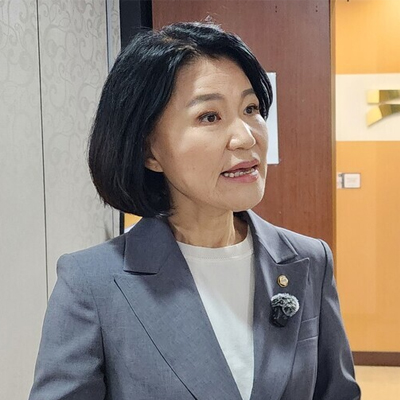
8월 13일 국회도서관 대강당에서 「5·18 민주화운동의 재조명 국회공개포럼」이 열렸다. 주최는 이진숙 의원실과 새역사국민운동 공동이다.

회고回顧/懷古
칼럼
PinkPepper
Nostalgia 154. Lee Jin-sook, who brought up 'New Millennium NHK', don't get on the bandwagon of livelihood-driven mental illness

0
2026. 08. 30
- This article frames Assemblywoman Lee Jin-sook and the People Power Party as descendants of pro-Japanese collaborators and political successors to the Gwangju massacre, criticizing their actions regarding 5.18 as a despicable "Iljinhoe-style" tactic to shift historical responsibility.
- It highlights Assemblywoman Lee Jin-sook's evasion of responsibility for organizing the 5.18 re-evaluation forum and the People Power Party leadership's ambiguous stance, while positively assessing Democratic Party leader Kim Min-seok's strong response.
- The article criticizes Assemblywoman Lee Jin-sook's attack on Kim Min-seok's past drinking habits as "name-calling politics," an unscrupulous act to obscure the truth and erase her own original sin, arguing it reveals the bottomless depths of Korean politics and portends a bleak future.
- Ultimately, the article condemns those responsible for the 5.18 massacre for dredging up past misdeeds and using Gwangju as a political shield, urging voters to awaken and act against such historical distortion and political maneuvering.
Lee Jin-sook and the People Power Party are a transformed and mutated group, and a part of past anti-national pro-Japanese collaborators, and are the political descendants of the power that stained Gwangju with blood. Their current actions are not justified political criticism, but rather a detestable tactic of shifting historical debt onto others, an evolved form of the Iljinhoe. Although Iljinhoe chairman Lee Yong-gu, before his death, confessed that he felt he had been deceived by imperial Japan, his son was already living as a Japanese person. History is not an imagination in print, but the heart of civilization where genes flowing in blood manifest as political actions. In this sense, the path the People Power Party is currently taking is the method of the Iljinhoe, which was the first and most representative of the 350 or so pro-Japanese government-affiliated and private cooperative organizations in Korea. Modern Korean voters need to realize that if they do not break this pattern, their vote as a voter may be meaningless.
On August 13, 2026, the 'Re-examination of the May 18 Democratization Movement National Assembly Public Forum' was held in the Grand Auditorium of the National Assembly Library. It was co-hosted by Representative Lee Jin-sook's office and the New History National Movement. The co-representative of the New History National Movement is Lee Young-hoon, a New Right scholar and co-author of 'Anti-Japan Tribalism.' Lee Young-hoon's brother-in-law is Kim Boo-kyum, a successful Democratic Party politician who rose to the position of Prime Minister during the Moon Jae-in administration and then ran for mayor of Daegu in the last June 3 local elections, where he was defeated. This also implies that Daegu, which once had such a strong political base that it could look down on the power within the Seoul palace, now has no prominent figures at all.
The authority to permit this event effectively rests with Hwang Jeong-geun, the Director of the National Assembly Library, who is a vice-ministerial level official appointed by the Speaker of the National Assembly. This is also a strange issue, a product of historical distortion – that the director of the National Assembly Library of the Republic of Korea, born from such circumstances, is vice-ministerial. How many truly truthful books could they possibly have on display? In the reports and commentaries at the time regarding this forum, there is mention that National Assembly Speaker Cho Jeong-sik demanded Hwang Jeong-geun to revoke the permit, but that is merely an excuse. It's better to believe Park Ji-won than Cho Jeong-sik. The event proceeded as scheduled. Now, voters must realize that the three branches of government in the Republic of Korea are merely 'churu for stray cats' to third-rate politicians, and act accordingly. Of course, there's no guarantee that divine fortune will return on the night of rebellion. Those anti-national pro-Japanese collaborators who thrived under the law and collaborated with imperial Japan must also be brought down by the law.
Before and after the holding of this event, the floor leadership, including People Power Party floor leader Jeong Jeom-sik, expressed concerns and requested its cancellation, but Lee Jin-suk pushed ahead, citing it as an academic event. A party official also stated, “It was an academic debate, so we couldn’t stop it.” As the controversy grew, the People Power Party leadership drew a line, saying it was not a party-level event. Senior spokesperson Park Sung-hoon said, “It was an academic event, and Lee Jin-suk also said that the remarks made on-site were unrelated to her, and currently, disciplinary action is not being considered.”
During the debate, remarks were made such as “the May 18th Uprising was a riot and an insurrection.” Lee Jin-suk, who laid the groundwork and ignited the fire, as the organizer, disclaimed responsibility by saying, “The content of the debate has nothing to do with me,” and insisted, “This is an idea that demands prior censorship.” This logic, which shifts the responsibility of the organizer to the speaker, is a convenient device that erases the duty of someone who has lent a public space. It's a strategy to survive by somehow holding on, extending this situation where insurrectionists and their sympathizers have not been punished, and thereby hindering the Democratic Party.
Regarding this cockroach-like strategy, Kim Min-seok, a candidate for party leader, raised concerns about this forum at the Democratic Party's joint Jeonnam-Gwangju rally on August 15, 2026, ahead of the party leader election. Targeting Lee Jin-sook, he clearly stated, “If we cannot expel her, we will amend the National Assembly Act to suspend her for one year and remove her from the National Assembly,” adding, “We will not allow a female Chun Doo-hwan or a female Hitler to gain a foothold in South Korea.”
The fact that an anti-national academic forum hosted by an opposition lawmaker was held in the National Assembly four days before the party leader election indicates that a large number within the National Assembly still intend to obstruct the government's work and directly interfere with the party leader election. This was not a case of Kim Min-seok stirring up trouble. In the context of South Korean Democratic Party politics, where many politicians are masochistic and enjoy difficult environments, candidate Kim Min-seok's remarks sounded like a declaration, however difficult, to break away from the Democratic Party's dirty ecosystem.
And two days later, Kim Min-seok, who would have ended up with a mere moral victory if he had lost the party leader election, put his words into action upon becoming the party leader. Although its feasibility is low, as it requires the approval of over 200 members, it is a step forward, and Lee Jin-sook's actions as a member of the National Assembly must be stopped. The Democratic Party should create a 'Lee Jin-sook Law' through legislation to prevent such individuals from serving as members of the National Assembly, making 100 seats sufficient for this purpose. In reality, both large opposition parties and large ruling parties are just playing word games and going through the motions. How long must sophisticated voters tolerate third-rate politics that throws out provocative statements to overturn an ongoing massacre, only to retract them if they don't work out?
Lee Jin-sook, who will have no shame looking up at the sky until the day she dies, held a press conference on August 24th, after much deliberation, to file a criminal complaint against party leader Kim Min-seok for defamation. She continues to engage in actions that are beyond the pale, thoroughly protecting herself with a lawsuit that ordinary people wouldn't even dream of. The card Lee Jin-sook played was a karaoke bar that Kim Min-seok went to after the May 18th commemorative event in 2000. The name of that karaoke bar, 'New Millennium NHK,' is quite provocative and stimulating. It makes me feel as if our Gwangju has already become a prostitute. The sight of Daegu, once fearless and proud, dying like a forest infected with pine wilt disease, suggests that Korean politics is also dying. In the midst of this, Kim Min-seok's recent provocation is truly exhilarating. Since a person who doesn't lose in a war of words has become the party leader, every time he takes the microphone, he will unreservedly press their panic buttons, and those who react hysterically to this will reveal the true nature of the crimes from an era where survival was impossible without pro-Japanese, anti-nationalist opportunism.
Lee Jin-sook's attempt to brand Kim Min-seok, the current party leader, with the phrase 'New Millennium NHK Kim Min-seok' regarding a drinking session 26 years ago, after defending the distortions that emerged from the May 18th debate as 'freedom of expression,' is a typical example of how there is no lower limit in Korean politics. In essence, she has declared that Korean politics has no future. If we do not resolve the structural contradiction of this electoral system, which allows individuals with less integrity than a dog's loyalty to become politicians, politicians like Lee Jin-sook will line up. Because easy and dirty politics, with Han Dong-hoon, Oh Se-hoon, and others, will follow the path of Yoon Suk-yeol, Moon Jae-in, Park Geun-hye, and Lee Myung-bak, Party Leader Kim Min-seok must handle this issue with gravity.
The incident in May 2000, where 386 politicians drank at a hostess bar in Gwangju after the 5·18 eve ceremony, was disgraceful. This is why anti-Democratic Party voters, who mock the degeneration of the student movement, vehemently rebel against the Democratic Party. Choosing to drink on a night of remembrance was a misjudgment and moral hazard by Korean politicians, indicative of their lack of modernization. Lee Jin-sook's political position makes this manipulation even clearer. She was once a leftist, but grew up within the comfortable and influential conservative media and power bloc. From her time as the chairperson of the Korea Communications Commission, she stood on the front lines of factional confrontation, repeatedly using language that defined public broadcasting and media unions as enemies. That history is why her talk of verification and freedom of expression doesn't sound like pure academic curiosity.
After creating a situation where remarks challenging the nature of 5·18 were made in the symbolic space of the National Assembly, and criticism poured in, they shifted the narrative, claiming 'the Democratic Party prohibited the debate itself.' The leadership of the People Power Party also distanced themselves by saying 'it's not a party event,' while simultaneously characterizing the resolution calling for expulsion as 'one-party dictatorship' and 'deprivation of freedom of speech.' The time when unilateral processing by the majority party was dangerous was during manipulated elections when voters cast formal ballots under military dictatorship. Even if the current Democratic Party tries to go the right way, the bravado of that era holds them back. In fact, at times like these, the thought of needing a new political party is urgent.
If Lee Jin-sook's tongue, which exposes danger, is the same as the tongue that condones remarks close to denying the massacre, then it is not the defense of principles but a demand for immunity for her own camp. The formidable lust for power of Koreans, who do terrible things without batting an eye, disguised as ideology, is connected to the ancient caste system. Those who are resentful of the limitations of life determined from birth, where they can never exceed a certain status according to their lineage, desperately wish to rise to high positions by any means necessary. They don't care about illegal or unlawful acts. Look around you. Among those who dabble in politics, there are few with decent professions, and among those who talk about ideology, few have mastered thought and philosophy. One can have a long academic background. However, the People Power Party, with its humble status and learning, is like an empty cart that rattles loudly.
Even the internal divisions within the party prove this point. The fact that over 3,000 party members reported Lee Jin-sook to the ethics committee and demanded the highest level of disciplinary action is a sign that even party members find it difficult to tolerate dealing with the May 18th incident in a way that contradicts the party's official stance. Nevertheless, the leadership obscures the essence. Even though the complaint included the point that Jeong Jeom-sik requested the cancellation of the event but it was pushed through, the party only left a vague statement, 'We share the concerns.' A party that does not turn shared concerns into responsibility, while accusing Kim Min-seok, who talks about expulsion and suspension of qualifications to his opponents, of being a 'hypocrite who sells out Gwangju.' That asymmetry is precisely the true face of a cowardly spiritual world.
The title 'New Millennium NHK Kim Min-seok' is rhetoric intended to complete its true nature. It diminishes a person by attaching their past like a proper noun, while simultaneously trying to erase their own original sin from view. Kim Jae-won's remark, 'Those who held drinking parties are still claiming the spirit of 5.18 and living in luxury,' reveals the true intention of that rhetoric. To criticize living in luxury, one must first ask: Who tried to erase Gwangju's deaths from the national narrative, and who used that erasure as political capital? Shaking only the sign of a hostess bar without answering that question is not judgment, but projection. It is an act of trying to cover one's own huge shadow with the small stain of another. I didn't know Lee Jin-sook was specialized in this. The dissolution of the Korea Communications Commission is a belated regret, but there are quite a few such term-producing personnel in each broadcasting station. Even if they can write well, their direction of serving is different. Divided into left and right, broadcasting stations are a kingdom of animals that needs a major cleanup for the future of Korea.
Some might prematurely back down, thinking Kim Min-seok's harsh analogy might have lacked restraint, but we are at a point where we desperately need a powerful, unrestrained cleaner, and Kim Min-seok is the right person as that leader. The fact that the People Power Party and Lee Jin-sook are acting as Gwangju's creditors under the pretext of excess is a symbol that their roots have fully embraced the history stemming from the Japanese colonial era of incitement and brainwashing, so we must continue to fight back and clean it up.
Gwangju is not the exclusive property of any political party, but it should not be allowed to become a messenger of evil where Shincheonji and the Unification Church have settled and coiled, becoming a club for the descendants of those responsible for the massacre to silence their opponents. Until Gwangju, a city of kind and talented people, overflows with industry and jobs, and the cries of children echo over the walls, Kim Min-seok must work like a madman.
What Lee Jin-sook and the People Power Party are doing now is redefinition disguised as debate, evasion of responsibility as hosts, ambiguous distancing that neutralizes internal party complaints, and name-calling politics that punishes the opponent's past flaws in the name of Gwangju. This chain of events was precisely how the Japanese imperialists tamed Koreans. The unqualified party is not the one who had a drink after 20 years. The responsibility to be ashamed of the 2000 drinking session lies with the political party and its faction responsible for the 1980 massacre. It lies with the descendants of the forces who, for a long time, denied and enforced the violence of murderers who were not at all ashamed of the gunshots of that day, and the subsequent distortions, as a historical view and national policy.
Those who discard the latter task and only brandish the former have no right to condemn Kim Min-seok and the then-Democratic Party lawmakers as 'those who defiled Gwangju.' That arrogance of claiming the right to condemn is an act of shamelessness beneath human dignity. Do not use Gwangju as a shield. Gwangju is not a shield but a debt. What a political party and its lawmakers need, who ignore the principal of that debt and only calculate the opponent's interest, is not witty counterattack but awakening. Lee Jin-sook deserves great credit for rebooting the still ambiguous memories of Gwangju. They say a cow stumbled backward and caught a mouse; a crazy filial daughter reminded history of betrayal. Well done, Jin-sook!
If the 29 out of 33 national representatives who drafted the Declaration of Independence gathered for a drinking session at the Taehwagwan restaurant in Insa-dong, Jongno, Seoul, on the afternoon of March 1, 1919, then history is being butchered every year. Among those who were arrested by Japanese police after the Taehwagwan meeting, excluding those abducted during the Korean War after liberation, Lee Gap-seong is guilty of not fulfilling his duty as a witness to history and dying without telling future generations. Do not be fooled by wordplay that suggests a wild drinking party just because there was a toast. There is another reason for exaggerating unproven events and misleading about that day's incident. That Insa-dong is not the current Insa-dong, and it has the effect of preventing people from saying where the March 1st Movement took place. There is no need to fall for Lee Jin-sook's misleading counter-terminology.
There are many forces that condone treason and regret the failure of the rebellion, and they all aim for success. In the past, a history conference led by the 'Korea-Japan Parliamentarians' Union' was held at a hotel near Yeouido. In good times, there were so many sponsors and endorsements that even old beggars passing by could get a meal, so people ignored the essence of the event and focused on entertaining guests, day and night, without realizing the country was falling apart, which is not uncommon in the Korean character. The Korea-Japan Parliamentarians' Union is an organization that needs investigation. Who funds such institutions and supports academic conferences, what kind of papers are welcomed by the New Right, the desire of those lacking historical consciousness to submit papers to academic conferences and become professors—to completely remove these rotten roots, such detailed work is necessary.
댓글
( 0 / 500 )
joonggil
7
글을 읽으며 가슴이 끓어오릅니다. 광주의 피를 정치적 말장난으로 소비하고, 역사 왜곡의 장을 열어놓고 표현의 자유 뒤에 숨는 자들에게 더 이상 관용을 베풀어서는 안 됩니다. 역사를 부정하는 정치에는 반드시 책임이 따라야 합니다.
( 0 / 500 )
오리온
10
정말 통렬한 글입니다. 광주는 방패가 아니라 아직 갚지 못한 대한민국의 부채라는 말에 깊이 공감합니다. 학살의 책임과 역사 왜곡에는 침묵하면서 26년 전 술자리 하나를 들춰 상대를 공격하는 정치, 이제 국민이 끝내야 합니다.
( 0 / 500 )
Oscar_W
8
역사를 잊은 정치가 결국 같은 비극을 반복하게 합니다. 표현의 자유를 말하려면 역사적 사실에 대한 최소한의 책임부터 보여야 합니다. 5·18을 흔들고도 책임지지 않으려는 정치, 더 이상 국민이 묵과해서는 안 됩니다.
( 0 / 500 )
Youngcheol
5
광주는 누구의 정치적 장식품도, 상대를 공격하기 위한 도구도 아닙니다. 역사적 진실을 왜곡하려는 시도에는 단호히 맞서되, 정치권 전체가 과거의 상처를 정략적으로 소비하지 않기를 바랍니다.
( 0 / 500 )
destroyer
5
글을 읽으며 분노보다 먼저 역사 앞에서 얼마나 무거운 책임감을 가져야 하는지를 생각하게 됩니다. 5·18을 정치적 소재로 소비하고 왜곡의 장을 열어놓은 뒤 표현의 자유를 말하는 태도에는 분명한 책임이 따라야 합니다.
( 0 / 500 )
jongman
5
정치가 갈수록 과거의 상처를 이용한 낙인과 말장난으로 흘러가는 현실이 안타깝습니다. 5·18은 대한민국 민주주의의 역사이며, 그 진실을 흔드는 행위에는 정당과 개인을 떠나 분명한 기준이 필요합니다.
( 0 / 500 )
ari90
3
거친 표현 때문에 글의 일부에는 공감하지 못하는 독자도 있겠지만, 5·18의 역사적 의미와 정치인의 공적 책임을 묻는 문제 제기만큼은 결코 가볍게 넘길 수 없습니다. 역사 왜곡에는 표현의 자유만큼이나 책임도 따라야 합니다.
( 0 / 500 )
┖ joon71
2
거친 표현은 없는 듯 합니다. 아주 공감가는 분노인듯 한데...
( 0 / 500 )
park_SJ
5
읽는 내내 분노가 치밀었습니다. 5·18을 왜곡할 기회를 제공해 놓고 “나는 관계없다”고 빠져나가는 정치, 이것이 과연 책임 있는 공인의 모습입니까. 광주의 희생을 정쟁의 도구로 삼는 행태는 반드시 끝내야 합니다.
( 0 / 500 )
옛날이야기
4
이진숙의 행태는 단순한 정치적 논쟁의 수준을 넘어섰습니다. 5·18의 진실을 흔드는 발언이 나오는 자리를 만들어놓고 책임은 없다고 말하는 것은 비겁합니다. 광주의 역사를 왜곡하는 정치에는 더 강력하고 단호한 국민적 심판이 필요합니다.
( 0 / 500 )
lovepoem
4
“광주는 방패가 아니라 부채다”라는 문장이 가슴에 깊이 박힙니다. 그날의 희생 앞에 빚진 자들이 오히려 역사를 왜곡하고 책임을 회피한다면, 국민이 기억하고 심판해야 합니다. 이 글의 분노에 깊이 공감합니다.
( 0 / 500 )
박종철
1
이 글의 핵심은 결국 책임의 문제라고 생각합니다. 행사를 주최하고 공간을 제공하며 논란을 예상할 수 있었던 사람이 “발언 내용은 나와 무관하다”고 선을 긋는다면 공적 책임은 어디에 있습니까.
( 0 / 500 )
Jeong Byeon_72828
0
1980 년 5월 파리에서 광주에서 벌어지는 학살을 뉴스로 알고 있었습니다. 도시를 완전 차단하고 민간인들을 총질하며 죽이고 있다는 모국 소식을 들으며 내가 개인적으로 할 수 있는 일이 하나도 없음에 가슴이 미어지는 기억이 지금도 생생합니다. 이진숙 씨 자중합시다. 그렇게 살지 맙시다. 열불납니다.
( 0 / 500 )
신고내용
신고내용을 선택해주세요
회원비난/비하/욕설글 및 댓글도배성 게시물저작권 침해/불법자료 유출허위사실유포개인정보 유출.사생활 침해무단광고/홍보음란물 및 도박 불법 광고물범죄행위 관련 글불법행위 관련 소개물품 판매 및 사기글악성코드 및 스파이웨어 유포기타 사유 및 운영진 판단


비밀번호를 잊으셨나요?
Sign in with Google
All information provided by us is free of charge and is for the public good.