品

Corea든 Korea든, 품격은 이름보다 먼저다
Whatever the name—Corea or Korea—dignity comes first.
Whatever the name—Corea or Korea—dignity comes first.
Now
지금
751 Diaspora
Heritage
유산
Humanity
인문
Mirengsi
未冷尸
Politics
정치
Media
언론

회고回顧/懷古
칼럼
霞田
Review 150. Who am I?

0
2026. 08. 24
I was about seven years old. The memory of the day I first had a tooth pulled is still vivid. It was a time when wobbly front teeth were tied with a string to a doorknob and the door was yanked open, or a quick tap on the forehead would instantly pull out a tooth. For my young self, it wasn't just a simple extraction; it was terror, an incomprehensible pain.
One day, I watched an ox leisurely grazing in a field. Suddenly, I envied that ox greatly. 'That ox eats so well without having its teeth pulled, so why do I, born as a human, have to suffer this pain?' At that moment, a strange question popped into my young mind.
'Who am I?'
It wasn't simply a question of 'Why am I human and not an ox?' It was: Where did I come from, what is my life, and why was I born into this world with this particular body? And if I am to die someday, what exactly am I, living here and now?
Looking back, the oldest question in my life wasn't about success, money, or fame. 'Who am I?'That was the question. When I turned sixteen and entered adolescence, that question deepened. At night, even lying in bed, my thoughts spiraled. Where did I come from? From what star did my life originate? Where do I go when I die? Does consciousness disappear with the body? Is there some purpose in the universe that sent me into this world?
At school, they always taught us the right answers. Math had answers, history had dates, and science had laws. But strangely, human life had no right answers. In fact, the more books I read, the more questions I had. The people who tormented me the most in my youth were 'Nietzsche' and 'Goethe'. They didn't give me the answers to life I expected. Instead, they shook up everything I had taken for granted.
Nietzsche demanded that humans create their own values. He made people who lived by values created by others uncomfortable. Goethe's Faust was no different. Humans were not made happy by acquiring knowledge; they were beings who endlessly wandered between desire and knowledge, good and evil, love and salvation.
I tried to find answers by reading books, but every time I closed a book, I found myself facing an even bigger question. At the time, that was agonizing. But looking back now, that was the first gift the classics gave me. Classics were not books that gave answers, but books that elevated the level of questions. I didn't know that in my youth.
Every time I opened a book, I wanted to know, 'What is right?' But the wise men did not answer easily. Socrates constantly questioned the Athenians, and Plato, through the allegory of the cave, made us ask whether the world we see is truly the whole truth. Aristotle questioned the purpose of human beings and explored what a happy life is. The wise men of the East were no different. Confucius spoke of the way for people to live as human beings, but he did not reduce human life to simple rules. Laozi said not to try to force the world to move, and Zhuangzi showed how narrow the boundaries and distinctions that humans cling to are. Siddhartha Gautama asked an even more fundamental question: Is what I cling to as 'I' truly an eternal self? I stood before that question for a long time.
Western philosophy persistently asked, 'How should I live?' and Eastern philosophy delved deeply into 'What is this self that I am clinging to?' However, the book that had the biggest impact on me in my youth was not a philosophy book, but Sima Qian's Records of the Grand Historian. Reading Records of the Grand Historian, I realized that history is not merely a record of the past, but a vast laboratory for dissecting the human condition.
Among them, what shook me most deeply was Sima Qian's "Letter to Ren An." Sima Qian did not abandon his life even amidst shame and suffering that were difficult for a human to bear. He was a person who physically questioned why one should live. For him, history was not merely the recording of dynasties and wars. It was about asking why humans should live, and from where human dignity comes.
In particular, the world Sima Qian faced was too cruel for a young me. Why do good people suffer and bad people prosper? Why do virtuous people suffer misfortune, and those who do evil live long lives? If heaven is just, why is the world so unfair? If there is indeed a God who governs this universe, what is He doing?
This question, Sima Qian's question, also became my question. In my youth, I wanted to believe that the world always rewarded good and punished evil. But reality was not like that. Living a good life did not necessarily lead to happiness, and living an evil life did not necessarily lead to misfortune. That was a confusion difficult for my young self to bear. However, now that I have lived a little longer, I look at that question differently. Does an order of good and evil truly exist in the world?
Perhaps it does not exist in the way we expect. The heavens do not reward the good and punish the wicked every night. Nature does not operate according to our moral standards. Rain does not fall only on the good, and the sun does not shine only on the wicked. So what do good and evil mean to humans?
Perhaps that is precisely where human greatness begins. Just because the universe doesn't guarantee us justice doesn't mean we should abandon justice. Just because the world doesn't necessarily reward good doesn't mean we lose our reason to choose good. Rather, 보상받지 못할 수도 있다는 사실을 알면서도 선을 선택하는 것, 그것이 인간의 ‘윤리’I don't even know. In my youth, I waited for the world to give me answers. But in my old age, I realized that the questions were not for the world, but for me to carry throughout my life. This is the wisdom I gradually gained after reading classics for a long time.
In my youth, classics were a storm for me. Reading Nietzsche shook the values I believed in, and reading Goethe made me fear human desires. Reading Sagi made me realize how powerless humans are in the face of history's cruelty. Reading Zhuangzi made me think that what I held onto as truth might just be a small distinction. The classics at that time did not comfort me. Rather, they made me uncomfortable.
But the classics I read again now are completely different. The same sentences come with different meanings. When I was young, even after reading wise sentences, I looked for 'what is the right answer.' Now, in those sentences, I find traces of the life I have lived. When I was young, Confucius's words sounded too obvious, and Zhuangzi's words felt too distant. Now, each sentence seems to soothe the heart of someone who has lived a long life.
When I was young, I read the debate about the existence of God in Nietzsche's 'God is dead'declaration. Now, in that sentence, I read the heavy demand that humans must take responsibility for the meaning of their own lives. When I was young, reading the endless desires of Faust, I asked why that person could not be satisfied. Now, I think that endless yearning might be the destiny of human existence.
That's why classics deepen with age. In fact, it might not be the book that has deepened, but myself reading the book. The Analects I read at twenty and the Analects I read at sixty are the same book, but they are not the same book. The book is the same, but I have changed. In my youth, I did not understand my parents. As a child, it was difficult to understand my parents' hearts. But as I grew older and looked at my children, I gradually began to understand the weight of 'filial piety' that Confucius spoke of.
젊은 날에는 사랑을 ‘욕망의 언어’로 이해했다. 그러나 시간이 흐른 뒤 사랑은 결국 상대를 ‘소유하는 것이 아니라, 놓아줄 줄 아는 마음’이라는 것을 배운다. 젊은 날에는 성공을 ‘얻는 것’이라고 생각했다. 이제는 성공이란 얼마나 많이 가지느냐보다 ‘What can you let go of?I think it might be close to that. This is the strange paradox that age brings. Young people want to know many things, while older people begin to learn what they don't need to know. In my youth, I wanted to change the world. But at some point, instead of changing the world, that it is much harder to set one's own mind straight을 알게 된다.
Looking back, the question "Who am I?" has followed me my entire life. At seven, it began with pulling out a painful tooth. At sixteen, it deepened as I gazed at the universe. As a young man, I was shaken by Nietzsche and Goethe, and despaired before human destiny upon meeting Sima Qian. From the sages of the East, I learned emptiness and humility, and from Western philosophers, I learned to think for myself and take responsibility for my own life. After living for decades like this, I am finally getting closer to a slightly different answer. I am probably Not a finished being, but one who lives a lifetime asking who they are일 것이다.
We are not born into the world with a complete 'self' from birth. The genes inherited from our parents make us, the times and society make us, love and wounds make us, and the people we meet and the books we read make us. And above all, the choices we have made throughout our lives make us. Therefore, the answer to the question 'Who am I?' is not found in our resident registration card, profession, wealth, or educational background. I am the sum total of the time I have lived, and the trace of the values I have chosen. Perhaps humans are beings who live their lives and at the same time create themselves.
Now, I don't want to teach my children the "right answers" in life. This is because the "right answers" I so yearned for in my youth might not have existed in the first place. However, there is one thing I do want to tell them. Don't be afraid to ask questions.
'Who am I?'
'How should I live?'
'What is right?'
'Why should I live virtuously?'
'What remains after death?'
These questions trouble us when we are young. But if we avoid them, life might become comfortable, but it won't deepen. Classics are the teachers who ask these questions for us. So, I hope you read books, but not to find the right answers. As you read old books, one day a moment will suddenly come: 'Ah, this person also pondered this problem thousands of years ago.'
And as you get a little older, another moment comes: 'Ah, when I was young, I didn't understand this at all.' It is then that classics become wisdom, not just knowledge. If classics were a sword in youth, they become medicine in old age. If classics were a storm that shook me in my youth, in old age they are a calm lake after the storm. And what is reflected in that lake is not the face of the classic, but the face of my aging selfis.
I now gaze at that face for a long time. In my youth, I wanted a flawless face. Now I know that even wrinkles and scars are a part of me. The path I have walked has had regrets and failures. There was love and separation. There was joy and days that were hard to endure. But if none of that had existed, I would not be who I am today. So now, I try not to arbitrarily divide my life into success and failure. Suffering was also my life, and wandering was also my life. The time I spent not finding answers ultimately brought me here.
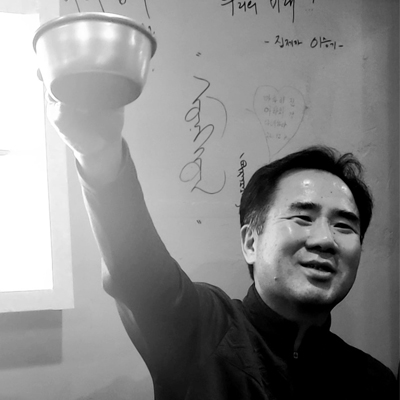
One dawn, as I sit quietly with a bowl of water, such a thought suddenly comes to me. Where was the 'me' I searched for so desperately in my youth? Perhaps the answer was not in distant stars, nor in grand philosophical systems, nor in any mystical knowledge. It must have been in the very everyday life I lived. I was also the seven-year-old child who cried while having a tooth pulled, and the sixteen-year-old boy who stayed up all night contemplating the origin of the universe. I was the young man confused by Nietzsche and Goethe, and the person who doubted the justice of the world in the face of Sima Qian's anguish.
And now, looking back at all that time, I am also the one quietly smiling. Therefore, the answer to the question 'Who am I?' might not be a single sentence. I am a person who has lived by asking questions. And perhaps that is enough. Rather than finding a perfect answer at the end of life, it might be more important to have a soul that can keep asking questions until the very end.
When you look at clear water, like the pure water offered at dawn, the sky is reflected in it. But the sky has not entered the water. It is simply that the water has become clear enough for the sky to be seen. The same applies to classics. In my youth, no matter how great the book I read, my mind was too turbulent to grasp its depth. But after many seasons, after joy and sorrow, after meeting and parting with people, after repeatedly gaining and losing, when I open a book again, a single sentence finally comes into clear focus.
The wisdom did not newly appear in the book. It was I who finally became clear enough to receive it. So now, I want to tell my children and future generations this: Rather than striving to possess much, I hope you live by thinking deeply. Rather than trying to get ahead of others, I hope you do not lose yourself. Rather than chasing the answers set by the world, I hope you become a person who knows how to ask your own questions. And above all, I hope you do not despair too early when life does not go as planned.
In youth, pain may seem like a failure in life, but a day will come when, looking back, you realize that pain was the teacher that deepened you. So, do not judge everything you encounter in life too quickly. Joy, sorrow, success, failure, love, and hurt will all eventually become a single story. And one day, after having gone through all those stories, we finally realize that the 'self' I had searched for my whole life was not somewhere far away, but... That you have been with me from the very beginning, in every moment of my life. That is the one answer I seem to be finally understanding, after a lifetime of reading classics and living life.
'Who am I?'
I am a human being who was born with this question, lives with this question, and will eventually grow old with this question. And the fact that I still hold onto that question, Perhaps that is the most certain proof that I am alive.
霞田 拜拜
落穗 ;
“Who am I?”
Perhaps there is an unbridgeable gap between 'the me others know' and 'the me I know.' People look at me through their own perspectives, and I live embracing the me I know. So, the me others remember and the me I remember are always slightly different. I have lived my whole life asking, 'Who am I?'
I constantly thought about what kind of person I am made of, what values I should live by, and finally, how I could define my existence in a single sentence. But now I know. It was a question that could never be completed in a single sentence from the start.
This is because humans are not beings defined by a single moment, but rather beings who constantly change, waver, and recreate themselves throughout their lives. 'Yesterday's me' is not 'today's me,' and 'today's me' will not be the same as 'tomorrow's me.' Therefore, there may not be a complete answer to the question 'Who am I?' Because life stops the moment you find an 'answer,' but as long as you live with the 'question,' you continue to become yourself.
Rather than trying to discover myself until the day I die, I want to do my best to 'give birth to myself' and 'recreate myself.'
餘滴 ;
I felt an obligation to complete 200 episodes. However, due to various circumstances, it unfortunately had to end at 150 episodes. I extend my deepest gratitude to all the readers who have faithfully read my column during this time.
댓글
( 0 / 500 )
고동수
10
이 사이트 초기부터 계속 좋은 글을 써오시던 분인데... 너무 아쉽습니다. 고전과 사유를 통해 인간 본성과 세상 바라보는 지혜를 주시던 좋은 글을 더 이상 보지 못한다는 아쉬움이 크네요. 감사합니다.
( 0 / 500 )
┖ hanakim
7
150회까지 이어온 글을 마무리하신다니 아쉽습니다. 하지만 이 글 자체가 마지막 글이 아니라 그동안의 사유를 독자에게 건네는 하나의 선물처럼 느껴집니다. 질문을 잃지 않고 살아가는 것이 곧 살아 있다는 증거라는 마지막 메시지가 오래 기억될 것 같습니다.
( 0 / 500 )
┖ Bachelor
5
150회에서 막을 내린다니 정말 아쉽습니다. 150편에 담긴 사유와 울림은 결코 숫자로 끝나지 않을 것입니다. 그동안 좋은 글을 읽을 수 있어 감사했습니다. 언젠가 다시 글로 만나 뵐 수 있기를 바랍니다.
( 0 / 500 )
고동수
삭제된 내용입니다
( 0 / 500 )
U2king
7
“젊은 날의 고전이 칼이었다면 노년의 고전은 약이다”라는 표현이 참 좋습니다. 같은 책도 삶의 경험에 따라 전혀 다르게 읽힌다는 사실을 잘 보여줍니다. 결국 독서는 책을 읽는 일이면서 동시에 자기 삶을 다시 읽는 일이겠지요.
( 0 / 500 )
민들레
7
어린 시절 이를 뽑던 작은 사건에서 시작된 질문이 평생의 철학으로 이어졌다는 점이 참 인상적입니다. 인간은 어쩌면 특별한 순간보다 사소한 경험에서 자신의 가장 깊은 질문을 발견하는 존재인지도 모르겠습니다.
( 0 / 500 )
revolution
6
‘나는 누구인가’라는 질문을 평생 품고 살아왔다는 고백이 깊은 울림을 줍니다. 결국 인생은 정답을 찾는 과정이 아니라 질문을 잃지 않는 과정인지도 모르겠습니다. 고전이 오래 살아남는 이유도 바로 여기에 있겠지요.
( 0 / 500 )
hummer
5
젊을 때 읽은 책과 나이 들어 다시 읽는 책의 의미가 다르다는 말에 공감합니다. 책이 변한 것이 아니라 책을 받아들이는 내가 변한 것이겠지요. 삶의 경험이 쌓일수록 고전의 한 문장이 가슴 깊이 들어오는 이유를 잘 보여주는 글입니다.
( 0 / 500 )
manbok
6
150회라는 숫자에 이르기까지 한 편 한 편 이어온 시간과 정성이 느껴져 더욱 아쉽습니다. ‘마지막’이라는 말보다 오랫동안 독자들의 마음에 남을 질문을 남겼다는 생각이 듭니다. 그동안의 연재에 깊이 감사드리며, 새로운 글을 다시 만날 날을 기다리겠습니다.
( 0 / 500 )
┖ marin88
4
150회로 마무리된다는 마지막 인사가 더욱 아쉽게 다가옵니다. 하지만 글에서 말씀하셨듯 끝은 또 다른 질문의 시작일지도 모르겠습니다. 그동안 던져주신 질문과 사유가 독자들의 삶 속에서 계속 이어진다면 150회는 결코 마지막이 아닐 것입니다. 좋은 글, 깊은 울림에 감사드립니다.
( 0 / 500 )
nadan
6
“나는 내가 살아온 시간의 총합이며, 내가 선택한 가치의 흔적이다”라는 문장이 오래 남습니다. 사람을 직업이나 재산, 사회적 지위로 규정할 수 없는 이유도 여기에 있는 것 같습니다. 결국 어떤 삶을 선택했느냐가 그 사람을 말해주는 것이겠지요.
( 0 / 500 )
paradise
4
“답을 찾는 순간 삶은 멈추지만 질문을 품고 살아가는 동안 나는 계속해서 나 자신이 되어간다”는 생각이 마음에 와닿습니다. 인생을 너무 빨리 결론 내리지 말아야겠다는 생각을 하게 됩니다. 좋은 글을 통해 삶을 돌아보게 됩니다.
( 0 / 500 )
송준혁
2
나이가 들수록 많은 것을 아는 것보다 무엇을 내려놓아야 하는지를 배우게 된다는 말에 깊이 공감합니다. 젊을 때는 세상을 바꾸려 했지만 결국 가장 어려운 일은 자신의 마음 하나를 바로 세우는 것이라는 깨달음이 오래 남습니다.
( 0 / 500 )
신고내용
신고내용을 선택해주세요
회원비난/비하/욕설글 및 댓글도배성 게시물저작권 침해/불법자료 유출허위사실유포개인정보 유출.사생활 침해무단광고/홍보음란물 및 도박 불법 광고물범죄행위 관련 글불법행위 관련 소개물품 판매 및 사기글악성코드 및 스파이웨어 유포기타 사유 및 운영진 판단


비밀번호를 잊으셨나요?
Sign in with Google
All information provided by us is free of charge and is for the public good.