品

Corea든 Korea든, 품격은 이름보다 먼저다
Whatever the name—Corea or Korea—dignity comes first.
Whatever the name—Corea or Korea—dignity comes first.
Now
지금
751 Diaspora
Heritage
유산
Humanity
인문
Mirengsi
未冷尸
Politics
정치
Media
언론

회고回顧/懷古
칼럼
霞田
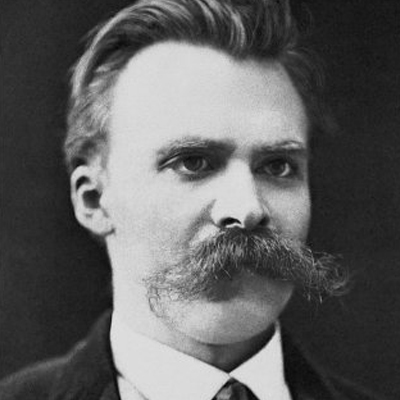
Review 149. The Death of God and the Birth of Man

0
2026. 08. 18
- Nietzsche diagnosed the collapse of Western civilization's value system as the "death of God," posing fundamental questions about how humanity should live after the loss of absolute values.
- Through concepts like the "Übermensch" and "will to power," he presented an ideal human who, rather than conforming to existing values, creates new ones and constantly transcends themselves through self-overcoming.
- Nietzsche, through his critique of Christianity, resisted morals that suppressed human vitality, and with the question of "eternal recurrence," he emphasized "amor fati"—loving and affirming one's entire life—urging an autonomous approach to living.
- Ultimately, Nietzsche's philosophy, in the void left by God, leaves not nihilism but "freedom and responsibility," proclaiming the birth of humans who "make their lives their own," rather than living by others' standards.
- Nietzsche, Reading Thus Spoke Zarathustra
When we read Goethe's Faust, we pause for a long time before one sentence. “Man errs as long as he strives.” This is because humans are not complete beings. The moment they seek something, they get lost, and because they are lost, they seek the way again. Faust's lifelong search for truth is both the tragedy and the greatness of humanity.
Reading Nietzsche's Thus Spoke Zarathustra, it suddenly strikes me that Faust's wandering has transformed into an even more radical form. If Faust had a 'question', Nietzsche had a 'collapse’'. If Faust is someone who asks, “What should I know?”, Zarathustra asks this: “If all values have now collapsed, how should humans live?” And Nietzsche does not shy away from this question. Rather, he descends into the deepest parts of Western civilization and confronts it directly. What he discovered there is that famous declaration. “God is dead.”
1. What does the phrase “God is dead” mean?
If one understands Nietzsche's sentence simply as an atheistic declaration, “God does not exist,” then one has not even read half of Zarathustra. What Nietzsche means by 'the death of God' is not a proposition by a natural scientist denying the existence of God. Rather, it is a 'diagnosis of the collapse of the value system that has sustained Western civilization'. For a long time, Europeans explained the meaning of the world through God. They judged what was good and evil, right and wrong, how humans should live, and what awaited after death, relying on God as an absolute standard.
However, in the modern era, the situation changed. Science began to explain nature by separating it from divine providence, the Enlightenment questioned traditional authority, and historical criticism began to view the origins of the Bible and religion within human history. Humans could no longer believe in God as before and simultaneously live with modern reason and science. The problem does not end here. 신을 버렸다고 해서 신이 맡고 있던 역할까지 사라지는 것은 아니기 때문이다. 신을 대신할 새로운 가치가 필요하다. 그런데 그 자리가 비어 있다. 바로 이 공백을 니체는 두려워했다.
What happens if humans still cling to the morals of the past even after God has disappeared? Humans who do not believe in God but live according to the morals created by God. Humans for whom the absolute foundation has disappeared, but only the belief in absolute values remains. For Nietzsche, this was the deepest contradiction of modern man. Therefore, the declaration "God is dead" signifies an end and, at the same time, a beginning. Now who will tell man the meaning of life?
2. But why Zarathustra of all people?
Nietzsche's choice here is surprisingly paradoxical. While criticizing Christianity and traditional Western morality, Nietzsche uses the name of a figure to convey his ideas.짜라투스트라(Zarathustra)’was chosen. The historical Zarathustra was a religious thinker in ancient Iran, later known as the founder of 'Zoroastrianism'. However, the exact period of his activity is difficult to ascertain, and the historical relationship of influence between Zoroastrianism's dualism and later Judaism, Christianity, and Islam should not be explained as a simple linear progression. Nevertheless, Zarathustra was a symbolically very important figure for Nietzsche.
In Nietzsche's view, Zarathustra was historically 'a representative figure who presented 'good' and 'evil' in the language of a grand moral confrontationit was. If so, isn't it possible, paradoxically, for that figure to reappear and speak new values beyond his past? This is Nietzsche's literary device. Zarathustra is not a mere recreation of the historical Zoroaster. He is a new creation by Nietzsche to articulate his philosophy. Philosophical Prophet and Literary Figure이다.
So when we read "Thus Spoke Zarathustra," we are not reading a history book. We are reading a grand allegory and prophecy that a philosopher is casting towards his own time. More precisely, The paradox that the prophet who created the morality of the past declares a new human being who transcends the morality of the past이다. 이것이 니체가 짜라투스트라를 선택한 가장 흥미로운 이유다.
3. Man is a bridge, not a destination.
One of the most powerful concepts in *Thus Spoke Zarathustra* is 'ÜbermenschHowever, it is problematic to understand the Übermensch as the commonly conceived 'Superman'. The Übermensch is not someone stronger than other humans, nor is he a ruler with power. It is a much more fundamental concept. For Nietzsche, humans are It is not a complete being. A human being is a process. The me of today can surpass the me of yesterday, and the me of tomorrow can surpass the me of today again. Therefore, a human being is not a completed destination, but rather 'the process of overcoming oneself'이다.
Nietzsche often compares humans to "a rope stretched between animal and Übermensch." This analogy is important. Humans are not a being that has already arrived, but rather '건너가야 할 존재’That's what it means. In that case, a superman is not a special race. Rather, it is a human being who constantly actualizes the possibilities within humanity. Instead of living according to values set by others, they take responsibility for their own lives, accepting even failure and suffering as part of their lives instead of resenting them, and instead of 'conforming to existing values,' they are human beings who 'create new values' themselves. In this sense, a superman is '남보다 높은 인간’이 아니라 ‘어제의 자기보다 높은 인간’Therefore, Nietzsche's philosophy is not a philosophy of dominating others, but essentially The Philosophy of Self-Overcomingshould be read as.
4. The 'will to power' is not a desire for domination.
이 지점에서 또 하나의 중요한 개념이 등장한다. ‘권력 의지(Wille zur Macht)’다. 이 말을 단순히 ‘The desire to dominate othersto translate it as such would severely distort Nietzsche's philosophy. For Nietzsche, life is not merely about survival. Life possesses the power to expand, grow, express itself, give itself form, and transcend itself. An artist creating something, a thinker generating new ideas, an individual overcoming their limitations to create a new self—all of these can be seen, in a broad sense, as expressions of the will to power. Therefore, the will to power is not merely a desire for political power or violence.
It is the power of life to answer the question, “What can I become?”Viewed this way, Nietzsche's philosophy is surprisingly modern. We constantly live by conforming ourselves to standards set by others: academic background, profession, wealth, honor, social status, the opinions of others. But Nietzsche asks, “Is that truly the life you desire?” And he asks again, “Are you creating your own life yourself?” In the face of this question, even successful people may not be free. A person who has achieved nothing socially, but is creating their own life, could be a much stronger human in the Nietzschean sense.
5. The Moment Nietzsche Asks the Most Frightening Question - Eternal Recurrence
However, the deepest and most frightening question in *Thus Spoke Zarathustra* is probably ‘Eternal Recurrence (Ewige Wiederkehr)’Consider this: what if you had to live the exact same life you are living now, all over again? To live today's day again, to experience the same loves and partings again, to relive mistakes and failures, to encounter joys and sorrows again, to meet the same family and friends again, and even to endure the same suffering again. And what if you had to do it not just once, but live it repeatedly, forever. Would you say “No”? Or would you be able to say, “Yes. I would live it again.”This is the deepest question posed by eternal recurrence.
It is not merely a cosmological hypothesis. More importantly, it is a test of one's attitude towards life.How much do I affirm my current life? Can I accept my entire life as my own? Can I call even the scenes I wish to erase from my life my own? Here, Nietzsche's philosophy is distinguished from mere optimism. An optimist might say, “Life will eventually get better.” But Nietzsche asks a much more brutal question. “Can you love this life even if it doesn't get better?” This is where it connects with what Nietzsche calls 'Amor fati'. It's not difficult to love only the good things in life. But to embrace even one's failures, wounds, and regrets as one's own life. That is what Nietzsche means by the affirmation of life.
6. Why did Nietzsche attack Christianity so much?
One of the most uncomfortable parts of reading Thus Spoke Zarathustra is Nietzsche's critique of Christianity. Nietzsche strongly criticized Christianity's guilt, obedience, asceticism, and otherworldly orientation. What he took issue with was not simply "believing in God" itself. What he attacked was a 'morality' that operated in a way that weakened human real-world life. A morality that excessively glorifies enduring suffering, demonizes desire, makes obedience a virtue, considers the afterlife more important than present life, and suppresses one's own strength and potential. Nietzsche believed that such morality weakened human vitality.
However, it is not sufficient to simply define Nietzsche as an 'anti-Christian philosopher' here. His critique of Christianity rather "How should humans live?"starts from the question. And that question is surprisingly close to the one Christianity posed. Only the answer is different. If Christianity demands 'transcendence towards God' from humans, Nietzsche demands 'transcendence beyond oneself'from humans. If Christianity says, "Follow God's will," Nietzsche says, "Create your own values." If Christianity speaks of 'human salvation,' Nietzsche speaks of human 'self-overcoming'This is what is meant. Therefore, the relationship between Nietzsche and Christianity is not a simple one of pro and con. Nietzsche can be seen as a philosopher who re-embraced the human problems posed by Christianity in his own way.
7. The most important word in Nietzsche's philosophy is 'creation'.
If I had to choose one key word that runs through Thus Spoke Zarathustra, I would choose 'creation'rather than 'Superman'. The death of God means that 'existing values have collapsed'. So, is what remains for humanity nihilism? Nietzsche's answer is no. On the contrary. 'Because existing values have collapsed, humans must now become creators.' This is what Nietzsche calls the transvaluation of values.
Humans who believed existing values were absolute only needed to follow them. However, when absolute values disappear, humans become free but also bear responsibility. No one else tells them the right answer. Neither God, tradition, society, nor authority guarantees the final answer anymore. This freedom is beautiful but also terrifying, because one can no longer shift responsibility for one's life to others. Nietzsche's concept of freedom lies precisely here: 'Freedom is not living as one pleases, but the ability to give meaning and value to one's own life.'
8. Thus Spoke Zarathustra is both a philosophical book and a literary work.
This is why Thus Spoke Zarathustra is particularly different from other philosophical books. Nietzsche does not philosophize like a thesis. He speaks like a prophet, uses metaphors like a poet, and declares like a preacher. Zarathustra descending from the mountain, the crowd, the disciples, the cave, the eagle and the serpent, dance, laughter, death, the child, the shepherd and the serpent—all of these appear as one grand philosophical symbol. Therefore, if one tries to read Thus Spoke Zarathustra logically, it is easy to get lost.
This book is not a collection of propositions to be understood, but a philosophical poem that makes one re-examine one's own life.Nietzsche does not demand that the reader “believe my words.” Rather, he constantly makes the reader uncomfortable. Are the values you believe in truly your own? Is what you call good truly good? Is what you consider moral truly moral? Is what you consider success truly success? Is the life you are living truly your life? These questions are Nietzsche’s greatest legacy to the reader.
9. However, even Nietzsche has dangerous shadows.
Great philosophies must be read critically. Nietzsche's concepts of the Übermensch and the will to power were later distorted or misused in political and social contexts. In particular, if the expression 'strong human' is read as a simple logic of domination and superiority, Nietzsche's philosophy can turn into a dangerous elitism. However, understanding Nietzsche's Übermensch simply as 'a human who dominates the weak' is overly superficial.
The opponent Nietzsche is truly fighting is not others, but the complacency, conformity, and resentment within himself.He values a person who overcomes themselvesmore than a person who defeats others. Therefore, reading Nietzsche properly is not about thinking, “I am stronger than others,” but about asking, “Have I surpassed the me of yesterday?”This difference is very significant.
10. From Faust to Nietzsche - Where does wandering lead?
In this respect, Goethe's Faust and Nietzsche's Thus Spoke Zarathustra, while seemingly far apart, meet at a deep level. Faust constantly wanders in search of truth. For him, humans are not static beings. “Man errs as long as he strives.” Nietzsche also does not see humans as complete beings. However, Nietzsche goes a step further. If Faust wandered to find truth, Nietzsche's human wanders to create himself.
For Faust, the question was, “What is truth?” But for Nietzsche, the more fundamental question is, “Who determined that truth?”And he goes a step further to ask, “So, what values will you create now?” Here, Faust and Zarathustra diverge. If Faust shows "humanity's endless quest," Zarathustra shows "Humanity's endless self-overcomingrefers to. If Faust says, "I want to know more," Zarathustra says, "I want to become a higher human." However, there is one commonality at the root of both of them: 'Unstoppable Human’이다.
11. Nietzsche's Questions to Today's Humanity
The reason why "Thus Spoke Zarathustra" remains a classic that we must read even today is not because Nietzsche only spoke about the problems of 19th-century Europe. Rather, today we are much closer to the world Nietzsche prophesied. Absolute authority has weakened, traditional values are shaking, religious beliefs can no longer be the common foundation of society as a whole, and people find it difficult to know what to believe amidst countless values and information.
As freedom increased, so did confusion. What is right? What should one live for? What is success? Who am I? Why do I live? Nietzsche does not give simple answers to these questions. Rather, he makes us question our very attitude of expecting simple answers. "Make it yourself." This is what Nietzsche demands of us. Therefore, "Thus Spoke Zarathustra" is not a life manual. Rather, it is a book that tells us to throw away the manual and live our own lives directly.
12. Ultimately, what kind of human being is Nietzsche talking about?
Nietzsche's human being does not necessarily coincide with a happy human being. Nor does it coincide with a successful human being. Even less so with a wealthy or powerful human being. The human being Nietzsche speaks of is '자신의 삶을 자신의 것으로 만드는 인간’Even if they fail, they accept their failures; even if they are hurt, they embrace that hurt as part of their life; they create new values from within themselves, not from values set by others; they are human beings who constantly transcend themselves, not remaining stuck in who they were yesterday. And human beings who, one day, can look back at their lives and say, “This is how I lived, and I would live it again.” Such a human being would be close to the human being Nietzsche dreamed of.
Conclusion
- What remains after God's death is not 'nihilism' but 'responsibility'.
After reading “Thus Spoke Zarathustra,” a strange feeling lingers. Nietzsche killed God. But he didn't leave nothing in his place. Instead, he left something too heavy for humanity:'Freedom' and 'Responsibility'. If God is not the ultimate guarantor of all values, then humans must now answer for their own lives.
You cannot beg for meaning from anyone. You cannot hide behind tradition. You cannot justify your life by saying, “Everyone else lives that way.” In the end, humans are left to ask themselves: Why am I living this way? Is this life truly my life? Am I becoming the person I could be? And finally, one stands before Nietzsche's most terrifying question: “If you had to live this life again, would you still say it is good?” Not many people would readily answer “Yes” to this question. But it is precisely at that point that the philosophy of “Zarathustra” begins.
Nietzsche does not promise us a happy life. Instead, he demands that we become human beings who can affirm their own lives.He doesn't say not to wander in life. Rather, he tells us to wander. He tells us to fail. He tells us to fall. He tells us to get back up. And above all, he tells us not to just follow paths made by others.If Goethe's Faust said, “Man errs as long as he strives,”Nietzsche's Zarathustra seems to add to that statement: “Then wander. But do not wander on a path set by others; wander while creating your own path.” Ultimately, what is important to humans may not be whether they have reached their destination. What is important is what kind of human being one is becomingis.
Humans are not complete beings. Humans are a path. It is 'the process of me today overcoming me yesterday, and me tomorrow overcoming me today.' Therefore, Nietzsche's Thus Spoke Zarathustra is 'the death of God'a book that declares, and paradoxically, 'the birth of man'It is a book that declares. It is not that only emptiness remains in the place where God disappeared, but now, for the first time, it asks humanity: “Then what kind of human will you become?”
Perhaps this is the oldest yet newest question that Thus Spoke Zarathustra still poses to us today.
Kasumiada Bye Bye
댓글
( 0 / 500 )
Tech84
7
니체를 단순히 “신을 부정한 철학자”로 설명하지 않고, 신의 죽음 이후 인간에게 남겨진 자유와 책임의 문제로 풀어낸 점이 인상적입니다. 특히 초인을 타인을 지배하는 강자가 아니라 어제의 자신을 넘어서는 인간으로 해석한 부분에 공감합니다.
( 0 / 500 )
은하수
10
괴테의 파우스트에서 시작해 니체의 짜라투스트라로 이어지는 흐름이 참 좋습니다. “파우스트가 진리를 찾기 위해 방황했다면 니체의 인간은 자기 자신을 창조하기 위해 방황한다”는 대목이 두 작품의 차이를 아주 선명하게 보여주는 것 같습니다.
( 0 / 500 )
manhee
8
니체의 철학에서 가장 중요한 것은 결국 타인을 평가하는 기준이 아니라 자기 자신을 돌아보는 질문인 것 같습니다. “나는 내가 될 수 있는 인간이 되어 가고 있는가?”라는 질문은 누구에게나 유효합니다. 좋은 철학은 정답을 주는 것이 아니라 이런 불편한 질문을 남기는 것이라는 생각이 듭니다.
( 0 / 500 )
Daniel
6
니체를 읽으면서 가장 경계해야 할 것은 그를 ‘강한 자의 철학’으로 단순화하는 것이라고 생각합니다. 이 글처럼 초인을 타인에 대한 우월성이 아니라 자기 극복과 자기 창조의 개념으로 읽어야 니체의 진짜 문제의식이 보입니다. 결국 가장 어려운 싸움은 남을 이기는 것이 아니라 자기 안의 안일함을 넘어서는 것이겠지요.
( 0 / 500 )
yeon85
5
“인간은 완성된 존재가 아니라 하나의 길이다”라는 문장이 글 전체를 관통하는 핵심처럼 느껴집니다. 우리는 자꾸 성공과 실패를 최종적인 결과처럼 생각하지만, 니체는 끊임없이 되어 가는 과정 자체를 인간의 본질로 본 것 같습니다. 결국 중요한 것은 어디에 도착했느냐보다 어떤 인간이 되어 가고 있느냐라는 말에 깊이 공감합니다.
( 0 / 500 )
제임스K
5
“좋아지지 않더라도 이 삶을 사랑할 수 있는가?”라는 질문이 오래 남습니다. 누구나 행복한 순간은 긍정할 수 있지만 실패와 후회, 상처까지 포함한 자신의 삶 전체를 다시 살아도 좋다고 말하기는 쉽지 않을 것입니다. 영원회귀의 의미를 잘 짚은 글입니다.
( 0 / 500 )
달그림자
4
『짜라투스트라는 이렇게 말했다』는 읽을수록 어렵고 해석도 여러 갈래로 나뉘는데, 이 글은 신의 죽음, 초인, 권력 의지, 영원회귀, 운명애를 하나의 흐름으로 연결해 이해하기 쉽게 설명했습니다. 특히 “신이 죽은 뒤에 남은 것은 허무가 아니라 책임”이라는 결론이 인상 깊습니다.
( 0 / 500 )
Oliver7
4
“자유와 책임”이라는 맺음말이 특히 마음에 와닿습니다. 절대적인 기준이 사라진다는 것은 마음대로 살아도 된다는 뜻이 아니라, 오히려 자신의 선택에 대해 스스로 책임져야 한다는 뜻일 테니까요. 니체가 왜 오늘날에도 여전히 불편하면서 중요한 철학자인지 잘 보여주는 글입니다.
( 0 / 500 )
신고내용
신고내용을 선택해주세요
회원비난/비하/욕설글 및 댓글도배성 게시물저작권 침해/불법자료 유출허위사실유포개인정보 유출.사생활 침해무단광고/홍보음란물 및 도박 불법 광고물범죄행위 관련 글불법행위 관련 소개물품 판매 및 사기글악성코드 및 스파이웨어 유포기타 사유 및 운영진 판단


비밀번호를 잊으셨나요?
Sign in with Google
All information provided by us is free of charge and is for the public good.