品

Corea든 Korea든, 품격은 이름보다 먼저다
Whatever the name—Corea or Korea—dignity comes first.
Whatever the name—Corea or Korea—dignity comes first.
Now
지금
751 Diaspora
Heritage
유산
Humanity
인문
Mirengsi
未冷尸
Politics
정치
Media
언론

사람人物
칼럼
bunny365
Figures from the 1800s (12) 이종만(李鍾萬), 1885 (Gojong 22) ~ 1977

0
2026. 04. 06
이종만선생의 연보.pdf

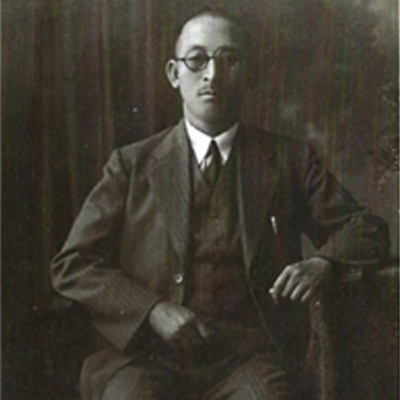
Namho (南湖) Lee Jong-man (李種萬) is a businessman and educator during the Japanese colonial period listed in the Dictionary of Pro-Japanese Figures. He donated war funds to the Sino-Japanese War, which began in 1937, and contributed articles encouraging the war to <Samcheolli> and <Maeil Shinbo>, the leading propaganda media at the time. He was also active in mobilization organizations under the Governor-General and educational organizations that strengthened Naeseon Ilche (Japan-Korea assimilation), so anyone can see that he was a pro-Japanese figure. However, can descendants who receive the Order of Merit for National Foundation from the Ministry of Patriots and Veterans Affairs in the 21st century be truly proud? People who need the Order of Merit for National Foundation are people with important social status. They are aware of the significant damage that the pro-Japanese activities of their direct ancestors cause to their descendants, and they must somehow have their achievements evaluated to raise the status of their family and enjoy the effects. Korean society is a country where there are clearly people who use the system to avoid the scarlet letter of pro-Japanese acts.
As for the historical figure Lee Jong-man, there is also Lee Jong-man (李鍾萬, 1870~1956), the commander of the Donghak Army's special forces, who has the same name, but his achievements are also not well known. Criticizing pro-Japanese figures during the colonial period without knowing the whole picture of the era when Donghak righteous armies and Naeseon Ilche were advocated is a deceptive tactic that politicizes research gaps and incites the public to one side. Someone's pro-Japanese activities are diluted and transformed into independence activists, but Japanese popular culture is spread like rain soaking clothes, creating a gloomy nostalgia for the past colonial era and creating biased social sentiments with simple ideological logic, hindering Korea's development. They have no interest in the balanced development of society, and the logic that only a very small number of people need to live well is the inner thoughts of all vested interests in the world today.
No one can understand the life of an individual, Lee Jong-man, in a state where pro-Japanese sentiment-cultivating groups, which are in conflict with the national sentiment, coexist openly, so no one is qualified to evaluate him. In a strange Korea where the significance of Donghak and the Righteous Army activities are belittled, and only Lee Jong-man's pro-Japanese acts, who is from the next generation, are highlighted, the academic community is undertaking the task of sublimating anti-Japanese sentiment into pro-Japanese sentiment, and the media does not hide its efforts to encroach on pro-Japanese sentiment into popular culture to drive this. Such socio-cultural double standards are nationally contradictory. Furthermore, considering that he succeeded in the mining industry and was the owner of land equivalent to 1/100 of the Korean Peninsula, not studying him is a betrayal of history and an evasion.
Like the humane people of that era, Lee Jong-man was also a person who included war orphans in his family register. It was an era when poverty was commonplace, but it was an era that knew the kindness of taking in several orphans, sleeping them with their own children, and feeding them. Even though the country was ruined, Koreans with the disposition to take in and raise orphans of the same ethnicity never voluntarily urged the division of North and South Korea. However, we must acknowledge the contradiction that there is now a class whose division is a business and a value, fanned by foreign intervention, to see the next stage.
The son of the youngest daughter of Lee Jong-man's eldest son, Young-jo, is movie actor Kang Dong-won. And one of the daughters of the youngest daughter, Nam-soon (南順, 1922~2013), is currently an actress and Doctor of Educational Philosophy in the United States, Vana Kim Hansen (朴恩明, 1946~). She travels back and forth to Korea to find the traces of her great-grandfather and studies the national leader Lee Jong-man. Lee Nam-soon, the youngest daughter of Lee Jong-man, graduated from the Department of Education at Japan Women's University before liberation and taught at her alma mater. Due to the outbreak of the 6.25 War, she was publicly criticized as a reactionary in front of students in Seoul, which was occupied by the People's Army. After the recapture of Seoul, she was accused of being a communist, sentenced to death, and went through prison life. Poet Noh Cheon-myeong was also sentenced to death on the same charges and lived her whole life under the stigma of pro-Japanese activities. Ideology was a strong shackle for Koreans in that even though she wrote <70 Years of Ewha Womans University>, she was in a position to be used and discarded when necessary.
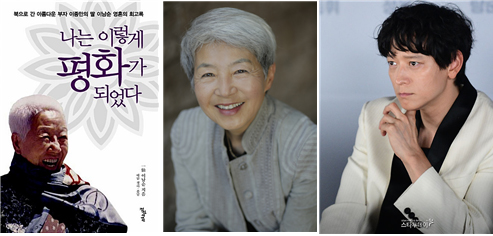
Lee Nam-soon / Kim Ban-ah / Kang Dong-won
The horrors of war that Lee Nam-soon experienced during her evacuation from Seoul to her hometown became an opportunity to harbor lifelong questions about the tragedy of national division and ideological conflict, and it is believed that this became the motive for actions that considered the nation and roots more than the individual in life, which also influenced her children's education. Lee Nam-soon, the youngest daughter, married her father's trusted business disciple and had two sons and two daughters, but after going through 4.19 and 5.16, she immigrated to Brazil in 1964. At the time, the broadcast slogan was national reconstruction and the construction of a new country, and the military service system in this land where new roses of Sharon were blooming was problematic, along with the promotion of anti-war ideology, live ammunition shooting, and harsh acts within the military. Immediately after the war, family-unit immigration to Brazil was popular to avoid military service because people were reluctant to commit murder by shooting guns, and it seems that the choice was made out of concern that the social and political views of Lee Jong-man, the father who went to North Korea, would affect his children in an economically and politically unstable situation. Lee Jong-man's youngest daughter's two sons and two daughters prove how much talent the South Korean dictatorship era's label of North Korean intellectuals and kidnapped intellectuals caused to be leaked from this land. They became a Ph.D. in Sociology, a Ph.D. in Anthropology, a Ph.D. in Educational Philosophy, an American actor, a Rhodes Scholar at Oxford University, and the representative of the International Spiritual Leadership Center Emissary.
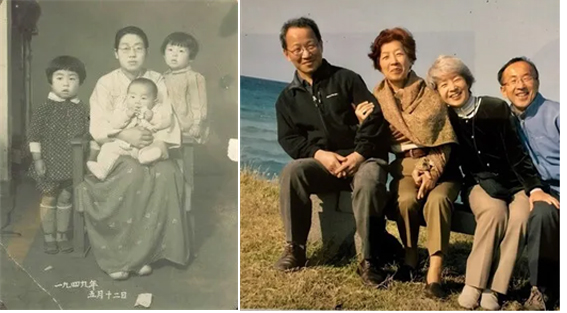
Left) Seoul in 1949. From the left, second 박은명 (Bana), mother 이남순, eldest son 세진, eldest daughter 옥경.
Right) The four siblings, scattered around the world, gathered for the first time when their mother, who returned to Korea in 2006 and settled in Jeju, underwent brain surgery in 2011. From the left, 박세진, PhD in Sociology, 옥경, PhD in Anthropology, 은명 (Bana), PhD in Educational Philosophy, and the youngest 유진, CEO of Korea Emissary.
Why was the fact that 이종만's business failed and expanded due to the influence of World War I and II, while he published agricultural and mining magazines as a national leader and devoted himself to national education, buried? Perhaps the biggest reason is 창씨개명 (Sōshi-kaimei). However, 창씨개명 is also one of the criteria for defining pro-Japanese figures, but this is a rudimentary level that does not escape the dichotomy logic, and true pro-Japanese figures acted without 창씨개명. The representative figure is 박흥식 of Hwashin Department Store. 박흥식 is the same as 이종만 in that he contributed to and was interviewed by pro-Japanese journals, but 박흥식 had far more articles praising him in government-patronized newspapers and magazines, and his womanizing was also a gossip of the times. Many Korean figures are not free from the 창씨개명 controversy, but since 창씨개명 was as natural an administrative process as birth registration, it is easier to find out who is behind inciting the 창씨개명 controversy and distorting the essence of the issue.
If Lee Jong-man's great-grandchildren had not been subjected to political pressure due to their great-grandfather's pro-Japanese controversy and defection to North Korea, and if the successful actor Kang Dong-won had been free from his great-grandfather's pro-Japanese controversy, the activities of these families would have contributed greatly to various sectors of society. We must not overlook the remaining Japanese forces growing behind the punishment that separates and sorts out the intellectual world based on simple, visible pro-Japanese acts such as 창씨개명 (adopting Japanese-style names). Lee Jong-man's defection to North Korea may also have been due to feeling betrayed by the nation, which was transforming from a Japanese colony to an American colony under the remaining Japanese forces and the US military government. This is similar to how North Koreans today, who are disgusted with the one-man dictatorship in North Korea, defect and, after completing the National Intelligence Service investigation and Hana Center education, enter South Korean Protestant churches. Defecting at the risk of their lives to escape the cult of personality, and then entering churches and becoming immersed in chosen-people ideology, means that this country has not yet fully recovered from the aftermath of colonialism and war. Some of them become puppets of the Western world and volunteer to give speeches cursing both South and North Korea. This tragedy was triggered by others, but we ourselves must take responsibility for breaking free from its shackles.
Lee Jong-man was a person from the time of Emperor Gojong, but he was a self-reliant figure who shed the hierarchy of status early on, dressed in Western clothes, and devoted his life to business, national unity, and fostering the national spirit. To study Lee Jong-man, one must first understand his use of the 760 million 평 (pyeong, unit of area) of land he owned, that is, his aspect as a mining businessman. No, one must grasp the true meaning of the record that an individual owned land equivalent to 1/100 of the Korean Peninsula's land area of approximately 66.5 billion 평. What about the war? We must understand what the history of Koreans being caught up in the Sino-Japanese War, the Russo-Japanese War, and even the Sino-Japanese War means. We must understand the logic behind the true power behind Japan's ambition for Asian hegemony. If Lee Jong-man is dealt with in academia and culture as a whole with a dichotomous perspective without any progress in such grand narratives, who can take responsibility for Lee Jong-man's youngest daughter's decades of living in a foreign land, just like Kang Dong-won's lost 10 years?
You may not need to know 이종만 because the families of political figures in South Korea are not listed in the Dictionary of Pro-Japanese Figures. As the operator of 경성고학당, he served as the president of 대동출판사, publishing magazines such as <공업 조선> and <농업 조선>, and in 1941, he printed <누판고>, which was compiled by 서유구, after correcting the proofreading by 벽초 홍명희. Just looking at 누판고, you can guess how much knowledge 이종만 had. His history as an anti-Japanese activist, a national leader dedicated to educational enlightenment, and 이종만's history as a businessman and mine operator are sufficient reasons to rewrite Korean economic history. However, 이종만, a businessman who funded the national movement, became one of the figures whose achievements were completely denigrated by past dictatorial governments due to his defection to North Korea after liberation, and is now listed as a Class 1 pro-Japanese figure in the Dictionary of Pro-Japanese Figures. Among the lives of colonial intellectuals hidden in the shadow of severe criticism of pro-North Korean intellectuals and anti-communist ideology, there are few figures who played as practical a role in reality as 이종만, and whose history remains distorted. Perhaps the establishment of the puppet government of North Korea was the result, process, and mainstay of the Korean extermination policy. When our people, who know how to fight but avoid fighting, and who know how to shoot but do not hold guns, point guns at each other, there is a history in which such a design has been going on for a long time.
While believing in the miracle of Moses parting the Red Sea, the frame that simplifies the events of colonial modern warfare with a black-and-white logic, without clearly revealing what happened, is a distorted self-portrait of Koreans who have put in a long time to ignore the essence of the issue. You can't see it even if you look in the mirror, you can't find your hometown even if you look at the map, and you don't know where is attached to where because you can't read even if you look at Chinese characters. Let's open the two hands that cover our eyes and block our mouths and ears and look down. They say you can only run within Buddha's palm, but if we only know the life of that one person, 이종만, the country will live.
I met Eugene in Seoul. He was a handsome, classy, and dignified scholar. Although we sat facing each other closely, his consciousness went back and forth to a distant place and explained it clearly and easily. He, who is considerate of the listener, has an unapproachable aura like a noble crane. He said that a young man who left Korea at the age of 9 and went to Brazil returned at the age of 29 to find Donghak. How much data would his homeland, where he went to the West and returned to find the East, have given him? My heart was cold.
댓글
( 0 / 500 )
king
6
한 인물을 단순히 ‘친일’이라는 낙인으로 규정하는 것이 얼마나 위험한지 다시 생각하게 만듭니다. 이종만의 삶을 입체적으로 바라보려는 시도는 의미 있지만, 동시에 역사적 책임에 대한 평가 기준도 함께 정교해질 필요가 있어 보입니다.
( 0 / 500 )
크리스
8
이 글은 한국 사회가 여전히 식민지와 분단의 기억 속에서 이분법적 판단에 머물러 있다는 비판으로 읽힙니다. 특정 인물의 재평가를 넘어서 역사 서술의 기준과 사회적 합의를 어떻게 만들어갈 것인지에 대한 질문을 던진다는 점에서 의미가 있다고 보입니다.
( 0 / 500 )
jongsoo88
6
박흥식과의 비교는 매우 흥미로운 시각을 제공합니다. 동일한 시대를 살았던 인물들의 선택을 대비시키는 방식은 유의미하지만, 각 인물의 구체적 맥락을 보다 정밀하게 분석할 필요도 있어 보입니다.
( 0 / 500 )
kang79
6
이종만이라는 인물을 둘러싼 서사를 통해 한국 사회가 선택적으로 기억하고 망각하는 양상을 드러내고 있습니다. 다만 그 선택성이 특정 방향으로만 작동한다고 단정하는 부분은 보다 신중한 검토가 필요해 보입니다.
( 0 / 500 )
김종호
5
동학 농민 운동과 식민지 시기의 맥락을 함께 보아야 한다는 문제 제기는 타당합니다. 그러나 이를 근거로 친일 행위 자체를 상대화하는 방향으로 확장될 경우 설득력이 약해질 수 있다는 점도 고려해야 할 것입니다.
( 0 / 500 )
박지영
5
후손들의 해외 이주와 학문적 성취를 통해 시대적 억압을 설명하는 부분은 인상적입니다. 개인의 삶이 정치적 낙인과 사회적 분위기에 의해 어떻게 영향을 받았는지를 보여주는 사례로 이해됩니다.
( 0 / 500 )
민주
4
친일 논란과 독립운동 서훈 문제를 연결하는 대목은 한국 사회의 기억 정치가 얼마나 복잡한지를 잘 보여줍니다. 공과를 분리해 평가해야 한다는 주장에는 공감하지만, 그것이 과오를 희석하는 방향으로 흐르지 않도록 경계할 필요도 있다고 생각됩니다.
( 0 / 500 )
Oliver7
4
후손들에게까지 이어지는 역사적 평가의 무게를 돌아보게 되는 부분이 인상 깊습니다. 개인과 가문, 그리고 사회의 관계에 대해 많은 생각을 하게 됩니다.
( 0 / 500 )
윤대원
3
친일과 반일이라는 이분법을 넘어, 식민지·전쟁·분단이라는 연속된 역사 속에서 한국 사회가 형성된 과정을 통합적으로 바라보려는 시도가 인상적입니다. 이러한 시각은 감정적 판단을 넘어서 보다 구조적이고 장기적인 역사 이해로 나아가기 위한 중요한 출발점이라고 생각됩니다.
( 0 / 500 )
君子有三樂
4
이종만이라는 인물을 둘러싼 평가가 얼마나 단편적인 프레임에 갇혀 있는지를 깊이 있게 짚어주고 있습니다. 특히 식민지 시기라는 구조적 조건 속에서 개인의 선택을 어떻게 이해해야 하는지에 대한 문제 제기는 매우 본질적이며, 한국 사회의 역사 인식 자체를 재고하게 만드는 통찰로 읽힙니다.
( 0 / 500 )
신고내용
신고내용을 선택해주세요
회원비난/비하/욕설글 및 댓글도배성 게시물저작권 침해/불법자료 유출허위사실유포개인정보 유출.사생활 침해무단광고/홍보음란물 및 도박 불법 광고물범죄행위 관련 글불법행위 관련 소개물품 판매 및 사기글악성코드 및 스파이웨어 유포기타 사유 및 운영진 판단


비밀번호를 잊으셨나요?
Sign in with Google
All information provided by us is free of charge and is for the public good.