品

Corea든 Korea든, 품격이 먼저다
Whether Corea or Korea, dignity comes first.
Whether Corea or Korea, dignity comes first.
Now
지금
751 Diaspora
Heritage
유산
Humanity
인문
Mirengsi
未冷尸
Politics
정치
Media
언론

사람人物
칼럼
bunny365
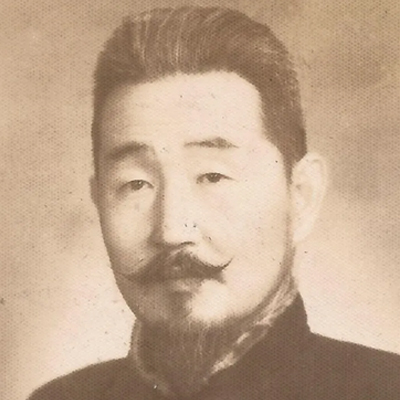
Figures from the 1800s (11) 이상정 (Lee Sang-jeong), 1898 (Gwangmu 2) ~ 1947 (Dangi 4280)

0
2026. 01. 09
Daegu is a peculiar region where the distance from Dongdaegu to Seodaegu is only about 8 km in a straight line, but there are a total of three KTX stations, including Daegu Station in the middle. Perhaps Daegu's politicians consider the east-west Daegu distance to be about 80 km. Was it an arrangement considering the wide and large history of Daegu in the past? Or was it because the politics of 'Chul-pia' worked? I don't know, but the scenery that catches my eye while driving on Taepeong-ro was no different from other cities where the historical description of the Daegu region does not match the physical evidence.
I couldn't find any traces of the colonial era of the last century, and only museums and memorial halls in various places stand as signs and evidence of the old traces. I don't know what was so peaceful that there are place names called Taepeong-ro all over the country, including Seoul, Gyeonggi, Daejeon, Jeonju, and Jeju, but the place name is unfamiliar to the sentiment. It's like going to Bangladesh or Afghanistan, which used to be British colonies, and seeing a sign that says 'Happy Road', but Daegu is already a graveyard of unsold apartments. Daegu, where nationalist patriots were active in the past and anti-Japanese intellectuals were also great, was a province that took the lead in popular education and enlightenment in various fields such as art and literature, but that Daegu does not exist on the Korean Peninsula.
Seomun Market in Daegu is much larger than Namdaemun Market in Seoul, but it sells similar items. It seems that Isabella Bird Bishop's words are true, that Daegu's area in the past was enormous, and that Joseon recorded the inconvenience of having to carry large amounts of coins on horses and donkeys because the currency was different in each region. However, Seomun Market is no different from Namdaemun Market in Seoul now. People do similar business, eat similar food, and greet the morning with similar desires, but it is hard to believe that the families, quality of education, and values of anti-Japanese activists in the Daegu area in the past were different from now and were rooted in nationalism.
This is what I felt after visiting the 'Ijangga Cultural Center,' which commemorates the family of Lee Sang-jeong (李相定, 1898~1947). His father, Unam Lee Si-woo (李時雨, 1877~1908), died young at the age of 31, but he had four sons: Lee Sang-jeong, Lee Sang-hwa, Lee Sang-baek, and Lee Sang-oh. The eldest son, Lee Sang-jeong, was an armed anti-Japanese independence activist skilled in poetry, calligraphy, and painting, the second son was the national poet Lee Sang-hwa, the third son Sang-baek was a historian and the first Korean IOC member who created a basketball team at Waseda University in Japan and introduced basketball to Japan for the first time. The youngest, Lee Sang-oh, was a master marksman, a pioneer of hunting culture, and served as the president of the Korea Shooting Federation. The mother of the four brothers, Kim Shin-ja (金愼子, 1876~1947) of the Gimhae Kim clan, was a pioneer of the women's movement in Daegu and Gyeongbuk. Were the four sons born as geniuses, or were they raised to be geniuses?
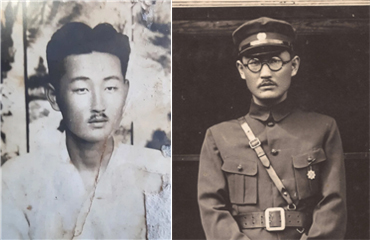
It's hard to believe that such figures were born in a local area called Daegu in the 19th century, and the country eventually collapsed. There must have been some irresistible force behind it, but what about now? The 60s and 70s, who were heavily educated in anti-communist education to permanently perpetuate the solidified division between North and South Korea, are actually experienced people who witnessed the horrors of war firsthand. The reason they claim to be conservative every election is because they do not know that forces that intervened in past history to incite terrorism and war were rampant. However, then and now, brainwashing and propaganda, which are too much to even mention, have always won over the horrors. With this, it is impossible to explain the history of how the proud and self-respecting nationalist Daegu became 'Gotham Daegu'.
Lee Si-woo's father, Geumnamgong Lee Dong-jin (李東珍, 1836~1905), was a wealthy man in Daegu during the late Joseon Dynasty, and in 1904, he established a private national education institution called 'Woo Hyun Seoru (友弦書樓)' at his own expense to promote new education, that is, a private school. Until it was forcibly closed by the Japanese in 1911, it selected dozens of talented people from all over the country, provided free room and board, and fostered more than 150 armed anti-Japanese activists. One individual's will and his children inherited their father's legacy with filial piety and patriotism. Daegu at the time had 10,000 books from the East and West and was able to nurture patriots. It is fundamentally different from the Daegu of today.
It is said that Uhyeonseoru later developed into Gyonam School, the predecessor of Daeryun Middle and High School, and although only its site remains now, it is not easy to discover its historicity. The spirit and energy of Uhyeonseoru are not felt between apartment complexes, and above all, because the site of the past has been reproduced, restoration or reproduction is not the original form. Even if it is a ruin, I want to see at least one piece of evidence that we, the descendants, can 'trust' and 'acknowledge' as the original.
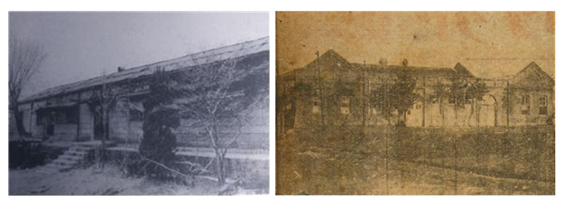
Left) Uhyeonseoru, Right) Gyonam School
In the background where scholars with meaning gathered and strived to become talents for the country and leaders, there was the chaos of the conclusion of the Eulsa Treaty and the outbreak of the Russo-Japanese War. This period, 1904, was already nearly 30 years after the Ganghwa Island Treaty. After Japan provoked and invaded with the Unyoho, as the atmosphere of national ruin deepened, even after a generation, people who did not give up despite oppression, were prepared to die, privately studied, shared meals and lodging, and volunteered to live as national leaders lived in Daegu.
The later evaluation of this educational institution, named after the saying "winning without fighting," as a 'modern library' played a significant role in undervaluing the anti-Japanese spirit of the patriotic figures from Uhyeon Seoru and the spirit of the Daegu aristocracy. The current scholarship, which freely discusses history based on Western education standards without knowing the actual history, is a standard of colonial historiography. With a historical sense riddled with colonial historiography, it is impossible to understand why the anti-Japanese movement continued for more than 30 years, moving from region to region, continuing guerrilla warfare, and relocating the Provisional Government. With the hope that things will fit together after buttoning the first button wrong, it will be impossible to even recall the essence of not only Daegu's history but also any phenomenon.
The operator Sonam Lee Il-woo (李一雨, 1868/1870~1936), who carried on his father's will, operated Uhyeon Seoru while leading the National Debt Redemption Movement and national education, and raised his younger brother's four sons. He is also a great man who should be evaluated. Jang Ji-yeon, Jang Ji-pil, Kwon Il-je, and Kim Seong-su, the chief writers of the Hwangseong Shinmun, were also talented individuals from Uhyeon Seoru. Park Eun-sik, the president of the Shanghai Provisional Government, and Lee Dong-hwi and Yeo Un-hyung, the first prime ministers of the Provisional Government, also had close ties to Uhyeon Seoru. Kim Ji-seop (金祉燮, 1884~1928), a member of the Righteous Brotherhood who attempted to assassinate the Emperor and his son at Nijubashi (二重橋) on January 5, 1924, on the way to the Tokyo Imperial Palace, was also from Uhyeon Seoru. Born in the year of the Gapsin Coup, Kim Ji-seop attempted to blow himself up in anger at the massacre of Koreans during the Great Kanto Earthquake. However, although Korea is the only country on Earth where people have resisted foreign powers for generations, it is also the only country that has devalued and diluted its history for generations.
In place of his younger brother Lee Si-woo, who died at an early age, his uncle Sonam Lee Il-woo cared for and supported his brother's four sons materially and spiritually. Reading the letters exchanged between Sonam and Lee Sang-jeong sends chills down your spine. From the perspective of modern people, they are intellectuals of different status and different qualities. The spirit of the aristocracy, which cannot even be mentioned now, is vivid, but we cannot even read the pure Chinese letters from just a hundred years ago, cannot gain inspiration, and the filial piety melted within is not just the relationship between an uncle and nephew, but a thick relationship of trust that is more than that of a father and son. It is a sense of camaraderie in a time of national ruin. Looking at the destroyed humanity and emotions of modern Korea, which does not hesitate to relentlessly project distorted desires, it breaks my heart with envy at how such spirit and justice could permeate among people. I tremble with sadness. It is because the future is bleak. The Lee Jang-ga Exhibition Hall is a space that is maintained because the family's laws are alive. The achievements of a family who grew up in an environment where they could grow up with a complete understanding of justice, morality, human relations, and heavenly relations, the historical figures that Daegu produced, and Daegu, which created such a family, now feels heavy in a different sense.
The Lee Sang-jeong family, a family of outstanding intellectuals, especially among those who possessed both literary and military skills, was truly a prestigious family, a Daegu native who was a painter, writer, seal engraver, military expert, and patriotic martyr with traditional values. When many people betrayed, someone risked their life for the 'nation', which is why we are here now. The attempt to completely conceal that fact is symbolized by the figure of Lee Sang-jeong. I don't know what pronoun to use to refer to Lee Sang-jeong. I will not go into the detailed story of Lee Sang-jeong. When I look into it, there is a meaning and sadness as deep as the Mariana Trench, so I don't want to touch it. Someday, I sincerely hope that the whole country will know the figure of 'Lee Sang-jeong' and shed at least one drop of tear.
Beautiful 삼천리, my beloved hometown
The foundation of Joseon passed down from ancient times
I have left behind and departed without a word
How could I forget it even in my dreams? I miss it so.
The winding and treacherous road back to my hometown
My heart aches because I cannot return.
Bearing sorrow in 백두, 금강, and 태백,
Sprinkling tears on the waters of the 두만 and 압록 rivers,
The white-clad compatriots who were driven out, 남부여대,
Don't let the snowstorm of North Gando cry.
It's a winding and rugged road back home.
My heart cannot return.
Siberian autumn moon on the Manchurian plains
How many times have I gone home in my dreams?
Spring days in Hangzhou and Suzhou, and rain on the long sandy beach
How many times have I thought of my love?
It's a winding and rugged road back home
My heart cannot return.
Fog shrouds the streetlights of Shanghai,
As the tide crashes against the Huangpu River,
The whistle departing from the Great Wall
Awakens me from my sleep, urging me to return home.
The winding road home is treacherous,
My heart aches for I cannot return.
The cold wind of Irkutsk pierces my skin,
As the moon reflects on Lake Baikal,
My heart sits in silence,
Oh, flying goose, do you know?
It's a winding and treacherous road back home.
My heart aches because I cannot return.
Thinking of my parents and my country,
I can only shed hot tears.
Even after wandering for ten years, biding my time,
Ah, who will know my burning heart?
It's a winding and treacherous road back home.
My heart aches because I cannot return.
Lee Sang-jeong, Manghyang Gok
댓글
( 0 / 500 )
飛上
7
대구를 이렇게 아프게, 이렇게 깊게 바라본 글은 오랜만입니다. 공간은 남아 있는데 정신은 사라졌다는 말이 뼈를 때리네요. 이상정 가문을 통해 본 대구의 과거는 ‘역사’가 아니라 ‘부채’처럼 느껴집니다.
( 0 / 500 )
보라아빠
9
읽는 내내 분노보다 허무가 더 컸습니다. 이 정도의 인물과 가문, 이 정도의 민족적 밀도가 있었던 지역이 왜 지금은 기억조차 지워졌는지 묻지 않을 수 없습니다. 복원된 흔적이 아니라, 폐허라도 좋으니 진짜 역사를 보고 싶다는 말에 고개가 끄덕여집니다.
( 0 / 500 )
홍가네
7
‘근대 도서관’이라는 이름으로 우현서루를 정리해버린 학문적 폭력이 무엇인지 잘 드러난 글입니다. 항일을 이해하지 못하는 역사관이 결국 지금의 공허한 지역 정체성을 만들었다는 지적, 매우 설득력 있습니다.
( 0 / 500 )
深山
6
이상정의 망향곡을 이 글 끝에 다시 읽으니, 단순한 시가 아니라 한 세대 전체의 유서처럼 느껴집니다. 우리는 너무 쉽게 그들의 삶을 ‘과거’로 밀어내고, 너무 안일하게 현재를 소비하고 있는 건 아닌지 스스로를 돌아보게 됩니다.
( 0 / 500 )
mac2144
6
이상정 가문을 읽으며 ‘이 정도면 나라가 안 망하는 게 정상 아니었나’라는 생각이 들었습니다. 그런데도 망했고, 망한 뒤에는 그 정신마저 지워졌다는 사실이 더 참담합니다. 글이 아니라 고발문에 가깝습니다.
( 0 / 500 )
김동완
4
대구의 현재를 단순히 보수·진보 프레임으로 설명하는 시선이 얼마나 얄팍한지 이 글이 보여줍니다. 문제는 정치 성향이 아니라, 기억의 단절과 역사 해석의 왜곡이라는 점에 깊이 공감합니다.
( 0 / 500 )
auto70
4
복원과 재현이 오히려 역사를 죽인다는 지적이 인상적이었습니다. ‘안심하고 인정할 수 있는 증거물’이 없다는 말이 왜 이렇게 절망적으로 들리는지 모르겠습니다. 우리는 너무 쉽게 모형에 만족해 왔습니다.
( 0 / 500 )
kimyoon
4
이 글을 읽고 나니 대구라는 도시는 하나의 장소가 아니라, 잃어버린 가능성의 이름처럼 느껴집니다. 이상정이라는 인물이 더 많이 알려질수록, 우리가 외면해 온 역사도 함께 드러날 것이라 믿고 싶습니다.
( 0 / 500 )
joonggil
3
소남 이일우와 이상정의 서신 이야기는 현대인으로서 차마 부끄러워 고개를 들 수 없게 만듭니다. 효, 의리, 동지의식이 모두 사라진 시대에 살고 있다는 자각이 이 글의 가장 큰 충격이었습니다.
( 0 / 500 )
인순
2
이 글은 대구를 비판하는 글이 아니라, 대구를 애도하는 글이라고 느꼈습니다. 민족주의 대구가 ‘고담 대구’가 되기까지의 설명을 정치나 세대 갈등으로만 돌릴 수 없다는 점에서, 오래 남을 문제제기입니다.
( 0 / 500 )
beeniru
0
해마다 광복절 즈음이 되면 전재산을 팔아 온 가족이 독립운동을 위해 만주로 이주했던 이회영 집안에 대한 이야기가 회자되곤 하며 이를 노블리스오블리제라는 거창한 수식어로 소개하는 경우가 많습니다. 그런측면에서 보면 이상정 가문의 이야기도 그에 못지않은 서사가 있죠!!! 내년부터는 이상정 가문 즉 ‘이장가(李庄家)'의 독립활동을 널리 알리는 캠페인이 필요하겠습니다. *^^*
( 0 / 500 )
신고내용
신고내용을 선택해주세요
회원비난/비하/욕설글 및 댓글도배성 게시물저작권 침해/불법자료 유출허위사실유포개인정보 유출.사생활 침해무단광고/홍보음란물 및 도박 불법 광고물범죄행위 관련 글불법행위 관련 소개물품 판매 및 사기글악성코드 및 스파이웨어 유포기타 사유 및 운영진 판단


비밀번호를 잊으셨나요?
Sign in with Google
All information provided by us is free of charge and is for the public good.