品

Corea든 Korea든, 품격은 이름보다 먼저다
Whatever the name—Corea or Korea—dignity comes first.
Whatever the name—Corea or Korea—dignity comes first.
Now
지금
751 Diaspora
Heritage
유산
Humanity
인문
Mirengsi
未冷尸
Politics
정치
Media
언론

사람人物
칼럼
bunny365
Figures from the 1800s (10) Jo Yong-ha (趙鏞夏), 1882 (Gojong 19) ~ 1937

0
2025. 10. 03
Not everyone remains a historical figure. Announcing a figure who lived through the demise of a civilization that had lasted for thousands of years since the 19th century is like counting grains of sand from the deep sea. To introduce the feeling of becoming Archimedes' sand counter (Psammites), it is the pain of realizing the truth that as many Joseon people as there are grains of sand filling the universe gave their lives to restore their country's sovereignty and territory. Pain turns into loneliness, and loneliness turns into anger again. The feeling of experiencing the psychological change of anger turning into futility is painful. Therefore, the work of counting the sand to fill the universe is a thought that makes us unable to help but think about the past, about what philosophy of the human abyss was filled with in that era.
With territory and people existing, but without sovereignty, today's Koreans cannot understand the distortion of the fact that their ancestors, who were numerous enough to fill the universe, threw away their only lives for something. Today, when no one cares about patriotism due to abstract nationalism, is this country really of the same lineage as them? That ever-changing era of war was terrifying. Faced with all sorts of thoughts that stimulate HSP, one cannot help but feel guilty about choosing a specific person. What right do I have to select them?
Gushim (求心) Jo Yong-ha (趙鏞夏) is the eldest son of Jo Jeong-gyu (趙禎奎), the 16th generation descendant of Eo Gye (漁溪) Jo Ryeo (趙旅), one of the six living saints who criticized Sejo for seizing his nephew's throne, protested against serving two lords (不事二君), and maintained his integrity, and is the brother of Soang (素昻) Jo Yong-eun (趙鏞殷). It is a prestigious family with a tradition of nearly 500 years, originating from Icheon-gun, Gyeonggi-do, or Yangju-gun. In 1901, he was a councilor or secretary at the Korean Empire's legation in Germany (駐獨) and France (駐佛), and at that time, he provided his younger brother, Soang, who was five years younger, with information on the international situation, helping to expand his worldview. There are articles that express that Jo Yong-ha was studying in Berlin, and his name is not listed in the Veritable Records, but there are generally many more descriptions that he was in public office, so it can be seen that he was a person who took office at a very early age compared to his age. But how could the older brother, who was stationed in Germany, have informed his younger brother, who was learning Korean studies in Yangju, Gyeonggi-do, about the world situation?
First of all, the government-run French school that Jo Yong-ha attended was an institution for training French interpreters, established in May 1895 with the promulgation of the "Regulations for Foreign Language Schools." Two months earlier, in March, the "Regulations for the Training Institute for Judges" were issued to recruit students who could learn at an accelerated pace. Although the establishment of foreign language schools and training institutes for judges was by royal decree of King Gojong, the frequent promulgation of laws, which seemed almost like forming a new government, took place during the Gabo Reform. The series of events from 1882 to 1895, the four major tragedies of the modern era - the "Imo Incident - Gapsin Coup - Eulmi Incident - Russian Legation Affair" - were important events that decorated the end of the dynasty's history, but the press coverage at the time did not accurately report the facts, so the detailed facts are unknown. This part, riddled with the most difficult events of the late Joseon Dynasty, must be examined from various angles, but the tone of historical disparagement, like a play on words, continues in later generations, and the inertia of a self-deprecating view of history remains.
Perhaps the emphasis on the revolutionary image of the Gabo Reform, which seemed to make everything new, led to a habit of not distinguishing between image politics and image historiography, whether it was real or fake. Even today's events and accidents are reported in completely opposite articles by the press and media depending on the interests of political parties and individuals, so there is nothing more to say about what happened over a hundred years ago. The amount of information received would have differed depending on one's status, and if there was no way to know what was happening above from below, it can be said that the truth was already buried at that time. How can we understand the state of the country at the time, when information was being transmitted to Germany and Yangju, Gyeonggi Province, the circumstances in which the country had no talent to entrust foreign life to someone at a young age, and the part recording officials during this period does not appear in the Gukjobogam, which records the appointees who took office?
More importantly, there is the problem of the strange direction of historical description, in which the fact that the 'Donghak Revolution' and the 'Sino-Japanese War' are sandwiched between these four tragedies of the late Joseon Dynasty is reduced to individual incidents and described as a civil revolt, as if the territory was given over to a foreign war. It is an unbalanced story to portray Donghak as a conflict of social classes or dissatisfaction with the government, and to create a third-rate historical novel in which a corrupt royal family that has lost control over the people borrows foreign troops to deal with the rebellion and gets caught up in an international war. The historical background is lengthy, but the space where the events occurred is narrow. Even though so many events took place on this small Korean peninsula, there are so many history books analyzing this period that it is excessive. If only the expansiveness of the places where these two events occurred is secured, it is easy to realize that there is a problem with the historical knowledge of Koreans who have been educated about this situation as simple individual events.
The appointment of young Jo Yong-ha was before the proclamation of the Korean Empire, making it an ambiguous time to consider it a driving force for new reforms. The Gabo Reform, which involved selecting and educating new-style officials, could be seen as meaning that Joseon had already collapsed, and even that all the experienced and loyal Joseon officials had been executed. If intellectuals who resisted foreign invasion had all died, making it easier to colonize, why would they bother to select new officials and go to the trouble of dispatching them to faraway Germany and France? Modern reform is a process of realizing that there is no space in Asia where it has been done voluntarily, so modernization should not be evaluated carelessly. However, these speculations are ignored. The public's attention will be drawn only to the dichotomous logic of pro-Japanese or not pro-Japanese, because Jo Yong-ha followed the Japanese academic system and appeared in Japanese publications. It is necessary to observe carefully which institution is leading the trend of thought.
Since Jo Yong-ha was born in 1882, he was at the German legation before he turned 20, and after returning to Korea in 1903, he was a county magistrate of the 8th grade of high officials in Juksan, Majeon, and Icheon, Gyeonggi Province in his twenties. It can be seen that even local officials employed young new talents. He went into exile in Beijing due to the forced conclusion of the Eulsa Treaty on November 17, 1905, and in 1906 he met his younger brother who was returning to Japan due to the policy of urging him to return to university in Japan, but the location is unclear. At this time, it was the time when the Tonggam-bu was established, so he left his homeland in confusion and wandered around, and the next record that appears is when he participated in Gyeonghaksa (耕學社) and devoted himself to full-scale anti-Japanese activities. It is unclear where he was for about 6 years until 1911, when Gyeonghaksa was created. Gyeonghaksa is a fraternity organization in Yuha County, Manchuria, Seogando, created by Lee Hoe-yeong and his brothers Lee Si-yeong, Lee Dong-nyeong, and Lee Sang-ryong. Of course, it is an anti-Japanese autonomous organization. As the country disappeared and the people were at a disadvantage, these intellectuals fled in all directions and engaged in mass enlightenment education and military education, and as the capital of the Methodist and Presbyterian churches came into these groups, they became involved in the 'Independence Army and Christianity' frame.
If a dynasty is corrupt and the nobles are the first to betray the nation, it deserves to be destroyed, and no one would be sad even if it were absorbed and unified by another ethnic group. But why did they embark on such a difficult evacuation route, and why did Western religion and capital join in to help with independence? Judging from the fact that even Do-ma Ahn Jung-geun has traces of being gaslighted or influenced by French missionaries, it seems that there was a historical demand for Joseon to be destroyed, and independence was essential.
In 1913, while in Hawaii, Jo Yong-ha organized the 'Korean Independence Corps' and 'Korean Association' in Hawaii with Park Yong-man, Ahn Chang-ho, and others. In July 1920, after being elected as the head of the Hawaii Regional General Assembly, he published the Korean newspaper 'The Korean Pacific Times'. He maintained close contact with his younger brother, Jo So-ang, who was the Minister of Foreign Affairs of the Provisional Government, and made constant efforts in diplomatic activities. He tried to use his background to inform the world about the anti-Japanese movement. It is said that he lived a frugal, single life during those lonely 20 years, owning only one necktie.
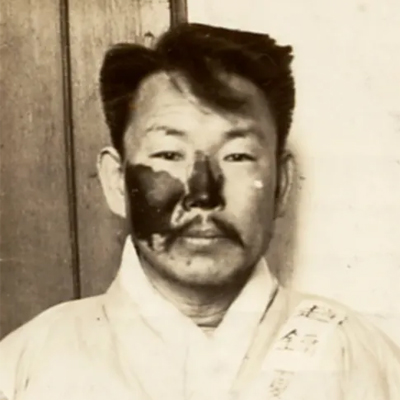
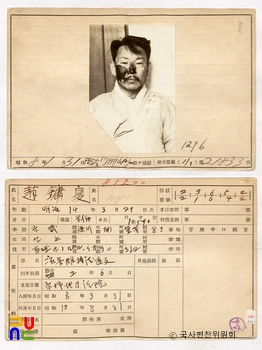
In April 1932, he received the task of delivering the declaration and membership application for the 'Sino-Korean Alliance' organization from his younger brother Jo So-ang, and encouraged and enrolled Koreans living in Hawaii, maintained ties with the Provisional Government, and devoted himself to the independence movement. In October of the same year, while traveling to Shanghai on an American steamship, he was arrested by Japanese police who obtained this information due to someone's betrayal after stopping at Kobe. How many ships stop at Kobe on the way from Hawaii to Shanghai these days? If you read the logbook of the ship at that time, you might suspect that a completely different history was deceiving mankind. In January 1933, Jo Yong-ha underwent the cumbersome procedure of being sent to Gyeongseong-bu, and on April 1, 1933, he was sentenced to two years and six months in prison at the Gyeongseong District Court on charges of violating the Public Security Maintenance Law and served his sentence. At this time, half of Jo Yong-ha's face is blackened in the mugshot on the prison card taken at this time. It is said that he painted his face with ink because he was ashamed of standing in front of Japanese people as a Korean. He was released on bail due to illness during his imprisonment, but died of exhaustion on March 3, 1937, at the age of 55.
Did Cho Jung-kyu's sons know the feeling of having to wear an upside-down prison uniform in front of the sinful Japanese and the reason why no country in the world would help even if they appealed for anti-Japanese sentiment around the world? Did they really not know the meaning of the scheduled destruction of Joseon and the scheduled independence? I can't help but feel deeply grateful once again for their determination not to die dirty, even though they would die anyway.
댓글
( 0 / 500 )
hurricane
3
조용하 선생 같은 분들이 있었기에 우리가 지금 이 땅에서 살아가는 게 가능했겠지요. 이름이 널리 알려지지 않았지만, 그 헌신이 결코 헛되지 않았음을 기억해야 합니다.
( 0 / 500 )
Pohang
6
먹물을 얼굴에 칠하고 법정에 섰다는 대목에서 눈물이 났습니다. 나라 잃은 설움 속에서도 인간으로서의 존엄을 지키려 했던 용기에 머리 숙여 감사드립니다.
( 0 / 500 )
Sangjoon
6
결국은 예정된 멸망, 예정된 독립이라는 표현이 뇌리에 남네요. 모든 게 거대한 흐름 속에서 이미 결정되어 있었던 건지, 개인의 희생이 어떤 의미였는지 깊이 생각하게 됩니다.
( 0 / 500 )
낭랑18세
5
읽으면서 답답한 건, 여전히 역사를 제대로 가르치지 않고 단순화된 프레임으로만 알려준다는 겁니다. 친일-반일, 반란-민란으로만 설명하는 건 진실을 가리는 또 다른 왜곡 아닐까요.
( 0 / 500 )
joon71
4
55세라는 나이에 옥고와 병보석, 결국 고문과 여독으로 돌아가셨다는 부분이 너무 안타깝습니다. 민족을 배신한 자들은 잘 먹고 잘 살았을 텐데, 정의로운 분들은 왜 이렇게 허망하게 가셨을까요.
( 0 / 500 )
candyboy
5
우리가 지금 편안히 사는 동안 이름 없는 선조들은 고통 속에서 싸웠습니다. 그 희생을 잊지 않고, 오늘을 사는 우리가 조금이라도 더 정의로운 길을 만들어야 한다고 생각합니다.
( 0 / 500 )
wonderland
7
하와이에서, 만주에서, 상하이에서… 당시 독립운동가들이 세계 곳곳을 전전해야 했던 이유를 다시 생각해 봅니다. 우리 힘만으로는 버틸 수 없었던 현실이 얼마나 참담했을까요.
( 0 / 500 )
태양
4
결국 세계 어느 나라도 도와주지 않았다는 부분이 마음에 걸리네요. 국제정치는 이상이 아니라 철저히 이해관계라는 사실을 그때도 지금도 똑같이 보여주는 것 같습니다.
( 0 / 500 )
Democracy88
8
이 글은 단순히 한 인물의 전기가 아니라, 그 시대를 살았던 조선인의 인간 심연의 철학이 무엇으로 채워졌는지를 묻는 깊은 사유입니다. 필자님의 노고에 다시 한번 감사드리며, 앞으로의 역사 발굴 작업에 응원과 격려를 보냅니다.
( 0 / 500 )
mijung
7
임오군란부터 아관파천으로 이어지는 4대 비극에 동학 혁명과 청일 전쟁을 개별 사건으로 축소하고 민란으로 서술한 기존 역사관에 대한 비판에 깊이 공감합니다. 말씀처럼 공간의 확장성, 즉 국제 정세 속에서의 역학 관계를 고려하지 않은 역사 서술은 진실을 왜곡하고 자학적인 역사관을 반복하게 만드는 것 같습니다.
( 0 / 500 )
77minsoo
6
독일에 있던 형 조용하가 경기도 양주의 아우(조소앙)에게 국제 정세를 전달했다는 경로의 난해함이 이 시대 지식인들의 고투를 상징적으로 보여주는 것 같습니다. 또한, 독립운동 과정에서 기독교 자본이 독립군 단체와 엮이게 된 배경에 대한 필자님의 분석도 흥미롭습니다.
( 0 / 500 )
eunjung
4
'아르키메데스의 모래알 세는 사람'이 되어가는 고통, 그리고 '특정 인물을 선택하는 죄의식'을 고백하신 필자님의 심정에 깊이 공감합니다. 우주를 채우는 모래알처럼 많았던 선조의 희생 속에서 특정 인물을 호명하는 일은 분명 무거운 책임감을 동반할 것입니다.
( 0 / 500 )
Cnadlelight
4
조용하 선생이 만 20세 전에 독일에 파견될 수밖에 없었던 시대적 정황이야말로, 나라의 위태로움과 개혁의 기만성을 동시에 보여주는 증거라고 봅니다.
( 0 / 500 )
風雲兒
3
과연 조선의 멸망과 독립이 '예정된 의미'였을까 하는 철학적 질문을 던져주시네요. 조용하 선생처럼 신식 교육을 받고 고등 관료직까지 지낸 인물들이 왜 모든 것을 버리고 독립운동에 투신했는지에 대한 심도 있는 연구가 필요해 보입니다.
( 0 / 500 )
신고내용
신고내용을 선택해주세요
회원비난/비하/욕설글 및 댓글도배성 게시물저작권 침해/불법자료 유출허위사실유포개인정보 유출.사생활 침해무단광고/홍보음란물 및 도박 불법 광고물범죄행위 관련 글불법행위 관련 소개물품 판매 및 사기글악성코드 및 스파이웨어 유포기타 사유 및 운영진 판단


비밀번호를 잊으셨나요?
Sign in with Google
All information provided by us is free of charge and is for the public good.