品

Corea든 Korea든, 품격은 이름보다 먼저다
Whatever the name—Corea or Korea—dignity comes first.
Whatever the name—Corea or Korea—dignity comes first.
Now
지금
751 Diaspora
Heritage
유산
Humanity
인문
Mirengsi
未冷尸
Politics
정치
Media
언론
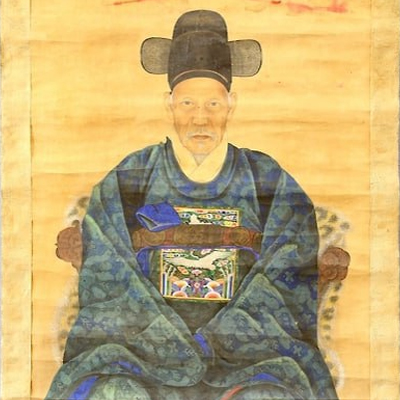

사람人物
칼럼
bunny365
19th century figure (8) Choi Ik-hyeon (崔益鉉), 1833 (Sunjo 33) ~ 1907 (Gwangmu 11)

0
2025. 06. 19
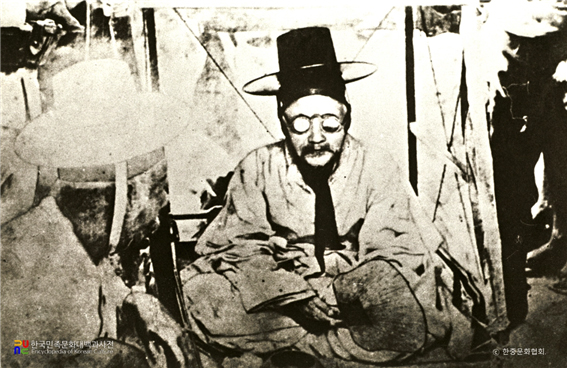
Choi Ik-hyun in exile on Tsushima Island (Photo: Encyclopedia of Korean Culture)
There are grand conspiracies and petty conspiracies in the world, and the majority of humanity, regardless of their political system, lives a life as part of one of them, forming conspiracy theories. The world of conspiracy is so deep and dense that it is a swamp of humanity that cannot be fathomed and talked about from the public's perspective. The public, supporting the conspiracies that are intricately intertwined vertically and horizontally, has become a slave to information and consumption without realizing that their mental integrity as human beings is threatened by both small and large conspiracies. Unfortunately, we cannot escape this Möbius strip-like irony, so survival is becoming increasingly tiring.
If I were asked to redefine conspiracy theory, it would be the work of those who led the destruction of the architecture and records of the Old World in the past, leading the deception of the public. This work, which has spanned hundreds of years, has been transformed into a stopgap for reality, dividing the public who have been used for it, and now it is a reality that it is felt that conspiracy theories cannot be made mainstream.
Centuries of Western colonialism were reborn as huge capital in modern society after World War II and still dominate the world economy. The political method of shouting democracy to modern humanity, which has become a slave to meager capital, still deceives the public through the illusion that it is advanced, and the role of further solidifying the world of conspiracy for global capitalists is exactly that of an NPC in a game. The public hardly even feels the need to realize their ego in reality as their propaganda unit. Occasionally, there are those who have primitive doubts about the structural contradictions of this world, but they cannot reveal the whole story with their individual information power. This is because the attributes of individuals and NPCs are in the same context.
Myeonam Choi Ik-hyeon is a figure who symbolizes the last intellectual of Joseon, who confronted the West, which was trying to break the orthodoxy of the old era, and the Japanese Empire, which moved as the West's dog, with his whole body and spirit. As a descendant of Choi Chi-won, he is a descendant of a truly distinguished family whose lineage has continued for a thousand years. Even in this vulgar world that has transcended the distinction between upper and lower classes and the boundaries between men and women, he is not someone we can easily make a subject of controversy. We ourselves do not realize how great and solemn the narrative of a thousand years maintaining a single family line is in human history. We should think about why we have lost our own memory and history. Can we say that Choi Chi-won and Choi Ik-hyeon maintained racial and biological identity for a thousand years? We know nothing. Choi Ik-hyeon and Choi Chi-won have never been seen or have information about them, but the shamelessness of using materials published during the Japanese colonial period as scholarship has made Choi Chi-won's imprisonment in Tsushima Island an element of conspiracy theories.
Choi Ik-hyun was born with the academic aptitude of Joseon geniuses who were said to be outstanding, but because the times were bad and the world was already in turmoil, he was only remembered as a leader of the righteous army. I wonder who would benefit from the introduction of historical figures, which is mostly a keyword memorization method. This kind of formality only hinders sincere reflection on the past, and like movies that have glorified dictatorships, sycophantic culture can never resonate with quick-witted Koreans. For a nation whose past has been obliterated, milestones in life that attempt to piece together the essence and phenomena have long disappeared. As a result of this being acquired after birth, we have become a variant that no longer suits a long history and does not try to face history, so there is no way that someone like Choi Ik-hyun can move people's hearts.
Choi Ik-hyeon's eldest son, Yeong-jo, collected his father's poems and prose and published the Myeonamjip as the 1908 (Musinbon) edition, one year after his death. In 1929, with the permission of the Governor-General of Korea, Jo Woo-sik and Park Jae-sik republished the Myeonamjip in 1931 (Sinmiban) as 48 volumes and 24 books. What could be the reason for publishing it twice in such a short period? Although I couldn't compare the differences between the Musinbon and Sinmiban editions, what is particularly noteworthy in the content is the petition. The petition contains a lot of content denouncing and criticizing the political situation at the end of the Korean Empire, the position representing Wijeong Cheoksa (卫正斥邪, Defend Orthodoxy and Reject Heterodoxy), and the atrocities of Japanese imperialism. At first glance, the condemnation of Japanese atrocities seems to guarantee the objectivity of historical materials, but the process of moving from Wijeong Cheoksa to persecution and Western disturbances and then suddenly becoming a Japanese colony is a description in which the factual relationship is not clear. There is suspicion that the politics of disguising Western Catholicism as Japanese invasion is not properly explained.
It is also strange that the printing industry became stronger between the Eulsa Treaty and the Gyeongseong Annexation. In war, the munitions industry would be an immediate task, but why did book publication become important? The Joseon History Compilation Committee officially recorded that it searched all over the country for books, even in rural mountainous areas, from the 1920s, but a certain strategic book publication era already existed systematically before that time, and all records were left. History has become something that cannot be understood unless the instinct of returning home against the strong currents, like the return of salmon, works for Koreans.
In 1865, a Russian fleet appeared in Wonsan Port and demanded trade. Nam Jong-sam (南鍾三, 1817-1866), a Catholic and Seungjeongwon Seungji, suggested a 'Franco-British alliance' to prevent Russia's southward advance. This meant that Joseon, France, and Joseon and England would form an alliance, not an alliance between England and France. In response, those who opposed the Western Religion (西敎 or 西學, i.e. Christianity) were outraged and martyred Nam Jong-sam and nine French priests. When Daewongun's policy of trying to stop Russia's southward advance by borrowing the power of France failed, he conversely suppressed Western learning and massacred about 8,000 officials and believers. This incident, known as the Byeongin Persecution (丙寅迫害), was used as an excuse for French Admiral Roze, who was anchored in Tianjin (天津), to lead a fleet and invade Ganghwa Island, which is called the Byeonginyangyo (丙寅洋擾).
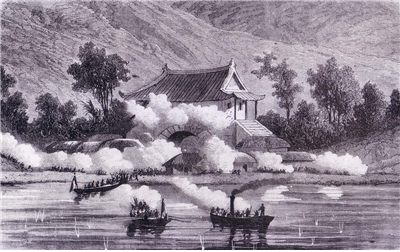
French fleet in Ganghwa, Choseon
I'm not sure if readers would believe it if I said the above picture is somewhere in Ganghwa Island. The cessation of the expansion of consciousness regarding space and time is thanks to colonial historiography, but it is necessary to infer from the picture when and where the era of Nam Jong-sam, who tried to simultaneously promote the Franco-Korean alliance and the Anglo-Korean alliance, took place as a historical event. Since commercial photography was actively taken around the world in the 1840s, the pen drawings of Joseon in this period can only be seen as having been drawn after seeing photographs. Through the 19th century, from which direction of the territory did the invasion of Western religions, centered on France, coil and grow? The negative impact on the human brain of a historical perception with a lack of reality that does not allow imagination about doubts in every scene of history is unimaginable. Isn't it obvious that you cannot encounter history unless the paralyzed sense of space and the misunderstanding of the attributes of place are cured?
During the Byeongin Persecution, Ridel (Félix-Clair Ridel, 1830-1884), who luckily escaped, was a French priest who entered Joseon through illegal entry. He reported to Admiral Roze of the Navy in Tianjin, causing French warships to land on Ganghwa Island, search the historical archives, and loot books, while holding Gojong accountable for the murder of the priests. The Joseon Dynasty succeeded in repelling Roze's fleet by mobilizing 500 iron cannons. However, the narrative tone that portrays the young Gojong as a symbol of incompetence and corruption, and the regime as a fight between the tyrannical king's father, Daewongun, and his daughter-in-law's family, is absurd and does not fit the global historical flow. The narrative that the whole world, including England, France, Germany, the United States, and Japan, invaded under the pretext of trade pressure with weapons and crosses, and that they fended off the attacks while fighting among themselves, but eventually fell into Japanese colonial rule as internal divisions and Japan's modernization began, was it really just a brawl over this small Korean peninsula? The historical narrative tone of the past, which omitted the essence of Western and Christian civilization's invasion of the East and judged that it would not be a problem in the future, does not fit the development of modern geopolitical history, but it will become even more incompatible in the future. A nation or country is an abstract group of people gathering and dispersing, but human nature is embedded in its attributes, and its essential characteristics do not change overnight. Even if a hundred years of modern invasion operations have taken place, the proportion of Koreans' genes that have been altered, with thousands of years of history, is still insignificant.
The following year, 1867, this time the armed American merchant ship SS General Sherman invaded the Daedong River and demanded trade, which was also sunk by the bombardment of the Pyongyang army. Here, US Navy Admiral Rodgers landed on Ganghwa Island to protest to Gojong, but this was also repelled (1971, Sinmiyangyo). Is it reasonable to argue that an American merchant ship would go all the way to the West Sea from the Korean Peninsula, go up the Pyongyang River, and enter the inland? It's time to stop memorizing and start thinking. Why was Ganghwa Island the neighborhood drum? It is necessary to consider the depth and draft to see which country's ships can fight a war on Ganghwa Island today.
Heungseon Daewongun, who avoided the two Western Invasions in the years of Byeongin and Sinmi, engraved a monument with the inscription, 'The Western barbarians have invaded, and to advocate for peace is to be a traitor. This is a warning to future generations.' This is Daewongun's Cheokhwabi (斥和碑), a vocabulary word to memorize in textbooks. The story is that these Cheokhwabi were erected in various parts of the country, and the policy of national isolation was strongly advocated, leading to a temporary lull in Western invasion. In other words, the existence of Cheokhwabi and its inclusion in historical accounts is evidence that the Korean Peninsula stood up against Western invasion. This is how historical narratives and historical artifacts are created.
This Shinmiyangyo is called the United States expedition to Korea in English, or simply the Korean Expedition, and in particular, the United States also calls it the Korean Campaign 1871, the United States-Korea War of 1871. If the United States were to embark on an expedition to the Korean Peninsula in modern warfare, would it have to take the risk of going up the Daedong River? I look forward to a harmonious knowledge of geopolitics and fingerprint geography.
Lastly, there is Ernst Oppert, a German merchant, between the French and U.S. expeditions. He attempted to rob the tomb of Namyeon-gun, the father of Heungseon Daewongun, located in Deoksan, Chungcheong Province, but failed (Ernst Oppert tomb robbery incident). Originally, Namyeon-gun's tomb was prepared in Majeon, Gyeonggi Province, but it was moved several times. Daewongun had a nightmare and moved it to Gayasan in Yesan-gun, Chungcheongnam-do, but Gayasa was also destroyed, so it was moved again. It's still not satisfactory. The area of the palaces in Seoul is roughly over 360,000 pyeong, and even if you only consider the area of the royal tombs, it is over hundreds of thousands of pyeong per tomb. Due to the characteristics of Koreans who still have reverence for their ancestors, using burial sites on other people's land or robbing other people's tombs is a heinous act that rarely occurs. It is necessary to think about what it means that a German merchant robbed Namyeon-gun's tomb.
Byeongin Persecution(1866) | General Sherman Incident(1866) | French Invasion of Korea(1866) | Opert's Grave Robbery Attempt(1868) | Shinmiyangyo (U.S. Expedition to Korea)(1871) |
France | USA | France | Germany | United States |
I haven't even explained Yangyo's quantum yet. The era when the sea stimulated human desire and the history of the past hundreds of years that devastated the entire Earth have not yet surfaced.
댓글
( 0 / 500 )
품품
4
마! 내가 느그 서장이랑! 사우나도 가고! 으이? 생각나네요 ㅎㅎ 이름은 같지만... 최익현이란 이름을 보면 이 분이 먼저 생각나도록 사회가. 시스템이. 많은 것들이 바뀌면 좋겠네요.
( 0 / 500 )
aladin
6
우리 조상들이 이렇게 당하면서도 꿋꿋이 버텼다는 게 참 눈물 납니다. 요즘 같은 시대엔 누가 목숨 걸고 나라 지킬 수 있을까요. 자꾸 역사를 잊어가는 것 같아 슬픕니다.
( 0 / 500 )
mini
9
역사 유물도 정치다’는 문장에서 멈춰 서서 생각하게 됐습니다. 왜 어떤 기록은 살아남고, 어떤 진실은 지워졌는지... 이 글은 역사에 대한 감각을 회복하라는 일종의 알람 같아요
( 0 / 500 )
상상
8
‘제너럴 셔먼호가 대동강을 거슬러 올라갔다’는 걸 공간적으로 의심해보라는 말, 정말 참신합니다. 교과서에선 그런 시각을 전혀 안 가르치죠.
( 0 / 500 )
君子有三樂
6
면암 최익현이 단지 의병장으로 기억되는 것이 안타깝다’는 말에 너무 공감합니다. 천 년 가계와 그 정신을 계승한 인물이라면, 훨씬 더 깊은 조명이 있어야 한다고 생각해요.
( 0 / 500 )
사랑
7
역사 교육이 진짜 진실을 가르쳐줬다면 우리가 이렇게까지 혼란스럽진 않았을 겁니다. 글을 읽으며 소름이 돋았습니다. ‘암기식 역사’가 진실을 가릴 수 있다는 말에 크게 공감합니다.
( 0 / 500 )
Korman
6
병인양요나 신미양요 같은 사건을 이렇게까지 입체적으로 다시 보게 될 줄 몰랐습니다. 단순히 교과서 안에 갇힌 연도가 아니라, 그 안에 숨겨진 정치적 흐름과 진짜 의도가 있었다는 생각을 처음 해봤어요.
( 0 / 500 )
Cnadlelight
6
면암 최익현에 대한 서술은 상당히 흥미로웠습니다. 특히 1908년 간행과 1931년 재간행의 맥락을 연결한 해석은 주목할 만하네요. 하지만 ‘서양 종교 = 침략’이라는 일변도의 해석은 좀 더 다층적으로 접근할 필요가 있어 보입니다.
( 0 / 500 )
vivian
4
이 글 내용으로 다큐 만들면 정말 좋을 것 같네요. 병인양요와 신미양요, 오페르트 사건까지도 다 각색해서 알기 쉽게 풀면 젊은 세대에게 충격 줄 수 있을 듯.
( 0 / 500 )
五感滿足
5
이 글을 읽고 나니 내가 알고 있던 역사가 너무 얕았다는 걸 깨달았습니다. 왜곡된 사료 위에 쌓인 지식이 과연 진실일 수 있을까요? 우리에게 필요한 건 ‘암기’가 아니라 ‘의심’이라는 말, 깊이 와닿네요.
( 0 / 500 )
soonmi
2
최근 봤던 드라마 ‘미스터 션샤인’ 생각이 나네요. 대원군과 척화비, 면암 최익현까지… 드라마도 이 글처럼 과감하게 진실을 파고들 수 있으면 좋겠어요.”
( 0 / 500 )
korman77
2
면암 최익현 선생은 조선 후기 격동의 시대를 온몸으로 살아낸 진정한 선비였습니다. 개항기와 일제강점 초기라는 절체절명의 시기에 유교적 신념과 나라 사랑 정신을 끝까지 지켜낸 모습이 존경스럽습니다. 특히 74세의 나이에도 의병활동에 나서신 용기와 의지는 후세에 길이 전해져야 할 귀중한 유산이라고 생각합니다
( 0 / 500 )
honghong
2
한 시대의 지식인이 어떻게 변화하는 현실에 대응해야 하는지에 대한 깊은 성찰을 하게 됩니다. 전통적 가치관을 고수하면서도 나라의 위기 앞에서는 직접 행동으로 나서신 모습에서, 진정한 학자정신과 실천적 애국심이 무엇인지 배우게 됩니다. 오늘날에도 여전히 유효한 교훈을 주는 인물이네요.
( 0 / 500 )
신고내용
신고내용을 선택해주세요
회원비난/비하/욕설글 및 댓글도배성 게시물저작권 침해/불법자료 유출허위사실유포개인정보 유출.사생활 침해무단광고/홍보음란물 및 도박 불법 광고물범죄행위 관련 글불법행위 관련 소개물품 판매 및 사기글악성코드 및 스파이웨어 유포기타 사유 및 운영진 판단


비밀번호를 잊으셨나요?
Sign in with Google
All information provided by us is free of charge and is for the public good.