品

Corea든 Korea든, 품격이 먼저다
Whether Corea or Korea, dignity comes first.
Whether Corea or Korea, dignity comes first.
Now
지금
751 Diaspora
Heritage
유산
Humanity
인문
Mirengsi
未冷尸
Politics
정치
Media
언론

사람人物
칼럼
bunny365
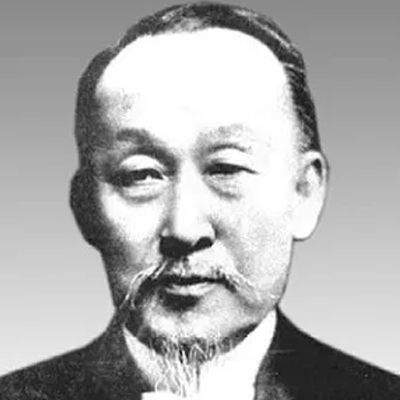
1800s figure (6) Min Yeong-hwi (閔泳徽), 1852 (Cheoljong 3) ~ 1935

0
2025. 01. 17
The task of organizing modern figures is not appealing because it involves a sense of self-disgust, like tearing apart my own flesh and digging through its insides. Looking into the 19th century itself is a chore. Digging into the circumstances in which a person's life is exposed as a tragedy before history is not a pleasant task from the perspective of a descendant. People only parrot that history is distorted, but they don't try to figure out what history is actually distorted and have their eyes and ears stolen by the mouths and writings of historians who learned history through colonial perspectives. With that, you cannot find the distorted history. The task of fighting against the stereotypes of the public and academia and searching for data alone is as slow as a turtle. There is only one reason why I strive to find the real history while enduring countless finger-pointing and contempt.
The history of 500 years of Joseon, which was brought to ruin by Heungseon Daewongun, Gojong, Queen Min, and corrupt nobles, is a theme injected into everyone's memory, and the reality that it is the mainstream of all historical views does not match the history books. This is because as you read the history that had to be memorized to death, perfectly assimilated into the logic of colonial rule, page by page, there are parts that don't quite fit. The task of finding this contradictory historical description is the task of discovering a clue to a factual relationship in one line from one book. Koreans cannot design the future by arguing that the dynasty was destroyed because it was subjected to colonial rule, or that it deserved to be destroyed, or that it was time to be destroyed.
Min Young-hwi (閔泳徽), born in Gwangju-gun, Gyeonggi-do in 1852 and died in Gwanhun-dong, Gyeongseong in 1935, was a distant relative of Queen Min, being 15촌 away. The *Biographies of Korean Aristocrats* states that his original name was Min Young-jun, which was changed to Min Young-hwi, and that he was born in Gyeongseong and was the son of Min Du-ho, who held the position of *Pandunyeong Wonsa*. It describes him as a person who passed the civil service examination in 1881 and rose rapidly in his career. Gyeongseong and Gwangju, Gyeonggi-do are different. No one knows for sure whether it's a matter of urban area or just around it. His history is filled with all sorts of sweet talk that can be described in writing, as a nobleman of Joseon who lived with the title of 'Korean Aristocrat' created by Japan. It's as if he completely abandoned his roots and acted rashly by siding with the invaders, or as if he was a completely different person. I imagine that the real Min Du-ho's son died, and a Japanese person replaced his name and disguised himself as a Korean aristocrat. The first way to escape colonial historiography is historical imagination. We have all memorized historical keywords as facts, but there is no guarantee that they are facts. However, if you add imagination to history, you are sometimes attacked as being presumptuous or distorting history. Why is the imagination of a drama in which the king becomes a zombie in the Joseon royal palace allowed? Is it because it's an American drama that they couldn't act high-handedly? If so, why are *Taegukgi Hwinalrimyeo* and *Queen Cheorin* criticized? Perhaps we don't know that the real history went through a time when the king changed and everyone from the king to the servants became zombies.
The basis for this imagination is the speculation that during the Gabo Reform, the Min family lost power and was accused of being corrupt officials, exiled to Imja Island in Sinan-gun, Jeollanam-do, and then secretly traveled to Pyongyang and fled to Qing China. The information that he was exchanged with Lee Jun-yong of Heungseon Daewongun in 1895 under the amnesty decree and returned home is also not covered in general modern history. The modern amnesty decrees in the Veritable Records appear in 1878, 1887, and 1902. The amnesty decree of 1895 refers to the Gabo Reform. In the Gabo Reform, Gyeongjang means reform that is revised and expanded in Chinese characters as ‘更張’. It seems that the chaos of modern times entered a new era with the reform in the summer of this Gabo year, but in the spring of the same year, the prosecutor's office was introduced in Korea. This prosecutor system was created by the Japanese, and the fact that the prosecutor system started before any reform means the beginning of the most unfortunate system in the history of the Republic of Korea since Dangun.
The Gabo Reform was a time when many Joseon aristocrats were at a crossroads, either engaging in anti-Japanese struggles or turning into pro-Japanese collaborators. Being exiled to a remote island during this period meant being expelled from one's hometown. Leaving one's hometown meant that the remaining house would be occupied by servants or remodeled for use by the Japanese. This meant that the owner of the house was changing, including taking possession of all household goods and property. Once they moved into the Min family's house, they might want to become a Min. The possibility that a Japanese person infiltrated the family of a Joseon aristocrat cannot be ruled out. However, we cannot glorify pro-Japanese traitors who were the wealthiest during the Japanese colonial era or endlessly imagine that a Japanese person transformed into Min Young-hwi.
However, it seems that Min Young-hwi's descendants have issues with their direct lineage due to adoption or illegitimate children, and to be more certain, the family tree needs to be checked. Indeed, the family tree, the number one history book of the only people on Earth with a family tree, has long been a plaything of the Japanese. Even in the 1990s, Japanese people went to fallen noble families and asked them to put their names in the family register. You can ask your surviving grandparents if they included Japanese people in the family tree for a few pennies. We have lost our history, so we cannot say that even the elderly are blameless.
Father: Min Du-ho (閔斗鎬, 1829∼1902) - Minister of Home Affairs, Chuncheon Yusoo (春川留守). Posthumously promoted to Yeonguijeong (Prime Minister). Known as Min Soe-galguri [閔鐵鉤]. The fact that he was called Soe-galguri is a very cheap expression, so it is not an expression to be attached to the noble aristocrats of a ruined country, but it means that he scraped together wealth in a very primitive and violent way. Not only Min Young-hwi's father, but also his adopted sons and illegitimate sons are not listed in the Joseon Sinsa Daedongbo (朝鮮紳士大同譜), a record of Joseon aristocrats.
*Adopted son: Min Hyung-sik (閔衡植) 1875~1947) - Passed the civil service examination in 1888, passed the literary examination in 1891. Vice Minister of the Ministry of Education.
Japanese nobleman (Viscount). Councilor of the Privy Council. His biological father was Min Young-jip (閔泳集), who served as the governor of Geumsan County.
*Second son (illegitimate): Min Dae-sik (閔大植, 1882~?) - President of Dongil Bank, President of Hanil Bank
*Fourth son (illegitimate): Min Gyu-sik (閔圭植, 1888~Abducted to North Korea) - Graduated from the Department of Economics at Cambridge University, England.
Representative of Dongil Bank. Councilor of the Japanese Government-General of Korea.
In addition to these, there may be pro-Japanese collaborators or remaining Japanese, or descendants of pure Koreans who are simply traitors, operating in key positions in the Republic of Korea, from grandchildren to great-great-grandchildren.
댓글
( 0 / 500 )
Park_bong
3
정말 중요한 연구를 하십니다. 좋은 정보 좋은 글 늘 잘보고 있습니다. 감사합니다
( 0 / 500 )
수호자
6
대단하십니다. 이런 연구를 하시니 존경 스럽네요 좋은 정보와 자료 감사합니다
( 0 / 500 )
pandora
2
정말 친일파와 그 후손들 다 찾아서 재산 환수하고 이땅에서 친일파 뿌리를 뽑아야 합니다
( 0 / 500 )
Jeong Byeon_72828
5
민희식은 서울대 불문과 졸업 이대에서 잠간 가르칠 때 배웠습니다. 한국은 일본 덕분에 개화되었다. 운명적으로 식민지배를 받게 되었다. 식민사관을 시도 때도 없이
학생들에게 주입시켰다. 불문학 강의는 물론 일본책 읽고 일본인 관점으로 읽은강의를 들으면서도 늘 불편했습니다
( 0 / 500 )
┖ band89
1
그시절에 배우셨다니, 힘이 드셨을 듯 하네요
( 0 / 500 )
andante
2
정말 이땅에 일제의 잔재가 얼마나 많이 남았는지 상상하기도 어렵네요.
( 0 / 500 )
보라아빠
5
도대체 이땅에 얼마나 많은 잔존일본인과 그 수하들이 있는지 상상하기도 어렵네요 빠른 척결이 필요합니다
( 0 / 500 )
無名
3
늘 좋은 자료를 만들어 알려주시네요. 이제 우리도 일제잔재 청산의 시기가 돌아올겁니다. 힘내주시길 바랍니다
( 0 / 500 )
koko
4
이런식으로 찾으면 얼마나 많은 나쁜놈을 찾을 수 있을까요. 정말 대단한 수고와 고생을 해주셔서 감사헤요
( 0 / 500 )
AI-74
0
이 사이트에 등장하는 인물에 대한 소개는 사실 중요한 자료입니다. 우리 모두가 알아야 할 우리 역사를 알려주시는거죠. 잘 배웁니다
( 0 / 500 )
신고내용
신고내용을 선택해주세요
회원비난/비하/욕설글 및 댓글도배성 게시물저작권 침해/불법자료 유출허위사실유포개인정보 유출.사생활 침해무단광고/홍보음란물 및 도박 불법 광고물범죄행위 관련 글불법행위 관련 소개물품 판매 및 사기글악성코드 및 스파이웨어 유포기타 사유 및 운영진 판단


비밀번호를 잊으셨나요?
Sign in with Google
All information provided by us is free of charge and is for the public good.