品

Corea든 Korea든, 품격이 먼저다
Whether Corea or Korea, dignity comes first.
Whether Corea or Korea, dignity comes first.
Now
지금
751 Diaspora
Heritage
유산
Humanity
인문
Mirengsi
未冷尸
Politics
정치
Media
언론

사람人物
칼럼
bunny365
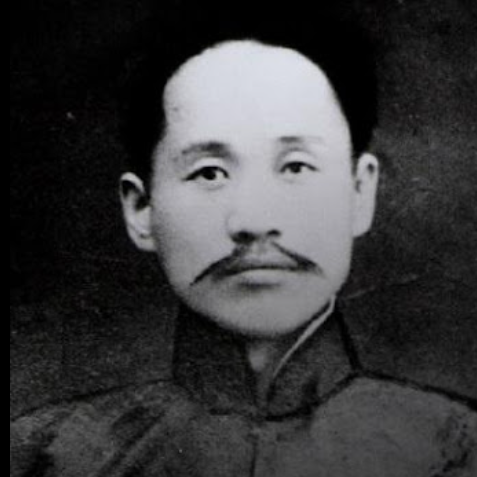
Nationalist historian, independence activist Shin Chae-ho

0
2023. 04. 06
Photo source: Wikipedia
Promote national consciousness and enlighten the people through media activities
Realized the great power of the people after seeing the 3.1 Movement
Wrote the <Declaration of the Korean Revolution> at the request of the Righteous Brotherhood
Anarchist ideology that any means are justified for independence
Shin Chae-ho (申采浩) (December 8, 1880 - February 21, 1936) was from Goryeong (高靈), and his pen names were Danjae (丹齋) and Ilpyeondan Saeng (一片丹生). He also had several other pen names, including Muaesaeng, Yeolhyeolsaeng, and Hannom. He was born in Daedeok-gun, Chungcheongnam-do (now Jung-gu, Daejeon). Although he was a nobleman, being the 18th generation descendant of Shin Suk-ju, his family fortunes had declined since his father's generation, and he was very poor. He grew up eating almost only bean porridge as a child, but he was so bright that he was called a prodigy.
He lost his father early and studied orthodox Neo-Confucianism under his strict grandfather. From the age of 18, he frequented Shin Gi-seon's house through his grandfather's introduction and encountered new learning. In the following year, 1898, he entered Sungkyunkwan University on Shin Gi-seon's recommendation. At Sungkyunkwan, he studied social science, and on days when there were no classes, he toured Jongno bookstores and devoured new books imported from China and Japan. Shin Chae-ho, who mastered modern knowledge through tremendous reading, broke away from Neo-Confucianism, accepted social Darwinism, and became involved in the Independence Association, developing the idea of enlightenment and self-strengthening (開化自强). When Emperor Gojong forcibly dissolved the Independence Association, he was arrested and imprisoned. He was deeply involved in the People's Joint Association, working as an executive.
In 1901, he went down to his hometown and founded the Mundong Academy and the Shandong School, and in 1905, immediately after becoming a Seonggyungwan Baksa (Doctorate), he caught the eye of Jang Ji-yeon and worked as a commentator for the <Hwangseong Shinmun>. When Jang Ji-yeon was imprisoned, he led the Hwangseong Shinmun in his place, and when the <Hwangseong Shinmun> was suspended indefinitely, he moved to <Daehan Maeil Shinbo>, which was run by Bethell (E. T. Bethell) in 1907, and continued his journalistic activities. Since the president of <Daehan Maeil Shinbo> was a foreigner, it was less subject to Japanese censorship.
Shin Chae-ho, who joined the Shinminhoe, a secret society centered on Yang Gi-tak, Ahn Chang-ho, Lee Dong-nyeong, Lee Hoi-yeong, Lee Dong-hwi, Kim Gu, and Lee Seung-hoon, preached nationalism with his outstanding writing skills through the <Daehan Maeil Shinbo>, which was virtually the Shinminhoe's organ. He firmly believed that the nation could only regain its sovereignty if everyone was mentally armed with nationalism. He wrote enlightening editorials such as ‘Japan’s Three Great Loyal Servants’ and ‘An Appeal to the Advocates of the Japan-Korea Annexation Treaty’, and serialized historical books such as 『Doksa Sinron (讀史新論)』 and historical novels such as 『The Biography of Yi Sun-sin』.
Shin Chae-ho embarked on a path of exile in April 1910 with Shinminhoe members such as Ahn Chang-ho, following Shinminhoe's resolution to establish an independent army base overseas. Shinminhoe members held a meeting in Qingdao, China, to discuss the independence movement, and Shin Chae-ho, who was appointed as a military academy instructor, left for Vladivostok. In 1911, in Vladivostok, he participated in the Kwon-up Association (勸業會) with Lee Sang-seol and Choi Jae-hyung to protect the rights and interests of the Korean residents, and served as the editor-in-chief of the organization's magazine, <Kwon-up Shinmun>. He also served as the vice-president of the Gwangbokhoe (光復會), which he organized with Lee Dong-hwi and Yun Se-bok. The Gwangbokhoe also created an organization in Korea, centered around Park Sang-jin, to build schools and raise funds for the independence movement.
When the <Kwon-eop Shinmun> was discontinued in 1913, Shin Chae-ho went to Shanghai at the invitation of Shin Kyu-shik. In Shanghai, he spent his time studying history and learning English from Kim Kyu-shik. He joined the Dongje Company, a trading company, and fostered talent at Bakdal Academy. In 1914, at the invitation of Yoon Se-bok, he taught Korean history at Dongchang School in Hwanin County, Seogando, wrote the Korean history textbook 『History of Joseon』, and studied the history of Goguryeo. In 1915, he went to Beijing at the recommendation of Lee Hoe-yeong and stayed there for four years. He continued his historical research, including visiting ancient Korean historical sites near Beijing, and also participated in the activities of the New Korea Revolutionary Party. In 1916, he published the novel 『Dream Sky』. The protagonist 'Hannom' of 『Dream Sky』 is the symbol of an independence activist that Shin Chae-ho envisions. If the left arm betrays, cut off the left arm, and if the right arm betrays, even cut off the right arm. Shin Chae-ho's view of history, which sees history as a "struggle between 'I' and 'non-I'," is revealed as it is. In February 1919, when independence activists in Manchuria announced the 'Korean Independence Declaration' advocating the construction of a Daedong society, Shin Chae-ho also signed it.
After the March 1st Movement, Shin Chae-ho, who participated in the provisional government's founding members meeting, opposed the election of Syngman Rhee as president. The reason was the mandate rule petition that Syngman Rhee submitted to US President Wilson with the permission of Ahn Chang-ho. Eventually, Shin Chae-ho revolted against the provisional government and left Shanghai for Beijing. In April 1920, he remarried Park Ja-hye, a student at Peking University, and enjoyed happiness for a while. In September 1920, he organized the <Military Unification Promotion Association> with Park Yong-man.
Disappointed with the Provisional Government, Shin Chae-ho became even more engrossed in anarchism. In 1922, at the request of the Righteous Brotherhood in Shanghai, he stayed with anarchist Yu Ja-myeong and wrote the 'Korean Revolution Declaration,' which sharply criticized compromise and diplomatic independence and argued that Japan should be overthrown only through assassination, destruction, and riots. Impressed, the members of the Righteous Brotherhood always carried the 'Korean Revolution Declaration'. From January 3, 1923, 124 representatives from about 70 independence movement groups gathered in Shanghai to hold the 'National Representatives Conference'. Here, a motion of no confidence in the President of the Provisional Government was passed, and there was a conflict over whether to 'reorganize' or 'create' the Provisional Government. Shin Chae-ho, who was a creationist, completely denied the Provisional Government and argued that a new Provisional Government should be established in Russia or Manchuria through armed struggle. Eventually, the creationists went to Vladivostok in August 1923 to prepare for armed struggle, but the Soviet government did not allow it.
Shin Chae-ho, who returned to Beijing, joined the Korean Anarchist Federation in China in 1926, and in April 1928, he organized and held the Beijing Conference of the Eastern Anarchist Federation. However, while attempting to forge foreign currency to secure funds for publishing a journal, his plan was discovered in advance, and he was arrested by Japanese police at the Keelung port in Taiwan. He was extradited to Dalian, sentenced to 10 years in prison, and imprisoned in Lushun Prison. He suffered from hunger and cold, collapsed from a cerebral hemorrhage on February 18, 1936, and died a few days later. The government posthumously awarded him the Presidential Medal of the Order of National Foundation in 1962.
# References
Lee Ho-ryong, 『Shin Chae-ho』, History Space, 2013
Shin Yong-ha, 「Shin Chae-ho's Life, Thought, and Independence Movement」, 『Quarterly Ideology』 380, 1991
Lee Ho-ryong, 「Shin Chae-ho, Anarchist Who Dreamed of National Liberation」, 『History Opening the Future』 15, 2004
Lee Jong-chun, 「Danjae Shin Chae-ho's Life and Thought」, 『Cheongju National University of Education Collection of Dissertations』 19, 1982
Son Mun-ho, 「The Political Thought of Danjae Shin Chae-ho」, 『Hoseo Culture Research』 5, 1988
Oh Young-seop, 「The Controversy over the Petition for Mandate Rule in the Early Provisional Government of the Republic of Korea」, 『Journal of Korean Independence Movement History』 41, 2012
Electronic Archives of Meritorious Subjects, Internet data and articles, etc.
댓글
( 0 / 500 )
신고내용
신고내용을 선택해주세요
회원비난/비하/욕설글 및 댓글도배성 게시물저작권 침해/불법자료 유출허위사실유포개인정보 유출.사생활 침해무단광고/홍보음란물 및 도박 불법 광고물범죄행위 관련 글불법행위 관련 소개물품 판매 및 사기글악성코드 및 스파이웨어 유포기타 사유 및 운영진 판단


비밀번호를 잊으셨나요?
Sign in with Google
All information provided by us is free of charge and is for the public good.