品

Corea든 Korea든, 품격이 먼저다
Whether Corea or Korea, dignity comes first.
Whether Corea or Korea, dignity comes first.
Now
지금
751 Diaspora
Heritage
유산
Humanity
인문
Mirengsi
未冷尸
Politics
정치
Media
언론
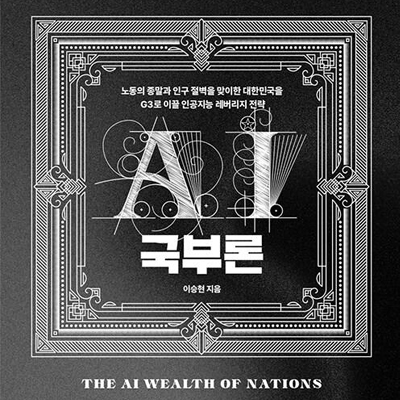
이승현의 AI 국부론은 AI가 창출하는 부의 분배와 인간의 경제적 가치 재정립에 대한 근본적 질문을 던지는 책이다.

책冊
칼럼
andante
After reading Lee Seung-hyun's 『AI National Wealth Theory』

0
2026. 11. 06
- AI is not merely a future technology but a core driver reshaping the current economic and social order, emerging as a strategic asset determining national wealth and survival.
- Facing a labor force decline, Korea must leverage AI to seek new growth opportunities and secure 'intelligence sovereignty' to be reborn as an AI-native nation.
- While Korea is a semiconductor powerhouse, its AI platform and software ecosystem are still lacking, necessitating an urgent national AI strategy that encompasses the entire industry, not just remaining a component supplier.
- Fundamental questions arise regarding the distribution of wealth created by AI and the redefinition of human economic value, requiring a new economic philosophy to ensure technological advancement leads to an improved quality of life for the public.
The Age of AI: Rethinking Korea's Wealth and Future
Artificial intelligence (AI) is no longer a technology of the future; it is a reality that is already transforming our economy and society. Just a few years ago, AI was considered a technology researched by specialists in specific fields or a supplementary tool to enhance corporate productivity. However, the emergence of generative AI has fundamentally changed this perception. As AI began to write, draw, develop programs, and analyze vast amounts of data, a significant portion of human intellectual labor and economic activity entered a new turning point.
This change is not merely a matter of technological innovation. It demands a redesign of the existing socio-economic order, including industrial structure, labor markets, capital flows, economic disparities between nations, and even education and welfare systems. If steam engines and electricity drove past industrial revolutions, today's AI is transforming intelligence and information processing capabilities into new means of production. Therefore, understanding AI is not just about understanding a new technology; it is about examining how the global economy will be reshaped in the future.
From this perspective, Lee Seung-hyun's 『AI Gukburon』 (AI Wealth of Nations) is a book that poses quite interesting questions. The author doesn't just view AI as a tool for individual corporate technological competition or investment, but approaches it as a strategic asset that determines a nation's wealth, survival, and future competitiveness. The author's critical awareness can also be seen in the book's subtitle, 'An AI Leverage Strategy to Lead Korea, Facing the End of Labor and a Demographic Cliff, to G3.' The aim is to transform the structural crisis of population decline and labor shortages into new growth opportunities through AI, and to develop Korea into a global AI powerhouse.
The first thing that stands out when reading this book is the perspective that AI is changing the very way nations create wealth. Until now, a nation's economic power has been determined by its population, labor force, capital, natural resources, and industrial technology. However, in the future, computing power, data, AI models, algorithms, and specialized talent will be added as core factors of production. AI, which expands human intellectual capabilities and automates repetitive labor, can significantly broaden the limits of productivity. This suggests the possibility that even countries with declining working populations can maintain or even increase a certain level of production capacity through AI.
The 'intelligence sovereignty' emphasized by the author can also be understood in this context. In the past, securing stable energy, food, and military power was a crucial condition for national survival. In the AI era, however, a nation's ability to independently develop and utilize the intelligence it needs becomes a new part of its sovereignty. Excessive reliance on foreign AI platforms, data centers, and core software would inevitably subject a significant portion of domestic industries, administration, and public services to the policies, prices, and operating methods of external technologies. Using technology is entirely different from controlling and developing it. The author proposes the establishment of an AI-native nation as a way to solve these problems. While existing e-government focused on digitizing administrative services, an AI-native nation refers to a country that redesigns the very way policies are formulated and executed, and administrative services are provided, with artificial intelligence at its core. It is a system that connects dispersed data across ministries, simplifies administrative procedures, and proactively provides services tailored to the circumstances and needs of citizens. It is well worth considering for its potential to reduce welfare blind spots, cut administrative costs, and enhance policy effectiveness.
However, the introduction of AI into national governance should not merely end with increasing administrative efficiency. Protection of personal information, algorithmic bias, accountability for automated judgments, and democratic control over the management and utilization of public data must also be established. While AI can be a means to enhance national intelligence, its judgments should not be blindly trusted, nor should human responsibility be handed over to technology. This is because a technologically efficient nation and a democratically mature nation are issues of different dimensions.
Where does South Korea stand in the age of AI?
Applying the book's concerns to the reality of Korea reveals both expectations and worries. South Korea possesses a considerably advantageous industrial foundation for the AI era. Above all, its semiconductor industry is competitive. As AI develops, the ability to quickly process and store vast amounts of data becomes crucial, and the core components supporting this are high-performance computing semiconductors and memory semiconductors. In particular, High Bandwidth Memory (HBM) has emerged as a key component determining the performance of AI accelerators. SK Hynix and Samsung Electronics possess important technology and production bases in this field. This means that Korea is not merely a peripheral country in the AI industry's supply chain but is in a position to exert global influence.
However, semiconductor competitiveness and leadership in the AI industry should not be considered the same. A country that excels at manufacturing semiconductors does not necessarily dominate AI platforms, software, and the data ecosystem. The United States is forming a massive industrial structure by connecting Nvidia's GPUs and CUDA ecosystem with Microsoft and Amazon's cloud services, and Google and OpenAI's AI models. In contrast, while Korea possesses world-class competitiveness in memory semiconductors and manufacturing, there is still a gap in global general-purpose AI models, cloud platforms, and the software ecosystem. This difference is crucial. While significant profits can be generated through semiconductor supply, it is not the same as being in a position to decide which platforms and technological standards global companies and industries using AI will choose. If Korea remains solely a component supplier, a significant portion of the immense added value created by AI is likely to go to foreign companies that dominate platforms and software.
That said, there's no need to underestimate Korea's potential. Analyses related to the Stanford Institute for Human-Centered Artificial Intelligence's 2026 AI Index show that Korea demonstrates significant competitiveness in AI patents, the spread of generative AI adoption, and industrial technology. In particular, AI patents and generative AI adoption rates per capita are indicators of Korea's technological receptiveness and R&D potential. In international assessments, Korea ranks among the top AI-competitive nations globally.
Here, Korea's manufacturing base is an important asset. Automobiles, shipbuilding, semiconductors, batteries, displays, communication equipment, and industrial robots are all areas that can create new added value when combined with AI. If the U.S. is developing around large AI models and platforms, and China is combining its large domestic market with manufacturing capabilities, Korea can secure differentiated competitiveness in its ability to apply AI to actual industrial sites. The problem is that these strengths have not yet been sufficiently connected into a complete AI industrial ecosystem. It is difficult to secure global industrial leadership by having semiconductor companies compete in their own domain, manufacturers in theirs, and AI research institutions in theirs. A national strategy is needed to connect different industries and technologies and create new markets.
Beyond technological advancement, to a new philosophy of national wealth
The part that makes me think most deeply while reading this book is the question of how to understand and distribute the wealth created by AI. Since the Industrial Revolution, capitalism has created wealth through the combination of labor and capital. However, AI can significantly change the role that human labor played in the existing production structure. If the human labor hours required for production decrease, and intelligence and automation become new means of production, the existing wage-centric economic system will inevitably change.
Here, we must ask a fundamental question. In a society where AI can work much faster and more accurately than humans, how will the economic value of humans be assessed? To whom will the fruits of productivity improvement go? How can social systems be established to ensure a decent life for those who do not work? If we view AI merely as a means of reducing labor costs and expanding corporate profits, we cannot answer these questions. We must change economic and social systems together so that technological development leads to an increase in human freedom and quality of life.
At this point, the problem consciousness of 『AI National Wealth Theory』 goes beyond a simple theory of fostering the technology industry. If AI is recognized as a new means of production that creates national wealth, then a new economic philosophy is also needed regarding how to accumulate that wealth and for whom it will be used. A nation's competitiveness cannot be evaluated solely by GDP, export volume, or semiconductor production. It is also necessary to examine whether technological development leads to an increase in national income, education, healthcare, working environment, and social opportunities. 『AI National Wealth Theory』 is meaningful in that it makes us think about this transition from a national perspective. While various reviews and discussions will be needed regarding the specific strategies presented in the book, the problem consciousness of viewing AI as a core issue of the national economy and questioning the future of South Korea is sufficiently noteworthy.
댓글
( 0 / 500 )
dataman
8
AI를 단순한 기술혁신이나 산업 경쟁의 관점에서 벗어나 국가의 부와 주권이라는 차원에서 바라본 점이 인상적입니다. 특히 반도체 강국이라는 현재의 성과에 안주하지 않고 AI 플랫폼과 소프트웨어 경쟁력까지 확보해야 한다는 지적에 공감합니다.
( 0 / 500 )
Pacific5
7
인구 감소와 노동력 부족이 심각해지는 대한민국에 AI는 선택이 아니라 생존을 위한 전략적 과제입니다. 다만 AI가 창출하는 부가 소수 기업과 자본에 집중되지 않고 국민 모두의 삶을 개선하는 방향으로 활용되어야 한다는 문제 제기가 더욱 중요하게 다가옵니다.
( 0 / 500 )
boys_to_man
5
대한민국은 반도체와 제조업이라는 강력한 기반을 갖고 있지만 이를 AI 산업 전체의 주도권으로 연결하는 전략은 아직 부족합니다. 정부와 기업, 대학과 연구기관이 개별적으로 움직이는 구조부터 바꿔야 한다는 현실적인 진단에 공감합니다.
( 0 / 500 )
kkb
5
『AI 국부론』을 통해 기술과 경제, 국가의 미래를 함께 생각할 수 있는 좋은 독서 후기입니다. 이제 대한민국도 AI를 해외 기술에 의존해 소비하는 나라에서 벗어나 스스로 기술을 만들고 산업을 주도하며 그 성과를 국민과 공유하는 국가로 나아가야 합니다.
( 0 / 500 )
맑은소리
4
AI 시대의 국가 경쟁력은 기술을 얼마나 많이 보유했느냐보다 그 기술로 무엇을 만들고 국민에게 어떤 혜택을 돌려주느냐에 달려 있다고 생각합니다. 기술 발전과 사회적 분배를 함께 고민해야 한다는 글의 관점이 특히 의미 있습니다.
( 0 / 500 )
hannam
4
인공지능이 노동을 대체하는 시대가 온다면 경제성장의 의미도 달라져야 합니다. 생산성이 높아졌는데도 국민의 삶이 나아지지 않는다면 그것은 진정한 발전이라고 할 수 없습니다. AI 시대의 국부는 국민의 삶을 얼마나 풍요롭게 만드는가로 평가해야 합니다.
( 0 / 500 )
madness
3
한국은 반도체라는 훌륭한 출발점을 갖고 있지만 그것만으로 AI 패권 경쟁에서 승리할 수는 없습니다. 독자적인 AI 모델과 데이터, 클라우드, 소프트웨어 생태계를 구축하고 제조업과 연결하는 국가 전략이 절실합니다.
( 0 / 500 )
Mickey
1
결국 AI 경쟁은 기술 경쟁인 동시에 사회제도와 국가 운영능력의 경쟁이라고 생각합니다. 정부가 기업의 투자만 지원하는 데 그치지 말고 교육과 복지, 노동의 전환까지 함께 설계해야 합니다. AI 강국을 넘어 국민이 AI 발전의 혜택을 함께 누리는 나라가 되기를 기대합니다.
( 0 / 500 )
신고내용
신고내용을 선택해주세요
회원비난/비하/욕설글 및 댓글도배성 게시물저작권 침해/불법자료 유출허위사실유포개인정보 유출.사생활 침해무단광고/홍보음란물 및 도박 불법 광고물범죄행위 관련 글불법행위 관련 소개물품 판매 및 사기글악성코드 및 스파이웨어 유포기타 사유 및 운영진 판단


비밀번호를 잊으셨나요?
Sign in with Google
All information provided by us is free of charge and is for the public good.