品

Corea든 Korea든, 품격이 먼저다
Whether Corea or Korea, dignity comes first.
Whether Corea or Korea, dignity comes first.
Now
지금
751 Diaspora
Heritage
유산
Humanity
인문
Mirengsi
未冷尸
Politics
정치
Media
언론
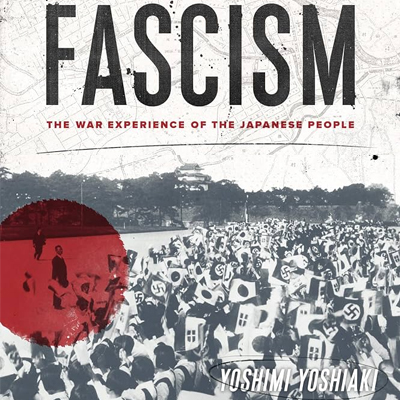
일상에서 본 파시즘과 전쟁 경험 — 평범한 사람들은 어떻게 침략전쟁의 주체가 되었는가

책冊
칼럼
chris_Jung
Yoshimi Yoshiaki's "Grassroots Fascism"

0
2026. 10. 19
- YOSHIMI Yoshiaki aims to reconstruct war history not from a state-centric narrative, but through the complex psychology and actions of ordinary citizens.
- Fascism is explained as "grassroots fascism," rooted in everyday life, combining not only dictatorial coercion but also public expectations, anxieties, and nationalistic superiority.
- Japanese soldiers were both victims of war and perpetrators of aggression and violence, which helps us understand how institutions reproduce violence rather than simply dividing individuals into good and evil.
- Even after defeat, people's consciousness grappled with confusion and contradiction, and the process of reinterpreting the past became the starting point for new conflicts over memory and responsibility.
- This book offers crucial insights by studying the history of perpetration, identifying the conditions under which violence recurs, and questioning the nature of responsibility.
1. Why did the author try to rewrite war history from the ground up?
YOSHIMI Yoshiaki is a Japanese historian born in 1946. Since the early 1970s, when he was researching popular political movements before the war, he noted a significant gap in Japan's historical accounts of the war. What he took issue with was the phenomenon of the subject of history disappearing. War is often described as something decided by the state, carried out by the military, and with the people mobilized. In such sentences, how the people accepted the war, what they believed, what they wanted, and what actions they took become vague. The people appear as passive beings, swept along by the tide of history. However, actual war is not that simple. Some people feared conscription but hoped for victory in the war, while others complained about material shortages and hardship but thought stronger military action was needed to end the war quickly. Some soldiers, even while experiencing brutal realities on the front lines, did not doubt the purpose of the empire they belonged to, and some did not let go of the state's propaganda and expectations of victory until defeat was imminent.
What Yoshimi attempted was to restore these contradictions to history without erasing them. Instead of pre-dividing people into good victims and evil perpetrators, he tries to reveal how war took root in society by tracing their realities and changes in thought. For him, ordinary people's diaries and letters are not trivial personal records. They are important historical materials that reveal the reality that official announcements concealed or justified, and show how the language of the state became embedded in people's consciousness. This approach is an attempt to reconstruct history from below, moving away from writing history only from top to bottom. What Yoshimi took issue with was not merely the fact that the experiences of ordinary people were missing. It is that without the experiences of ordinary people, it is impossible to explain how fascism became the reality of an entire society.
2. How did fascism become common sense in everyday life?
The core of this book lies in its refusal to explain fascism simply as the command of a dictator or the coercion of the military. Yoshimi examines the process by which fascism spread throughout society, emphasizing how national policies and public sentiment influenced each other. Japan expanded its continental invasion after the Manchurian Incident in 1931. In the early stages of the war, public support for the war spread through media reports, but when battles subsided, economic difficulties in rural areas and rising prices in cities once again pressured daily life. A gap emerged between the expectation that the war would improve people's lives and the reality of deteriorating living conditions.
What's interesting here is the direction of discontent. In a situation where rice was scarce, prices rose, and family members were conscripted due to the war, public discontent did not necessarily lead to opposition to the war. Instead, the argument that stronger political and military decisions were needed to end the war quickly sometimes gained traction. This is precisely the paradox that enabled the continuation of the war of aggression. The suffering created by the war, instead of leading to questioning the war itself, could be transformed into a demand to push the war harder.
To understand this phenomenon, the public should not be seen merely as victims of propaganda. Of course, state censorship and propaganda, media control, and social pressure greatly influenced public judgment. However, what Yoshimi traces is how such pressures combined with people's desires. Expectations that winning the war would strengthen the nation and solve economic difficulties, national pride that Japan was superior to other Asian countries, and social pressure that opposing the war could lead to being treated as disloyal to the nation, all intertwined. As a result, dissatisfaction with the war and support for the war could coexist in one person's consciousness. What Yoshimi calls 'grassroots fascism' refers precisely to this reality. Fascism is not completed solely by orders from above. It is also reproduced in people's everyday judgments and emotions, economic interests, expectations of the state, and prejudices against other ethnic groups. This is a very important insight for understanding fascism. Dictatorial regimes are not maintained only when they succeed in silencing the people. They take deeper root when some of the people accept the regime's goals as their own and begin to understand the regime's violence as legitimate.
3. Were the soldiers on the front lines victims or perpetrators?
Another important pillar of the book is the war experiences of Japanese soldiers. Soldiers on the battlefield suffered from cold, hunger, disease, and the fear of death. Some were conscripted, leaving behind their families and livelihoods, while others lost hope of returning alive as the war dragged on. Their letters and memoirs reveal longing for home, concern for family, dissatisfaction with military life, and the horrors of war. However, such human suffering did not necessarily mean a rejection of the war of aggression. This is precisely where the importance of this book lies. Japanese soldiers could have been victims mobilized by the state, but at the same time, they were also perpetrators who participated in aggression and violence in China and other parts of Asia. Restoring the war experiences of ordinary soldiers is not to unconditionally defend them, but to understand how victimhood and perpetration could coexist within a single human life.
Yoshimi's approach, rather than dividing people into fixed categories of good and evil, asks what institutions, ideologies, and circumstances led people to specific actions. However, this does not negate individual responsibility. Rather, it is a way of specifically asking how responsibility was actually formed. Military hierarchy and violent training, propaganda that dehumanized the enemy, pressure from comrades and superiors, and the expectation of rewards from winning the war could all be conditions that altered individual judgment. Only by analyzing these conditions can we understand how violence is repeated and accepted as normal.
In this sense, this book goes beyond the perspective that explains war crimes as merely the deviance of a few abnormal individuals. This is because it shows that ordinary people can also participate in cruel acts within specific institutions and ideologies. And that question is not limited to the Japanese military. Any army or nation can package its violence in the language of justice and order, patriotism and survival. Therefore, the soldiers in this book are not only past Japanese soldiers, but also historical examples showing how humans are incorporated into violent systems.
4. How did defeat change people's consciousness?
The latter half of the book deals with the process by which Japan's war effort became difficult and defeat became a reality, and the post-war issues. The title of Part 4 in the table of contents is 'Democracy from the Battlefield'. This section is important for examining how the public's perception of the war changed as the war progressed. News of early victories reinforced the Japanese people's belief in the nation's power and the legitimacy of the war. However, as the war dragged on and the war situation worsened, shortages of food and daily necessities, family casualties, and the threat of air raids increased. The gap between the image of the war conveyed by the state and the reality people actually experienced inevitably widened. Yet, the suffering of reality did not immediately translate into anti-war sentiment. One could feel skeptical about the war but find it difficult to accept defeat, and one could distrust government policies yet hope for national victory. In this way, people's consciousness is not organized into a single, consistent attitude.
This is also why Yoshimi places great importance on individual records. While official state records tend to organize war as a series of victories and defeats, commands and executions, individual records reveal the confusion and contradictions that exist in between. Even after the war ends, the mindset that enabled the war does not automatically disappear. After defeat, people reinterpret what they believed and how they acted in the past. Some may feel that they too were deceived by the state, while others may remember the past centered on the suffering they had to endure. Still others may try to distinguish between their own actions and the responsibility of the state. Therefore, defeat is not only a military event but also the starting point of new conflicts surrounding memory and responsibility.
5. What significance does this book hold for Korean readers?
For Korean readers, this book not only helps understand Japan's war history but also prompts reflection on how to remember colonial rule and war responsibility. When explaining Japan's aggression, it is essential to point out the responsibility of militaristic leaders and the military. However, to understand the social conditions that allowed the war to continue for so long, one must also examine the consciousness and actions of ordinary citizens. What role did national superiority, expectations of imperial prosperity, and hopes for the benefits of war victory play in justifying aggression? How were everyday discrimination and prejudice connected to the violence on the battlefield? How did people remember and explain the history they participated in after the war ended?
Rather than offering simple answers to these questions, Yoshimi's book deepens them through concrete materials and experiences. A comparative perspective is particularly useful when reflecting on how Korean society dealt with pro-Japanese collaboration and the legacy of colonial rule after liberation. However, Japanese imperialism and the post-liberation political order in Korea should not be treated as identical phenomena. The two societies had different power dynamics and historical conditions. Nevertheless, comparing the relationship between state power and individual cooperation, social interests and moral responsibility, and the ways of remembering the past is meaningful. Above all, this book reminds us that studying the history of perpetrators does not mean understanding or forgiving them. Understanding how violence was possible allows for a more accurate identification of the conditions under which the same violence might be repeated. The act of assigning responsibility and the act of analyzing causes are not in opposition to each other.
If I were to summarize the philosophy of this book in one sentence, I would express it this way:
The tragedy of history cannot be explained solely by the fact that those in power issued commands. It is necessary to reveal the process by which those commands became common sense in society, permeated people's desires and fears, and were reproduced as everyday actions.
댓글
( 0 / 500 )
Endorphin
8
파시즘은 어느 날 갑자기 독재자의 명령으로 완성되는 것이 아니라, 평범한 사람들의 일상적인 생각과 선택 속에서 자라난다는 지적이 인상적입니다. 역사의 비극을 권력자의 책임으로만 돌리지 않고 사회 전체의 의식과 행동을 함께 살펴야 한다는 점에서 깊이 생각하게 하는 글입니다.
( 0 / 500 )
원빈
7
전쟁의 피해자였다는 사실이 가해자로서의 책임까지 지워 주지는 않는다는 대목에 공감합니다. 징집되어 고통받은 병사도 다른 나라 사람들에게는 침략자일 수 있습니다. 역사를 선악의 단순한 구도로 나누기보다 한 인간 안에 공존하는 피해와 가해의 모순을 직시해야 진정한 역사적 성찰이 가능할 것입니다.
( 0 / 500 )
인순
7
가해자와 피해자를 단순하게 구분하지 않고, 한 인간 안에 공존하는 고통과 책임의 모순을 짚어 주신 대목에 공감합니다. 과거의 폭력이 어떻게 일상의 상식으로 받아들여졌는지 살펴보는 일은 오늘날에도 반드시 필요한 성찰입니다. 좋은 책을 깊이 있게 소개해 주셔서 감사합니다.
( 0 / 500 )
manbok
5
요시미 요시아키의 저작을 단순한 전쟁사 소개에 그치지 않고, 평범한 사람들이 어떻게 침략전쟁의 주체가 되었는가라는 근본적인 질문으로 풀어내신 점이 인상적입니다. 역사를 권력자의 명령만으로 설명할 수 없다는 문제의식이 오늘날 우리 사회를 돌아보게 합니다. 깊이 있는 서평 잘 읽었습니다
( 0 / 500 )
안동
4
전쟁으로 생활이 어려워졌는데도 전쟁 자체를 의심하기보다 더 강력한 전쟁 수행을 요구했다는 역설이 오늘날에도 낯설지 않습니다. 정치적 선전과 집단적 확신에 사로잡히면 고통의 원인을 잘못 진단하고 오히려 그 원인을 강화할 수 있습니다. 그래서 역사를 공부하는 일은 과거를 아는 것을 넘어 현재의 자신을 돌아보는 일이기도 합니다.
( 0 / 500 )
파수꾼
3
일본의 침략전쟁을 군부와 정치 지도자의 책임만으로 설명한다면 당시 사회에 퍼져 있던 제국주의적 욕망과 민족적 우월감은 제대로 드러나지 않을 것입니다. 그렇다고 모든 국민에게 똑같은 책임을 물을 수도 없습니다. 누가 어떤 조건에서 무엇을 선택했고, 그 선택이 어떤 결과를 낳았는지 구체적으로 밝히는 것이 역사 연구의 역할이라고 생각합니다.
( 0 / 500 )
79kim
2
역사의 기억은 패전이나 정권의 교체만으로 바로잡히지 않습니다. 자신이 무엇을 믿었고 어떤 폭력을 묵인하거나 정당화했는지 돌아보는 과정이 필요합니다. 과거를 이해하는 것은 가해자를 용서하기 위해서가 아니라 폭력이 일상적인 상식으로 자리 잡는 과정을 밝혀 같은 비극의 반복을 막기 위해서라는 글의 문제의식이 오래 남습니다.
( 0 / 500 )
최광호
1
역사를 기억하는 것과 역사의 구조를 이해하는 것은 다르다는 생각이 듭니다. 선량한 개인도 집단적 편견과 국가주의에 사로잡히면 폭력에 가담할 수 있다는 사실을 외면해서는 안 되겠습니다. 이 책을 통해 일본의 전쟁 책임뿐 아니라 우리 사회의 역사 인식과 과거 청산 문제까지 함께 생각할 수 있도록 이끌어 주신 서평 작가님께 감사드립니다.
( 0 / 500 )
신고내용
신고내용을 선택해주세요
회원비난/비하/욕설글 및 댓글도배성 게시물저작권 침해/불법자료 유출허위사실유포개인정보 유출.사생활 침해무단광고/홍보음란물 및 도박 불법 광고물범죄행위 관련 글불법행위 관련 소개물품 판매 및 사기글악성코드 및 스파이웨어 유포기타 사유 및 운영진 판단


비밀번호를 잊으셨나요?
Sign in with Google
All information provided by us is free of charge and is for the public good.