品

Corea든 Korea든, 품격은 이름보다 먼저다
Whatever the name—Corea or Korea—dignity comes first.
Whatever the name—Corea or Korea—dignity comes first.
Now
지금
751 Diaspora
Heritage
유산
Humanity
인문
Mirengsi
未冷尸
Politics
정치
Media
언론
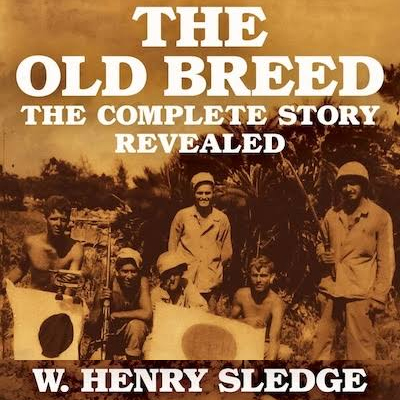
《With the Old Breed》를 읽는 일은 태평양전쟁의 역사를 다시 읽는 일인 동시에 전쟁이라는 거대한 사건을 한 인간의 눈높이에서 바라보는 일이다

책冊
칼럼
hanna_Kim
The Face of Imperialism as Shown in E. B. Sledge's "With the Old Breed"

0
2026. 09. 29
- Sledge's memoir re-examines the Pacific War through a personal lens, vividly revealing the human dignity and suffering easily lost amidst a massive conflict.
- Beyond a mere clash between nations, the Pacific War showcases the complexities of imperialist warfare, encompassing the tragic reality of colonized peoples forcibly mobilized as war resources.
- For Korean readers, this book serves as a reminder that the Pacific War was an integral part of colonial history, deeply connected to the Korean Peninsula, prompting a reinterpretation of the war's meaning within the context of modern Korean history, leading to post-liberation division and the Korean War.
- It's crucial to remember the suffering and sacrifices war inflicts on individuals, beyond victory or defeat, which is essential for understanding the unequal burdens borne by colonial Koreans, such as forced mobilization and atomic bomb damage.
- Ultimately, this book reflects on the true nature of war from a human perspective, emphasizing that remembering the hardships and resistance experienced by each individual as an agent of history is the path to genuine historical understanding.
Reading Sledge's "With the Old Breed" is both a re-reading of the history of the Pacific War and a look at the grand event of war from a human perspective. Sledge served in the 5th Regiment of the 1st Marine Division and directly experienced the battles of Peleliu and Okinawa. He recorded what he saw and experienced in a small notebook on the battlefield, and after the war, he completed his memoir based on those records. The book was published in 1981 and has since been regarded as an important work among memoirs of the Pacific War. However, the value of this book does not lie solely in its vivid description of combat. Rather, Sledge revives the human aspect that is often lost in war. On a map, Peleliu and Okinawa are merely small islands, and in military history, they are organized by specific dates and operation names. But for the soldiers who fought on those islands, one island was their entire world.
Another meaning of the Pacific War shown by Peleliu and Okinawa
The Battle of Peleliu might seem like a small battle in the grand scheme of the Pacific War. However, in Sledge's records, it was by no means small. Amidst the harsh terrain of the coral island, scorching heat, water shortages, and incessant shelling, soldiers experienced the limits of human endurance. In a battlefield, even an island with minimal strategic value was a place where a dying person's entire life was at stake. Okinawa holds an even more complex meaning. This battle was one of the last major battles before the invasion of mainland Japan, but it transcended the framework of war as a clash between armies. The residents of Okinawa also became direct victims of the war. As the battlefield overlapped with civilian living spaces, the war was no longer solely the concern of combatants.
At this point, another face of the Pacific War emerges. The longer the war drags on, the more the nation needs not just its military. The entire society, including labor, food, supplies, industrial facilities, transportation, and even women's labor, is aligned with the needs of the war. In imperialist wars, residents of colonies and occupied territories are also forcibly incorporated into that system. Humans are transformed not into individuals with their own lives, but into numbers representing military strength and labor.
But where were Koreans in this war?
For Koreans, the most important question in looking at the Pacific War begins here. While Sledge was fighting the Japanese army in Peleliu and Okinawa, the Korean Peninsula was also within the Japanese Empire's war system. However, Koreans were not in the same position as American soldiers. American soldiers were combatants who participated in a war decided by their own nation, but Koreans were colonial subjects who had lost their independent nation. As the war expanded, Japan further incorporated Korea as a base for supplying human and material resources for the empire's war effort. After the National General Mobilization Law was enacted in 1938, various forms of human resource mobilization took place in Korea, and Korean laborers, soldiers, and civilian military personnel moved to mainland Japan and war zones. This mobilization occurred within a national mobilization system that is difficult to explain solely through the framework of individual free choice.
However, this history should not be recorded only in numbers. Behind the hundreds of thousands and millions were individual lives. There were people who had to leave their hometowns, people who were separated from their families, people who had to work in unfamiliar factories, people who were dragged to the battlefield, and people who never returned home. The vast statistics of war can easily erase the lives of those individuals, but history is ultimately about remembering that each of those numbers was a human being.
The war damage suffered by Koreans was not 'damage in the rear.'
It is insufficient to understand the suffering of Koreans as merely indirect damage incurred in the rear during wartime. Koreans were mobilized as labor to sustain Japan's war economy, and some were directly incorporated into the war as soldiers and military personnel. Among women, some suffered severe human rights abuses within the Japanese military comfort station system. However, it is also not enough to record the history of Koreans solely as a history of suffering. Among those forcibly mobilized, there were also people who resisted in various ways, such as escaping, refusing work, and engaging in strikes and slowdowns. Colonial residents were not passive beings who moved according to the empire's demands. They, too, made choices and acted to protect their lives.
This fact is important. Describing people who experienced colonial rule solely as helpless victims, in fact, erases their human agency. The fact of being oppressed and the fact of resisting are not contradictory. Rather, the stronger the oppression, the more humans tried to protect their dignity in various ways.
In Hiroshima and Nagasaki, Koreans were also victims.
When we talk about the final scenes of the Pacific War, we recall Hiroshima and Nagasaki. In August 1945, the United States dropped atomic bombs on the two cities, and Japan eventually surrendered. This event caused immense damage to Japanese civilians. However, Koreans also lived in those cities. A significant number of Koreans who had been mobilized to Japan for labor were victims of the atomic bombs. While there are differences in the exact scale depending on data and estimation methods, the fact that a considerable number of Korean atomic bomb victims existed is difficult to deny.
Here lies the tragic irony of the Pacific War. Koreans were mobilized to mainland Japan for the Japanese Empire's war, and there they experienced the final devastation of the war. Colonial rule, war, forced mobilization, and atomic bomb damage were connected in a single historical chain. Therefore, the history of Hiroshima and Nagasaki should not be explained solely as Japanese suffering, nor, conversely, should only Korean suffering be emphasized. It is necessary to look at the complex reality that Japanese civilians, Korean laborers, and other foreign laborers and prisoners of war suffered together.
The 'Hidden Meaning' of the Pacific War
If the Pacific War is understood only as a war between the United States and Japan, a much broader historical structure is overlooked. The Pacific War was a conflict between the United States and Japan, and at the same time, it was part of the expansionist war that the Japanese Empire pursued in Asia and the Pacific region. The Manchurian Incident and the establishment of Manchukuo in 1931, the expansion of the Sino-Japanese War in 1937, the war on the Chinese mainland, the advance into Southeast Asia, and the attack on Pearl Harbor in 1941 were not isolated events. As the expansion of the Japanese Empire and the conflict of interests with existing powers such as the United States and Britain overlapped, the scope of the war gradually expanded.
Therefore, multiple wars were superimposed within the Pacific War. There was a hegemonic rivalry between the United States and Japan, a long-term war between Japan and China, and wars fought in the colonies and occupied territories of Southeast Asia. In the process, residents of colonies, including Korea and Taiwan, were incorporated into the Japanese Empire's war system. Viewed this way, the Pacific War was not a war between nation-states. It was a complex history in which empires clashed, empires utilized colonies and occupied territories as resources for war, and in the process, countless civilians became victims of the war.
What Sledge ultimately shows is that even the 'enemy' is human.
Another issue that comes to mind while reading "With the Old Breed" is the fact that the enemy is also human. For Sledge, the Japanese soldiers were clearly enemies who killed his comrades and attacked him. In the reality of battle, fear and hatred of the enemy were real. However, documenting the war after it ends is a different matter than simply leaving the enemy as a monster. Japanese soldiers also operated within a military system created by the state, and among them were ordinary people with different life circumstances than the ruling class who chose war. This is the difficulty of remembering war. Recognizing the enemy as human does not absolve them of responsibility for their actions. Conversely, denying the enemy's humanity does not justify the violence of war. Rather, when we can see the enemy as human, the inhumanity of war itself becomes even clearer.
War corrupts human judgment from the moment it turns people into targets to be killed. The reason Sledge's records endure is that he not only documented the heroic scenes of war but also showed how humans change amidst hatred and fear.
Reading "With the Old Breed" in Korea
For Korean readers, Sledge's book poses a slightly different question. What was happening in Korea when Sledge was experiencing the war in Peleliu and Okinawa? The people of the Korean Peninsula were living under Japan's wartime system. Some were responsible for food production in rural areas, some moved to factories and mines in mainland Japan, and some were incorporated into the military and its supply system. Some left their families for unfamiliar lands, and some never returned. From this perspective, the Pacific War was by no means a distant war unrelated to Korea. It was at the heart of the colonial history directly experienced by our parents' and grandparents' generations.
The liberation on August 15, 1945, came with the end of that war. However, liberation was not the moment when all problems were solved. In the place where the Japanese Empire disappeared, a new order of US military government and Soviet military government, the Cold War, and division emerged, and a few years later, another war broke out on the Korean Peninsula. Therefore, reading the Pacific War in modern Korean history does not end the story in 1945. It is necessary to view 1945 within the continuous history of colonial rule and liberation, division, and the Korean War.
Reasons to remember war history
The reason to read 《With the Old Breed》 is not just because the battle scenes are vivid. This book changes the very questions we ask about war. We often first ask who won the war. However, if we look a little deeper into war history, different questions become necessary. Who decided the war? Who carried out the war? Who benefited from that war? And who paid the price? Political leaders decide wars, and soldiers carry out orders. The state mobilizes its citizens and colonial residents. But the ultimate price of war is paid by nameless soldiers and civilians.
Especially in colonies, the burden is distributed even more unequally. This is because those who do not have the political right to determine the direction of the war themselves bear the cost of a war decided by the empire. In that sense, the Pacific War is an important window for understanding modern Korean history. This is because it can be viewed within a long historical flow, from the forced mobilization and military mobilization of Koreans, to labor sites in mainland Japan, the atomic bomb damage in Hiroshima and Nagasaki, liberation and repatriation, and the subsequent division.
If we only remember the history of the nations that won wars, then war becomes a story of heroes. However, if we also remember the lives of the soldiers who died in that war, the laborers who were forcibly mobilized, the colonial residents who lost their homes, and the civilians who were bombed and nuked, then war takes on a completely different appearance. Ultimately, perhaps the heaviest question that 《With the Old Breed》 leaves us with is this: Will we remember the victory or defeat of war, or will we remember the price humanity had to pay for that victory or defeat? Reading this book in Korea means re-asking that question of our own history. And at the end of that question lies both the image of a soldier who died on some nameless island in the Pacific and the image of a person from colonial Joseon who was dragged into the empire's war against their will.
댓글
( 0 / 500 )
초롱이
8
슬레지의 회고록을 단순한 미 해병의 전쟁 경험담으로 읽지 않고, 식민지 조선인의 삶까지 연결한 시선이 인상적입니다. 전쟁은 지도와 작전명으로 기록되지만 결국 그 안에는 각자의 삶을 가진 사람들이 있었다는 사실을 잊어서는 안 된다는 생각이 듭니다.
( 0 / 500 )
Amore
7
특히 “조선인은 어디에 있었는가”라는 질문이 오래 남습니다. 태평양전쟁을 미국과 일본의 충돌로만 바라보면 식민지 주민들의 경험이 사라집니다. 강제동원과 군사동원, 원폭 피해까지 연결해 보면 태평양전쟁은 우리 현대사와 결코 분리해서 생각할 수 없는 사건입니다.
( 0 / 500 )
이기상
7
전쟁의 역사를 승패와 영웅의 이야기로만 기록해서는 안 된다는 주장에 공감합니다. 펠렐리우의 미군 병사와 일본군, 그리고 전쟁체제에 동원된 조선인 모두 각자의 자리에서 전쟁의 폭력을 경험했습니다. 적을 인간으로 바라보는 것이 오히려 전쟁의 비인간성을 더 분명하게 드러낸다는 대목이 깊이 와닿습니다.
( 0 / 500 )
강민
6
식민지 주민을 단순히 피해자로만 묘사해서는 안 된다는 지적도 중요합니다. 강제동원의 피해를 인정하면서도 그 속에서 탈출과 저항, 태업과 같은 주체적인 행동이 있었다는 사실을 함께 기록해야 역사가 온전해집니다. 피해와 저항은 서로 배치되는 개념이 아니라 함께 존재했던 현실이니까요.
( 0 / 500 )
전봉준
6
이 글이 던지는 질문은 전쟁사를 바라보는 관점을 바꾸자는 이야기라고 봅니다. 누가 이겼느냐보다 누가 결정했고, 누가 동원됐으며, 누가 그 대가를 치렀는지를 물어야 한다는 것입니다. 《With the Old Breed》를 한국인의 역사적 경험 속에서 다시 읽어낸 점이 특히 의미 있게 느껴집니다.
( 0 / 500 )
Xman5
4
슬레지의 기록을 읽으면서 가장 두려운 것은 전쟁이 인간을 숫자로 바꾸는 과정입니다. 몇 명의 병력, 몇 톤의 물자, 몇 명의 사상자라는 통계 뒤에는 모두 이름과 가족과 삶이 있었습니다. 식민지 조선인의 경험까지 함께 바라봐야 전쟁의 실체가 제대로 보인다는 생각입니다.
( 0 / 500 )
Lee4
4
펠렐리우와 오키나와를 설명하면서 조선인의 강제동원과 연결한 부분이 좋습니다. 같은 시기에 누군가는 전장에서 싸우고, 누군가는 공장에서 일하고, 누군가는 식민지에서 전쟁물자를 생산했습니다. 전쟁은 전선에서만 벌어진 것이 아니라 사회 전체를 휘감고 있었다는 사실을 다시 생각하게 합니다.
( 0 / 500 )
CJY
4
히로시마와 나가사키를 일본인의 피해만으로 기억해서도, 조선인의 피해만으로 기억해서도 안 된다는 지적에 공감합니다. 전쟁의 피해는 국적에 따라 깔끔하게 나뉘지 않았습니다. 한 공간에서 일본인과 조선인, 다른 외국인들이 함께 피해를 입었다는 복합적인 현실을 기억하는 것이 역사에 더 충실한 태도라고 봅니다.
( 0 / 500 )
747kor
4
해방을 태평양전쟁의 마지막 장면으로 끝내지 않고 분단과 6·25전쟁까지 이어서 바라본 점도 의미 있습니다. 1945년은 어떤 의미에서는 끝이었지만 동시에 새로운 역사의 시작이었습니다. 식민지배, 전쟁, 해방, 귀환, 분단을 서로 끊어진 사건이 아니라 연결된 역사적 과정으로 바라볼 필요가 있다는 생각이 듭니다.
( 0 / 500 )
상용78
2
“적도 인간이다”라는 대목이 이 글에서 가장 어려우면서도 중요한 부분이라고 생각합니다. 적의 인간성을 인정한다고 해서 전쟁범죄나 침략의 책임을 없애는 것은 아닙니다. 오히려 평범한 인간이 어떻게 국가의 전쟁체제 속에서 적을 죽이는 존재로 변해가는지를 바라볼 때 전쟁의 구조가 더 선명하게 드러납니다.
( 0 / 500 )
신고내용
신고내용을 선택해주세요
회원비난/비하/욕설글 및 댓글도배성 게시물저작권 침해/불법자료 유출허위사실유포개인정보 유출.사생활 침해무단광고/홍보음란물 및 도박 불법 광고물범죄행위 관련 글불법행위 관련 소개물품 판매 및 사기글악성코드 및 스파이웨어 유포기타 사유 및 운영진 판단


비밀번호를 잊으셨나요?
Sign in with Google
All information provided by us is free of charge and is for the public good.