品

품격있는 정치, 품위있는 정치인과 함께 하는 세상이어야 하는데
All Koreans are refugees like animals in the zoos. Corea, Korea, Corean, Korean, Coreans and Koreans. Whatever they are!
All Koreans are refugees like animals in the zoos. Corea, Korea, Corean, Korean, Coreans and Koreans. Whatever they are!
Now
지금
751 Diaspora
Heritage
유산
Humanity
인문
Mirengsi
未冷尸
Politics
정치
Media
언론
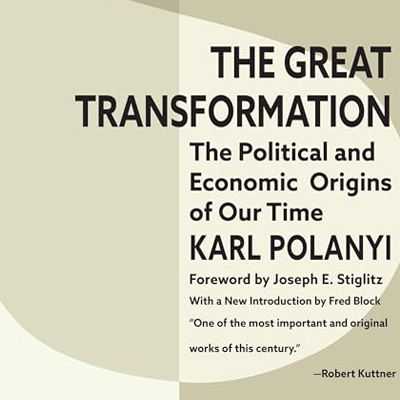
국가자본주의와 공급망 냉전, 그리고 연성 파시즘의 유혹

책冊
칼럼
baba77
The Crisis of Korean Politics from the Perspective of Karl Polanyi's Theory of Failed Class Adjustment

0
2026. 09. 19
- Karl Polanyi warned of the market's irrationality and violence, suggesting that a "double movement" arises when the market threatens society, and its failure to adjust can lead to fascism.
- Korean society is experiencing severe fissures, including a dual labor market structure, asset inequality, and generational conflict, yet existing political parties fail to adequately represent or reconcile these class issues.
- Under external pressures like state capitalism and the supply chain cold war, the state is increasing control over the market, but this risks protecting only certain classes while burdening others, thereby deepening social conflict.
- The temptation of "soft fascism," which pursues coercive solutions while disregarding democratic processes and adjustments, is growing, posing a threat not just to specific parties but to Korean society as a whole.
Problem Consciousness — Why Polanyi Again?
Among economic commentators, those who have nothing to say often parrot the phrase, 'the market is the answer.' If the market isn't right, then what is economic justice? Are my wages or SpaceX's valuation fair? But Polanyi said that the market is not perfect and is a source of problems. How can one say that the market's 'invisible hand' makes the situation beautiful for someone who graduated high school and worked simple tasks in Samsung Electronics' semiconductor division, receiving bonuses to buy an apartment in Dongtan, compared to someone who graduated from graduate school, worked as a part-time lecturer at a university, and now makes a living working in Coupang logistics? In the era of financial capitalism, the final stage of capitalism, the market is a casino. This is a theory that Schumpeter recognized and Lenin developed into his theory of imperialism. The market is an oppressive and blind chariot, and it manifests with cultural, political, and racial elements mixed in, not just economic ones.
Karl Polanyi's intellect was forged in the baroque buildings of Vienna, yet he differed from the Austrian School, which focused on marginal utility and supply and demand. While the Austrian School moved to America during the Nazi era and founded the Chicago School, Polanyi, who was an idealistic social democrat in his youth, worked as a precarious lecturer in London before almost securing a professorship at a famous American university. However, he was branded a communist and ended up teaching in Canada. His father was a failed capitalist, and he was surrounded by many 'Gangnam leftists' of the Habsburg era. He was a wandering intellectual with the keen observational skills that his friend Karl Mannheim spoke of.
I really liked this book when I was young. I found Polanyi's macroscopic and historical perspective to be wonderful and refreshing. In the Korean economics community, where mathematical economics dominates, theories that integrate international affairs, domestic politics, class struggle, and socioeconomic issues into a single perspective were rare. Karl Polanyi was a Hungarian Jew, a wandering free spirit who belonged neither to the ruling bloc nor to the workers' vanguard. That position allowed him to see society sharply. Korean political commentators often link phenomena to their own interests, tied to capital or future official positions. If you are fed up with such an atmosphere, it is better to return to the classics, even if they are a bit old-fashioned.
Another person who loved this book the most was George Soros. Soros used Polanyi not as a blueprint for social reform, but as a lens to understand the relationship between macroeconomic crises and finance, and attacked the pound. The Great Transformation is not an economic history but a political sociological diagnosis. When self-regulating markets turn labor, land, and money into 'fictitious commodities,' society initiates a double movement to protect itself. The problem arises when this protective movement cannot be adjusted in an agreed-upon form among classes. In Europe in the 1920s and 30s, when industrial workers, farmers, the declining middle class, and the unemployed could not reconcile their interests within the liberal party system, fascism filled that void. For Polanyi, fascism was less an ideology than a way to find solutions to the institutional failures of market society in the political sphere, bypassing democratic procedures and inter-class compromise.
The US-China technology hegemony competition, supply chain reorganization, and the cracks in neoliberal globalization superficially resemble the 1930s. However, for this analogy not to end as mere rhetoric, it must be applied to the class composition and representative system of a specific society. Korea is a sharp test case for this, as it has accumulated compressed industrialization, the dualization of the labor market since 1997, and the asset price shocks and demographic changes of the 2020s all at once. In the late 2020s, one more condition is added: state capitalism, where the state attempts to reassert control over the market, and a supply chain cold war divided into blocs. As the range of choices narrows, society becomes impatient, and impatience tempts coercion rather than compromise. Our economic and trade relationship with the United States is one where we live and die economically, and the other is a political struggle where we take sides and kill each other. We are living in an IT Cold War era; if the past Cold War was romantic, this Cold War is dirty, without ideology, and like a jungle. A smartphone made by an enemy is a cyber-hacking weapon, and subsidies given by a friend are beautiful. We are now living in the 1920s-30s before the Great Depression. Fools, forget WTO free trade. We are living in a state capitalist system, and Trump is fascism with an American veneer.
Polanyian Class Map
What is decisive in Polanyi's framework is not class itself, but the political alliances that classes form in response to market shocks. In this respect, his theory resembles Antonio Gramsci's theory of hegemony. Fascism gained power in Germany's Weimar Republic not because the entire working class was radicalized. It was because groups with different interests, such as declining small business owners, white-collar workers threatened by unemployment, and retired soldiers suffering from pension insecurity, sought solutions outside the market, unrepresented within existing left and right-wing parties.
In Korea, the fault lines are also clear. Regular employees of large corporations are already insiders in the labor market. Enterprise-specific unions and seniority-based wages largely protect them from market fluctuations. Their interest is less about 'protection from the market' and more about 'defending their existing status.' The redistribution and solidarity narratives of left-wing parties are unlikely to be a real incentive for them. Statistics from around 2025 show that the wage and tenure gap between regular employees of large corporations and other sectors has not narrowed, and the wage gap between regular and non-regular employees has widened to its highest level since statistics began to be compiled.
Non-regular workers, platform workers, and young people are at the opposite end. Interpretations differ regarding the impact of working hour regulations, such as the 52-hour work week, on the quantity of jobs. However, the core issue they perceive is that the door to the regular labor market has not opened. The proportion of the low-growth generation whose first job is non-regular is distinctly higher than that of previous generations. What they need is not an expansion of protection from the existing union system, but a restructuring of the dual structure itself, yet no major political party has succeeded in representing this agenda.
The self-employed class is becoming precarious amidst shrinking consumption, encroachment by platform capital, and pressure from rents. Their conservative leaning is less a choice of ideology and more an empirical learning that the state's redistributive politics have never represented them. The middle class is the most fluid. Property taxes, transaction taxes, and asset market volatility have instilled a sense that 'the state threatens my assets,' which can lead to a defensive reaction against redistribution in general. From a Polanyian perspective, this is a paradox. Groups that were originally in a position to demand protection from the market have, as asset holders, come to occupy a dual position of demanding protection from state intervention.
Crisis of Representation — Not reducing personnel failures to a single line
Cracks within the progressive camp are also overlapping. It is a fact that the selection of candidates for the Minister of Gender Equality and Family (formerly the Ministry of Gender Equality and Women) has repeatedly failed. Following Kim Haeng and Kang Sun-woo, candidate Yong Hye-in, nominated on August 30, 2026, voluntarily resigned on September 13, just about two weeks later. This was the first case of a candidate dropping out before a confirmation hearing under the Lee Jae-myung administration, without even making it to the hearing. However, reducing this incident to a single line, 'the gender agenda pushed out the class agenda,' is not accurate. The direct triggers were the concurrent holding of proportional representation parliamentary seats and ministerial positions, the survival structure of the Basic Income Party as a minor party, the so-called family party and underground organization controversies, and the pressure to resign that even came from within the ruling party. The candidate herself stated that it would be realistically difficult to serve as a cabinet member given the concerns of the ruling party. The repeated personnel failures strongly indicate flaws in the verification process and the practice of political appointments.
Nevertheless, the symbolism remains. This is because the political cost becomes apparent when progressive parties simultaneously bear the burdens of redistribution and identity issues for a class-unstable electorate. It's hard enough to do one thing well, so why bother with such complex identities? If you broaden your meddling to include homosexual identity, then both the left and progressives will be completely crushed. Those who seek to spread homosexual ideology by riding on the back of the left are as strategic as the Bolsheviks during the Russian Revolution. The Democratic Party seems naive and incompetent compared to them. Let them try if they want to. The legitimacy of identity politics itself and the failure of personnel selection at a specific point in time must be distinguished. However, it is naive to expect voters to make that distinction precisely. Doubts about a representative's capabilities arise before delving into the details. The assessment of the presence of the 386 generation (late 50s to early 60s as of 2026) is similar. There is an interpretation that they maintain influence through supporting specific politicians, and another interpretation that their organizational power has hollowed out and only symbolism remains as they enter retirement age. If the latter is true, it means that the traditional core base of progressive parties is demographically shrinking. It is a phase where they are losing representativeness with the aging of their existing support base, without forming a new class alliance.
From failed coordination to soft fascism
The fascism Polanyi spoke of does not refer only to full-blown totalitarianism like Nazism. It is a phenomenon where the backlash against market failures is forcibly resolved by state power, bypassing democratic procedures. According to this definition, President Yoon Suk-yeol's declaration of martial law on December 3, 2024, regardless of its constitutional legitimacy, was a symptomatic event. The declaration was made that night, and martial law was lifted the next morning after the National Assembly passed a motion to revoke it. It lasted about 6 hours. However, that short period could not hide its nature as an attempt to resolve political deadlock at once through state coercion rather than negotiation through parliament. The subsequent impeachment and trial only show how that attempt was handled within the system, but do not erase its significance as a symptom.
If we call this soft fascism, there are three key elements. First, a vacuum where the left and right party systems fail to represent insiders/outsiders, asset holders/non-asset holders, and generational divides. Second, a state capitalist tendency where the state acts not as a market regulator but as a direct controller to fill that vacuum. Third, the constant temptation to break through deadlock by force rather than negotiation. Rather than the emergence of full-blown authoritarianism, it is closer to a state where the political adjustment function of class conflict is paralyzed within the shell of democracy. A more important question than any party's approval rating is whether either side can represent this divide now. If both sides try to patch it up only with the language of their traditional support base, tolerance for extreme measures will repeat regardless of the rise and fall of a particular party.
State Capitalism and the Supply Chain Cold War — When Options Narrow
If the gold standard of the 1930s stifled policy space, what is stifling Korea in the late 2020s is the supply chain cold war and the corresponding state capitalism. Semiconductors, batteries, shipbuilding, defense, and nuclear power are no longer comparative advantage goods but geopolitical assets. China is narrowing the technology gap in HBM, DRAM, and NAND by several years, and penetrating the general-purpose memory market, putting pressure on the profitability of Korean companies. The United States, while wanting advanced production from its allies, politically redistributes the profitability of the supply chain through permits, tariffs, and sales burdens. Korea cannot completely abandon the Chinese market, nor can it survive outside the US technology, equipment, and demand network. It is not an either/or choice, but a tightrope walk, enduring the constraints of both sides simultaneously.
The government is stepping forward to directly widen that corridor. In 2026, the Lee Jae-myung administration declared semiconductors, physical AI, and AI data centers as its three major mega-projects, promising to accelerate the construction of fabs in the southwestern region and power/water infrastructure with a 'speed battle.' In September of the same year, it held its first multilateral summit with five Central Asian countries, adopting the Seoul Declaration, which connects critical minerals, energy, and advanced manufacturing. This is the idea that the state will design the entire cycle, from exploration to refining, materials, and finished products. It is a very Polanyian response, where the market has failed, so the state will re-embed the supply chain.
The problem is that this response cannot replace class adjustment. State capitalism concentrates resources in strategic industries and large corporate ecosystems. Insiders (regular employees of large corporations, partners in strategic industries, vested interests in hub regions) are protected. Outsiders (self-employed in non-strategic sectors, subcontracted labor, young entrants, asset-less middle-class renters) bear the costs of electricity rates, fiscal priorities, deregulation, and pressure for labor flexibility first. The narrative that 'the state opens a path to survival' sounds like a language of protection, but in reality, it selects who is protected. For selection to be justified, there must be rules of representation and compensation. When these are absent, state capitalism becomes a locomotive of impatience, not a coordinating institution.
When options narrow, anxiety cannot tolerate time. If one fab is delayed, China catches up; if one mineral is missed, the battery supply chain falters; if power for data centers is not secured, the AI ecosystem disintegrates. The phrase 'this is not the time to leisurely adjust interests' becomes common sense. Economically, that phrase might be correct. Politically, it is dangerous. When the market doesn't work, when political parties fail to represent classes, and when time feels short, people begin to view the delay of democratic processes as a luxury.
The Korean form of soft fascism is unlikely to involve uniforms and torches. A more probable scenario is the constant declaration of extraordinary industrial goals, labeling the veto power of environmental, labor, regional, and minority interests as 'obstructionism,' and normalizing special laws, special organizations, and presidential direct projects that bypass the National Assembly and bureaucracy. Opposition is recoded not as anti-state, but as anti-growth, anti-future, and anachronistic. If the martial law of December 2024 was overt coercion, subsequent temptations might wear softer language: speed, survival, supply chain security, national interest.
Neither of the two major parties is free from this temptation. Conservatives seek to expand direct state control in the name of security and market order, while progressives do so in the name of state-led growth and correcting inequality. However, neither side can directly confront the insider-outsider divide. They try to appease non-regular workers and youth without touching the vested interests of regular workers, and attempt to absorb the anger of the asset-less without provoking the asset-holding middle class. The supply chain cold war makes such stopgap measures even more difficult. A government that must pour resources into strategic industries finds it hard to promise universal protection, and if it promises universal protection, it struggles to execute a speed-driven campaign.
Polanyi's warning is not that fascists suddenly appear. It is that when the institutions of a market society fail to democratically translate society's demands for protection, power forcibly fills that void. In Korea, that void is already open: the dual structure of the labor market, the fault line between the asset-rich and the asset-poor, the vacuum of intergenerational representation, and the hierarchy of protection selectively chosen by state capitalism. The supply chain cold war stamps "no time" on top of all this. The solution may not be a grand ideological shift. What is more urgent is to restore the institutions of adjustment: rules that genuinely lower entry barriers to the insider labor market, representative mechanisms that draw self-employed and platform workers into redistributive politics, language that translates the fears of the asset-holding middle class not into tax populism but into housing and old-age security, and politics that openly negotiate strategic industry investment and its cost burden. The more the state designs supply chains, the more politics is needed to articulate who bears the cost of that design. Without it, the state does not embed the market but slides into suppressing social conflict.
The reason for re-reading Polanyi is not nostalgia for a return to the 1930s. It is to see how society fights back when the market tries to swallow it, and what takes its place when that counterattack cannot be coordinated among classes. Acknowledging that choices have narrowed is entirely different from abandoning democratic coordination because of those narrowed choices. Calling the latter a temptation might be an exaggeration. However, the moment that temptation is not recognized as such, it already becomes commonplace.
댓글
( 0 / 500 )
kim_minsoo
7
폴라니를 단순히 시장 비판의 고전으로 읽지 않고, 오늘날 한국의 노동시장 이중구조와 자산 격차, 공급망 재편까지 연결한 시각이 인상적입니다. 결국 중요한 것은 시장이냐 국가냐의 선택이 아니라, 시장의 충격을 사회가 민주적으로 조정할 수 있는 제도를 갖추느냐의 문제라는 생각이 듭니다.
( 0 / 500 )
hongjo
7
가장 섬뜩한 부분은 ‘시간이 없다’는 말이 민주주의를 압박할 수 있다는 지적입니다. 실제로 위기 상황에서는 속도와 효율이 강조되면서 토론과 협상이 장애물처럼 취급되기 쉽습니다. 그래서 오히려 위기일수록 국가의 강한 개입과 민주적 통제를 동시에 고민해야 한다는 생각이 듭니다.
( 0 / 500 )
minsuk
4
폴라니가 지금 다시 읽히는 이유가 분명하네요. 시장이 모든 것을 해결해 줄 것이라는 믿음도, 반대로 국가가 모든 문제를 해결할 수 있다는 믿음도 결국 한계가 있습니다. 중요한 것은 시장과 국가 사이에서 사회적 이해관계를 조정할 민주적 장치를 만드는 일이라는 생각입니다.
( 0 / 500 )
사라박
4
한국 정치의 위기를 단순히 진보와 보수의 대립으로 보지 않고 내부자와 외부자, 자산 보유자와 무자산자, 세대 간 대표성의 문제로 바라본 것이 설득력 있습니다. 특히 정규직·비정규직의 간극을 해결하지 못한 채 서로 다른 계층의 불만을 기존 정당의 언어로만 봉합하려는 정치가 한계에 도달했다는 지적이 뼈아픕니다.
( 0 / 500 )
sarang2948
2
폴라니의 ‘이중운동’이라는 개념을 지금 한국 사회에 적용해 볼 필요가 있다는 생각이 듭니다. 시장의 압력이 커질수록 사회적 보호 요구도 커지는데, 그 요구를 민주적 타협으로 제도화하지 못하면 결국 더 강한 국가 개입이나 극단적인 정치적 해법을 찾게 된다는 경고로 읽힙니다.
( 0 / 500 )
mama
1
폴라니의 경고를 한국 정치에 적용한다면 결국 답은 계급 간 조정 능력의 회복에 있겠지요. 청년, 비정규직, 자영업자, 정규직 노동자, 자산 보유층이 서로를 적으로 보는 구조를 그대로 두고 어느 한쪽의 분노만 정치적으로 동원해서는 사회가 안정되기 어렵습니다. 이 글은 그 문제를 꽤 근본적인 차원에서 건드리고 있습니다.
( 0 / 500 )
신고내용
신고내용을 선택해주세요
회원비난/비하/욕설글 및 댓글도배성 게시물저작권 침해/불법자료 유출허위사실유포개인정보 유출.사생활 침해무단광고/홍보음란물 및 도박 불법 광고물범죄행위 관련 글불법행위 관련 소개물품 판매 및 사기글악성코드 및 스파이웨어 유포기타 사유 및 운영진 판단


비밀번호를 잊으셨나요?
Sign in with Google
All information provided by us is free of charge and is for the public good.