品

Corea든 Korea든, 품격이 먼저다
Whether Corea or Korea, dignity comes first.
Whether Corea or Korea, dignity comes first.
Now
지금
751 Diaspora
Heritage
유산
Humanity
인문
Mirengsi
未冷尸
Politics
정치
Media
언론
김민웅 (촛불행동 상임대표)의 기고글입니다.

책冊
칼럼
blueSky
The novel <Prachchi>, our future beyond its indictment of the times

0
2026. 09. 06
- Kim Chang-hyun's novel "Prach'i" is a solemn record exposing the dark side of modern Korean history, particularly the nature of power maintained by violence and the individual lives destroyed by it.
- Through characters who betray under duress and ultimately become agents of evil, the work exposes how people parasitic on power destroy themselves, revealing the tragic reality of a "prach'i world" that persists from the past into the present.
- Nevertheless, the author presents the possibility of historical progress and true revolution through unyielding conviction, love, and hope passed down to the next generation, urging readers to confront current crises and continue the struggle for the future.
Kim Chang-hyun writes an indictment of the times.
I read the first draft of this novel a long time ago. The content was not easy, so I thought it would be published someday, and that the situation would take a serious turn. That day is today. Moreover, Kim Chang-hyun once published a book called <Running Life>, which he wrote after suddenly deciding to become a taxi driver one day. In his greeting, Kim Chang-hyun said that he was an “eojak,” meaning “an accidental writer,” but that's not true. He is a “bonjak.” He is a “born writer.”
When it comes to Kim Chang-hyun, it's his character. For a long time, he has been involved in movements, struggles, and politics, carving his name into the history of progress. He is truly a kind person. His work <Prakchi>, in which he transformed his deeply ingrained trauma into nourishment for this era and placed it on our tables, is a stern indictment of an era that normalized barbarism. It captures with intense tension the demonic nature of those who uphold power seized through violence, and the tragic inner lives of those destroyed by it.
The author testifies how the dreams, courage, ideology, and practical struggles of young people were trampled, and with a fervent voice, calls upon those who tried to protect their true selves to the end in a time that no longer respects movements and struggles. Dooyoung and Hongsik, who appear in the novel, are the very names of countless youths who lost their lives under the name of suspicious deaths. They are brilliant beings in history that we all must remember forever. In that sense, the novel <Prakchi> is also a tribute to them.
Those who destroy themselves, not others
Unlike these, this novel relentlessly exposes the group of people who, under coercive pressure, went down the path of betrayal and unwilling informants, only for it to eventually become their conviction. Giseok and Sun-oh are those who turn the lives of forcibly conscripted young men into hell under the name of “녹화사업” (Greenification Project) for their own future, grasping success, fame, power, and money in their hands.
While destroying Soon-oh's spirit with the violence called "conversion," Giseok says, "You must have respect for strong opponents." "You know, the socially vulnerable. Do you know when the disabled, the elderly, and women receive consideration? It's when they conform to social order... Politics is when a strong leader controls the people." Afterwards, Soon-oh adopts those words as his worldview and eventually becomes a politician. It's obvious how the politics of such people will shape that society and the humans living in it.
After Park Chung-hee was assassinated by Kim Jae-gyu, contrary to expectations, a "Park Chung-hee system without Park Chung-hee" emerged, and under Chun Doo-hwan, who took over, Giseok and Sun-oh found their world. Sun-oh betrayed his comrades, including Seong-wook, and became an even more cunning expert, transforming into an embodiment of greed as a member of a political gang. This person, as the author says, is one of those who "design submission." Sun-oh's betrayal was due to Giseok's choice and manipulation, but thereafter, he made it his conviction and became someone who manipulated the history of an era and produced it with the ideology of violence.
Soon-oh believes he is destroying others, but he never realizes that he has become someone who constantly destroys himself. Soon-oh is abandoned by So-jung, a feminist researcher he meets again after a long time in the US. He is secretly punished by being treated like trash by the woman he once adored. Such is the fate of betrayal. Nevertheless, these people once held sway over an era and are still enjoying everything they can. It is a disgrace to all of us.
These people live wretched lives, become police executives, high-ranking officials, media intellectuals proud of their writing skills, and before long, political bigwigs. The world of infiltrators has not yet ended. There are only those who are changing shifts. This perfectly aligns with the historical identity of the United States, which took over after the Japanese colonial period. Therefore, our struggle is still valid.
If revolution is love
Seong-wook, who wrote this testimony, is also someone who, to his daughter Min-hae's (民解/Minjok Haebang - National Liberation) generation, is dismissed as an "old fogey" and recounts his past of over 40 years ago in today's time. The fact that his comrade and friend, Yong-man, did not abandon his youthful ideals and later emerged as a labor law attorney shows the evolution of history. Above all, the author Kim Chang-hyun connects the love of his wife, Young-soon, who lived without abandoning her convictions until the end, and the new front of unceasing struggle to the history of the future. The novel ending with the appearance of Jun-yeon, a student from the night school where Young-soon once poured her heart and soul, leaves readers deeply moved by an unexpected emotion. Hope exists, history does not stop, and love is tenacious and enduring.
So, this work is a love confession sent by Kim Chang-hyun, one of the various characters within Sung-wook, or rather, the character Sung-wook in the novel, to his real wife, Young-soon. Perhaps we were hooked by the novel's title, <Prakchi>, and read it. But what does it matter? Revolution is love.
Seong-wook summarizes himself this way: "The process of people becoming masters of their own lives was slow and clumsy, but within it, an irreversible power of change was growing... I trembled at the thought that this was the real revolution." We are now on that path together.
As someone who was on the arrest list for immediate execution on the night of the rebellion and was surveilled by the National Intelligence Service as a target, I couldn't help but recall the reality of the "Hwanggeumsan Spy Ring Fabrication Incident" depicted in this novel throughout my reading. Thoughts like, "This is how they must have suffered," "This is how they must have died," and "This conspiracy surely hasn't disappeared yet," kept coming to mind. As a senior to the author, and with characters in this story belonging to the same generation as my youngest brother, these narratives are not at all unfamiliar to me. I have suffered deeply because of them, and the shock remains like an indelible scar on my family to this day. And how many others are there like us?
Our world is just beginning now.
So what about our future now? Imperialism, which is in decline, still holds us by the throat, and the domination of big capital is seizing power, creating a super-gap society. Movements and struggles are buried as if they are things of the past, and the generations who once stood on the front lines of struggle are forgetting their past and becoming a power cartel. The Korean Peninsula is in a precarious situation where we don't know what kind of storm will hit, and the United States is exerting all kinds of pressure to drag us into their war of invasion against Iran. We live in a country that is considering dispatching troops to America's war of aggression and conducting military exercises with Japan. The world of infiltrators has not ended. The lives of those who fight against that world have not ended either.
Today, we read this book facing such a world. A certain author once said that one could properly read a book if they dwelled on its sentences for as long as they had lived. I completely agree. Of course, this book has a very fast pace. Nevertheless, I recommend reading it slowly, rather than trying to read it too quickly.
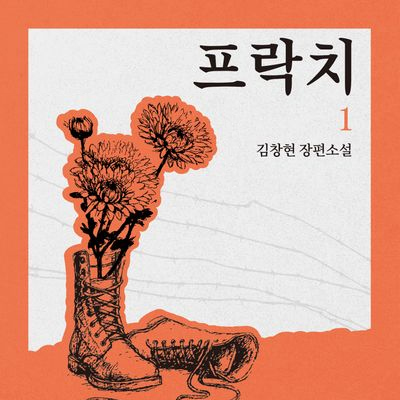
In reality, there will be other Soon-ohs following Ki-seok, the protagonist of political maneuvering, but there will also be Jun-yeon, who follows Young-soon, who started in night school and ran all the way to the community. We believe in such a future. To Kim Chang-hyun, a now 60-year-old youth who still dreams of a future of love and revolution beyond mere accusations, we offer "a flower blooming in a military boot" like the book's cover, with heartfelt emotion and applause.
Our world is just beginning now.
댓글
( 0 / 500 )
모모짱
10
소설 《프락치》를 단순한 과거사 고발로 읽지 말아야 할 이유가 분명하네요. 폭력에 굴복한 사람이 어떻게 가해자의 논리를 자신의 신념으로 바꾸는지, 그리고 그 상처를 넘어 어떻게 다시 사람답게 살아갈 수 있는지를 함께 보여주는 작품이라는 생각이 듭니다. 특히 “굴복을 설계하는 무리”라는 표현이 오래 남습니다.
( 0 / 500 )
曲筆
9
기석과 순오의 이야기가 무서운 것은 그들이 특별히 악해서가 아니라, 출세와 권력이라는 이름으로 자신의 비겁함을 정당화한다는 데 있는 것 같습니다. 처음에는 강요받은 변절이었을지라도 그것을 신념으로 삼는 순간, 한 사람의 타락은 사회 전체의 폭력이 됩니다. 그래서 이 소설은 과거의 이야기가 아니라 지금도 유효한 경고로 읽힙니다.
( 0 / 500 )
Bio2274
9
우리는 폭력의 시대를 얼마나 제대로 기억하고 있으며, 그 시대의 논리가 오늘 우리 안에 어떤 모습으로 남아 있는가. 고발을 넘어 사랑과 혁명의 미래를 꿈꾸자는 글의 마지막 문장이 깊은 울림을 줍니다. “우리의 세상은 정작 이제부터”라는 말처럼, 기억하는 일도 실천하는 일도 아직 끝나지 않았습니다.
( 0 / 500 )
뽀빠이
9
“혁명은 사랑일진대”라는 문장이 이 글의 핵심처럼 느껴집니다. 투쟁의 역사를 말하면서도 결국 사람을 지키는 사랑과 연대의 힘으로 돌아오는군요. 과거의 동지들을 추억하는 데 머물지 않고, 다음 세대가 자기 삶의 주인이 되는 미래를 이야기한다는 점에서 더욱 뜻깊은 서평입니다.
( 0 / 500 )
moondo
7
《프락치》라는 제목이 처음에는 한 시대의 어두운 얼굴을 떠올리게 하지만, 이 글을 읽고 나니 그 안에 담긴 것은 결국 인간의 존엄과 사랑에 대한 이야기라는 생각이 듭니다. 폭력에 굴복한 사람과 끝까지 신념을 지킨 사람의 대비가 선명할수록, 우리가 어떤 삶을 선택해야 하는지 더 깊이 묻게 됩니다.
( 0 / 500 )
chuljoong
7
두영과 홍식의 희생을 기억하는 일, 영순과 용만처럼 삶의 자리에서 신념을 이어가는 사람들을 만나는 일이 한 작품 안에 함께 있다는 점이 깊이 인상적입니다. 역사는 거창한 구호만으로 이어지는 것이 아니라, 끝내 사람을 포기하지 않는 이들의 삶 속에서 계속된다는 말씀에 공감합니다.
( 0 / 500 )
아들사랑
7
가장 무서운 것은 강요된 변절 자체보다, 그 변절을 나중에는 자신의 신념이라고 믿게 되는 과정인 것 같습니다. 기석의 논리가 순오의 세계관이 되고, 개인의 타락이 사회의 폭력으로 이어지는 모습은 과거의 역사에만 머물지 않습니다. 그래서 이 소설이 던지는 경고가 더욱 묵직하게 다가옵니다.
( 0 / 500 )
이종호
6
“혁명은 사랑일진대”라는 문장이 참 오래 남습니다. 투쟁의 역사를 이야기하면서도 결국 사람을 살리고 서로의 삶을 지켜주는 사랑으로 돌아온다는 점에서, 이 작품은 단순한 시대고발을 넘어서는 것 같습니다.
( 0 / 500 )
윤희
6
“우리의 세상은 정작 이제부터”라는 마지막 문장이 이 글 전체를 관통하는 것 같습니다. 과거의 상처를 잊지 않되 그 기억에만 머물지 않고, 다음 세대가 자기 삶의 주인이 되는 미래를 함께 만들어가자는 뜻으로 읽힙니다. 고발을 넘어 희망을 말하는 서평이라 더욱 뜻깊습니다.
( 0 / 500 )
john89
4
대표님께서 《프락치》를 읽고 써주신 글을 통해, 이 소설이 단순히 과거의 아픔을 고발하는 데 그치지 않고 그 상처를 어떻게 기억하고 어떤 미래로 이어갈 것인가를 묻는 작품이라는 점을 깊이 느꼈습니다. 특히 “혁명은 사랑일진대”라는 말씀에 공감합니다.
( 0 / 500 )
종길아범
3
“우리의 세상은 정작 이제부터”라는 대표님의 마지막 말씀이 오래 남습니다. 과거의 희생을 기억하는 일과 오늘의 현실을 바꾸는 일, 그리고 다음 세대에게 희망을 건네는 일이 결코 따로 떨어져 있지 않다는 생각이 듭니다.
( 0 / 500 )
고고준
2
폭력의 시대를 견뎌온 사람들의 이야기가 결국 서로를 지키는 사랑과 연대의 힘으로 이어진다는 점에서, 이 책을 꼭 읽어보고 싶어집니다.《프락치》를 통해 역사의 상처를 다시 마주하고, 그 상처를 넘어 사랑과 혁명의 미래를 이야기해주신 대표님의 깊은 서평에 감사드립니다.
( 0 / 500 )
최유미
0
민중, 소시민이 거대한 국가 폭력에 앞에서 신념과 신의를 지키기 위해 그들이 잃은 것에 대한 대가로 우리가 얻은 것을 다시 한번 짚어보게 되네요.
( 0 / 500 )
신고내용
신고내용을 선택해주세요
회원비난/비하/욕설글 및 댓글도배성 게시물저작권 침해/불법자료 유출허위사실유포개인정보 유출.사생활 침해무단광고/홍보음란물 및 도박 불법 광고물범죄행위 관련 글불법행위 관련 소개물품 판매 및 사기글악성코드 및 스파이웨어 유포기타 사유 및 운영진 판단


비밀번호를 잊으셨나요?
Sign in with Google
All information provided by us is free of charge and is for the public good.