品

Corea든 Korea든, 품격이 먼저다
Whether Corea or Korea, dignity comes first.
Whether Corea or Korea, dignity comes first.
Now
지금
751 Diaspora
Heritage
유산
Humanity
인문
Mirengsi
未冷尸
Politics
정치
Media
언론
이 글은 품의 '지윤선생'님의 기고 글입니다.

책冊
칼럼
blueSky
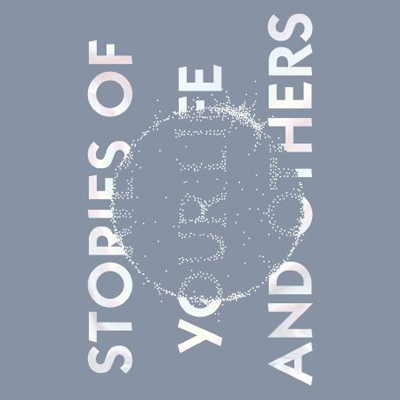
Reading Ted Chiang's short story collection, Stories of Your Life and Others

0
2026. 08. 23
- Ted Chiang's works confront human limitations and absurdities, yet emphasize the pride of humans who choose and love within a grand order.
- Through discussions of 'KALI' technology, he stresses caution in applying technology, distinguishing between efficiency in the public sphere and the importance of preserving human instinct and aesthetic values in the private sphere.
- Exploring the irrationality and uniqueness of human emotions through an 'emotional singularity' where feelings vanish without rational cause, he re-examines the meaning of true relationships.
- Through the language of aliens with a non-linear perception of time, he showcases humanity's noble resolve to live fully in the present despite knowing the future, suggesting the value of integrated thought and creativity unique to humans in the AI era.
- He emphasizes that the path for humans to coexist with AI, rather than being replaced, lies in continuously expanding our unique ability to imagine nothingness within imperfection and create new paradigms.
Finding the Clue to Irreplaceable 'Legitimacy': Remaining Human in the Age of AI
1. Introduction: Affirming Human Pride in the Face of Vast Order and Limitations
In the realm of science fiction, there is a unique author who, without a single full-length novel, sweeps prestigious literary awards with every rare short story or novella he publishes. That author is Ted Chiang. Having majored in computer science and worked as a technical writer in the IT field, he eschews flashy space wars or spectacles. Instead, he meticulously and precisely explores scientific thought experiments to persistently question 'the human condition.' His first collection of short stories, which includes the original novella for the film 〈Arrival〉, 『Stories of Your Life and Others』, employs mathematical contradictions, overwhelming alien languages, artificially modified visual instincts, and even superintelligence that transcends human reason to directly confront the limitations and absurdities of the human species.
However, even in the face of this vast and desperate framework, humans do not succumb to mere fear or reward. Instead of relying on Pascal's Wager (a calculation that suggests believing in God is a no-lose proposition, whether God exists or not) or entrusting themselves to forced beliefs, the pride of humanity in ultimately upholding its reason and integrity underpins the core of this collection.
The central message that permeates the entire collection is clear: the laws and order of the universe surrounding humans sometimes operate coldly and strictly, regardless of human emotions or sense of justice. Yet, even within those unavoidable limitations, it is solely up to humans to choose what to love and what attitude to adopt in facing life.
2. Reflections on Each Episode in the Short Story Collection 『Stories of Your Life and Others』: Rediscovering Instinct, Reason, and Relationships
This collection consists of a total of 8 short and medium-length episodes, including the titular short story 〈Story of Your Life〉. Among the works built upon diverse academic foundations such as mathematics, linguistics, religious studies, and neuroscience, I will select four key episodes that deeply explore humanity beyond technology and reason, and delve into my thoughts and impressions of them.
① <A Study on Lookism: A Documentary>: The Exquisite Crack Between Public Fairness and Private Instinct
This episode is a documentary-style work that deals with the debate over the mandatory implementation of 'Calli,' a hypothetical neurological device that controls human brain nerves to selectively block only the sense of beauty and ugliness felt from others' faces. In the university society within the novel, a heated debate ensues over whether to mandate Calli for students, under the pretext of completely eradicating discrimination and inequality due to appearance.
The human ability to identify others and feel emotions through their appearance or impression is the most primitive 'survival instinct' accumulated over 300,000 years of evolution, and a result of empirical statistics. The cognitive shortcut where the brain recognizes and reacts to another's appearance in just 0.1 seconds is an efficient system developed to avoid danger and quickly distinguish beneficial subjects, and is fundamentally a result of being extremely faithful to human instinct. Therefore, the act of being attracted to appearance and empathizing with it cannot be indiscriminately dismissed as an evil custom to be eradicated.
The problem lies in the fact that modern media and commercial advertising excessively distort and exploit this survival instinct, fostering extreme lookism. The original healthy cognitive mechanism has been contaminated and inflated by media-distorted aesthetic standards, leading to the side effect of excessive appearance bias.
Therefore, the discussion about 'Calli,' a technology to overcome media-created bias, must be clearly divided into public and private domains. In special public situations where objectivity and fairness must be prioritized, such as interviews, trials, and performance evaluations, selectively utilizing 'Calli ON' to block media-contaminated bias can be highly significant, both technologically and socially.
However, if this were to be mandated and enforced across society, extending to the private sphere, the narrative would change completely. For fun, I simulated with AI, "What would happen if Calli were mandated across society?" The results were quite shocking yet clear. It was concluded that with the visual reward circuit blocked, the total amount of romantic passion (eros) between men and women would plummet by more than 90%, and the drama and popular culture industries, which relied on actors' attractiveness and expressions, would instantly collapse. Completely castrating humanity's long-standing survival instincts, aesthetic pleasures that fill life, and narrative immersion in the name of fairness will only create another absurdity.
Therefore, if Kali is technically perfected and can be selectively used in necessary special situations, I would strongly support it. However, if a mandatory society arrives where Kali even controls private instincts, I would gladly choose to become an antisocial person who deviates from those norms.
② <Dividing by Zero>: The Discovery of Emotional Singularity and Uniqueness
Just as René discovered the irrational contradiction of “1=2” without any prior warning in the mathematical logic she had legitimately built up over several years, Karl's emotions also face the cold contradiction of “I no longer love her (René)” at some point, without any rational reason or negative event.
If Karl had been hurt by René or came to hate her for some other reason, that would be a causal relationship with a cause and effect. However, Ted Chiang completely removes rational causality even in the end of emotions. He loved her until yesterday and still cherishes and wants to protect her more than anyone, but the emotion of love itself has vanished without a trace. Just as all existing values lose meaning and evaporate when a number is divided by zero, the switch of emotion is turned off in an instant.
We often think of love as something we maintain through effort, but Ted Chiang shows the limits of human beings, how emotions can instantly disappear to '0' regardless of will or consideration, and furthermore, how futilely the emotion we believed to be love can be shattered. Ultimately, Karl's emotion was not the result of negative resentment, but rather, like a contradiction in the world of mathematics, it was a sudden occurrence beyond human reason, without any warning, at some point. an 'emotional singularity'and a tragic state of nothingness.
However, on the other hand, the process itself, in which Karl was attracted to Renée not by her simple appearance but by her unique deep expression, and began to love her by reading that expression, is highly inspiring. This passage naturally brings to mind 'Kali' from the previous episode.
What if there was a technology that didn't indiscriminately obscure one's appearance like Kali, but instead allowed one to intuitively see the unique characteristics, texture, depth, and charm beneath the surface of a person? Even if such characteristics don't always act positively, a solution that helps read the essence of another beyond standardized aesthetic shells or artificial corrections would be a much more humane and useful tool than the Kali that appears in the novel.
③ Story of Your Life: Spinoza in a Nonlinear View of Time
This short story, the original work for the movie Arrival, tells the story of linguist Louise, who deciphers the language of the 'Heptapods' (seven-legged creatures), alien beings who arrive on Earth one day, in order to communicate with them.
The alien written language in the novel, 'Heptapod B,' is not a linear language that flows according to the order of sounds like human language. Instead of causality where cause and effect follow in sequence, they possess a unique simultaneous worldview that views the beginning and end, past, present, and future all at once, like a complete painting. For humans, who have lived their entire lives trapped in time flowing only from past to future, this way of perceiving, where past and future unfold simultaneously, is an alien realm that is not easily understood. It is easy to misunderstand it as the miraculous foresight or psychic ability of a fortune-teller who can see the future.
However, if we understand this not as mere 'prophecy,' but as the sensation of simultaneously unfolding and viewing 'a complete sheet music' of the entire song of my life in our minds, the resonance of the narrative changes completely.
As Louise deeply internalizes Heptapod B, she fully comprehends the tragic future (the ending of the musical score) where her daughter will be born, grow up, and ultimately die young. However, Louise does not flee from this tragedy or give up on life. For the brilliant, fleeting moments she will share with her beloved child, laughing and crying together, she unhesitatingly walks towards the path of predetermined tragedy.
Like Spinoza's attitude of "even if the world were to end tomorrow, I would plant an apple tree today," it's about loving with all one's heart and creating meaning in every moment, even if one cannot change a grand, predetermined destiny. This is not a weak resignation to tragedy or blind submission, but rather the most sublime determination and proactive breakthrough that humans can demonstrate.
④ <The Evolution of Human Science>: The Potential of Homo Sapiens and the Pride Towards the 'Übermensch'
Director Lee Jeong-mo's book 『Brilliant Extinction』If we briefly recall its contents, humans are merely a dominant species that briefly borrowed the stage after the dinosaurs in the 4.5-billion-year history of Earth. Just as Homo sapiens took over where dinosaurs disappeared, it is the natural providence of evolution that the next generation of masters will eventually inherit the Earth. The obsession that 'only humans should be the eternal masters of the Earth' might perhaps be nothing more than a species-level arrogance or another form of eugenic blind faith.
If we look at it dispassionately, Homo sapiens, in the eyes of the 'New Humanity' (AI that far surpasses human intelligence, or super-intelligent entities combined with technology, such as the 'Meta-humans' in novels)that will emerge after the technological singularity, could be a clearly harmful presence for the survival of Earth. This is because, due to endless selfishness epitomized by the 'tragedy of the commons,' they are destroyers who cannot stop global warming and environmental destruction, driving the entire planet to co-destruction. If the new humanity has acquired high efficiency and even human good ethics as data, there is a sufficient probability that they would judge Homo sapiens as an 'error' that must be eliminated or excluded for the survival of the entire planet.
I am a 'Singularitarian'I have always believed that these new humans would ultimately replace current Homo sapiens. So, at one point, I harbored the self-deprecating assumption that 'Shohei Ohtani would be humanity's last 'Übermensch' (Nietzsche's concept of a 'superhuman who transcends their own limits'). I wondered what meaning there would be in humanity's sweat and tears to reach the top if the physical and intellectual abilities displayed by these new humans far exceeded human limits.
However, upon encountering the following passage by Ted Chiang in the episode of 'The Evolution of Human Science,' I tentatively revised my thinking. Or rather, I was finally able to revise it.
"..Moreover, there is a possibility that human researchers may discover applied methods that metahumans have overlooked. Because of their overwhelming superiority, metahumans tend to be unaware of our human interests. (omitted) This possibility alone is a sufficient reason to continue human research." (p.316)
It was the moment I discovered the justification and the clue for Homo sapiens to proudly 'coexist' rather than simply be replaced by new humans.
Today's artificial intelligence (LLM), which quickly outputs answers, appears to grasp the whole, but in reality, it is merely an extreme linear operator that sequentially adds the next word. In contrast, the human brain, though confined to linear media such as sound or language, harbors within it the seed of a 'Gestalt simultaneity' that instantly grasps context, emotion, and intuition. 'Gestalt simultaneity'(an integrated perception that grasps the whole at once, beyond the sum of its parts). Although humans cannot possibly match AI in terms of calculation speed or processing volume, true integrated thought and intuition, which survey time at a glance like Heptapod B, are (at least for now) a realm that only humans can reach.
'The one person' who completely shakes up the existing world and opens up a new paradigm, like Von Neumann, Einstein, Steve Jobs, and Elon Musk. This discontinuous and massive transformation, which a new humanity armed with data optimization and sequential computation would dare not create, may be a unique domain of Homo sapiens, who imagine nothingness amidst imperfection and intuitively integrate.
If humans persistently expand this unique domain, thereby proving their right to coexist, and continuously teach the new humanity blind spots and values that only humans can see, the possibility of Homo sapiens and the new humanity prospering together will be much higher.
Therefore, even if the probability is only 0.01%, the efforts of Homo sapiens to move towards the Übermensch to overcome their limitations are sufficiently valuable and should be enthusiastically encouraged. Even under the shadow of meta-humans or superintelligence, humans must not stop their proactive challenges to overcome their limitations by directly facing their own lives.
3. Conclusion: A Candle in the Wind, Its Unextinguishable Imagination
To borrow from the perspective of 『Brilliant Extinction』 again, from the long history of Earth, the singularity could be a natural evolutionary step where the dominant species of Earth simply changes from dinosaurs to Homo sapiens, and then to a new humanity. However, just as the 'Jurassic series' continues endlessly because of the regret over the disappearance of the massive and heavy presence of dinosaurs, the fact that humanity's unique heritage of 'self-consciousness' and the 'creativity' based on it might disappear is truly regrettable and unfortunate. Elon Musk's warning that "human consciousness is in danger of being extinguished like a candle in the wind" aligns perfectly with this.
That is why Ted Chiang's works offer sophisticated comfort that embraces this regret. They provide hope that even if meta-humans and superintelligence far surpass humanity, some essence that these new humans will ultimately never possess will remain in humans, and from this, the justification for the continued existence of Homo sapiens.
I believe that last spark is what Yuval Harari called 'the ability to imagine what does not exist,' that is, the creativity to create meaning from nothing. Like the characters in the novel who, even in the face of overwhelming norms and a grand order, refused to succumb to calculations and ultimately found their own subjective meaning, the true value we must protect until the end, even if an era of new humanity arrives, lies in that unquenchable imagination and human pride.
댓글
( 0 / 500 )
origin69
8
AI 시대에 인간의 가치는 계산 속도나 정보량으로 경쟁하는 데 있지 않다는 점을 잘 짚은 글입니다. 테드 창의 작품을 통해 인간의 불완전함이 오히려 창의성과 선택의 근거가 될 수 있다는 해석이 인상적입니다. 결국 AI와 경쟁하기보다 인간만의 사각지대를 끝까지 확장하는 것이 중요한 것 같습니다.
( 0 / 500 )
순정
7
〈네 인생의 이야기〉를 운명에 대한 체념이 아니라 ‘알고도 선택하는 삶’으로 해석한 부분이 특히 와닿습니다. 미래를 바꿀 수 없더라도 그 미래를 향해 어떤 마음으로 걸어갈 것인지는 선택할 수 있다는 것. AI 시대를 살아가는 우리에게도 꽤 중요한 메시지라고 생각합니다.
( 0 / 500 )
문진성
10
결국 이 글이 말하는 ‘인간으로 남는다는 것’은 AI보다 뛰어나겠다는 선언이 아니라, AI가 아무리 발전해도 인간 스스로 의미를 만들고 질문을 멈추지 않는 존재로 남겠다는 다짐처럼 읽힙니다. 계산할 수 없는 것을 사랑하고, 정답이 없는 곳에서 질문을 던지는 능력. 어쩌면 그것이 인간이 끝까지 지켜야 할 마지막 자산일 것 같습니다.
( 0 / 500 )
남해송
8
AI와 인간의 미래를 경쟁이나 대체의 문제로만 바라보지 않고 ‘서로의 사각지대를 보완하는 관계’로 본 점에 공감합니다. 초지능이 인간보다 많은 것을 알게 되더라도 인간이 전혀 다른 질문을 던질 가능성은 남아 있습니다. 공존의 정당성은 우월함이 아니라 차이에서 찾아야 할 것 같습니다.
( 0 / 500 )
Ellie
6
AI가 인간보다 훨씬 빠르고 정확하게 답을 내놓는 시대가 오더라도, 인간이 완전히 무의미해지는 것은 아닐 겁니다. 오히려 AI가 너무 효율적이어서 놓치는 질문과 가치가 인간의 새로운 역할이 될 수 있겠지요. ‘인간만의 사각지대’를 경쟁력이 아니라 공존의 근거로 본 관점이 흥미롭습니다.
( 0 / 500 )
Hangi7
5
칼리 같은 기술이 보여주는 역설은 기술이 인간의 편견을 제거할 수도 있지만 동시에 인간다움의 일부까지 제거할 수도 있다는 점입니다. 무엇을 기술적으로 할 수 있는가보다 무엇을 기술적으로 해도 되는가가 더 중요한 질문일 수 있겠습니다. AI 시대에도 반드시 필요한 문제의식입니다.
( 0 / 500 )
jindong
5
〈네 인생의 이야기〉에 대한 해석이 오래 남습니다. 결말을 알고도 사랑을 선택한다는 것은 운명에 굴복하는 것이 아니라, 결과와 무관하게 삶의 의미를 스스로 선택한다는 뜻일 테니까요. 미래를 예측하는 기술이 발전할수록 오히려 ‘그래서 나는 무엇을 선택할 것인가’가 더 중요해질 것 같습니다.
( 0 / 500 )
김은주
4
〈외모 지상주의에 관한 소고〉를 단순히 외모 차별의 문제로 읽지 않고, 공적 공정성과 사적 욕망의 경계라는 관점에서 풀어낸 점이 재미있습니다. 공정성을 위해 인간의 본능까지 제거하려 한다면 그 역시 또 다른 획일화가 될 수 있겠지요. 기술은 인간을 교정하는 도구보다 인간의 선택을 넓히는 도구여야 한다는 생각이 듭니다.
( 0 / 500 )
大望
4
결국 인간에게 남는 가장 강력한 무기는 지식의 양이나 계산 능력이 아니라 아직 존재하지 않는 것을 상상하는 힘일지도 모르겠습니다. AI가 기존 데이터의 경계를 아무리 넓혀도 인간은 그 바깥에서 새로운 의미를 만들어낼 수 있습니다. 테드 창을 통해 ‘인간의 존엄’이라는 오래된 질문을 AI 시대의 언어로 다시 읽어낸 글이라 생각합니다.
( 0 / 500 )
최유미
3
테드 창의 작품 세계를 잘 알지 못했는데 알고 싶어지는 글이네요.
( 0 / 500 )
동준84
3
아직 『당신 인생의 이야기』를 읽지는 못했지만, 이 글을 보니 단순한 SF 소설집이 아니라 인간의 본능과 사랑, 시간과 운명, 그리고 AI 시대의 인간 존재까지 깊이 생각하게 만드는 작품인 것 같습니다. 특히 〈네 인생의 이야기〉와 AI와 인간의 공존에 대한 부분이 궁금해졌습니다.
( 0 / 500 )
piccolo
2
영화 〈컨택트〉는 재미있게 봤지만 원작 소설은 아직 읽지 못했습니다. 그런데 이렇게 다양한 작품들이 인간의 감정과 이성, 미래와 운명, AI 시대의 인간성까지 다루고 있다는 것을 처음 알았습니다. 글을 읽으니 영화를 다시 보고 원작 소설집도 꼭 읽어봐야겠다는 생각이 듭니다.
( 0 / 500 )
신고내용
신고내용을 선택해주세요
회원비난/비하/욕설글 및 댓글도배성 게시물저작권 침해/불법자료 유출허위사실유포개인정보 유출.사생활 침해무단광고/홍보음란물 및 도박 불법 광고물범죄행위 관련 글불법행위 관련 소개물품 판매 및 사기글악성코드 및 스파이웨어 유포기타 사유 및 운영진 판단


비밀번호를 잊으셨나요?
Sign in with Google
All information provided by us is free of charge and is for the public good.