品

Corea든 Korea든, 품격은 이름보다 먼저다
Whatever the name—Corea or Korea—dignity comes first.
Whatever the name—Corea or Korea—dignity comes first.
Now
지금
751 Diaspora
Heritage
유산
Humanity
인문
Mirengsi
未冷尸
Politics
정치
Media
언론

책冊
칼럼
baba77
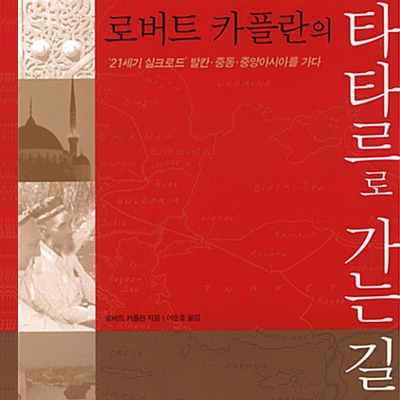
Robert D. Kaplan's Eastward to Tatary

0
2026. 08. 12
- Robert Kaplan is a journalist who gained geopolitical insights and foresaw the post-Cold War surge of nationalism by experiencing geography firsthand through backpacking.
- He captures both the harshness of human nature and the cruelty of power hidden behind beautiful landscapes, suggesting that travel offers new hope and the wisdom of classics.
- Georgia is a geopolitical crossroads where Eastern and Western civilizations meet, possessing a unique Christian tradition, complex ethnic duality, and a history of tragedy.
- Zviad Gamsakhurdia, a poet and nationalist, met a tragic end after wielding nationalist violence upon gaining power, and subsequent leaders also failed to escape Georgia's geopolitical fate and excessive nationalistic energy.
- Georgia is a contradictory space where beautiful scenery and brutal history, poetry and guns, wine and blood coexist, still retaining medieval characteristics and gazing at two worlds without fully transitioning to modernity.
Book Reviews – Focusing on Articles Related to Georgia (Gruziya)
Robert Kaplan, after graduating with an English degree from a regional American university, worked for a small newspaper in Vermont. In the late 1970s, watching the Lebanese Civil War on the nightly news, he dreamed of becoming a foreign correspondent, but no major newspaper would hire him. Eventually, he traveled the Mediterranean with just a backpack, settling in a slum in Athens, where the cost of living was low and it was easy to move to conflict zones like the Middle East and Afghanistan. He barely made a living by selling foreign news articles here and there, and if his manuscripts didn't sell, he would even sell his blood to make ends meet.
He was not someone who traveled only between major cities on business class flights, like a diplomat or a global corporate executive. He traveled overland, frequenting dilapidated buses and train restrooms where the pipes were exposed like intestines. Walking the roads this way, he realized how geography and culture define human destiny, and he learned that geopolitics is a discipline understood not from a desk, but from the soles of one's feet. And he predicted that when the Cold War ended, peace would not come; instead, the nationalism suppressed under the Cold War's oppression would erupt again.
He traveled the Balkans and wrote *Balkan Ghosts*, a book famous for reportedly influencing President Bill Clinton's intervention in the Yugoslav Civil War. The reason I like Kaplan is that while he lyrically describes the landscapes he passes through, he simultaneously reveals the harshness of human nature and the cruelty of power hidden behind those beautiful scenes. It's similar to the style of Admiral Yi Sun-sin, who, after beheading Japanese invaders, calmly recorded the windy sea in his *Nanjung Ilgi* (War Diary).
For Kaplan, travel is not just movement. Travel allows one to see new landscapes, and new landscapes bring new hope. Meeting new people is like seeing new landscapes. There is always a companion on his journeys. It is the voice of the soul that comes from within us, and when that voice is lost, the classics left by people of the past take its place.
I remember wandering aimlessly during my college days, watching a 500-won movie at the French Cultural Center in Samcheong-dong, and then roaming the corridors of the old Joseon Government-General building, which was then used as the National Museum of Korea. A brief conversation I had with a woman I met by chance at an art exhibition, whose name I no longer remember, remains an endless landscape of memories, distorted with the passage of time. People become more anxious as they get older. However, Kaplan's books, which awaken our desire for the Balkans, Central Asia, and the Middle East, places we have not yet visited, give us hope that we can still be young. One such book is 『To the Tartar Steppe』, written after traveling through the Balkans, the Middle East, and Central Asia immediately after the Cold War.
The reason I am so attached to this book is that it awakens my experience of traveling through Central Europe, the Balkans, Turkey, Syria, and Israel for six months immediately after the Cold War when I was young, and allows me to continuously reinterpret that experience. By reinterpreting the landscape immediately after the Cold War, I have come to a deeper understanding of the essence of geopolitics and the technological hegemony war that has revived in the Trump era. 『To the Tartar Steppe』 contains an impressive article about Zviad Gamsakhurdia, the first president of Georgia.
Georgia, the land where East and West meet
Georgia is a country located between the Caucasus Mountains and the Black Sea. It was a crossroads that had to be passed to go from Xi'an, China, along the Silk Road, through northern Persia, to Rome. In ancient times, it was called the Kingdom of Iberia, and it is a country with its own unique alphabet and a long Christian tradition. This country adopted Christianity as its state religion in the early 4th century, even earlier than the Roman Empire.
The Caucasus was originally a place where hundreds of languages and ethnic groups coexisted. Rugged mountain ranges and deep valleys separated them, and each community stubbornly preserved its customs and language. Georgia has mountains with perpetual snow, and on the Black Sea coast, there is a beautiful port city called Batumi. This people has always lived between Byzantium and Persia, Mongolia, the Ottoman Empire, Iran, and Russia. It is, in the true sense of the word, a land where East and West meet.
This duality is also reflected in Georgian names. It's a history where Konstantin and Genghis Khan seem to coexist in the same space. Men have a strong macho culture, enjoying drinking all night, shooting guns, and fighting, while women are religious and resilient. Sitting in a cafe in Tbilisi's Old Town, you can still see Byzantine-style onion-domed churches and encounter people drinking wine while listening to the Russian song 'Million Scarlet Roses.'
Georgia was incorporated into the Russian Empire, then briefly gained independence, and later became a constituent republic of the Soviet Union. The most infamous figure born in this country is Stalin. Although he was Georgian, he brutally suppressed Georgian nationalism more than anyone else, sending countless nationalists to Siberia to die. The anecdote that in his later years, when he visited his hometown, he grieved for the friends he had purged, encapsulates the tragedy of this nation.
Gamsakhurdia: From Poet to Revolutionary
There was a pale intellectual who wrote poetry in English and translated Shakespeare. His name was Zviad Gamsakhurdia. He was a poet and literary critic, an anti-communist nationalist activist, and at the same time, a politician strongly drawn to power. He taught English literature at Tbilisi State University and translated numerous English and American literary works, including Shakespeare, into Georgian. He was imprisoned several times for organizing nationalist movements under the Soviet regime, and continued his independence movement even after his release.
When Gorbachev's perestroika and glasnost began in the 1980s, the Georgian nationalist movement led by Gamsakhurdia spread throughout the Caucasus, including Armenia and Azerbaijan. Ethnic conflict in the region was one of the important factors that accelerated the collapse of the Soviet Union. In that sense, he was a peripheral player in the end of the Cold War. The bloody crackdown by Soviet troops on anti-Soviet protests in Tbilisi in 1989 became a decisive turning point for the Georgian independence movement. At the time, the protests were compounded by tensions surrounding the Abkhazian issue and Georgian sovereignty. When the Soviet Union collapsed, Gamsakhurdia became the first president of independent Georgia with overwhelming support. I still prefer the name 'Gruzia' to 'Georgia'. Not only does it avoid confusion with the US state of Georgia, but it also better captures the historical texture of the country.
The Catastrophe of Nationalism
In the 1980s, Gamsakhurdia was a symbol of morality and resistance. However, after coming to power, he changed rapidly. He promoted Greater Georgian nationalism, excluding minorities and opponents, and his armed security organization began to suppress not only communists but also former nationalist comrades. Eventually, Georgia fell into civil war. The economy collapsed, and gunshots echoed through Tbilisi every night. It was chaos, a tangle of macho culture, armed groups, and criminal organizations.
Russia supported Abkhazian separatist forces to weaken Georgia, resulting in thousands of deaths and hundreds of thousands of refugees. Despite wielding nationalist violence, Gamsakhurdia was an intellectual who always seemed embarrassed in front of the public and couldn't look people in the eye. Perhaps he resembled the characters in the Hamlet he translated. Ousted by a coup, he went into exile in Chechnya and attempted a comeback under the protection of Dzhokhar Dudayev's forces. He even allied himself with forces he had once opposed. However, after all attempts failed, he ended his life with a pistol in 1993.
After the fall of the Georgian Dream, the armed forces that seized power needed legitimacy. So they called in Eduard Shevardnadze, who had been the First Secretary of the Georgian Communist Party during the Soviet era and gained international fame as the Soviet Foreign Minister during the Gorbachev era. However, Shevardnadze consolidated his power by successively eliminating the forces that had brought him to power.
The person who emerged to challenge him was Mikheil Saakashvili. A US-educated lawyer fluent in English, French, and Russian, he led the Rose Revolution in 2003 and came to power, strongly pushing for Westernization and administrative reform. However, his politics also had the unique excessive energy of Georgia. In 2008, he clashed head-on with Russia in the war over South Ossetia, and eventually walked the path of political downfall. Afterward, he served as the governor of Odesa, Ukraine, but was dismissed, and after returning home, he was imprisoned on various charges.
Still in the autumn of the Middle Ages
In a sense, Georgia is still stuck in the autumn of the Middle Ages. On the edge between Western Europe and Russia, it has not fully transitioned to modernity, looking at both worlds simultaneously. The current Georgian regime maintains a certain distance from Russia but does not completely turn its back. Perhaps that is the long geopolitical nature of this country.
I once visited the old town of Tbilisi, where the real model for 'A Million Roses' supposedly lived. Alleyways paved with granite over a thousand years old, a shabby bar below the house where the painter Niko Pirosmani lived, people dancing all night, Georgian wine that was still unripe and astringent like Beaujolais Nouveau. A poet recited Russian poetry, and the women in the bar were not legendary chaste ladies but modern women living freely and wildly. At that moment, I understood why Kaplan so persistently documented Georgia. This country is a place where beautiful scenery and brutal history, poetry and guns, wine and blood coexist. And 'The Road to Tatar' is the most lyrical record of that very contradiction.
댓글
( 0 / 500 )
萬福
10
단순한 서평이 아니라 한 시대를 통과한 사람의 회고록처럼 읽혔습니다. 카플란이라는 작가를 소개하면서도 결국은 여행, 기억, 지정학, 그리고 인간의 운명을 함께 이야기하고 있다는 점이 인상적입니다. 특히 그루지아를 ‘시와 총, 와인과 피가 공존하는 나라’로 정리한 마지막 문장은 오래 남습니다.
( 0 / 500 )
Piter58
8
로버트 카플란을 좋아하는 이유를 이렇게 설득력 있게 설명한 글은 드문 것 같습니다. 책의 내용을 요약하는 데 그치지 않고, 직접 발칸과 중동을 여행했던 경험을 겹쳐 읽어내는 방식이 글의 깊이를 만들어 줍니다. 지정학이 지도 위가 아니라 발바닥으로 이해하는 학문이라는 문장이 특히 마음에 남았습니다.
( 0 / 500 )
origin69
8
감사후르디아의 삶을 통해 민족주의의 빛과 그림자를 함께 보여준 대목이 좋았습니다. 저항의 상징이 권력을 잡은 뒤 어떻게 파국으로 향하는지를 그루지아라는 사례로 설명하니, 오늘날 세계 곳곳의 정치 현실과도 자연스럽게 연결됩니다. 좋은 역사 에세이는 결국 현재를 다시 보게 만든다는 생각이 들었습니다.
( 0 / 500 )
paradise
6
여행은 새로운 풍경을 보게 하고, 새로운 풍경은 새로운 희망을 갖게 한다는 문장이 오래 맴돕니다. 젊은 시절의 방황과 우연한 만남이 시간이 흐를수록 더 선명해진다는 고백도 많은 사람들의 경험과 닿아 있을 것입니다. 카플란의 책을 읽고 싶어지는 동시에, 오래된 여행 노트를 다시 펼쳐보고 싶어졌습니다.
( 0 / 500 )
백남희
6
감사후르디아를 ‘햄릿 같은 인물’로 읽어낸 해석이 흥미로웠습니다. 번역자이자 시인이었던 사람이 권력을 잡은 뒤 비극의 주인공이 되는 과정은 셰익스피어의 정치극을 현실에서 보는 듯합니다. 문학과 정치가 이렇게 자연스럽게 연결될 수 있다는 점이 인상적이었습니다.
( 0 / 500 )
September9
4
삼청동 프랑스문화원과 옛 국립중앙박물관의 기억을 카플란의 여행과 연결한 대목이 특히 좋았습니다. 지정학이라는 거대한 주제도 결국 개인의 기억과 경험 속에서 비로소 살아난다는 것을 보여주는 문장이었습니다. 좋은 글은 책을 소개하면서도 자기 삶을 드러내는데, 이 글이 그렇습니다.
( 0 / 500 )
minsoo
4
카플란의 책을 읽으면 늘 느끼는 것이지만, 그는 국가를 설명하기보다 인간을 설명하는 사람이라는 생각이 듭니다. 이 글도 그루지아의 역사와 지정학을 이야기하면서 결국은 한 지식인의 욕망과 좌절, 그리고 나이 들어 다시 과거를 해석하게 되는 인간의 운명을 이야기하고 있네요.
( 0 / 500 )
Rose
3
조지아를 단순한 ‘러시아 주변국’이 아니라 문명과 제국이 교차하는 공간으로 풀어낸 부분이 특히 좋았습니다. 스탈린, 세바르드나제, 사카슈빌리까지 이어지는 정치사의 흐름도 한 편의 비극처럼 읽혔습니다. 좋은 서평은 책을 소개하는 동시에 독자의 세계를 넓혀 주는데, 이 글이 바로 그런 글이라고 생각합니다.
( 0 / 500 )
픽사45
2
냉전 직후의 여행 경험을 오늘의 기술 패권과 지정학 경쟁으로 다시 읽어낸다는 부분에 깊이 공감했습니다. 젊을 때는 풍경만 보이지만, 시간이 지나면 그 풍경 뒤의 권력과 역사, 자원의 흐름이 보인다는 말처럼 들렸습니다. 카플란이 여전히 읽히는 이유도 바로 그 재해석의 가능성 때문이겠지요.
( 0 / 500 )
신고내용
신고내용을 선택해주세요
회원비난/비하/욕설글 및 댓글도배성 게시물저작권 침해/불법자료 유출허위사실유포개인정보 유출.사생활 침해무단광고/홍보음란물 및 도박 불법 광고물범죄행위 관련 글불법행위 관련 소개물품 판매 및 사기글악성코드 및 스파이웨어 유포기타 사유 및 운영진 판단


비밀번호를 잊으셨나요?
Sign in with Google
All information provided by us is free of charge and is for the public good.