品

Corea든 Korea든, 품격이 먼저다
Whether Corea or Korea, dignity comes first.
Whether Corea or Korea, dignity comes first.
Now
지금
751 Diaspora
Heritage
유산
Humanity
인문
Mirengsi
未冷尸
Politics
정치
Media
언론

책冊
칼럼
hanna_Kim
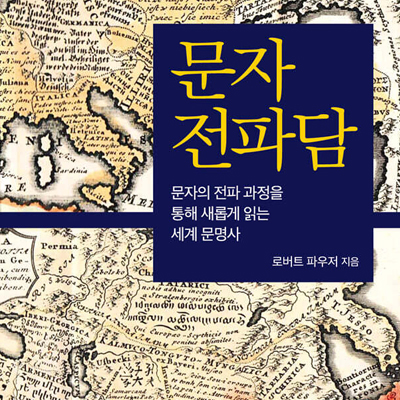
Robert Fouser's "The Story of the Spread of Writing"

0
2026. 07. 09
- Robert J. Fouser's "The Spread of Writing Systems" interprets writing not merely as a recording tool, but as a product of power dynamics, religious dissemination, cultural exchange, and the formation and resistance of national identity.
- The book critiques Western-centric writing hegemony, re-examining the uniqueness and role of non-Western writing systems, and particularly praises Hangeul as a unique creation in world writing history, combining scientific principles with practicality.
- It persuasively demonstrates through various examples that the creation and spread of writing are not just technological advancements, but survival strategies reflecting the needs, resistance, and creativity of specific cultures, as well as symbols of national identity.
- Fouser's perspective reinterprets Hangeul not as an isolated stroke of genius but within a global historical context, enhancing Koreans' cultural pride and emphasizing that writing is a living legacy embodying the history of human connection and division.
A grand narrative of human civilization read through its writing systems
Robert J. Fouser is an American linguist from Michigan who is fluent in multiple languages, including Korean and Japanese, and has been actively involved in academic and cultural pursuits in Korea and Japan for many years. As a former professor in the Department of Korean Language Education at Seoul National University, he left a deep impression on Korean readers through his works written in Korean, such as 《외국어 전파담》 (The Story of Foreign Language Transmission) and 《외국어 학습담》 (The Story of Foreign Language Learning). His new book, 《문자 전파담》 (The Story of Script Transmission), published by Hyehwa1117 in 2026, is an ambitious masterpiece that explores how writing systems have been born, transmitted, transformed, and recreated throughout the long history of human civilization, from cuneiform to modern emojis, emoticons, and even AI encryption systems.
This book is not a history of writing systems. It reads as a civilizational narrative that penetrates the dynamics of power, the spread of religion, cultural exchange, and the formation and resistance of national identity. Particularly impressive is its sharp critique of the Western-centric hegemony of the Latin alphabet, and its re-examination of the uniqueness and role of non-Western writing systems. The very fact that Fouser, a white male scholar, wrote the book entirely in Korean symbolically supports the book's message.
What is writing: A product of conscious learning, not natural transmission
Fouser poses a fundamental question about writing. While humans naturally acquire spoken language from birth, writing is a tool that must be learned through acquired knowledge. Writing is not like a virus that spreads automatically; it is the result of social and political choices and resistance. The book's main argument is that the driving forces behind the spread of writing were the expansion of empires and the dissemination of religion. The ancient Roman Empire unified the Mediterranean world through the Latin alphabet, and the Chinese Empire established Chinese characters as the common language of the East Asian cultural sphere. However, writing was not passively accepted; it was transformed and recreated according to the needs, resistance, and creativity of the cultures that adopted it.
From this perspective, the book begins with Mesopotamian cuneiform (circa 3200 BCE). Developed by the Sumerians for practical administration and record-keeping, this script, carved in wedge shapes on clay tablets, was a symbol of practicality. In contrast, Egyptian hieroglyphs emphasized religious and aesthetic perfection, focusing on expressing sacred authority. The calligraphic tradition of Arabic script reflects the aesthetic and spiritual values of Islamic culture, while in the Sinosphere, writing evolved into a philosophical and administrative tool. Faulser consistently criticizes the tendency of Western academia to view the formation of the Latin alphabet as the 'standard model' for the development of human civilization. He argues that using the presence or absence of writing as a criterion for civilizational superiority is merely a remnant of modern imperialism, and that each script is a product of its culture's environment and needs.
Creation of Independent Scripts: Symbols of National Identity and Resistance
A particularly noteworthy part of the book highlights cases of independent script creation in world history where the creator or exact year is known, which is rare. Around 405 CE, Mesrop Mashtots, an Armenian cleric, created the Armenian alphabet based on the Greek alphabet to disseminate the Bible and protect national identity. Armenians preserved this script despite foreign invasions, and Mashtots is known as the 'Sejong of Armenia.' This demonstrates that script creation was not merely a technological innovation but a strategy for cultural and political survival.
Similar cases can be found in the Western Xia (Tangut) kingdom on China's northwestern frontier. Its first emperor developed a complex, independent script to emphasize its equal independence from the Song dynasty. These scripts served as a resistance against imperial central scripts and a powerful symbol of national identity. Through these examples, Faulser emphasizes that script creation was a tool for 'peripheral' states or minority groups to express their autonomy and creativity. Even under the overwhelming influence of imperial scripts, local cultures continuously voiced themselves through reinterpretation and resistance.
The Global Historical Position of Hangeul: The Quintessence of Scientificity and Practicality
In this global trend, Fouser naturally positions Hangeul. Created under the leadership of King Sejong in 1443 and promulgated in 1446, Hangeul vividly reflects the political and cultural context of the early Joseon Dynasty. Joseon regarded the Ming Dynasty as a model of civilization, but there was a significant gap between Chinese characters and the spoken language of the common people. Sejong sought to bridge this gap but was careful not to directly challenge the authority of Chinese characters. It is highly probable that such political considerations played a role in the background of Hangeul being recorded as 'Sejong's personal project' rather than an official undertaking by the scholars of the Jiphyeonjeon. Chinese characters were designed for the ruling class and official documents, while Hangeul was intended as an auxiliary tool for public education and practical use.
The scientific nature of Hangeul stands out even in the history of world writing systems. The shapes of consonants and vowels are designed to mimic the organs of pronunciation (tongue, lips, throat), and its structure, which combines into syllabic units, is efficient. It goes beyond the 'rebus principle' (expressing sound by borrowing pictures), which is common in ancient scripts, and is the result of conscious and systematic creation. Fouser states that writing in Korean reaffirmed his belief that 'Hangeul is the easiest and most comfortable writing system in the world.' His anecdote of being able to read the Gimpo Airport signs after only a little study on the airplane vividly testifies to Hangeul's ease of learning.
The history of Hangeul's development is a drama of resistance and revival since its creation. The strong opposition from early yangban and Confucian scholars was a product of the cultural superiority complex centered on Chinese characters. However, it gradually took root with the emergence of Hangeul novels and popular literature after the 16th century. Through the Silhak movement, the Gaehwa period in the 19th century, and the nationalist movement in the 20th century, it became established as 'Gukmun' or 'Hangeul,' and especially during the Japanese colonial period, it emerged as a symbol of national identity. After liberation, Hangeul, which settled as an almost exclusive writing system, is a relatively 'young' script with a 600-year history, yet it has been well-preserved conservatively.
Modern Implications and the Author's Confession
Pauser also pays close attention to the modern meaning of Hangeul. He evaluates that the easy writing system greatly contributed to the Korean society's adaptation to the information and digital revolution. He also emphasizes its value as a 'counterpart' to the internalized cultural superiority of the West. He confesses that during the writing process, he converted from an advocate of mixed use of Chinese characters to a complete Hangeul-only advocate. This is not a personal sentiment, but a result of rediscovering Hangeul's unique position in the global writing network.
An interesting anecdote is the 'Ahiru script' (a form similar to Hangeul, an attempt to emphasize the purity of ancient Japan, but evaluated as a forgery) that appeared in Japan during the Edo period. This is an example that shows Hangeul's cultural influence and the complexity of creating a national script. Through this episode, Pauser reveals that the creation of a script is sometimes a product of nationalistic imagination and historical interpretation.
The impact of "The Story of Script Diffusion" on the history of Hangeul's development, and furthermore on Korean cultural history, is significant. First, it opened new horizons of interpretation by placing Hangeul not as an isolated 'genius invention' but within a global historical context (the uniqueness of a peripheral nation, tension with imperial scripts). Second, it reconfirms the scientific and practical nature of Hangeul from an objective and comparative perspective, thereby enhancing Koreans' cultural pride. Third, the history of civilization viewed through script diffusion tells a story of the common people, practicality, and identity, beyond narratives centered on imperialism and power.
The book reads like a knowledge documentary. With rich visual materials and clear descriptions, it is easily accessible to general readers, and despite its 512 pages, it is immersive without being boring. It has garnered great interest, with the author giving a lecture at the recent 2026 Seoul International Book Fair. It is definitely worth reading for anyone interested in script, language, and civilization.
Through this book, we realize once again that Hangeul is not just a common writing system, but a living heritage that embodies the wisdom, history, and future adaptability of our nation. Fouser's perspective sheds new light on Hangeul as a heritage for Koreans, and prompts us to reflect on our identity within the global cultural network. For readers accustomed to Western-centric narratives, it reveals the flip side of Latin script hegemony, and for those interested in non-Western cultures, it offers the richness of diverse writing networks.
The history of script dissemination is ultimately the history of human connection and separation. From ancient clay tablets to digital-age pixels, script has realized power, recorded resistance, and sustained civilization. "The Story of Script Dissemination" vividly portrays how humanity became 'beings who read and write' through this long journey. Fouser's insights will also be a valuable guide for us today as we contemplate a new future for script in the age of AI and digital writing environments.
댓글
( 0 / 500 )
park_SJ
6
문자는 단순한 기록 수단이 아니라 권력과 종교, 문화, 정체성이 응축된 결과물이라는 점이 특히 인상 깊었습니다. 한글을 고립된 발명이 아니라 세계 문명사의 맥락에서 설명한 시각이 신선하고 설득력 있게 다가옵니다.
( 0 / 500 )
lovepoem
8
로버트 파우저가 한국어로 직접 집필하며 한글전용론에 공감하게 되었다는 대목이 가장 기억에 남습니다. 외국인의 시선으로 한글의 장점과 가치를 객관적으로 조명했다는 점에서 더욱 의미 있는 책이라는 생각이 듭니다.
( 0 / 500 )
soomin
6
평소 문자의 역사에는 큰 관심이 없었는데, 이 글을 읽고 책이 무척 궁금해졌습니다. 우리가 매일 사용하는 글자가 수천 년의 문명사와 연결되어 있다는 사실만으로도 읽어볼 가치가 충분한 작품인 것 같습니다.
( 0 / 500 )
김민혁
5
라틴 문자 중심의 서사를 넘어 다양한 문자의 역사와 역할을 균형 있게 바라보려는 시도가 돋보였습니다. 문자를 통해 제국과 저항, 민족 정체성을 함께 읽어낼 수 있다는 점이 이 책의 가장 큰 매력인 것 같습니다.
( 0 / 500 )
Tomson
5
AI 시대를 살아가는 지금, 문자의 과거뿐 아니라 미래까지 생각하게 만드는 책이라는 점이 흥미롭습니다. 언어와 문자, 그리고 한글의 가치에 관심 있는 사람이라면 꼭 한 번 읽어볼 만한 교양서라는 생각이 듭니다.
( 0 / 500 )
종필
4
512쪽이라는 분량이 부담스러울 줄 알았는데, 문자를 따라 인류 문명의 흐름을 풀어내는 방식이라 흥미롭게 읽힐 것 같습니다. 한글을 포함한 다양한 문자의 역사를 함께 이해할 수 있는 좋은 책이라는 생각이 듭니다.
( 0 / 500 )
중섭
4
한글을 단순히 '우수한 문자'라고 말하는 데 그치지 않고, 세계 여러 문자와 비교하며 그 특징과 의미를 설명한 점이 인상적입니다. 감정보다 객관적인 비교를 통해 한글의 가치를 보여준 점이 돋보입니다.
( 0 / 500 )
박나경
2
문자는 인간이 만든 가장 위대한 사회적 약속 가운데 하나라는 사실을 다시 느끼게 됩니다. 권력과 종교, 문화와 기술이 문자와 함께 발전해 왔다는 설명이 매우 흥미롭고 깊이 있게 다가왔습니다.
( 0 / 500 )
mina
1
한글이 일제강점기에는 민족 정체성을 지키는 상징이었고, 오늘날에는 디지털 시대에 가장 경쟁력 있는 문자 가운데 하나라는 점이 인상 깊었습니다. 과거와 현재를 자연스럽게 연결한 좋은 서평입니다.
( 0 / 500 )
신고내용
신고내용을 선택해주세요
회원비난/비하/욕설글 및 댓글도배성 게시물저작권 침해/불법자료 유출허위사실유포개인정보 유출.사생활 침해무단광고/홍보음란물 및 도박 불법 광고물범죄행위 관련 글불법행위 관련 소개물품 판매 및 사기글악성코드 및 스파이웨어 유포기타 사유 및 운영진 판단


비밀번호를 잊으셨나요?
Sign in with Google
All information provided by us is free of charge and is for the public good.