品

Corea든 Korea든, 품격이 먼저다
Whether Corea or Korea, dignity comes first.
Whether Corea or Korea, dignity comes first.
Now
지금
751 Diaspora
Heritage
유산
Humanity
인문
Mirengsi
未冷尸
Politics
정치
Media
언론

책冊
칼럼
jeffrey
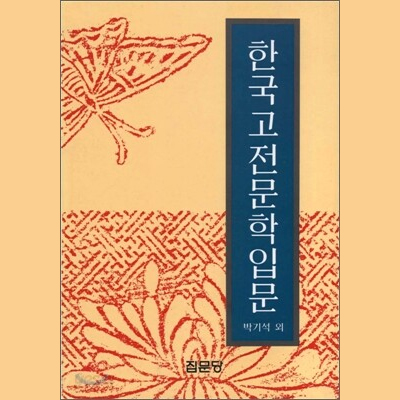
"Introduction to Korean Classical Literature" - Overcoming the Literacy Crisis and Reaffirming Our Roots

0
2026. 07. 04
- Amidst declining literacy and an identity crisis in the digital age, "Introduction to Korean Classical Literature" plays a crucial role in offering deep thought and cultural roots to the younger generation.
- This book systematically guides readers through the complex layers of classical literature, helping a generation accustomed to fragmented thinking develop critical thought and empathy through sustained reading.
- Through classical literature, imbued with the wisdom of the past, readers can gain insight into contemporary life's concerns, re-establish their identity as Koreans, and cultivate the profound thinking skills necessary for the digital age.
- Beyond simply imparting knowledge, it is a powerful educational tool that guides readers to actively reflect on the past, understand the present, and build inner strength for the future.
- It emphasizes that reading classics itself is an act of resisting the superficial trends of the digital age and fostering personal growth, suggesting that this book can be a guide for literacy recovery and cultural self-discovery.
Today's younger generation lives with the phrase "declining literacy." It's an era where smartphone screens dominate most of the day, 15-second short-form videos stimulate emotions, and AI chatbots write sentences for us. The ability to read long texts to the end, analyze complex sentences, and reconstruct them in one's own language is becoming increasingly rare. Reports indicate a decline in Korean students' reading ability in the PISA International Student Assessment, and companies lament, "The ability to read and write reports is deteriorating." In such an era, "Introduction to Korean Classical Literature" (written by Park Ki-seok et al., Jipmoondang, 1997) shines not just as a Korean literature textbook, but as a powerful prescription for restoring literacy and cultural identity.
This book is a guide compiled for students majoring in Korean literature and highly educated individuals. It is 422 pages long and systematically organized into a general overview and specific sections. The general overview covers the concept and scope of Korean classical literature (Kim Jin-young), genres (Park Ki-seok), perspectives (Kim Jong-cheol), and characteristics, establishing a basic framework for approaching classical literature. The specific sections concretely explain major genres such as lyrical literature, narrative literature, dramatic literature, and essays/criticism through representative works. The impressive structure is designed to allow readers to grasp the big picture of Korean classical literature and delve into the depth of the works in a single volume.
Why is this book particularly necessary for today's younger generation? The first reason is that it serves as a practical training ground for building the foundation of literacy. The digital native generation struggles with "reading." They are accustomed to scanning sentences, extracting only keywords, and giving up immediately if something becomes even slightly complex. Korean classical literature is filled with compressed expressions in the style of Chinese characters, historical backgrounds, symbols and metaphors, and multi-layered meanings. "Introduction to Korean Classical Literature" kindly and systematically guides readers through these difficulties.
After clarifying concepts in the general discussion, the book explains the contextual meaning, author's intent, and historical implications of each work in the detailed discussion, allowing readers to naturally learn 'how to read.' For example, in the chapter on lyrical literature, it explores the mystical rhythm of Silla hyangga and the lyricism of Goryeo gayo, while in the chapter on narrative literature, it delves into the egalitarian spirit of 'Hong Gildong Jeon' and the love and resistance in 'Chunhyang Jeon.' Although it may initially feel unfamiliar and challenging, as you turn each page, sentences accumulate in your mind, and you experience the pleasure of connecting logic and emotion. This is an essential process for moving beyond the fragmented, immediate thinking of the SNS era to 'deep, long-term thinking.' Declining literacy is not about being unable to read, but about being unable to deeply understand the world and clearly express one's thoughts. This book serves as a powerful tool to cultivate that ability.
The second reason is its value as an anchor that awakens cultural and historical roots in the digital generation. While K-dramas and K-webtoons are sweeping the world, there is a lack of interest in the traditional literature that serves as their prototype. Many young people consume classic works that deal with the contradictions of feudal society without knowing that they became motifs for modern dramas. 'Introduction to Korean Classical Literature' bridges that gap. By presenting the flow of literature from ancient times through the Goryeo and late Joseon periods within its historical context, it helps readers understand 'who I am as a Korean' historically.
The boundaries between dream and reality in 'Guunmong,' the transience of life in 'Unyeongjeon,' and the reflections and laments on life contained in sijo deeply resonate with young generations suffering from uncertainty and loneliness today. Especially in a society where competition and anxiety are commonplace, the universal human concerns presented in classics—desire and restraint, justice and absurdity, love and separation—come not as mere knowledge but as life wisdom. For a generation experiencing an 'identity crisis' alongside declining literacy, this book is a bridge connecting the past and present, and a compass for asking the fundamental question 'Who am I?' and finding answers.
The third reason is that it simultaneously fosters critical thinking and empathy. Classical literature is by no means an outdated story. It sharply satirizes the contradictions of feudal society, delicately reveals the conflicts within the human mind, and explores the tension between ideals and reality. The detailed sections of this book guide readers to interpret such works in multiple layers. Readers do not just 'read' the works, but practice 'interpreting and criticizing' them. In the dramatic literature section, the structure of plays and theatrical imagination are analyzed, while in the essay and criticism section, the author's thoughts and stylistic characteristics are examined.
This process cultivates not only literacy but also critical thinking, empathy for others' perspectives, and a historical consciousness that reflects on the present through the past. In an era where AI writes and summarizes texts, what truly matters is 'what to read and how to think.' "An Introduction to Korean Classical Literature" is precisely the textbook that teaches that 'how.'
Of course, as a book published in 1997, some perspectives or expressions may have room for improvement from today's reader's point of view. However, its basic framework and insights transcend time. Rather, there are many parts that reaffirm the value of classics in a rapidly changing digital environment. Because it was written to be accessible even to non-specialists, it is useful for university students, working professionals in their 20s and 30s, test-takers, and general readers alike.
It suggests an actual reading method. There's no need to read it thoroughly from beginning to end. After grasping the overall flow with the general overview, start with the genre that interests you. If narrative literature appeals to you, read the chapters related to "Hong Gildong Jeon" or "Chunhyang Jeon" first, and it's also good to look up the original texts (modern Korean translations) together. If you skip over unfamiliar Chinese characters or background knowledge by making notes, and slowly digest one or two genres a month, your literacy will improve, and a natural affection for Korean literature will also develop.
Declining literacy is not an individual problem, but a societal one. When a generation accustomed to short videos and quick information turns away from long texts, the depth of thought and creativity in society inevitably diminishes. 《한국고전문학입문》 (Introduction to Korean Classical Literature) is a book that resists this trend. The moment we read this book, we momentarily escape the digital sea and immerse ourselves in the deep river of classics. In that water, we retrieve the wisdom and emotions of our ancestors, reflect on our current lives, and gain inner strength for the future.
Especially in an era where 'not reading' is taken for granted, the act of reading this book itself is a small act of resistance and a great step towards growth. To the younger generation who feel their literacy has declined, let's open this book without pressure. It may seem unfamiliar and difficult at first, but as page after page accumulates, you will experience the overwhelming emotion of realizing the 'joy of reading,' the 'power of thinking,' and 'my roots.'
Korean classical literature is not a relic of the distant past, but a living tradition that breathes within us. 《한국고전문학입문》 is the key that opens the door to that tradition and a beacon that turns the literacy crisis into an opportunity. I hope you start with this one book and venture into the wider world of classics. Through the process of reading, thinking, feeling, and re-reading, you will be reborn as a true 'literary human being.'
댓글
( 0 / 500 )
82sara
9
요즘 문해력 문제를 단순히 "책을 안 읽어서"라고만 생각했는데, 이 글을 읽고 보니 고전을 읽는 과정 자체가 사고력과 공감력을 키우는 훈련이라는 점에 공감했습니다. 짧은 콘텐츠에 익숙해진 시대일수록 이런 책의 가치가 더 커지는 것 같습니다.
( 0 / 500 )
joon
8
고전은 시험을 위한 암기 과목이라고만 생각했는데, 현대 사회의 불안과 인간의 욕망, 정의와 사랑 같은 문제를 담고 있다는 설명이 인상 깊었습니다. 오래된 작품이 아니라 지금을 이해하는 거울이라는 말이 와닿습니다.
( 0 / 500 )
puma
7
기본적으로 미디어의 빠른 변화와 영상 중심의 컨텐츠로 중심축이 이동했고 코로나 시기를 지나며 학교에서조차 책 읽기 교육의 어려움으로 문제가 더해졌습니다. 요즘 10대, 20대 넓게는 30대까지 문해력이 떨어진 점이 요즘 적잖은 학생들이 극우화 된 이유 중 하나라고 생각합니다. 빨리 제대로된 책 읽기 문화가 자리 잡아야 합니다. 요즘 국회가 독서국가를 선포하고 학교에 책 읽는 문화를 만드려 노력하는데 좋은 결과가 이루어지기 바랍니다.
( 0 / 500 )
Jinhyuk
6
AI가 글을 써주는 시대일수록 중요한 것은 '읽고 생각하는 힘'이라는 지적이 핵심이라고 봅니다. 기술은 대신해 줄 수 있어도 사고력과 통찰력은 결국 스스로 길러야 한다는 사실을 다시 한번 느끼게 됩니다.
( 0 / 500 )
나비야
6
K-콘텐츠를 즐기면서도 그 뿌리가 되는 한국 고전문학에는 무관심했던 것은 아닌지 돌아보게 됩니다. 전통을 제대로 이해해야 현재의 문화도 더 깊이 즐길 수 있다는 점에서 젊은 세대가 한 번쯤 읽어볼 만한 책이라는 생각이 듭니다.
( 0 / 500 )
pianoman
4
문해력 저하는 단순히 독서량의 문제가 아니라 사회 전체의 사유 능력과 연결된다는 마지막 부분이 특히 인상적이었습니다. 긴 글을 읽고 스스로 해석하는 습관이야말로 디지털 시대를 살아가는 가장 강력한 경쟁력이라는 점에 깊이 공감합니다.
( 0 / 500 )
상민
4
짧은 영상과 자극적인 콘텐츠가 일상이 된 시대에 긴 글을 끝까지 읽는 것 자체가 하나의 훈련이라는 말이 공감됩니다. 문해력은 국어 성적이 아니라 삶을 이해하는 힘이라는 사실을 다시 생각하게 만드는 글이었습니다.
( 0 / 500 )
october79
3
고전문학을 과거의 유물로만 여겼는데, 이 글을 보니 인간의 욕망과 사랑, 정의와 갈등은 시대가 달라도 크게 달라지지 않았다는 것을 느꼈습니다. 결국 고전은 가장 오래된 이야기이면서 가장 현재적인 이야기인 것 같습니다.
( 0 / 500 )
미남
3
AI가 발전할수록 오히려 사람에게 필요한 것은 더 깊이 읽고 스스로 판단하는 능력이라는 주장에 동의합니다. 정보를 많이 아는 것보다 제대로 이해하고 해석하는 힘이 앞으로는 더 중요한 경쟁력이 될 것 같습니다.
( 0 / 500 )
luckyboy
2
대학 시절 전공서처럼 느껴졌던 고전문학 입문서가 지금의 디지털 시대에는 오히려 사고력을 회복하는 교재가 될 수 있다는 관점이 신선했습니다. 책을 소개하면서도 왜 지금 읽어야 하는지를 잘 설명한 글이라고 생각합니다.
( 0 / 500 )
최유미
0
한국 고전 문학에 관심을 가져야 겠어요.
( 0 / 500 )
신고내용
신고내용을 선택해주세요
회원비난/비하/욕설글 및 댓글도배성 게시물저작권 침해/불법자료 유출허위사실유포개인정보 유출.사생활 침해무단광고/홍보음란물 및 도박 불법 광고물범죄행위 관련 글불법행위 관련 소개물품 판매 및 사기글악성코드 및 스파이웨어 유포기타 사유 및 운영진 판단


비밀번호를 잊으셨나요?
Sign in with Google
All information provided by us is free of charge and is for the public good.