品

Corea든 Korea든, 품격이 먼저다
Whether Corea or Korea, dignity comes first.
Whether Corea or Korea, dignity comes first.
Now
지금
751 Diaspora
Heritage
유산
Humanity
인문
Mirengsi
未冷尸
Politics
정치
Media
언론
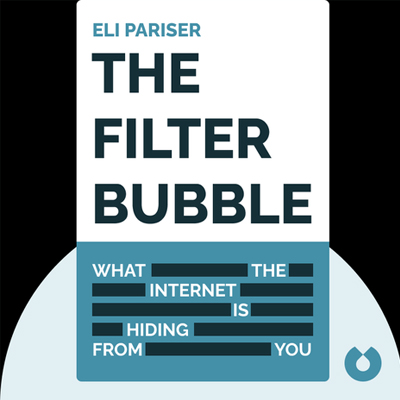
필터 버블이란 인터넷 플랫폼이 이용자의 취향과 행동을 분석하여 개인 맞춤형 정보를 제공하는 과정에서 사용자를 특정 정보 환경 안에 가두는 현상을 의미

책冊
칼럼
hanna_Kim
Eli Pariser's <Filter Bubble>

0
2026. 06. 17
The Invisible Information Prison Created by Algorithms
Today, we live exposed to more information than in any previous era. Just opening a smartphone unleashes an endless stream of news, YouTube videos, social media posts, and search results. On the surface, it seems like we are encountering diverse perspectives amidst a flood of information. However, the exact opposite is happening. We are increasingly exposed only to the information we want to see, and we are trapped in an environment where we cannot see opinions different from our own. This phenomenon was named 'Filter Bubble' by Eli Pariser, an American internet activist and author.
A filter bubble refers to the phenomenon where internet platforms analyze users' preferences and behaviors to provide personalized information, thereby confining users within a specific information environment. Without realizing it, users repeatedly encounter only information that aligns with their preferred opinions, while opposing information or different perspectives gradually become hidden. It's like being trapped inside a soap bubble, unable to properly see the outside world.
In the past, when newspapers and broadcasting dominated information distribution, everyone was exposed to relatively similar news. Conservatives and liberals could discuss the same front-page newspaper article or the same evening news. However, in the era of internet platforms, the situation has completely changed. Even if the same event occurs on the same day, different information is provided to different people. One person's YouTube screen might recommend only videos of a certain political leaning, while another person's screen shows only content of the opposite leaning. Consequently, even though they live in the same society, they experience different realities.
This phenomenon occurs because of the recommendation algorithms used by platform companies. The goal of platforms like Google, YouTube, Facebook, Instagram, and TikTok is to keep users engaged for as long as possible. The longer users stay, the more ads they see, and the company's revenue increases. Therefore, algorithms continuously recommend content that users are likely to enjoy.
For example, let's assume a user clicks on a video with a specific political leaning once. The algorithm identifies this as the user's interest. Subsequently, it starts recommending more videos of a similar nature. If the user watches these, the algorithm learns even more strongly. Eventually, the user's screen becomes filled with similar content. Over time, the user mistakenly believes that the information they are seeing represents the entire reality.
The problem is that filter bubbles go beyond matters of taste and seriously impact democracy and social cohesion. Democracy is a system where citizens with different opinions debate based on common facts. However, within filter bubbles, people come to believe different facts. Regarding the same event, one side considers it an undeniable truth, while the other believes it to be a fabricated lie. A common understanding of reality disappears.
This phenomenon further deepens political polarization. Humans inherently have a confirmation bias, preferring information that aligns with their own beliefs. Algorithms maximize this human psychology because they repeatedly supply only the information users like. As a result, people become increasingly convinced of their own opinions and are unwilling to understand opposing views. In fact, several studies report that the longer people spend on social media, the more political polarization tends to worsen. Content that incites anger, fear, and hatred, in particular, often gets actively spread by algorithms because it increases user engagement. Sensational and extreme claims receive more attention than calm and balanced analyses.
The problem of fake news is also closely linked to filter bubbles. People tend to be less critical of information that aligns with their beliefs. Algorithms exploit this characteristic by prioritizing content that users are likely to prefer. Therefore, even if information is of questionable veracity, it can spread rapidly if it aligns with the user's existing beliefs. Consequently, false information transforms into stronger convictions, and information that refutes it never appears on the user's screen.
The interesting thing is that the filter bubble does not operate coercively. In the past, censorship by authoritarian regimes involved the state directly blocking information. In contrast, modern filter bubbles are created by a combination of user choices and algorithms. People think they are making their own choices, but in reality, they are often choosing within an information environment designed by algorithms. This makes filter bubbles even more powerful and dangerous, because people don't even realize they are trapped.
The most prominent example of a filter bubble in Korean society can be found in the political YouTube ecosystem. YouTube is structured to continuously recommend similar content by analyzing users' viewing history and interests. The problem is that this recommendation system can act as a very powerful propaganda tool in the political sphere. For example, if a user watches a few videos of a certain political leaning, the YouTube algorithm will continue to recommend similar political channels and videos. Over time, the user's screen becomes filled only with the arguments of a specific camp. Opposing views or balanced analyses gradually disappear, and only the political messages they prefer are repeatedly exposed. Users think they are encountering diverse information, but in reality, they are consuming information only within a single political world created by the algorithm.
A bigger problem is that political YouTube channels generate profit by stimulating emotions rather than delivering information. Due to YouTube's revenue structure, where views and watch time are crucial, content that incites anger, fear, and hatred is far more advantageous than calm analysis. This is why extreme expressions such as 'the country is collapsing,' 'the election was rigged,' 'the opposing camp are all traitors,' and 'a dictatorship has begun' repeatedly appear. Emotional mobilization generates more clicks than factual accuracy. In this process, some political YouTubers present unverified claims from the media or academia as facts. Users often accept these without critical examination because the content aligns with their already trusted political views. Within a filter bubble, even false information can be perceived as truth through repeated exposure.
This phenomenon is particularly evident in Korean politics, observed in both progressive and conservative camps. People who only watch YouTube channels from a specific camp lose the opportunity to encounter the arguments of the opposing side. Consequently, they come to perceive the other side not as political competitors to be understood, but as enemies to be eliminated. What is needed in a democratic society is a culture of debate that acknowledges differences of opinion, but filter bubbles and political YouTube often amplify hostility and hatred instead. More concerning is that this information environment also influences actual political behavior. Some users come to believe content repeatedly encountered on YouTube as objective fact, and their judgments on elections, policies, and social issues also depend on such information. Ultimately, there is an increased risk that political decision-making will be swayed by emotional content provided by algorithms rather than by facts and evidence.
Political YouTube itself is not the problem. On the contrary, it also plays a positive role in providing diverse perspectives that traditional media cannot cover. However, when users start to rely on only one channel or one political camp, the filter bubble rapidly intensifies. This does not expand the diversity of information but rather reinforces a specific political worldview.
Today, the filter bubble extends beyond politics to influence the economy, culture, and society as a whole. Investors only encounter investment opinions they believe in, consumers are only recommended products that match their tastes, and citizens repeatedly confirm only the values of the groups they belong to. The development of information technology is paradoxically weakening social diversity.
So, what is the way to escape the filter bubble? The most important thing is to intentionally make an effort to encounter diverse perspectives. One should read media outlets they don't prefer and examine the arguments of people with opposing views. Furthermore, instead of consuming only information recommended by algorithms, one should develop the habit of actively searching and comparing. Platform companies should also design algorithms in a way that considers information diversity and public interest, not just user engagement time.
The filter bubble is not a technological problem. It is a structural problem of modern society created by the combination of human confirmation bias and platform capitalism. We live in an age of information overload, but paradoxically, we may be thinking within an increasingly narrow world. True information freedom comes not from seeing a lot of information, but from the ability to encounter different perspectives. Understanding the filter bubble is the first step to understanding modern democracy and the media environment.
댓글
( 0 / 500 )
Riz_au_curry
9
정말 공감합니다. 요즘은 같은 사건을 두고도 사람들이 전혀 다른 세상에 사는 것처럼 이야기하는 경우가 많습니다. 문제는 상대방이 틀렸다고 생각하기 전에 내가 보고 있는 정보도 편향될 수 있다는 사실을 인정하는 자세인 것 같습니다.
( 0 / 500 )
jonepark
7
가짜뉴스가 왜 그렇게 빠르게 퍼지는지 이해할 수 있는 글입니다. 사람들은 자신이 믿고 싶은 정보를 더 쉽게 받아들이고, 알고리즘은 그것을 계속 강화해 주니 거짓도 진실처럼 느껴질 수밖에 없겠네요.
( 0 / 500 )
windy
6
정치 유튜브를 보다 보면 알고리즘이 얼마나 무서운지 실감합니다. 한두 개 영상 봤을 뿐인데 비슷한 내용만 계속 추천되더군요. 나도 모르게 특정 시각에 갇힐 수 있다는 경고가 매우 중요하다고 생각합니다.
( 0 / 500 )
불꽃
5
필터 버블의 핵심은 검열이 아니라 자발적 고립이라는 점인 것 같습니다. 누가 정보를 막는 것도 아닌데 결국 스스로 편한 정보만 소비하게 되는 구조가 더 위험하다는 지적에 동의합니다.
( 0 / 500 )
candyboy
5
정보가 넘쳐나는 시대에 오히려 사고의 폭은 좁아질 수 있다는 역설이 인상적이네요. 결국 중요한 것은 정보의 양이 아니라 얼마나 다양한 관점을 접하느냐라는 사실을 다시 생각하게 됩니다.
( 0 / 500 )
expressK
5
필터 버블이라는 개념은 알고 있었지만 정치 유튜브와 연결해서 설명하니 훨씬 현실적으로 다가옵니다. 요즘 주변에서도 유튜브만 보고 세상을 판단하는 사람들이 많아진 것 같아 걱정됩니다.
( 0 / 500 )
bigBOY
4
진보든 보수든 모두에게 해당되는 문제라는 점이 인상적입니다. 상대 진영의 주장도 최소한 들어볼 수 있는 환경이 사라진다면 민주주의는 결국 진영 간 전쟁으로 변질될 수밖에 없을 것입니다.
( 0 / 500 )
냥냥이님
4
민주주의는 공통의 사실 위에서 토론해야 한다는 대목이 특히 인상적입니다. 지금 우리 사회는 의견 차이보다 사실 자체를 공유하지 못하는 상황이 점점 심해지는 것 같습니다.
( 0 / 500 )
Robert_j
3
결국 필터 버블을 깨는 가장 좋은 방법은 스스로 불편한 정보도 찾아보는 습관인 것 같습니다. 나와 생각이 다른 사람들의 이야기를 듣는 것이 민주주의 시민의 기본 자세라는 생각이 듭니다.
( 0 / 500 )
소나무
2
알고리즘은 중립적인 기술이라고 생각했는데, 결국 수익을 위해 사람의 감정을 자극하는 방향으로 작동할 수 있다는 점이 무섭네요. 기술 문제를 넘어 사회 문제라는 지적에 공감합니다.
( 0 / 500 )
신고내용
신고내용을 선택해주세요
회원비난/비하/욕설글 및 댓글도배성 게시물저작권 침해/불법자료 유출허위사실유포개인정보 유출.사생활 침해무단광고/홍보음란물 및 도박 불법 광고물범죄행위 관련 글불법행위 관련 소개물품 판매 및 사기글악성코드 및 스파이웨어 유포기타 사유 및 운영진 판단


비밀번호를 잊으셨나요?
Sign in with Google
All information provided by us is free of charge and is for the public good.