品

Corea든 Korea든, 품격이 먼저다
Whether Corea or Korea, dignity comes first.
Whether Corea or Korea, dignity comes first.
Now
지금
751 Diaspora
Heritage
유산
Humanity
인문
Mirengsi
未冷尸
Politics
정치
Media
언론
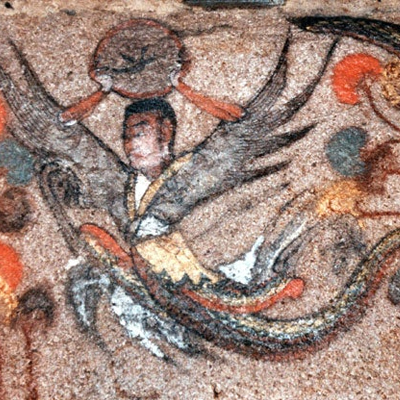
중국 집안(集安)의 고구려 후기 오회분(五盔墳) 4호묘, 인류사는 도굴과 발굴을 분명하게 하지 않는 습성이 있다. 도굴꾼의 서사를 의심하라.

음양陰陽
칼럼
bunny365
Korean Folk Tales: Folk Beliefs

0
2026. 11. 23
7. Drawing a dog and swallowing it
Someone said, “I feel uneasy in my stomach,” and another person advised,
“That’s because all sorts of dirty things have accumulated in your stomach. If you draw a dog and eat it, that dog will eat up all the dirty stuff.”
“Then how do I get rid of that dog?”
“You can draw a tiger and drink it. The tiger will chase the dog away.”
“What about the tiger?”
“If you draw a hunter and eat him, he’ll come out.”
“What about the hunter?”
“Hunters are good at poaching, so if you draw a podo (捕盜: police officer) and eat him, he’ll try to run away and come out.”
“What about the podo?”
“If you write and eat a summons from the gunsu (郡守: county magistrate), he’ll come out very quickly.”
“What about the summons?”
“Since it’s paper, it’ll come out as poop.”
Same day (January 1928) Talk by Kim Yang-ha, Bachelor of Science, Jeongpyeong-eup, Hamnam
8. Gumiho (Nine-Tailed Fox)
A man was urinating by the roadside and looked down to see his urine falling on a white skeleton. Playfully, he asked, “Is it cold?” and the skeleton replied, “It’s cold.” If he asked, “Is it warm?” it replied, “It’s warm.” Frightened, he ran away, and the skeleton chased after him.
Growing more and more scared, he reached a pub and said, “Wait here for a moment. I’ll buy some alcohol and let you drink it,” leaving the skeleton to wait, then he fled through the back door of the pub. After that, the skeleton was not seen again.
Several years later, he passed by the front of that pub again and looked closely. A new pub had appeared right in front of the old one, and a beautiful woman was selling alcohol. He went in and drank, recounting the past: “Several years ago, right on the spot where this house stands, I tricked a strange white skeleton and ran away.”
Suddenly, the woman transformed into a gumiho and said, “Ah, so you were the one. That skeleton was me. I’ve been waiting for you here all this time,” and then she ate the man. One should not urinate on a white skeleton.
Same day (January 1928) Talk by Kim Yang-ha, Bachelor of Science, Jeongpyeong-eup, Hamnam
9. Conceived by sunlight
Once upon a time, the son of a certain minister got married. On the wedding night, in the middle of the night, the bride gave birth to a baby. He personally acted as the midwife, wrapped the baby in cloth, secretly placed it in front of the main gate, and then woke up his household, instructing them, “I hear a baby crying in front of the gate; it’s probably an abandoned child, so go and bring it in quickly.”
Thus, the child was raised by its mother, but he never spoke a word to his wife about it. He later became a minister of the country, like his father, and retired from office at an old age. Still, the events of their wedding night never left his mind, so only then did he call his wife for the first time and ask her the reason.
However, his wife replied, “When I was a maiden, I always urinated in the backyard of our house. The spot where I urinated was always bathed in sunlight. I simply found it amusing and always urinated in the same spot; I never had relations with any other man.”
Not long after that, he died, but the child grew up to become a very distinguished person.
On the same day (January 1928), Mr. Kim Yang-ha, a scholar from Jeongpyeong-eup, Hamnam, spoke.
*The story of 'drawing a dog and eating it' has similar settings in 1830s Britain, Japan, and the following century in the United States. The idea of bringing in a dog when one's stomach is upset, meaning that each solution just written becomes the next problem as solutions increase, is a contradiction in human society. Each prescription focuses on solving the immediate problem at hand, without considering how the entire process, including that prescription, will end, making it a methodological failure.
The ending, where the paper that swallowed the county chief's summons to solve the stomach problem (dog-tiger-hunter-policeman) comes out as feces, places the problem-solving method in authority, but ultimately contains nihilism and evasion, returning to the physical properties of paper. If one thinks deeply about it, it seems like the current Korean political scene, where the root cause is not solved, interpretations of what dirty things are in the stomach are divided, and only time is wasted. To prevent groups pursuing selfish desires from gaining power during that precious time, it is necessary to train oneself to empty the stomach through excretion when it hurts, even now.
If a skeleton is lying by the roadside, it could be a crime scene or a place related to a crime where the remaining skeletons could be collected, and urinating and playing pranks is clearly undesirable. Even after death, the human body retains energy, which is why in the past, descendants tried to find good burial sites for their ancestors. The 『葬書』, attributed to Guo Pu (郭璞), a 4th-century figure, contains the phrase “人受體於父母,本骸得氣,遺體受廕,” which means 'Humans receive their bodies from their parents; if the ancestors' remains acquire qi, their descendants who inherit those bodies will receive their blessings.' This is often referred to as 'Donggi Gam-eung (同氣感應),' a core theory of feng shui.
The problem is that the exact historical period of Guo Pu's life in China is unclear, making it difficult to acknowledge the academic value of both the ancient Chinese geography book 『山海經』, which he annotated, and 『葬書』, a classic of feng shui. This issue hides a very important problem of modern geopolitics, obscured by the simplistic treatment of traditional thought as superstition. In fierce wars of taking and losing, those who seize good positions hide feng shui, utilizing its advantages, while those who lose their positions no longer seek feng shui but turn to the Western God. It's simple, but it's true.
The core of Donggi Gam-eung (同氣感應) is often likened to resonance (the same frequency, one might say) in physics, but empirical research has limitations in that it cannot be proven without living and experiencing it, and there are secondary problems that lead to politics and history. To confirm the claim that past discourse influences the present and future, one needs to verify whether the vitality of the land affects the remains. For example, one could analyze the fortunes of the descendants of someone who urinated on a gumiho's skeleton, and the fortunes of the descendants of someone who collected a skeleton from the vicinity and buried it in a propitious spot.
Myths of conception, linked to sunlight from the sky, eggs, and gold ingots, are widespread globally, but like feng shui, they are not seriously discussed. If we delve deeply, excluding literature that addresses cultural universality, the question narrows down to what humanity truly is and where we come from. However, the biggest reason traditional thought is treated as superstition lies in politics, which, because history is ongoing, prevents us from contemplating this question: what humanity truly is and where we come from. Politics and history, politics and religion, politics is the dog's prescription for everything; one simply needs to escape that Mobius strip.
댓글
( 0 / 500 )
Dominic90
7
세 편의 민담이 단순한 옛날이야기로 끝나지 않고 인간의 어리석음과 사회의 모순, 전통사상의 의미로 확장되는 점이 흥미롭습니다. 특히 개를 삼키고 호랑이와 포수, 경관까지 차례로 불러들이는 이야기는 오늘날의 정치 현실에도 적용해 볼 만한 풍자입니다.
( 0 / 500 )
달빛
5
민담 세 편을 소개하는 데 그치지 않고 각각의 이야기를 현대 정치와 역사, 전통사상의 문제로 연결하신 시각이 흥미롭습니다. 특히 옛사람들의 이야기 속에서 오늘날 우리가 반복하는 사고의 오류를 발견하게 됩니다.
( 0 / 500 )
최동혁86
5
문제를 해결하려고 만든 처방이 오히려 새로운 문제를 낳는다는 대목이 인상적입니다. 우리 사회도 근본적인 원인을 해결하기보다 임시방편과 권위에 의존하다가 문제를 키우는 경우가 많습니다. 결국 필요한 것은 더 많은 처방이 아니라 문제의 본질을 직시하는 태도라는 생각이 듭니다.
( 0 / 500 )
happynam
5
백골에 오줌을 누었다가 수년 뒤 구미호에게 잡아먹힌다는 이야기는 단순한 괴담 이상의 의미가 있어 보입니다. 죽은 자의 흔적을 대하는 인간의 태도와 조상 숭배, 장례문화, 풍수사상이 하나의 이야기 속에 연결되어 있다는 점에서 민속학적으로도 흥미로운 자료입니다.
( 0 / 500 )
대전아재
4
전통사상을 미신이라는 이름으로 쉽게 배척해 온 태도에 대해 다시 생각하게 됩니다. 동기감응과 풍수의 실증 가능성은 별개의 문제겠지만, 그 사상들이 형성된 역사적·문화적 배경까지 외면해서는 안 된다는 말씀에 공감합니다.
( 0 / 500 )
77jaemin
3
햇빛으로 잉태했다는 이야기는 고대인의 세계관을 이해하는 중요한 단서라고 생각합니다. 인간의 탄생을 생물학적 현상만이 아니라 하늘과 자연의 기운으로 설명하려 했던 사고방식이 여러 문화권에서 반복된다는 점도 주목할 만합니다. 전통사상을 무조건 미신으로 치부하기보다 그 안에 담긴 문화적 의미부터 살펴볼 필요가 있습니다.
( 0 / 500 )
moonjoon
1
세 민담을 관통하는 주제는 결국 인간과 자연, 역사와 정치의 관계가 아닐까 합니다. 특히 전통사상을 미신이라는 한마디로 정리해 버리는 태도 역시 또 다른 편견일 수 있습니다. 다만 동기감응이나 풍수의 물리적 실재 여부는 문화적 가치와 별개로 실증적인 검토가 필요하겠지요. 민담을 통해 현대사회의 인식과 권력 구조까지 생각하게 하는 글입니다.
( 0 / 500 )
신고내용
신고내용을 선택해주세요
회원비난/비하/욕설글 및 댓글도배성 게시물저작권 침해/불법자료 유출허위사실유포개인정보 유출.사생활 침해무단광고/홍보음란물 및 도박 불법 광고물범죄행위 관련 글불법행위 관련 소개물품 판매 및 사기글악성코드 및 스파이웨어 유포기타 사유 및 운영진 판단


비밀번호를 잊으셨나요?
Sign in with Google
All information provided by us is free of charge and is for the public good.