品

Corea든 Korea든, 품격이 먼저다
Whether Corea or Korea, dignity comes first.
Whether Corea or Korea, dignity comes first.
Now
지금
751 Diaspora
Heritage
유산
Humanity
인문
Mirengsi
未冷尸
Politics
정치
Media
언론
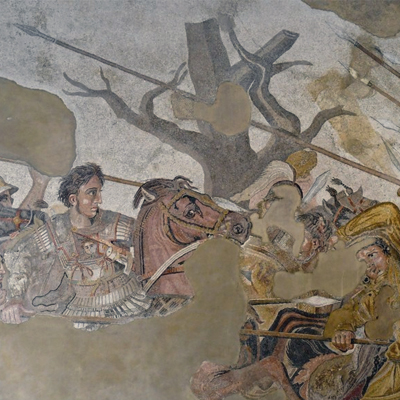
1831년 폼페이에서 발견된 '알렉산드로스 모자이크' 가로 5.83m, 세로 3.13m

음양陰陽
칼럼
bunny365
Chosŏn Sangmal Chŏnjip, Vol. 2, pp. 144, 145, 146

0
2026. 11. 20
144. Heo Saeng-won (Mr. Heo)
A certain gisaeng (courtesan) house always had many customers. One person arrived first and sat down, followed by two more customers. The gisaeng muttered to herself, “Ma Bu-jang (Deputy Ma) and Woo Ju-sa (Clerk Woo) are coming!” Then two more people entered, and she said, “Is that Noh Saeng-won (Mr. Noh) and Choi Seo-bang (Mr. Choi)?”
The person who arrived first quietly observed that among the four customers were Mr. Kim and Mr. Lee, whom he had a slight acquaintance with before. After they all left, he asked, “Didn’t you seem to not know the customers’ surnames earlier?” The gisaeng replied, “Why would I not know their surnames? We’re close enough—those aren’t their real surnames. I made them up based on how they perform at night.”
When asked, “How did they get those surnames?” the gisaeng answered, “Ma Bu-jang is big-bodied and also big there, so I named him Ma-ga (Brother Ma). Noh Saeng-won is small-bodied but big there, so I named him Noh-ga (Brother Noh). Choi Seo-bang goes up and down, so the character for 'Lee' looks like 'Choi,' making him Choi-ga (Brother Choi). And Byeong Ju-sa (Clerk Byeong) goes in and finishes quickly, so 'Woo' sounds like 'Cow,' making him Woo-ga (Brother Woo).”
The person heard this and said, “That sounds plausible.” Then he asked, “So what surname would I be known by?” The gisaeng replied, “You come every day but don’t accomplish anything and just leave, so you’re wasting time (heosongsewol). Shall I call you Heo Saeng-won (Mr. Heo)?”
145. Cheonjamun (Thousand Character Classic) 1
In the Gyeongsang-do dialect, ‘him’ (strength) is pronounced ‘shim,’ and a woman’s menstrual pad is called ‘seodap.’ A certain elementary school teacher was teaching the Thousand Character Classic and, upon reaching the line ‘raegyeupmanbang’ (benefiting all directions), he pronounced the character ‘rae’ as “seodap rae.” When someone asked him why, the teacher replied, “How could I possibly teach it as ‘ssibibul’ (vulgar term for vagina)?”
146. Cheonjamun (Thousand Character Classic) 2
In the old days, when we learned Chinese characters at the seodang (traditional village school), didn't we just mimic the sounds without understanding their meaning? We knew '하늘 天' (heaven) and '따 地' (earth), but we understood '가물 玄' (dark/mysterious) as 'to be dry' and '누르 黃' (yellow) as 'yeast'. Among these, the funniest was when we were learning '律呂調陽' (the harmony of yin and yang), one child read it as '고로 調 볓 陽' and then suddenly, indignantly, exclaimed, “Damn it, if a whale's dick is a hundred nyang, then my dick must be a thousand nyang!”
* To all Heo Saengwon-nims of the Republic of Korea
Did the gisaeng have enough knowledge to select men who paid to come for night work by their Chinese characters, and if so, should that era be considered enlightened?
Maga (馬哥: 哥 is a suffix attached to people's surnames) means he is as strong as a horse, and Noga (盧哥) is the character for donkey (驢) with the 馬 (horse) radical removed, implying that while No Saengwon (盧生員) is small in stature, his penis is large.
Originally, for a man named Iga (李哥), the character for sparrow (崔), which is the lower part of the character for the surname Choi, was used because his movements during sexual intercourse were like a bird, quickly hopping on and off like a sparrow.
Woo Jusa (禹主事) and Byeong Jusa (甁主事) are, in context, the same male customer. It is speculated that Woo-ga (禹哥) was given the surname Woo (禹), which sounds like 'cow' (牛), because he ejaculated immediately upon insertion, and that this was a play on the sound made by a bottle (병).
The story of Heo Saengwon in the Joseon Sangmal Jeonjip is similar to 'Giga Popyeom' in 『Eosu Sinhwa』. 『Eosu Sinhwa』 is a collection of Chinese character stories compiled in 1812 (the 12th year of King Sunjo's reign) by Jang Han-jong (張漢宗, 1768~1815), a court painter of the late Joseon Dynasty, and means 'new stories to chase away sleep'.
The Monghak Hunjang (蒙學訓長) who appears in the story of Cheonjamun is an educator who teaches basic Chinese classics such as Cheonjamun, Dongmongseonseup, Sajasoak, and Myeongsimbogam, which are elementary Chinese textbooks for children. Monghak (蒙學) refers to Mongolian language education, which was one of the four academic instructors (四學訓導) belonging to the Sa-yeokwon (司譯院): Han-hak Hun-do (漢學訓導), Mong-hak Hun-do (蒙學訓導), Wae-hak Hun-do (倭學訓導), and Yeojin-hak Hun-do (女眞學訓導). The Tongmungwan (通文館), a government office responsible for translating and interpreting foreign languages since the Goryeo Dynasty, was renamed Sa-yeokwon and abolished in 1894 (31st year of King Gojong's reign). The history from the renaming of Tongmungwan to Sa-yeokwon until its abolition during King Gojong's reign is ambiguous and requires further research.
A role similar to that of a Monghak teacher can also be found in the ancient Indian Sanskrit Upādhyāya (उपाध्याय). An Upādhyāya is a teacher who instructs disciples in reading scriptures and basic norms, comparable to a mentor or teacher who assists in learning at close quarters today. The role of observing a child's daily life and conduct is also similar to the ancient Greek paidagōgos. On the other hand, the Indian Guru (गुरु) is a teacher who guides a disciple's entire life and practice, possessing greater educational and spiritual authority. The Guru, meaning 'heavy' or 'important,' was traditionally considered to be one who dispels the darkness of a disciple's ignorance and illuminates their path.
The character 賴 (roe) in '賴及萬方 (roegeupmanbang)' from Cheonjamun means 'to rely on' or 'to be indebted to.' The pun in this story goes from '힘입을' (him-ibeul, to be indebted to) → '심입을' (sim-ibeul) → '씹이불' (ssib-ibul). If '힘' (him, strength) is pronounced '심' (sim) in the Gyeongsang-do dialect, '힘입을' becomes '심입을,' and when pronounced further, it sounds similar to '씹이불.' The teacher took that sound as a humorous expression referring to a woman's sanitary pad, and unable to say it in front of the children, he changed it to '서답' (seodap), a dialect word for the same item, and said '서답 뢰' (seodap roe).
If students had only been taught to mouth the words '하늘 천 따지 가물 현 누룩 황' (heaven, earth, dark, yellow), today's generative AI cheating wouldn't even be a thought. As one memorizes the 125 verses of 8 characters each in Cheonjamun, one cannot help but grasp the meaning of who is the master of cosmic creation and the history of Chinese characters.
Why is the history of human migration, where Sanskrit and Indo-European languages share the same roots, not being discussed? Why can Hangeul represent all of Sanskrit, and why did we abandon Chinese characters, which are the phonetic sounds of Hangeul, and only use the phonetic sounds, thus losing the ability to decipher classical Chinese and losing the point of humor? The foolishness of not knowing where to laugh is concealing a history where the roles have been reversed.
댓글
( 0 / 500 )
Aphrodite
6
해학적인 민담 속에 조선 후기 서민들의 언어감각과 생활상이 고스란히 담겨 있네요. 단순한 음담패설로 치부하기보다 당시 사람들이 한자의 음과 뜻을 어떻게 받아들이고 비틀어 웃음으로 만들었는지 살펴보는 재미가 있습니다.
( 0 / 500 )
Hell_boy72
7
천자문을 외우면서도 뜻을 제대로 이해하지 못했던 교육의 한계를 풍자한 대목이 인상적입니다. 글자를 암기하는 것과 문자를 이해하는 것은 전혀 다른 문제라는 점에서 오늘날의 교육 현실에도 시사하는 바가 큽니다.
( 0 / 500 )
문상준
6
옛사람들의 해학은 참으로 거침없으면서도 기발합니다. 한자의 음과 모양, 지역 방언까지 끌어들여 웃음을 만들어낸 것을 보면 우리말과 한문에 대한 민중의 감각이 얼마나 풍부했는지 알 수 있습니다.
( 0 / 500 )
komando
5
단순한 옛날 이야기인 줄 알았는데 읽을수록 여러 가지 생각을 하게 됩니다. 우리가 무심코 지나쳤던 말과 글 속에도 선조들의 지혜와 풍자가 살아 있었네요. 읽다 보니 절로 웃음이 나옵니다. 옛사람들의 해학과 재치가 참으로 대단하네요. 지금 기준으로도 표현이 거침없고 기발해서 흥미롭습니다.
( 0 / 500 )
sahara
4
허생원 이야기는 웃음 뒤에 인간의 욕망과 허영, 그리고 사람을 관찰하는 날카로운 시선이 숨어 있습니다. 옛이야기를 단순히 소개하는 데 그치지 않고 관련 문헌과 역사적 배경까지 연결해 주셔서 더욱 흥미롭게 읽었습니다.
( 0 / 500 )
Lee4
4
이런 이야기가 아직도 전해진다는 게 신기합니다. 무심코 웃고 넘길 이야기 같지만 당시 사람들의 생활과 풍속을 엿볼 수 있어 색다른 재미가 있네요. 한자 몇 글자와 사투리만으로 이렇게 재미있는 이야기를 만들어냈다는 것이 놀랍습니다. 옛날 서당의 풍경과 사람들의 생활상이 눈앞에 그려지는 듯합니다.
( 0 / 500 )
이철민
4
고전은 글자만 외워서는 제대로 읽을 수 없고, 그 시대의 언어와 문화, 사람들의 삶을 함께 이해해야 비로소 본뜻이 드러나는 것 같습니다. 산스크리트와 한자, 한글의 관계까지 확장한 문제 제기도 흥미롭습니다. 잊혀가는 옛 문헌을 발굴하고 오늘의 시각으로 다시 읽게 해주셔서 감사합니다.
( 0 / 500 )
747kor
2
옛이야기 하나에도 당시의 사회적 풍속과 민중의 사고방식, 언어의 변천이 담겨 있다는 사실이 흥미롭습니다. 단순한 야담 소개를 넘어 문헌과 역사적 배경까지 추적하는 작업이어서 더욱 가치가 있습니다.
( 0 / 500 )
sr84
1
조선상말전집은 잊혀가는 옛사람들의 생활과 언어, 해학을 오늘의 독자들에게 되살려 주는 귀중한 기록입니다. 웃음으로 시작하지만 그 속에 담긴 시대상과 문화적 의미를 생각하게 만드는 좋은 연재입니다.
( 0 / 500 )
신고내용
신고내용을 선택해주세요
회원비난/비하/욕설글 및 댓글도배성 게시물저작권 침해/불법자료 유출허위사실유포개인정보 유출.사생활 침해무단광고/홍보음란물 및 도박 불법 광고물범죄행위 관련 글불법행위 관련 소개물품 판매 및 사기글악성코드 및 스파이웨어 유포기타 사유 및 운영진 판단


비밀번호를 잊으셨나요?
Sign in with Google
All information provided by us is free of charge and is for the public good.