品

Corea든 Korea든, 품격이 먼저다
Whether Corea or Korea, dignity comes first.
Whether Corea or Korea, dignity comes first.
Now
지금
751 Diaspora
Heritage
유산
Humanity
인문
Mirengsi
未冷尸
Politics
정치
Media
언론
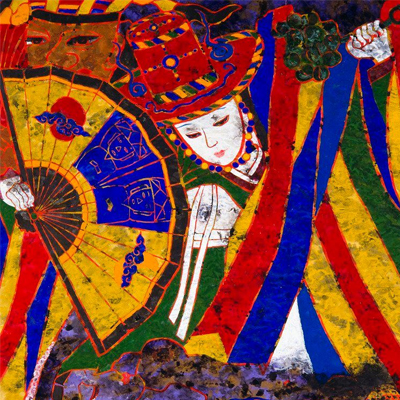
한국 전통의 귀신 이야기가 단순한 미신이 아니라, 식민 지배와 서구 사상의 억압 속에서 잊혔던 민족의 한과 역사를 담고 있다.

음양陰陽
칼럼
bunny365
Korean Folk Tales: Folk Beliefs

0
2026. 11. 05
4. Vengeful Ghost (冤魂鬼)
Once upon a time, the daughter of a commoner (常民, 賤民) secretly fell in love with the son of a yangban (兩班: 士族 or 貴族). However, this was an impossible love, and the daughter eventually fell ill with lovesickness (相思病). When her father learned of his daughter's feelings, he braced himself for death and, in an attempt to save her, confessed his daughter's situation to the head of the yangban family. But the yangban flatly refused.
“My daughter wishes to meet you, even just once. Please, meet her just once,” he pleaded with the yangban's son, but the son did not grant his request. The daughter died. And her soul (魂鬼) became a vengeful spirit (怨靈, usually called 怨魂(冤魂)) that constantly followed the yangban's son. Because of the daughter's vengeful spirit, the yangban's son failed at everything he attempted. Even when he studied diligently, no opportunities arose, and he only failed the civil service exams. Her vengeful spirit never left the son's side. No matter how much he apologized or how many exorcisms he performed, the vengeful spirit would not depart.
The yangban's son had no choice but to embark on a wandering journey to travel through the eight provinces. One day, he climbed Mount Samgak (三角山). On a narrow path atop a cliff, he met a monk. Suddenly, a fog rolled in, making it difficult to see even a short distance, so the two sat down on the path and decided to tell old stories until the fog lifted. First, the yangban's son began a story. Then it was the monk's turn. The monk thought for a while but couldn't come up with any other interesting stories, so he asked if he could tell a story about his own past instead of an old tale. “Of course,” the younger man replied.
Then the monk began to tell the following story: “It’s not a very interesting story, but please listen. One day, I went down to a village to beg for alms. When I entered a farmhouse, there was no one there except a beautiful young woman weaving alone. I found it difficult to suppress the ambition secretly rising within me, so I rushed at her. The woman resisted stubbornly, so I stabbed her breast with a kitchen knife that was nearby. She died on the spot. I, too, did such a violent thing when I was young,” he said, cutting off the story.
The young nobleman, hearing this, became greatly enraged and said, “You scoundrel, how dare a monk like you rape a woman from a good family?” and at the same time, he kicked the monk off the cliff. Immediately, a strange ghostly sound was heard from the sky, and two female ghosts began to fight. This was because the woman murdered by the monk had also become a vengeful spirit and always followed him. Since her revenge had been carried out by an unexpected man in an unexpected place, in return, she began to fight the vengeful spirit that was following the young nobleman, intending to kill it. Thus, a battle between the two vengeful spirits began.
That night, a woman appeared in the young nobleman's dream. The woman was bleeding from her chest. “Thanks to you, I was able to avenge my long-standing grudge. I, your humble servant, also killed the bad woman who was following you to repay your kindness. Now you can rest assured,” she said, and the woman's figure disappeared. It is said that the young man was finally able to escape from the vengeful spirit because of this.
November 1921, told by Mr. Ryu Chun-seop of Wansan-dong, Jeonju-gun, Jeonbuk.
5. The Only Son of Nine Generations and Two Maidens
Once upon a time, in a rural village, there lived a boy who was the ninth-generation only son. His family had been plagued by the misfortune of being eaten by tigers for generations; his grandfather and all his ancestors before him had been devoured by tigers at the same hour, on the same day, in the same month, when they were all 13 years old. This is how his family line had continued with only one son per generation. When his fortune was told by a diviner, it was revealed that he, too, was destined to be eaten by a tiger, and if he stayed at home, he would die at 13. Initially, his family didn't want to send him away, but since every fortune teller said the same thing, they reluctantly sent him on a journey of wandering.
He wandered in all directions, and by the time he arrived in Gyeongseong, he was already 13 years old. There, he met a fortune teller. At that time, he only had one hundred nyang in his possession, and he invested half of it to have his fortune told. The fortune teller was initially very surprised to see his fortune, but after a moment of thought, he said, “There is a household in Gyeongseong called Kim Jeongseung’s, and there is a highly esteemed daughter there. If you hide in her room on a certain month and day, at the exact time you are destined to be eaten by a tiger, you can survive, but there is no other way.”
So he went and loitered in front of Kim Jeongseung's house, but there was no easy way to enter the residence of a high official. Coincidentally, there was a thatched hut in front of the house where an old woman lived alone. He gave the old woman the money he had, gained her favor, and was able to stay at her house for a while. During that time, he confided his fate to the old woman and asked for her help. The old woman was the aunt of Kim Jeongseung's daughter (or, according to some, a hereditary servant). After her husband died, she fell into financial hardship and committed a misdeed, which led to her being unable to stay in Kim Jeongseung's house, so she built a thatched cottage in front of their gate and lived there.
On the day the old woman knew the boy would be eaten by a tiger, she prepared a lavish dinner and drinks for the gatekeepers guarding the twelve gates of Kim Jeong-seung's residence. As a result, all the gatekeepers became drunk, and the old woman cleverly hid the boy under her skirt, managing to take him deep into the inner chambers of the Kim Jeong-seung family. She then calmly entered Kim Jeong-seung's daughter's room and hid the boy behind a folding screen. After that, she put down the food she had brought and said, “Tonight happens to be the anniversary of your (daughter's) deceased uncle, so I've prepared some food and brought it for you to eat.” The old woman then placed the food behind the folding screen and immediately left.
After some time, when Kim Jeong-seung's daughter opened the folding screen to eat the delicious food, a strange boy appeared from behind it. The daughter thought he was a ghost and began reciting passages from the I Ching to ward off evil spirits. However, the boy did not reveal his true identity, nor did he disappear; he remained clearly human. So the daughter asked, “Who are you? Why have you entered someone else's room?” He told her the whole story without omitting anything. Feeling pity, she hid him in the folding screen (wardrobe).
Just then, the daughter of the neighboring Lee Jeong-seung family came to visit. After the two talked and played for a while, Kim Jeong-seung's daughter said, “If a person in such and such a situation appeared, what would you do with him, young lady?” Lee Jeong-seung's daughter replied, “Of course, I would help him.” At that, Kim Jeong-seung's daughter opened the folding screen, pointed to the boy who appeared, and said, “This is exactly that person.” Lee Jeong-seung's daughter was surprised, but having made a promise, she had no choice. The two young ladies hid the boy in the wardrobe and waited for the time the tiger was expected to arrive.
At that hour, indeed, a tiger forcibly broke through the twelve gates and entered Kim Jeong-seung's residence. The tiger lay down at the foot of the stairs to Kim Jeong-seung's daughter's room and urged, "Please bring out the boy you are hiding." The two daughters, with solemn faces, quietly opened their mouths and rebuked, "You are truly rude. Not only have you entered this deep part of our home, but eating people is an unthinkable act." The tiger then pleaded, "I have already eaten 99 readers, and if I eat this boy tonight, I can ascend to heaven (or become human), so please help me." However, the daughters did not listen and began to recite the I Ching. The tiger roared, but soon, as the first rooster crowed, it shed tears and left.
When they opened the door, the boy had already fainted, so the two daughters prepared a warm drink for him, and barely revived him. When he told them how the tiger had disappeared, the boy bowed a hundred times. The girls asked the boy to compose a poem. The poem surprised the daughters, and seeing him as an extraordinary boy, they said, "Tomorrow is the day of the civil service examination. And those two examiners are our father. The title of the examination is such and such, so submit this poem," and they showed him a poem they had composed, which he immediately memorized.
Early the next morning, he left Kim Jeong-seung's house, prepared at the old woman's house, and immediately headed to the civil service examination hall. The exam topic was, of course, as he had been taught the night before. He wrote down the poem he had learned in one go and submitted it to the examiner sitting to his left. Needless to say, he was first place. The examiner who received it was Kim Jeong-seung. Kim Jeong-seung was very impressed by the boy's poem and tucked it under his knee. Lee Jeong-seung, the examiner sitting to his right, was also moved by the poem and secretly decided to make the author of this poem his daughter's son-in-law. The boy passed the exam with the highest score and received three cups of wine.
Kim Jeong-seung proposed a marriage to him. At the same time, Lee Jeong-seung also made the same request, but he hesitated. However, he soon learned about the incident that night, and considering it fate, both Kim Jeong-seung and Lee Jeong-seung, after consultation, decided to marry their two daughters to him at once. This was because it was their two daughters who saved his life. A grand wedding banquet was held. The young man took his two wives and returned to his hometown, where he lived happily, showing filial piety to his mother. And it is said that their family enjoyed prosperity for a hundred generations and a thousand descendants.
June 2, 1927, Gyeongnam Gimhae-gun Jinyeong, Kim Young-joo's story
6. Amitabha Buddha ten times ten thousand recitations
There was once a great merchant who traveled to and from China. He had initially amassed a fortune, but this time he suffered a great loss. With his remaining money, he returned to Joseon and, hearing of a famous fortune-teller in Pyeongyang, sought him out. “What kind of business should I do to make a lot of money?” he asked. The fortune-teller replied, “First, pay me three thousand nyang for the divination.” He listened and paid the three thousand nyang as instructed. After a while, he was told to “pay three thousand nyang” again, and he paid it. After some time, he was told he had to pay three thousand nyang once more, and he did as instructed. Then, this time, he was told to “come back in three days.” So, he returned three days later, and the fortune-teller handed him a large paper talisman on a large sheet of paper, instructing him, “Do not open this now. Go to the foot of Gyeryongsan in Chungcheong-do, gather as many people as possible, hold a grand banquet, and then display this to the visitors. And tell them, ‘This is what I earned on my recent trip to China.’” The merchant spent all his remaining money to host a grand banquet. Tens of thousands of people gathered, and after the banquet, he took out the paper talisman in front of the crowd and said, “This is what I earned. Please look at this, everyone.” The gathered people thought, ‘Did he bring some kind of certificate?’ and examined the paper talismans one by one, but they were all blank. Even after unfolding the last one, it was still just blank paper. When he opened the last small piece of paper, it only had the four characters ‘Amitābha’ written on it. The people became furious and said, “You rude fellow, how dare you mock us! Punish this man!” People began to kick him, mocking him with “Amitābha.” He was beaten by tens of thousands of people and fainted.
Barely regaining consciousness and opening my eyes, I saw countless stars shining in the blue sky. Suddenly, an old monk appeared and asked, “What happened, and who are you?” He then recounted everything from being swindled by a fortune teller. The old man said, “Then you are the savior of my life. I am the spirit of Gyeryongsan, and I incurred the wrath of the Jade Emperor for my misdeeds. This morning, I was summoned to heaven. The Emperor said that if the sound of 'Amitabha' is heard a hundred thousand times from below Gyeryongsan by the end of today, my sins would be forgiven; otherwise, I would be executed. I had resigned myself to death. But suddenly, the sound of Amitabha continuously echoed from the mountain, so I have just been forgiven and am now returning. You said you failed in business and were ashamed to face your financier. In that case, I will give you this,” he said, pulling out a golden calf. When he led the golden calf back to the financier's house, the gatekeeper, saying, “Is this an Amitabha calf?” tried to kick him but was startled to see the golden calf. The financier bought the golden calf and was overjoyed, saying, “This is worth dozens of times the amount I lent.” He, too, became very wealthy from it.
January 1928, Hamnam Jeongpyeong-eup, Scholar Kim Yang-ha's account
*It is said that if you kill a person, their vengeful spirit will cling to the murderer. There's a story about someone who could see ghosts, who wondered about the spirits trailing behind a passerby, only to later discover that person was a serial killer. To scientifically prove the kinds of stories we've forgotten, various academic fields would need to come together, but that would expose the 'Memories of Murder' that Western scholarship and philosophy have compiled. This is because colonial imperialism was the wailing of ghosts. In the wars, politics, and culture mobilized in the past to achieve this, our public was merely a tool, so we had to side not with the ghosts, but with the murderous devils.
Therefore, South Korea is currently at the peak of a confrontation between old and new. Eastern classics and Western ideologies are clashing. Even ghosts had forgotten the history of Western ghosts and traditional ghosts fighting, but why has a time of great spiritual transformation arrived now? There may be a greater cosmic principle at play, but there is no movement in the political sphere to uncover all of it. The time will come when their brilliant hypocrisy will lose its effect without a trace, like autumn leaves falling, so until then, readers, as citizens, must restore their spirituality. If we are not awake, we cannot see problems clearly or make proper judgments, and thus cannot see a good outcome.
There are also questions. If the wisdom of our ancestors had judged good and evil so well as to even resolve the grievances of spirits, why did Koreans have to put an end to thousands of years of history and become a colonized people? We have never calculated this in reality. Over the past bleak hundred years, assimilated into the logic of colonial rule, our ability to see ghosts with the naked eye and our five senses to detect them have atrophied. Many people have died knowing and died not knowing, becoming ghosts wandering the nine heavens, and have come to this Korean Peninsula to look down.
History is the study of the past of the dead, and thus also serves as a kind of exorcist. Their grievances have reached the heavens, so we cannot present a comfortable and easy history; instead, we convey a history of injustice through ghosts. Western scholarship has never escaped the logic of propaganda that justified human slaughter, so this kind of story is taboo for both imperial Japan and the West.
Therefore, the traditional Korean view of life and death was treated as a lowly and illogical superstition. In a country where ghosts were politically despised, Western religions and scholarship, logically systematized, took their place. But what to do? Even if they are invisible to human eyes, even if they turn into just a handful of ashes, the principle remains unchanged.
The existence of merchants (good people) who went to China (支那) for business was forgotten, and the fact that the noble money lenders (錢主) who funded them were annihilated does not disappear. What exactly is China (支那), where is it, when was this term used, and who coined it? Our ancestors are silently looking down, but it is questionable whether history can be restored without offering ancestral rites or sacrificial rice.
댓글
( 0 / 500 )
Oxford
5
세 편의 민담에는 원혼의 한과 인과응보, 인간의 운명을 넘어서는 초월적 존재에 대한 옛사람들의 믿음이 담겨 있습니다. 특히 억울하게 죽은 사람의 원한은 결코 사라지지 않는다는 생각에서 전통 사회의 정의관과 생사관을 엿볼 수 있습니다.
( 0 / 500 )
想像
8
민담을 단순한 옛날이야기로 소개하는 데 그치지 않고, 원혼과 억울한 죽음이라는 소재를 통해 우리 역사의 망각과 식민지 경험까지 연결한 문제의식이 인상적입니다. 전통문화 속에 묻힌 민중의 기억을 다시 살펴보는 계기가 됩니다.
( 0 / 500 )
민성H
5
흥미로운 것은 귀신이 단순히 공포의 대상이 아니라 선악을 판단하고 억울한 사람의 원수를 갚아주는 존재로 등장한다는 점입니다. 당시 민중이 현실에서 실현하지 못한 정의를 초월적 세계에서라도 구현하고자 했던 마음이 느껴집니다.
( 0 / 500 )
김영헌
5
서양의 근대적 학문과 종교가 유입되는 과정에서 우리 고유의 정신문화가 어떻게 평가절하되고 주변화되었는지 되짚어볼 필요가 있습니다. 다만 전통의 가치를 회복하는 일도 맹목적인 신앙이 아니라 역사적 검증과 열린 성찰을 통해 이루어져야 할 것입니다.
( 0 / 500 )
marina
4
귀신 이야기를 미신이라는 한마디로 밀어낼 것이 아니라, 그 속에 담긴 역사적 기억과 민중의 정서를 읽어야 합니다. 억울하게 죽은 사람을 기억하고 원한을 풀어주려는 마음 역시 우리 전통문화의 중요한 정신적 유산입니다. 과거의 이야기를 복원하는 일은 잊힌 사람들의 목소리를 되살리는 일이기도 합니다.
( 0 / 500 )
sara
4
결국 귀신 이야기에서 우리가 읽어야 할 것은 귀신의 존재 여부보다 억울한 죽음을 외면하지 않으려는 인간의 마음이라고 생각합니다. 전통 민속을 복원하는 일이 과거에 대한 향수에 머물지 않고 오늘날 우리 사회의 정의와 양심을 돌아보는 작업으로 이어지기를 바랍니다.
( 0 / 500 )
표영식
4
원혼이라는 소재를 통해 식민지 역사와 국가폭력, 집단적 망각을 이야기한 발상이 흥미롭습니다. 죽은 자의 억울함을 풀어주는 일이 곧 역사의 퇴마라는 표현도 오래 생각하게 합니다. 기억되지 못한 희생자들을 다시 역사 속으로 불러내는 작업이 필요합니다.
( 0 / 500 )
guidance73
3
아미타불 십십만 편 이야기는 우연과 기적을 빌려 인간의 욕심과 어리석음, 종교적 신앙의 의미를 풍자합니다. 민담은 단순한 옛날이야기가 아니라 당시 민중의 생활상과 세계관, 웃음과 해학까지 보존한 소중한 문화유산입니다.
( 0 / 500 )
파스텔
1
귀신 이야기를 미신으로 치부하기 전에 그 시대 사람들이 무엇을 두려워하고 무엇을 정의롭다고 여겼는지부터 살펴봐야 한다는 생각에 공감합니다. 역사는 승자의 기록만이 아니라 억울하게 사라진 사람들의 기억까지 복원해야 비로소 완성됩니다.
( 0 / 500 )
신고내용
신고내용을 선택해주세요
회원비난/비하/욕설글 및 댓글도배성 게시물저작권 침해/불법자료 유출허위사실유포개인정보 유출.사생활 침해무단광고/홍보음란물 및 도박 불법 광고물범죄행위 관련 글불법행위 관련 소개물품 판매 및 사기글악성코드 및 스파이웨어 유포기타 사유 및 운영진 판단


비밀번호를 잊으셨나요?
Sign in with Google
All information provided by us is free of charge and is for the public good.