品

Corea든 Korea든, 품격은 이름보다 먼저다
Whatever the name—Corea or Korea—dignity comes first.
Whatever the name—Corea or Korea—dignity comes first.
Now
지금
751 Diaspora
Heritage
유산
Humanity
인문
Mirengsi
未冷尸
Politics
정치
Media
언론

음양陰陽
칼럼
bunny365
Korean Folk Tales: Myths and Legends

0
2026. 07. 29
- The legends of Daegu, Gongju, and Songnimsa are more than just local folklore; they reflect the national identity and historical consciousness during the Japanese colonial period.
- Son Jin-tae was a folklorist who strove to preserve national culture during the Japanese colonial period, but after liberation, he was trapped by a pro-Japanese narrative, distorting his achievements and true intentions.
- Symbols within the legends, such as the crowing of a rooster and the broken Songnimsa pagoda, are not mere stories but hold deep meanings, hinting at past free energy systems or the beginning and end of the nation.
- These legends serve as a warning that history can be manipulated by powerful nations, much like the distortion of weights and measures, while also emphasizing the importance of insight to discern the truth.
- Ultimately, these legends can be interpreted as Son Jin-tae's attempt to see through the nation's suppressed history and distorted truths, and as a message passed down to future generations.
42. Legends of Daegu and Gongju
Daegu was originally an island, but as the water receded, the land collapsed, and a plain was formed where present-day Daegu was built. It is said that on Bipasan Mountain, which is now Daegu's Apsan Mountain, an iron chain used to moor ships when Daegu was an island is still hanging around a large rock.
Also, it is said that Dalseongsan Mountain, located within the current Dalseong Park, originally floated from China (meaning it levitated). It would have been good if it had come all the way to the front of Dongjae (in the past, there were two study rooms, one in the east and one in the west). However, a woman who was doing laundry at the time saw the mountain floating and said, “Look, look, the mountain is coming.” The mountain spirit became angry, thinking she was a talkative woman, and blocked her, making the mountain settle down right there (if you listen to this story and look closely at Dalseongsan Mountain, you will find many parts that seem to have been artificially created).
It is also said that Gongju in Chungcheongnam-do is a boat-shaped land, and according to a geomancer, a mast-like structure was erected from a large tree in the center to improve its geographical advantage. It is said that this pillar still remains.
March 1930, Daegu-bu Nam-dong 86, Mr. Lee Jae-yang's account
*It is unclear what the story of Daegu's land floating from China is an analogy for, but since the place names that appear can be found in present-day Daegu, it is plausible to assume that Daegu may have actually come from China. Dongjae and Seojae are names that can be found in companies and schools in Daegu, and Apsan and Bipasan also exist, but the Chinese characters are not used, so they are subtly different despite being similar. We cannot find the waterways from the island days when the surroundings were surrounded by the sea, nor can we find a peak on Bipasan where an iron chain could be hung. This enigmatic legend can be seen as more interesting than any other legend introduced so far to Koreans who cannot escape their territorial complex. This could become a territorial sovereignty issue that the New Right does not want to attract public attention, so this controversy will become more serious as it escalates.
Before we consider the meaning of this legend, let's remember that the author, Son Jin-tae (孫晋泰, 1900~?), is one of the intellectuals who was abducted to North Korea during the Korean War and whose fate is unknown. Son Jin-tae, caught in the framework of 'intellectual-abducted or kidnapped to North Korea or defected to North Korea-pro-Japanese-purged,' is a symbolic figure who disappeared into the backwaters of history, swept away by the mechanism that Korean academia and literary circles have used to cook, boil, and exploit, concealing much history until now. The damage is immense, as our inherent hatred has transformed him, a promising folklorist and historian, into a cursed pro-Japanese collaborator and traitor, without even knowing who, when, or how he was killed, or if he was even given a grave, instead overlaying stereotypes and branding him, rather than understanding history as it is.
Son Jin-tae collected folk tales and legends from all over the country starting in 1921, and printed this book in December 1930. The date of recording this legend is March of the same year, before printing. Now, if a 21-year-old youth, living in a country that has fallen, took action believing that the way to survive lies in preserving the nation's traditional culture, what kind of person should we evaluate that youth to be? It is time for us to ask ourselves. In modern Korea, we cannot even imagine, let alone have the conditions to assume, such a youth. However, the view that condemns Son Jin-tae as a pro-Japanese collaborator is a method, policy, and systemic means of historical distortion that has continuously plagued us since liberation, leading to a very serious phenomenon of national identity dissociation, and it is the source of harm.
I wondered if Son Jin-tae might have inserted the story of Daegu floating from China, assuming a third party. In an era where the truth could not be spoken, what was the message he wanted to convey to future generations, even through legends? Don't you wonder why someone who told such stories had to be branded as a collaborator?
Daegu, which came from China, is where nationalist noble intellectuals, who were brutally trampled, were massacred. Therefore, they carry a deep-seated resentment and a directionless anger in their genes. In Daegu, where all those who could speak of history were killed, many collaborators from Gyeongbuk, spitting saliva, occupy positions of power in politics, and as time passes, they erode each other, entangled in their political ideologies. The revitalization of Daegu can begin by acknowledging the history of intellectual extermination and the existence of true collaborators.
The story that a large mast-shaped pillar was erected to properly support the pear-shaped land of Gongju makes one imagine an era like a legend, where humanity in the past could freely use electrical energy by utilizing conductors of metal spires erected high on buildings. Even in this era of thought control, where imagination is stifled if something isn't immediately visible, I believe it's not a sin to connect it to the imagination that the Free Energy System, which operated city electricity with copper-containing metal pillars, might have ended with the Carrington Event in 1859, when a solar storm caused disturbances in the Earth's magnetic field. The hypothesis that Nikola Tesla's wireless power transmission technology was taken over by Western capitalists as a means of human control is also a story worth considering.
It may now be meaningless to question whether there was a time when energy was free for humanity. Humans no longer remember such an era, nor do they have the records or passion to research it. The system that runs the world has already been settled by a single line of historical record: Benjamin Franklin's invention of the lightning rod. Humans are beings who avoid complexity and live in simple, sweet antlions and Venus flytraps.
43. Legend of the Hahoe Ryu Clan (河回柳氏) Cemetery
The Ryu clan of Hahoe, Andong-gun, Gyeongsangbuk-do, produced the noble scholar Seoae Yu Seong-ryong (柳成龍, 1542-1607), but before him, the Ryu clan was a poor family. In contrast, the Andong Kim clan of today was very wealthy at that time. There was a woman from the Kim family who married into the Yu family, and she experienced the deaths of both her birth father and her father-in-law at the same time.
Both families visited the burial ground together. The Kim family, being wealthy, hired the best geomancers to find an auspicious spot, but the Ryu family could not afford to do the same. A geomancer from the Kim family, after digging a spot and examining it, said, “If, after the hour of Osi (11 AM to 1:30 PM) tomorrow, no water appears, this will be a very auspicious place, and three generations will surely rise to become prime ministers.”
At that time, the daughter-in-law of the Ryu family, who had returned to her parents' home to mourn her birth father, overheard the conversation from the guest room. In the middle of the night, she secretly found the spot and spent the entire night drawing water and pouring it in. The next day, at Osi, when Kim went to check, water had appeared, so the Kim family abandoned that spot.
The daughter-in-law pleaded with her brother to inherit that spot, and thus her father-in-law was buried there. It is said that thereafter, the Kim family gradually declined, and the Ryu family prospered.
On the same day, Mr. Lee Jae-yang spoke.
*This is a representative legend about the efficacy of geomancy, a story where a married daughter takes over her birth father's burial site for the sake of her own children's prosperity. Is it a common existential value of humanity to wish for the success of one's own children more than for the roots that bore oneself, or is it a unique Korean love for children? I'm not sure. No matter how much time changes, only weapons of mass destruction could overcome the unwavering love of parents for their children. That's why both the Seoae family and the Andong Kim family were almost completely wiped out by the Japanese occupation. No matter how good the benefits of geomancy, there must be principles that precede it. Geomancy without patriotism is a feast for parvenus. The energy of geomancy is invisible, so in this era where people only believe what they can see, deception can exist above geomancy. The belief that confines the etheric body and astral body to the religious realm is an infinite hell without taxation, shackling human functions and abilities. To whom does the future belong?
44. Songnimsa Prayer
About 10 ri (about 1 Japanese ri) from Dodeok-dong, Chilgok-gun, Gyeongsangbuk-do, there are traces of a large temple called Songnimsa. When I visited 5 or 6 years ago, only the main hall (Daeungjeon) and two annex buildings, the monks' quarters (Seungbang), remained, but it seems to have originally been a very large temple. Old foundation stones remain on a plain about 1 ri square, and stone mortars (seokgu) are still present, half-buried. Also, at a place far from the temple site, presumed to be the entrance to the temple (donggu: the mountain gate entrance to the temple), a tall pole (bong) (is this referring to the so-called Jangsaeng: Jangsaeng is the Chinese character for Jangseung) still stands, and some kind of carving is engraved on it.
Today's Daeungjeon (main hall) houses three types of large Buddha statues: the largest golden seated Buddha, three white Buddhas painted with white powder, and various other Buddhist statues, including carved and cast figures, totaling over 50. There is also a pagoda made of slightly earthy-colored tiles. These tiles are often damaged and fall off, but it is said that no one has ever picked up a fallen tile because they disappear as soon as they fall.
A long metal pole stands atop the pagoda, bent from the middle. Local people say that during the Imjin War (referring to Hideyoshi's war), Japanese soldiers, thinking it was gold, tried to break it off, causing it to bend. However, a sudden thunderbolt occurred during the attempt, and fearing divine punishment, they stopped midway, leaving it bent to this day.
However, there is a founding legend about Songnimsa Temple. The site of Songnimsa Temple was considered a very auspicious place according to feng shui, a place where if someone were to build a tomb there, a prime minister would emerge from that family for three generations. A Buddhist monk, learning of this, intended to build a temple there. Another geomancer, knowing this, went to a nobleman and told him that the land was auspicious and advised him to build a tomb there. The nobleman sent people to explore the geography and finally intended to build a tomb, but the monk vehemently refused and was in the process of preparing the temple site. When the nobleman consulted the geomancer about this, the geomancer said, “You must send people to tie up the monk, make him submit to the ground, and beat him until the rooster crows three times.”
The monk, unable to endure the pain of the beating, said after the rooster crowed twice, “With this, all evil spirits in this land have been completely expelled, so please feel free to build your tomb (it is said that evil spirits flee when the rooster crows three times).” When the people returned and reported the story, the geomancer was surprised and immediately took his men back. When they arrived, they saw that the monk had leveled the temple site overnight, completed the temple, and was already chanting prayers with other monks, circling the temple.
This is how Songnimsa Temple was built, and there is a story that in recent times, this temple was completely burned down due to looting by Hwajeok (bandits or mountain robbers). Furthermore, among the stupas (a transliteration of the Sanskrit 'stūpa', an architectural structure enshrining and offering to Buddha's relics), it is said that if one receives the Buddha's (Tathagata, one of the ten epithets for Buddha, a Chinese translation of the Sanskrit 'tathāgata') tooth as a relic, and bows and prays to it, it is very efficacious.
March 1903, Daegu-bu Honmachi Lee Sang-oh-gun's talk
Note: Sometimes, a chicken's crow is made during burial. After digging the grave and placing the coffin, a myeongjeong (a banner recording the deceased's official title and surname, usually written in white on a red background, carried in front of the funeral bier during the funeral and then placed over the coffin and buried with it) with the deceased's name written on it is placed over the coffin. On top of that, five numbered boards (I forgot their name) are placed sequentially side by side. The two middle boards are opened, and facing inward, three times, one shouts, 'Oh! Dalguya! (Ah - chicken!)' after wiping, and then soil is covered to form a burial mound. It doesn't seem like the sound of a chicken crowing 'cock-a-doodle-doo' is made. ―Story by Mr. Lee Sang-oh.
Jin-tae (Son Jin-tae) believes that the story of ghosts, evil spirits, or monsters disappearing or fleeing when the third chicken crows (the chicken crows three times) is a common tale in Joseon's strange legends. The part in this story where the chicken crows three times might be a magical reference to the first, second, and third chicken crows.
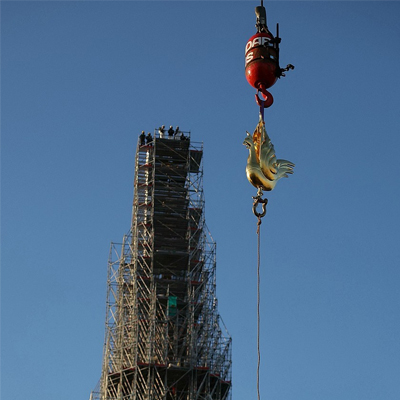
*Among the records from the Japanese colonial period, the existence of this chicken is one of the most significant symbols. Among the many descriptions where it's unclear what the chicken signifies, this chicken story reveals the contrast between the most evil and the most good. The chicken symbolizes an auspicious being that awakens the darkness and announces the dawn, crowing first every day to drive away the night's energy and usher in a new day. Therefore, it seems to be believed that the sound of a chicken's crow has the power to ward off evil spirits and malevolent forces. However, I haven't been able to deeply trace its origins. I still don't know what the chicken on a weathervane or the golden rooster at the top of Notre Dame Cathedral's spire truly symbolizes. I also don't fully understand Peter's denial of Jesus. Whether used in a good sense or enlisted in a bad sense, the chicken signifies a beginning. For some, a beginning will soon mean an end, so the crowing of a chicken at a burial site where a coffin is interred could potentially bestow a divine order necessary for founding a great temple.
Songnimsa Temple was mostly destroyed during the Imjin War, so why did the bent metal spire remain? It is unknown whether there truly was a time when human life was sustained by conductive spires. In 1092, the Goryeo high monk Daegakguksa Uicheon extensively rebuilt Songnimsa Temple, and it is said that it was founded in 544, the 5th year of King Jinheung of Silla, by Myeonggwan. During the Silla period, Idu was used, and that language is related to Sanskrit. Do we know the process and history of how Indian Sanskrit words like stupa and tathagata were transformed into Chinese characters?
The Japanese standard of one ri being ten times that of Joseon was a measure of power at the time. World history, which teaches the unification of weights and measures as a fundamental right of hegemony, does not teach the deception of altering the interpretation of weights and measures. The apex predator conquered the world by interpreting ten times as one-tenth. Will humanity survive?
댓글
( 0 / 500 )
moondo
9
손진태가 전국을 다니며 이런 설화를 채록했다는 사실 자체가 당시 민속학의 중요한 성과라고 생각합니다. 전설의 사실 여부와는 별개로, 당시 사람들이 어떤 세계관을 가지고 살았는지 보여주는 귀중한 기록이라는 점은 높이 평가할 만합니다.
( 0 / 500 )
최동혁
6
송림사의 닭 울음 전설이나 귀신을 물리친다는 믿음은 한국뿐 아니라 여러 문화권에서 새벽과 닭을 '어둠을 끝내는 존재'로 여긴 공통된 상징과도 연결되는 것 같습니다. 이런 비교 연구까지 이어진다면 더욱 풍성한 해석이 가능할 것 같습니다.
( 0 / 500 )
Platon
7
이런 자료를 읽다 보면 조선의 전설은 단순한 옛날이야기가 아니라 당시 사람들의 가치관과 두려움, 희망이 응축된 집단 기억이라는 생각이 듭니다. 잊힌 설화를 다시 소개하는 작업 자체가 의미 있습니다.
( 0 / 500 )
김길규
5
대구가 섬이었다는 이야기, 떠다니는 산, 풍수 명당 같은 전설들이 한데 모여 있는 걸 보니 지역 사람들의 집단 기억과 상상력이 얼마나 풍부했는지 느껴집니다. 설화를 역사적 사실과 동일시하기보다 그 시대의 문화와 인식을 읽는 자료로 접근하면 더욱 흥미로운 것 같습니다.
( 0 / 500 )
김치
5
손진태의 삶과 연구가 한국 학계에서 충분히 조명되지 못했다는 지적에는 공감합니다. 다만 개인의 행적에 대한 평가는 다양한 사료와 연구를 함께 검토해야 할 문제이고, 설화의 내용과 역사적 해석은 구분해서 살펴볼 필요도 있어 보입니다.
( 0 / 500 )
grand_k
4
대구와 공주, 안동, 송림사까지 지역마다 전승된 이야기가 서로 다른 듯하면서도 풍수와 신성한 공간이라는 공통된 주제를 담고 있다는 점이 인상적입니다. 우리 민속이 생각보다 훨씬 체계적인 세계관을 갖고 있었던 것 같습니다.
( 0 / 500 )
Hybridman
3
손진태처럼 전국을 직접 다니며 설화를 기록한 연구자들이 있었기에 오늘날 우리가 이런 이야기를 접할 수 있는 것이겠죠. 자료를 남긴 선배 학자들의 노고는 정치적 평가와 별개로 충분히 재조명받을 가치가 있습니다.
( 0 / 500 )
Jenny
2
전설은 과학으로 증명하는 대상이라기보다 당시 사람들이 세상을 이해했던 방식과 상징을 담은 문화유산이라고 생각합니다. 그런 관점에서 읽으니 한 편 한 편이 훨씬 깊게 다가옵니다.
( 0 / 500 )
kang79
0
이런 기록들을 현대어로 풀어 소개해 주니 원문보다 훨씬 읽기 편했습니다. 앞으로도 다른 지역의 설화와 전설을 함께 소개해 주시면 한국인의 역사적 상상력과 민속문화를 이해하는 데 큰 도움이 될 것 같습니다.
( 0 / 500 )
신고내용
신고내용을 선택해주세요
회원비난/비하/욕설글 및 댓글도배성 게시물저작권 침해/불법자료 유출허위사실유포개인정보 유출.사생활 침해무단광고/홍보음란물 및 도박 불법 광고물범죄행위 관련 글불법행위 관련 소개물품 판매 및 사기글악성코드 및 스파이웨어 유포기타 사유 및 운영진 판단


비밀번호를 잊으셨나요?
Sign in with Google
All information provided by us is free of charge and is for the public good.