品

Corea든 Korea든, 품격이 먼저다
Whether Corea or Korea, dignity comes first.
Whether Corea or Korea, dignity comes first.
Now
지금
751 Diaspora
Heritage
유산
Humanity
인문
Mirengsi
未冷尸
Politics
정치
Media
언론
支那通商 1902

재일 동포
칼럼
Mizuno
Zainichi 38. “It was Japan that developed the desolate Joseon and achieved economic growth.”

0
2026. 08. 08
- Japanese society expresses deep-seated discrimination and a sense of superiority towards Koreans, based on the perception that "Japan developed a desolate Joseon."
- The "two-faced" attitude of the Japanese is presented as etiquette for maintaining appropriate distance from others, but in reality, it reveals a duplicity that leads to internal discrimination and anti-Korean sentiment.
- Anti-Korean factions promote the colonial modernization theory, disparaging the Joseon Dynasty as a failed state, denying discrimination against Zainichi Koreans, and instead distorting it as them enjoying privileges.
- Korea, by focusing solely on the 35 years of Japanese colonial rule, has been unable to effectively counter Japan's 350 years of historical distortion and supremacism.
- Japan's education in the rule of law and the introduction of Western-style institutions have been utilized as mechanisms to support the legitimacy of colonial rule and the superiority of the Japanese people.
“It was Japan that rebuilt the devastated Joseon and achieved economic growth.”
This stereotype about Koreans who couldn't hide their true feelings was the perception in Japanese society that they had provided a way for poor Koreans to survive for a certain period, not only for the war generation but also for all subsequent age groups.
Koreans' view of two-faced Japanese people
Japanese people rarely reveal their 'true feelings' to others. This is not because they are taciturn and humble, but because they have long been accustomed to the custom that maintaining an 'appropriate' distance in relationships with others is more polite. It is ironic that the stance of modern Japanese society, where this self-proclaimed Japanese etiquette acts as a logic of pride that played a significant role in 'Joseon people living well.'
While the dam of Japanese emotional concealment has long since burst, the difference between true feelings and outward appearance (本音と建前) even between parents and children is peculiar compared to the excessive closeness of Koreans. Let's say this Japanese way of thinking dates back to when Perry appeared in Japan with his black ships before the Meiji Restoration. In fact, Japan's encounter with Western Europe was very early, and Dutch technology and culture, among others, adorned historical records as a culture and genre. If we consider this, the period during which Japan, aiming for Westernization as civilization, asserted its own Western-style etiquette goes back much further than the common sense of Koreans. Just as their long-standing etiquette, their stereotypes about foreigners (Orientals) are bound to be deeply ingrained.
However, the two-faced etiquette, human discrimination, and hatred in Japanese society also exist among themselves. Depending on the region, there are heated debates and sharp arguments about how udon broth should be. The fierce psychological battle between Osaka and Kyoto people is also of that kind. The expressions of discrimination against Okinawans and Hokkaido people that I encountered in Japanese society in the 1990s left me in deafening silence, and the discrimination against Burakumin, which the discriminated parties used as political self-definition, fostered ambiguous and anti-social phenomena of 'human discrimination' in Japan. At the center of this is anti-Korean sentiment.
And the code of conduct of that assertion is a logic that glorifies wars of aggression and claims that the exploitation of colonial territories and human and material resources they seized is natural. The fate of the Japanese who held out like this is fully explained by what Japan is showing right now—the insane actions of comment warriors who mock the goodwill of Korean Air, which sent 12,000 1.5-liter bottles of drinking water to earthquake victims in Kumamoto in July 2026—but the harm caused to Korean society by Koreans who blindly follow them cannot be ignored. This is because it incites division within the community.
The statements about naturalization in Japan by YouTuber Daebojjang, who has incited anti-Korean sentiment with fake news, and the suicide of Bae In-gyu, a young far-right member of the New Men's Solidarity, show human figures whose hatred and animosity, unable to distinguish between friend and foe, have reached a psychopathological phenomenon. This overlapping phenomenon, where victims and perpetrators are intertwined and unable to grasp the subject, seems to indicate that the trauma has not been properly healed, whether for Koreans, for whom consistency between appearance and reality was a virtue, or for the duplicitous Japanese.
The past actions of taking everything from others are not even a subject of reflection, and there is a strange spiritual victory in Japan that claims their contribution to the infrastructure and development of Korea, which became prosperous after liberation. Similarly, the endless hunger of Koreans, who still don't feel prosperous despite becoming well-off, is also a mental problem. Insatiable desires, whether material or spiritual, mean Koreans are still hungry. It's equally strange that the Japanese don't find it odd for appearance and reality to differ, and that Koreans, who mistakenly believe they are consistent but don't confront their true feelings about what honesty is, are also strange.
The Japanese definition of Japanese people as superior to Koreans
It is strange that the past act of seizing others' land is not subject to trial or criticism, and that the regret of colonialists, who lament being driven out after defeat and losing their investments in exploitative infrastructure built on the seized land, is socially diluted. However, the Korean War completely devastated the landscape of the Japanese colonial era on the Korean Peninsula, making it difficult to discern what was Japanese aid and what was interference. Given the devastation of this war, Korea is a nation reborn from complete ruins.
But why do they continue to make statements that glorify their past? Of course, the victims diluted the issue and adopted a submissive posture of pleading due to Park Chung-hee's Korea-Japan Basic Treaty (June 22, 1965), which did not hesitate to make the nation an enemy. However, it is difficult to believe that Japan's provocations and anti-Korean sentiment, followed by delusions, are solely due to this. This question seems to be related to the cathartic effect of Japanese people subtly expressing their deep-seated discrimination and superiority towards 'outsiders,' especially East Asians. This is the definition that Japanese people are superior. Superior to whom? The concept is that they are absolutely and relatively superior to Koreans, the colonized people. It goes without saying that this is the result of accumulated education, propaganda, and brainwashing.
As this is the result of learning accumulated over a very long period, it is necessary to selectively introduce each piece of data. The learning that creates a superior Japanese person, which is unbelievable even when seen, is transferred down from the highest level of status to the lowest. Various theories and evidence have been created to assert the superiority of the Japanese from anthropological, biological, and ethnological perspectives. These have multiplied over time and gained the power of religion. Religion also played a significant role in creating Japanese superiority. If the majority believes it, it is truth; if the minority believes it, it is called a cult. Through race and religion alone, the Japanese transformed into a superior people and race.
Without going into details, I will briefly touch upon the rule of law, which instilled an anti-Asian self-esteem that became the motto of anti-Korean sentiment among the mechanisms the Japanese government used to brainwash its own people after the war, and the denigration that Koreans do not know history.
Japan's adherence to the rule of law, that is, the persona of Japanese people with an excellent spirit of compliance, largely stems from the education of civilized people by multi-faceted Westerners (お雇い外国人) who came to Japan before the Meiji Restoration and introduced new cultures and technologies. Many visitors to Japan's national, public, and private museums and art galleries, who consistently attend large exhibitions held periodically and for specific events, take great pride in their cultural education. In exhibition halls, one can also witness the role of social venues where viewing takes place in group gatherings. While some Japanese have criticized the pretense of Japanese people who would rather starve and eat ramen than go without their flower arrangement bag slung over their shoulder, the sight of groups acquiring culture, culture, as they exclaim, is also something to behold.
유럽이나 일본의 박물관을 장식하고 있는 것은, 오리지널리티를 훔쳐 온 남의 작품이다. 인류 공동의 자산을 완전히 무시하면서 한국인의 준법정신 결여를 비웃는 일본인의 언행은 미래 일본인 후손에 좋은 영향을 끼칠 수 없다. 오늘만 살겠다는 식의 한일 양국의 변화는 가해자와 피해자가 동질성을 띠는 중첩(victim–offender overlap)이 있지만, 이 뻔뻔함을 유지해주는 배경에는 이 서양인의 교육 중 가장 강력한 힘이 된 법이 있다. 식민지 정당성과 조선인보다 우월한 일본인을 법 정신에 부여한 교육이다. 프랑스 법학자이자, 교육가로 1879년 일본 근대 민법 초안을 작성한 귀스타브 부아소나드(Gustave Emile Boissonade, 1825~1910)와 유대계 독일인으로 메이지 헌법의 아버지, 알베르트 모세 (Albert Mosse, 1846~1925)는 일본의 행정제도 정비를 맡았다. 일본에는 이 태생적인 서양 지도 원리가 작동하고 있다는 걸 한국이 간과하고 있어 제도적 행정적 순진한 태도를 벗어날 수 없다.
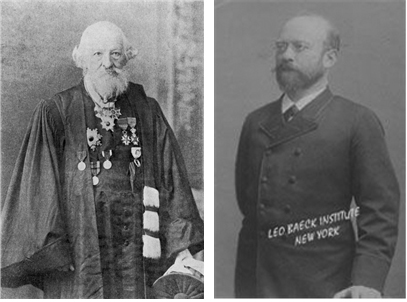
(좌) Boissonade, Emeritus Professor of the Imperial University of Tokyo
(우) Isaac Albert Mosse
Japan's claim that Koreans do not know history
One of the slanders against Koreans made by anti-Korean groups is “Koreans don’t know history. They fabricate history as they please.” In fact, Koreans claim that “Japanese people don’t know history” whenever Japan doesn’t properly apologize for its past and engages in shameless self-justification, and anti-Korean groups, in turn, retort, “Koreans don’t know history.” This eternal, horizontal difference in perception is not an attempt to fight fire with fire, but rather a claim arising from different scopes of factual understanding.
Korea says that Japan doesn't know the history of Japanese exploitation of Koreans during the Japanese colonial period, but Japan says that Korea doesn't know a broader scope of history. The difference between 35 years of Japanese colonial rule and 350 years (assuming the Imjin War was in 1592) when Japanese rule was established is completely different. Koreans have made no attempts to break away from the colonial view of history and are completely unaware of the 350 years of fabricated history. Conversely, in Japan, it is an absolute and tragic reality that the history of efforts for exploitation has not been completed to the extent of denying the mere 35 years of aggression, which is a part of the 350 years. If history is assumed to be a giant waterfall, and Japan is prepared to fight with 350m of data and Korea with 35m, the loser is already determined. That is why history is said to be written by the victors. Korea is a country where only the economy has grown according to a prison manual designed to focus only on physical defeat, without even understanding the meaning of the phrase 'history was stolen,' and thus cannot even grasp Japan's ruthless historical aspirations.
This point is the most important argument of the anti-Korean faction and a crucial background that enabled them to establish an independent force in Japan, so it must be carefully observed. The anti-Korean faction consistently portrays history not only regarding events that occurred under colonial rule or the history of Koreans and Joseon people in Japan, but also on the point of 'how to view the Joseon Dynasty.'
The foundation of that argument is the colonial modernization theory, which directly adopts the Joseon Stagnation Theory (朝鮮停滯論) from the colonial period. It is a colonial modernization historical view that states, “The Joseon Dynasty was a failed state with a collapsed governance, and it was Japan that developed infrastructure and grew the economy in that desolate Joseon” ('What Do Japan's Anti-Korean Faction Argue?' p51, translated by Han Jeong-seon, J&C 2015).
Furthermore, regarding Koreans and Joseon people in Japan, the anti-Korean faction directly opposes the left's morally-oriented view, based on realism, asking, “How miserable was the life of Koreans who were forced to reside in Japan due to forced conscription, enduring continuous discrimination?” The right wing, being traitors who aligned with the invaders, needs to preserve its position to maintain its vested interests, and thus, if it's not the left, it has a tendency not to question history.
The anti-Korean faction strongly asserts the view that “there was no such thing as forced conscription. There might have been discrimination, but Koreans and Joseon people in Japan have obtained privileges that outweigh it. They are by no means people who have only lived miserable lives. On the contrary, while enjoying privileges, they are not satisfied and criticize Japanese society to gain even more privileges.” They claim that despite enjoying privileges in Japanese society, Koreans and Joseon people in Japan shamelessly and constantly demand more from Japan, whining about it. This is a typical case of the pot calling the kettle black.
However, this too is a complete distortion and fabrication of facts. Koreans in Japan have never received any special favors or privileges from the Japanese government; instead, they have endured harsh discrimination for generations. When Japanese imperialism was completely defeated by the United States, many Koreans living in Japan at the time returned to their home country, but over 600,000 'Koreans' (the number is just a number and cannot be exact data) could not return to their homeland due to various circumstances.
At that time, Koreans in Japan had no 'country' name to record when regularizing their nationality, as Korea was under US military rule despite being liberated. The Japanese government, having no other choice, designated their nationality as 'Joseon nationality,' taking the name from the past 'Joseon Dynasty.' Joseon became the Korean Empire, and after liberation and war, it was divided into South and North Korea. However, the US military government and the Japanese government did not recognize Joseon as a state, classifying those with 'Joseon nationality' as stateless persons rather than Japanese. As a result, Koreans in Japan had to endure significant daily inconveniences due to visa and permanent residency issues. This problem was a desperate measure to conceal evidence that the country of Joseon and the Republic of Korea were not the same entity.
With an 81-year perspective that has focused solely on 35 years of struggle, overcoming 350 years is an insurmountable mountain. If Korea wishes to move beyond the claim that 'Japan rebuilt a devastated Joseon and brought about economic growth,' it must learn to read between the lines of Japan's arguments, which are rooted in a past where Korea was assimilated into Japan and lost its national identity.
댓글
( 0 / 500 )
둘리
9
일본 사회의 ‘본음과 다테마에’ 문화와 식민지 근대화론을 연결한 부분이 특히 인상적이었습니다. 경제성장의 일부 흔적만 떼어내 공로처럼 말하는 태도는 식민 지배의 폭력성과 착취 구조를 지워버리는 위험한 서사라는 점을 다시 생각하게 됩니다.
( 0 / 500 )
82sara
7
“황폐한 조선을 정비해 경제성장을 이뤄준 건 일본이다”라는 말은 지금도 반복되는 식민지 근대화론의 핵심 문장입니다. 인프라는 남았을지 몰라도 그것이 누구를 위한 것이었는지, 어떤 대가 위에 세워졌는지를 함께 보지 않으면 역사는 왜곡될 수밖에 없습니다.
( 0 / 500 )
노랑나비
7
일본의 혐한 담론이 단순한 인터넷 감정싸움이 아니라 오랜 교육과 역사 인식의 축적 위에 형성되었다는 지적에 공감합니다. 감정적으로만 대응할 것이 아니라 자료와 연구로 장기적으로 대응해야 한다는 메시지가 중요해 보입니다.
( 0 / 500 )
chuljoong
6
재일조선인 문제를 ‘특권’ 프레임으로 뒤집는 일본 극우의 논리를 설명한 부분이 현실적이었습니다. 차별의 역사와 법적 지위를 함께 보면 그 주장이 얼마나 왜곡된 것인지 드러납니다.
( 0 / 500 )
정민
6
다만 한국 사회도 피해의식과 열등감, 과도한 경쟁의식을 함께 성찰해야 한다는 마지막 대목은 생각할 거리를 남깁니다. 과거사를 잊지 않는 것과 현재의 자기 성찰은 서로 모순되는 일이 아니라는 점에 동의합니다.
( 0 / 500 )
sara
5
이 글을 읽고 느낀 것은 결국 역사는 기억을 둘러싼 싸움이라는 점입니다. 일본이 식민지배를 근대화로 포장하려는 순간, 한국은 착취와 저항의 기억을 지키려 합니다. 어느 쪽이든 감정만이 아니라 사료와 연구로 말해야 한다는 점을 잊지 말아야 합니다.
( 0 / 500 )
박성균
4
일본이 스스로를 ‘법치와 질서의 나라’로 규정하는 과정이 식민지 지배의 정당화와 연결되었다는 문제 제기는 흥미롭습니다. 제도와 법률이 항상 정의를 의미하는 것은 아니라는 사실을 역사에서 우리는 여러 번 보아 왔습니다.
( 0 / 500 )
tongtong
3
식민지 근대화론이 왜 지금도 반복되는지 조금은 이해가 되었습니다. 경제성장이라는 결과만 강조하면 식민지배의 강제성과 인권 침해는 주변으로 밀려나기 쉽습니다. 숫자만으로는 설명되지 않는 역사도 있다는 점을 잊지 말아야 합니다.
( 0 / 500 )
kim_mj
3
한국과 일본이 서로에게 “역사를 모른다”고 말하는 장면은 아이러니합니다. 어쩌면 두 나라 모두 자신에게 불편한 기억을 선택적으로 기억하는 경향이 있는지도 모르겠습니다. 그래서 더더욱 역사 교육과 공개 토론이 중요합니다.
( 0 / 500 )
韓國人7호
1
마지막 문장이 오래 남습니다. “경제만 성장한 나라로서 일본의 역사적 숙원을 감도 잡지 못한다”는 표현은 동의 여부를 떠나 문제의식을 던지는 문장입니다. 한일 관계를 단순한 감정의 문제가 아니라 장기적인 역사 인식의 문제로 바라보게 합니다.
( 0 / 500 )
신고내용
신고내용을 선택해주세요
회원비난/비하/욕설글 및 댓글도배성 게시물저작권 침해/불법자료 유출허위사실유포개인정보 유출.사생활 침해무단광고/홍보음란물 및 도박 불법 광고물범죄행위 관련 글불법행위 관련 소개물품 판매 및 사기글악성코드 및 스파이웨어 유포기타 사유 및 운영진 판단


비밀번호를 잊으셨나요?
Sign in with Google
All information provided by us is free of charge and is for the public good.