品

Corea든 Korea든, 품격이 먼저다
Whether Corea or Korea, dignity comes first.
Whether Corea or Korea, dignity comes first.
Now
지금
751 Diaspora
Heritage
유산
Humanity
인문
Mirengsi
未冷尸
Politics
정치
Media
언론
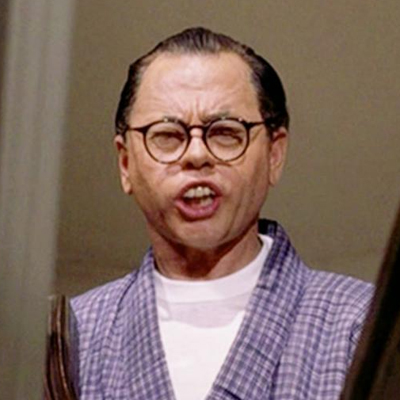
미키 루니가 분장한 일본인

재일 동포
칼럼
Mizuno
Zainichi 35. Why Anti-Korean Factions Hate Korea - Omniscient Japanese Perspective 1

0
2026. 06. 01
The Shared Culture of Misogyny in Japan and Israel
In the last issue, we examined the characteristics of Zaitokukai, a far-right group similar to Korea's Ilbe, and their "hate speech." They use criticism of the "privileges" of Koreans in Japan as an excuse to denigrate all of Korea and spew baseless hatred. Although their extreme claims are sometimes dismissed as mere "attention-seeking" even within Japan, this does not mean that the anti-Korean sentiment has completely disappeared from Japanese society.
I would like to define the anti-Korean sentiment espoused by anti-Korean factions as the "mild version" of Zaitokukai's hate speech. Although the number of public demonstrations by Zaitokukai has decreased in the 2020s, they continue their activities vigorously as "net right-wingers" in the anonymous space of social media.
Even now, anti-Korean factions, although not overtly displaying the malicious and distorted Korean hatred seen at the Zaitokukai level, are still spreading an anti-Korean atmosphere subtly and widely throughout Japanese society. Japanese people do not readily express their political leanings in public, but the anti-Korean sentiment is quietly and secretly shared in 'their own spaces.' If you combine the anti-Korean sentiment with the Japanese characteristic of not showing their true feelings outwardly but subtly criticizing behind the scenes or with pointed remarks, you can imagine the atmosphere. However, Koreans are either silent or adopt a 'let it slide' attitude, unwilling to make a big deal, directly or indirectly, about this anti-Korean racial discrimination in Japanese society. While Korea is gradually becoming pro-Japanese, recent criminal trends within Japanese society are direct and cruel, and the age of the perpetrators is increasingly younger. Crimes where people in their twenties, accompanied by young children, brutally murder others are seen as rooted in a domestic 'human hatred' culture, similar to anti-Korean sentiment.
Cases where the people of one nation so persistently and systematically hate and despise another nation, apart from Japan's 'anti-Korean sentiment,' could only be compared to Israel's hatred of Palestine, which could be considered at the 'anti-Korean' level. Ultimately, Israel attacked the United States and Iran, and there are still many citizens who believe they should continue to attack, according to public opinion polls. Some Korean citizens who waved the flag of such a warmongering Israel and paraded around Gwanghwamun and City Hall have no idea what they are doing, and are a symbol of an era of ignorance, like a ticking time bomb. Unlike in the past, as the words and actions of ordinary people now remain forever across the world, a mature understanding of world history, where each individual takes responsibility, is necessary.
Japan's Fundamental Instability of Mental Victory
Palestinians' hatred of Israel is merely a way of resisting for survival because they are still oppressed and harmed even after their territory was taken. In particular, Palestinians are fighting for their lives against an apartheid (racial discrimination policy) state based on Jewish supremacy. However, anti-Korean sentiment among some Japanese people unilaterally hates and envies Korea, even though Korea has never invaded Japan, nor does it discriminate against the Japanese, who were the perpetrators in the past, either politically or culturally. While unprovoked hatred may not be a significant problem for the perpetrator, the victim cannot help but feel a sense of crisis and anger beyond mere hurt feelings. However, if one carefully examines history, there can be no such thing as unprovoked hatred. Past colonial hegemonic states are very cautious, but they cannot hide their hatred and animosity towards certain races. Japan's inclusion in this group has a historical context.
We have so far examined the era in which Fukuzawa Yukichi's "Datsu-A Ron" (Leaving Asia Theory), which was based on the sense of superiority that "only Japan is the sole transcendent nation representing Asia," provided a strong theoretical foundation for the essence and historical roots of anti-Korean sentiment. We understood that the essence of anti-Korean sentiment lay in the "enlightenment (educate)" that the Japanese government politically educated its own people. The simple and uninformed Japanese people of the last century (Joseon under colonial rule) could not help but fall for the temptation of such a superior "narrative." Furthermore, the prejudice that Korea is no match for Japan (politically, economically, and culturally), and especially that Joseon people (who became slaves of Japanese imperialism) are disorderly, rude, and ignorant, and that their "bad national character" is negatively affecting Japan, spread and took root in the essence of anti-Korean sentiment, implying that it was harming Japan.
Just as pastors of various denominations have preached a history where Israel was disguised as God's faithful chosen people, Japan, too, has acted like the loser of history for generations through countless types of general books, complete works, general treatises, and collections of writings. The term "Orient" was also used in the region, culture, and geopolitics of Asia only because of Japan's work. They did everything they could to show off their power, but they overlook the fact that it is not easy to carry on a logical argument without a psychopathic problem when considering the idea that Japan, which invaded others and seized their property to justify itself, dislikes causing trouble and negatively impacts war-torn nations. In short, it is like a murderer waving away the stained background of their murder, rejecting it with their whole body and mind. Now, even if only a few Koreans, the power of this Japan has only diminished, but Koreans should be able to find a mental defect at the core of Japan's unchanging anti-Korean sentiment. Yes. At the root of anti-Korean sentiment lies psychopathological symptoms, an excessive sense of victory obsessed with Koreans. An obsession that will last forever, even if they kill all or half of them, is due to an inherent limitation.
Why do Japanese people become strangely serious, uncompromising, and exclusive when talking about Korea? Even Japanese scholars are puzzled by this issue, saying that the Japanese people seem to have a kind of 'Korean Phobia' towards Korea.
Professor Ogura Kijo (小倉紀藏, born 1959, graduated from the University of Tokyo with a degree in German Literature), who teaches Korean Studies at Kyoto University, has compiled and presented 10 reasons behind anti-Korean sentiment. After graduating, he worked at an advertising company before coming to Seoul National University's Graduate School of Philosophy to study Korean philosophy for eight years, earning a doctorate. He is a representative "Korean expert" within Japan. Examining the background of anti-Korean sentiment as analyzed by a pure Japanese person can be considered the closest way to understand the current Japanese psyche. Of course, the phrase "pure Japanese person" is a naive approach. Anyway, Ogura's 10 reasons for anti-Korean sentiment, based on his Korean experience, are as follows:
1. Deterioration of the Japanese people
2. Sense of defeat among the Japanese people
3. Apology fatigue
4. Long-standing contempt for Korea/Joseon
5. Hatred of East Asia
6. Rightward shift in politics
7. Media strategy (increased sales)
8. Anti-Japanese Japanese (left-wing liberals critical of Japan)
9. Remarks and actions of former President Lee Myung-bak
10. Remarks and actions of former President Park Geun-hye
These 10 items are uneven, but overall, they are so accurate that it's even more absurd, and they can be broadly divided into three categories. First, the impatience that the nation of Hakkō Ichiu (八紘一宇: a WWII slogan that the Japanese Emperor rules the whole world) can no longer economically overwhelm Korea. Second, that impatience, Japan's current political situation, the unfulfillment of the past cry for Datsu-A Ron (脫亞入歐: "Leave Asia, Enter Europe"), and the resulting anxiety and regression. Third, the rise of anti-Korean sentiment as a means of livelihood and, conversely, the emergence of anti-Japanese Japanese. The way they seem to pay attention to every remark made by Lee Myung-bak and Park Geun-hye, whether they were in office at the time or not, clearly reveals the anxiety and conspiracy underlying Japanese society. Perhaps this is possible because of the practice in Korean society of accepting such political give-and-take. At least 30% of this would not happen if Korean society drew a clear line.
If Japan still lives better than Korea, would there be no anti-Korean sentiment?
It is worth noting that the widespread and sometimes escalating anti-Korean sentiment in Japan is rooted in the inherent conditions of Japanese society. Among the 10 factors contributing to the rise of anti-Korean sentiment in Japanese society, only two directly involve Korea as a variable: the "deterioration of Japanese people" (劣化) and two others. This indicates the severity of the social pathology in Japan, where it attempts to resolve its internal problems through external variables. This also means that Japanese society lacks the self-correcting mechanism to independently resolve the social problem of anti-Korean sentiment.
Professor Ogura's first item for the background of anti-Korean sentiment in Japan is the "deterioration of Japanese people" (劣化) and "inferiority complex" (劣等意識). I will focus on explaining these two. Deterioration, in electrical and electronic terms, refers to "the phenomenon where the chemical and physical properties of an insulator worsen due to external or internal influences." This term is interpreted as meaning that Japanese people are increasingly losing their self-esteem and confidence, thereby losing Japan's excellence. It is, in effect, a self-assessment by Japanese people undergoing a process of inferiority.
Japan's socioeconomic indicators have continuously worsened since the collapse of its bubble economy in the 1990s. Once filled with the confidence of being the world's best, even buying the Empire State Building (purchased in 1991 by Japanese real estate magnate Hideki Yokoi, 1913-1998), a symbol of America, that confidence is now nowhere to be found. The peak of the Japanese economy can be seen as having begun its decline with the Plaza Accord in 1985. The strange accent, buck teeth, and comical behavior of Mr. Yunioshi, the Japanese landlord played by Mickey Rooney in the 1961 film *Breakfast at Tiffany's*, was a white American's Japanophobia mocking a Japan that was becoming increasingly wealthy, and a self-portrait of humanity in a materialistic age where only economic superiority mattered.
Japanese people are currently experiencing a "lost 30 years" due to a total loss of confidence and national isolation. However, this cannot simply be explained by the impressionistic critique that 'Japan has deteriorated.' The impressionistic critique that 'Japanese people have deteriorated' is a somewhat ambiguous perception when one considers what it specifically means and whether it can be objectively proven. Yet, it is precisely this point that might hold the greatest significance for the proposition that 'Japanese people have deteriorated.' In other words, the fact that everyone vaguely shared the image that 'Japanese people have deteriorated' without objective verification through meaning, indicators, or data, can be said to be a characteristic of Japanese society during those 30 years. Japanese people are unconditionally 'deteriorating' without objective argumentation. The power of this vague 'perception' became an important mechanism that narrowed the Japanese people's vision and closed the door to social tolerance.
The degradation of Japanese people means that the "Japanese character," which was excellent in the past, is gradually degenerating and being lost due to internal and external factors. Now, ordinary Japanese people sometimes think, "Japanese people are degenerating. Therefore, they cannot keep up with globalism. However, Chinese and Koreans are leading the way in globalism. We cannot be with these people (bastards). This is because Japanese people are now tired of such a competitive worldview. It is better to avoid China and Korea if possible." This reaction can be seen as a defense mechanism to avoid reality, a recognition of reality, and furthermore, an action of inertia. In other words, Ogura's analysis is a factual analysis, but it can be seen as a natural regression phenomenon that reveals the inherent habits of Japan and Japanese people.
Since the collapse of the bubble economy in the 1990s, Japan has not been able to recover its superior position in the global economy. Professor Ogura argues that "part of the reason why many Japanese people have come to feel 'we want to cut ties with East Asia' is the perception of 'the degradation of Japanese people'." He explains this "transformation" of perception as a "reverse Fukuzawa Yukichi orientation." During the Meiji era, Fukuzawa Yukichi advocated for "Datsu-A Ron" (Leaving Asia), arguing for "cutting ties with Joseon, which cannot be globalized (Westernized)," based on the perception that "Japan is ahead of Asia." However, the current "reverse Fukuzawa Yukichi" is, on the contrary, based on the perception that "Japan is lagging behind Korea in globalization." Rather, the perception and sentiment that "we don't want to globalize" are sweeping over Japan ('What do Japan's anti-Korean factions argue?' p31, Ogura Kijo, translated by Han Jeong-seon, J&C 2015).
In other words, Japan's anti-Korean sentiment is the result of 'scapegoat hunting' stemming from its failure to resolve its overall loss of self-confidence and national isolation. Japan cannot help but cast envious and jealous glances at its 'neighboring country,' Korea. It projects its wounded pride over losing the status of a 'global leading nation' that it once enjoyed to Korea as 'anti-Korean sentiment.' In this respect, anti-Korean sentiment might mean that there is nothing Korea can do to resolve it, and that we must endure a long period of waiting until Japan itself leaps forward into a normal and healthy society. That is why the Chosun Ilbo, JoongAng Ilbo, and Dong-A Ilbo affiliates are diligently collaborating on Japanese trot and enka, evoking the era of Koreans assimilating with Japan.
At this point, let's look at Koreans. Koreans have no feelings because they do not remember the past. Just as they were enlightened, Koreans have also been diligently enlightened over many generations, so they are indifferent to Japan's degradation or superiority. This is not a response based on objectivity, but a feast of ignorance. In history, Japan has played a mask game, changing its face with each era. Koreans, who do not even remember those roles and the shapes of those masks, will not notice even if Japan becomes a little easier to deal with now, or even if it reoccupies Korea. Events do not happen suddenly one day. Koreans, who have been raised not to notice any premonitory symptoms, need to think about why they are trying to view anti-Korean sentiment from their perspective. This thought will be the key to solving all future geopolitics.
댓글
( 0 / 500 )
Rosemary
7
일본 사회 내부의 혐한 현상을 단순한 역사 문제나 외교 갈등이 아니라 집단 심리와 사회 구조의 문제로 해석한 점이 인상적입니다. 다만 일본 사회 전체를 하나의 성향으로 일반화하기보다 다양한 목소리도 함께 살펴볼 필요는 있어 보입니다.
( 0 / 500 )
Cross
6
오구라 기조 교수의 분석을 통해 혐한의 배경을 일본 내부의 불안감과 정체성 문제에서 찾으려는 시도가 흥미롭습니다. 결국 건강한 한일 관계를 위해서는 상대방을 바꾸려 하기보다 각자 사회 내부의 문제를 직시하는 자세가 중요하다고 생각합니다.
( 0 / 500 )
계양
6
글을 읽으면서 혐오라는 감정이 얼마나 쉽게 정치적 도구로 소비되는지 다시 느꼈습니다. 한국이든 일본이든 특정 집단에 대한 증오를 통해 현실의 문제를 설명하려는 태도는 결국 사회를 더 병들게 만들 뿐입니다.
( 0 / 500 )
박지영
4
일본의 혐한 현상에 대한 문제 제기는 공감하지만, 동시에 한국 사회 역시 감정적 민족주의나 편견에서 완전히 자유로운 것은 아니라는 점도 함께 논의되었으면 좋겠습니다. 상대를 이해하려면 자기 성찰도 필요합니다.
( 0 / 500 )
萬吉
4
혐한을 단순한 반한 감정이 아니라 일본 사회의 장기 침체와 자신감 상실 속에서 나타난 현상으로 해석한 부분이 설득력 있게 다가왔습니다. 역사 문제를 넘어 현재 일본 사회의 불안과 위기의식까지 함께 봐야 한다는 점을 생각하게 만드는 글이었습니다.
( 0 / 500 )
kimyoon
4
일본의 혐한을 단순히 몇몇 극우 세력의 일탈이 아니라 사회 전반에 스며든 구조적 현상으로 분석한 점이 인상적입니다. 특히 경제적 자신감 상실과 열등감이 혐오로 전환된다는 설명은 현재 일본 사회를 이해하는 하나의 단서가 될 수 있다고 생각합니다.
( 0 / 500 )
중섭
3
이 글을 읽으며 가장 무서웠던 부분은 혐오가 반드시 소리 높여 외치는 형태로만 나타나는 것이 아니라는 점입니다. 일상 속 농담, 편견, 무관심 속에서도 차별은 재생산될 수 있다는 사실을 다시 생각하게 됩니다.
( 0 / 500 )
jonghoon
3
일본의 혐한 문제를 지적하는 것은 필요하지만, 일본 사회 전체를 병리적 집단으로 규정하는 표현은 다소 신중할 필요가 있어 보입니다. 문제의 원인을 분석하는 것과 국민 전체를 일반화하는 것은 다른 문제라고 생각합니다.
( 0 / 500 )
光鐵
3
한국과 일본 모두 과거사 문제를 정치적으로 활용해 온 측면이 있습니다. 그러나 식민지배라는 역사적 사실과 현재의 혐오 현상을 분리해서 볼 수 없다는 점에서, 일본 사회가 왜 아직도 역사 문제에 민감하게 반응하는지 고민하게 만드는 글입니다.
( 0 / 500 )
이동혁
2
일본의 혐한이 한국 때문이 아니라 일본 내부의 불안과 정체성 위기에서 비롯된다는 주장이 특히 인상 깊었습니다. 결국 혐오의 대상이 바뀔 뿐, 사회가 건강하지 못하면 새로운 희생양을 계속 만들어낼 수 있다는 점에서 시사하는 바가 큽니다.
( 0 / 500 )
신고내용
신고내용을 선택해주세요
회원비난/비하/욕설글 및 댓글도배성 게시물저작권 침해/불법자료 유출허위사실유포개인정보 유출.사생활 침해무단광고/홍보음란물 및 도박 불법 광고물범죄행위 관련 글불법행위 관련 소개물품 판매 및 사기글악성코드 및 스파이웨어 유포기타 사유 및 운영진 판단


비밀번호를 잊으셨나요?
Sign in with Google
All information provided by us is free of charge and is for the public good.