品

Corea든 Korea든, 품격이 먼저다
Whether Corea or Korea, dignity comes first.
Whether Corea or Korea, dignity comes first.
Now
지금
751 Diaspora
Heritage
유산
Humanity
인문
Mirengsi
未冷尸
Politics
정치
Media
언론

재일 동포
칼럼
Mizuno
Zainichi 34. The Identity of 'Zaitokukai', More Extreme Than 'Anti-Korean Faction'

0
2026. 04. 27
If we don't discuss what happened just because anti-Korean sentiment is waning, both individuals and society will lose their permanence and gradually become just one element of material civilization. If that happens, the value and dignity of human beings will disappear, and even the colonial rule will be regarded as a mere dream. As a result, third-rate popular culture, starting with the trot competition and escalating into a Korea-Japan song contest, will gain authority as if it were the essence of Korean culture. If the public is only obsessed with changes in phenomena, the cultural status can only overgrow, elated by the perception of others, with the essence extinguished. A history without a social ego is also history. If we don't look back, we are bound to regress.
The common goal of anti-Korean sentiment in Japan and the extreme right in Korea is anti-Korean sentiment
The anti-Korean atmosphere in Japan is not simply a search for a 'scapegoat' to attribute the causes of their economic recession and social unrest to the outside and others, but a historical legacy rooted in Fukuzawa Yukichi's 'Leaving Asia' theory, which was formed through the Meiji Restoration in the 19th century. The theory of Mimana Nihon-fu, which provides the theoretical basis and historicity for anti-Korean sentiment, claiming that Japan ruled the Korean Peninsula in the 4th to 6th centuries, is based on the distorted historical perspective of modern Japan, not that era, and its roots can be traced back to the theory of conquering Korea before and after the Imjin War, and the theory of colonial modernization during the Japanese colonial period, which can be said to be the present life of the deep-rooted 'Korean contempt theory' of the Japanese people.
This is a very serious matter, as Japan has manipulated academic grounds to seize a position of eternal Japanese superiority. However, when Koreans deal with Japan's anti-Korean sentiment, the prevailing attitude is non-response or non-action, dismissing it as merely an extremely emotional and violent "hatred" of some "far-right forces." The problem on the side that has become the object of hatred is also serious. Of course, there is also the absurd Korean hatred of some extreme right-wingers in Japan, but it is similar in nature to the Japan's promotion-type anti-Korean sentiment in the orbit and category of the Korean extreme right's non-sense and immorality. The phenomenon in which a widespread, quiet, secretive, and private atmosphere of anti-Korean sentiment, in which Korea is hated and loathed, has insidiously taken root is a situation in which the perpetrator and victim of the war are intertwined and going crazy. The fact that the Korean extreme right has its own enemies within the country and is a symbol of national division also means that Koreans are not ready to face the essence of Japanese anti-Korean sentiment, which has a self-betrayal attribute.
Based on the experience of living as if it were natural for Westerners to have an underestimated perception of Korea's existence or position until only a few decades ago, Koreans do not readily question the situation they have been subjected to. It is possible that Korean education, which has failed to mature social self-esteem in a continuous state of poverty and humiliation, has fostered a common anti-Korean sentiment between Korea and Japan, regardless of the situation. Both the Koreans who belittle themselves and the Japanese who try to raise their self-esteem by belittling others are sociopathological phenomena with serious mental problems.
The Essence of Hate Speech is Maintaining Historical Anti-Korean Sentiment
I would like to examine the claims of Japan's 'anti-Korean faction' from the perspective of the Japanese people. First, there is the need to properly distinguish between the 'Hate Speech' of some far-right groups, which refers to speech that incites insults, disparagement, or discrimination or violence against individuals or specific groups based on characteristics such as race, gender, religion, or disability, and the 'anti-Korean sentiment' of ordinary people.
In fact, this issue is often confused even in Japan. In Korea, there are many cases where 'anti-Korean sentiment' and 'Hate Speech' are not properly distinguished. Broadly speaking, a small number of 'Hate Speech' groups are included as a subset within the larger anti-Korean faction. In Korean terms, Hate Speech corresponds to 'Ilbe' (a far-right website), while communities that 'spew out' anti-Japanese sentiment and are critical of Japan can be considered part of the anti-Korean faction. In fact, it is doubtful whether there are any communities in Korea that are critical of Japan. Korean culture in Japan has gone through many waves of generations and genres, and anti-Korean sentiment is now almost a thing of the past in Japan. However, as mentioned earlier, it is necessary to know the era in which they heightened anti-Korean sentiment and activated socio-cultural defense mechanisms, in that we cannot prepare for various upcoming events unless we know how this human-hating cultural structure has been repeated.
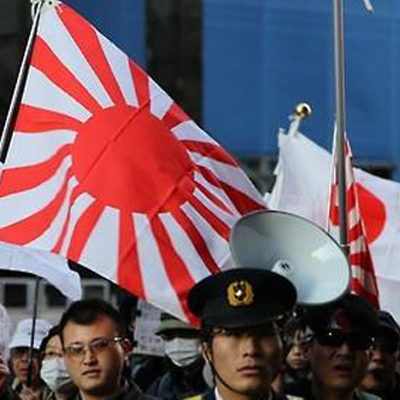
If Korea has Ilbe, Japan has Zaitokukai (在特会: a citizens' group that does not tolerate the privileges of Koreans residing in Japan). Zaitokukai was formed in 2007, and Makoto Sakurai served as its chairman until 2014, leading radical remarks and actions. Zaitokukai's official website domain in Japan was 'www.zaitokukai.info' and changed to 'www.zaitoku814.com' in 2018 before being shut down after 2022. Of course, the political orientations and goals of the two places are completely different, but they have in common that they make far-right and distorted claims.
The group name does not indicate whose privileges of residing in Japan are not tolerated. But in fact, "residing in Japan" virtually means Koreans residing in Japan. At every demonstration, Zaitokukai shouts, "Koreans, leave Japan" and "The Japanese government should abolish the privileges given to Korea." They argue that of the many foreigners living in Japan, only Koreans should have their privileges abolished. The Japanese government, like a person who poops, is mobilizing agitators to create a false culture among its citizens that hates victims who have been harmed by their own country in the past but reside there permanently. In its early days, Zaitokukai did not attract much attention. However, as anti-Korean sentiment increased with President Lee Myung-bak's visit to Dokdo in 2012, Zaitokukai's presence also rose rapidly. In some demonstrations in 2013, the year after President Lee's visit to Dokdo, Zaitokukai even shouted slogans that went too far, such as "Rape Korean women" and "Kill all Koreans." However, Lee Myung-bak is not a great patriot. He is a person who set a record as a modern Korean president who pursued personal gain with taxes. After Lee Myung-bak, Korean politics was divided into those who followed his ways and those who did not. His visit to Dokdo was a show. Dokdo is not Dokdo now, haha...
Around 2013, after 이명박's visit to Dokdo, when the Zaitokukai's hate speech reached its peak, anti-Korean demonstrations frequently occurred in Japan. In this process, the hate speech spewed out by the Zaitokukai became a major social problem even in Japan. Before 이명박's retirement, it is worth remembering what suspicions and sins he could not escape. The visit to Dokdo gave him absolution, and hate speech worked hard to allow him to write memoirs comfortably after his retirement. The Zaitokukai is close to a group of convinced criminals who openly, blatantly, and loudly condemn Korea, but the majority of 'silent Korea phobias' hate Korea in private spaces, ambiguously, quietly, and impatiently. The Zaitokukai's activities (hate speech) have been convicted and ordered to pay damages in Japanese courts, and very few Japanese people support these activities ('What do Japan's anti-Korean factions claim?' p10 Ogura Kizo, translated by Han Jeong-seon, J&C 2015).
In fact, just as we mostly do not 'budge' to the claims of Ilbe, it is said that even ordinary people in Japan do not 'agree' with the extreme and煽動적인 claims of hate speech, but rather tend to think of it as a social disgrace. Nevertheless, when Korea-Japan relations deteriorate, when the position of politicians rooted in Japan, like 이명박, becomes difficult, or when the power shows a tendency to completely exclude and ignore Korea, like the Abe government, there are parts where the extreme claims of the hate speech faction show a slightly similar frequency to those of the anti-Korean faction.
When you go to a Zaitokukai rally or demonstration, it is said that there are cases where extremely ordinary people or ordinary housewives with children in strollers participate. If we see extremely ordinary citizens agreeing with the Zaitokukai's hateful claims, how should we accept that? The reason is said to be that the people participating in the demonstrations have such a basic lack of knowledge about Korea that they are easily persuaded by the Zaitokukai's bizarre and absurd claims. It is difficult to understand why they are easily swayed by radical claims because they do not know, but it seems that Japanese people accept such radical remarks because they are "of the same race" and feel a closed and exclusive "sense of homogeneity" unique to island nations. At this point, how about the far right in Korea hating their own politicians and regime in their own politics? Isn't the message from fools to fools distorted like clothes getting wet in a drizzle, leading to self-loathing that is self-contradictory?
Ordinary citizens who participated in the Zaitokukai demonstration are said to express surprise, saying, "Could there be such a terrible neighboring country? Are Koreans and Koreans living in Japan parasitizing Japanese society so unrestrainedly?" They also tend to recognize that "We are Japanese. Therefore, we are accurate and proper people," and "Compared to that, Korea, North Korea, and Koreans in Japan are very low-level." The Zaitokukai's sense of superiority over Korea is the result of brainwashing education that originated from Yukichi Fukuzawa's theory of leaving Asia, which despised and belittled Joseon during the Meiji Restoration in the 19th century. Even though there isn't a single proper video of Fukuzawa's speech, he is a hero of Japanese modernization, and it is no different from Koreans who have followed their education constantly praising Ryoma Sakamoto. The fact that Japan's nationalistic repertoire is accepted by Koreans as the knowledge of intellectuals is a self-betrayal of Koreans who admire Japan's superiority in historical distortion. The good feeling you have when you hate something comes from ignorance.
Zaitokukai is the flower of Japanese politics, starting in Korea and failing in Japan due to Korea
In order to properly understand the claims of the anti-Korean faction, we must cross the 'bridge' of Zaitokukai. Even if Zaitokukai's claims are ultra-right-wing and full of prejudice and ill-feeling, in the end, anti-Korean sentiment and Zaitokukai will merge into one in the great river of 'Joseon contempt theory'. Only by accurately recognizing the ultra-right-wing 'special Zainichi privileges' claims of Zaitokukai can we accept the 'moderate' criticism of Korea by the anti-Korean faction more objectively.
In fact, Zaitokukai's claims are cleverly set up to surprise ordinary Japanese people who do not know the actual situation of Zainichi Koreans and Joseon people. Even without that, Japanese people have a subtle tendency to ignore and discriminate against Koreans, and Zaitokukai's claims strongly pull that 'taste'.
The most representative thing that Zaitokukai attacks as 'privileges of Zainichi' is the 'special permanent residency status'. In 1991, the Japanese government granted special permanent residency status to Zainichi Koreans and Koreans based on the 'Immigration Control Special Act'. Zaitokukai vehemently criticizes the special permanent residency rights given to Koreans (who acquired Korean nationality) and Koreans (Korean nationality) who were forcibly brought to Japan during the Japanese colonial period or had no choice but to choose to come to Japan, calling it 'privileges of Zainichi (在日特權)'. They argue that there are many foreigners in Japan, so why only Koreans (Korean nationality) are given special permanent residency status. This is clearly a 'Joseonjin privilege' for modern Japanese people. This is because there is a history that the Japanese government does not teach its own people, and the Korean government cannot teach because it does not know, and does not teach even if it knows. There is a sin that must be packaged as a debt of apology for colonial oppression and hidden forever. We must recognize that the Japanese themselves cannot bear the debt of history in this ambiguous name, which is neither a privilege of Zainichi Koreans nor a privilege of Zainichi Koreans, but is marked as a privilege of Zainichi.
Koreans who were forcibly relocated during the Japanese colonial period could not acquire Japanese nationality after Japan's defeat, and lived with the administrative nationality of Korean nationality, but most of them changed to Korean nationality, and some maintained Korean nationality as it was. Since they are basically not Japanese citizens, they must continue to apply for residence, but the Japanese government has crossed the years by recognizing them as 'remnants' of the history of the Japanese colonial period and granting them special permanent residency status. Zaitokukai, which ignores the historical reasons and packages it as 'generosity' to give privileges only to specific ethnic groups that they once ruled, is attacking, saying that the special permanent residency status of Koreans (Korean nationality) given for free is absolutely unacceptable. When Japan was doing well, a small amount of generosity worked, but the excessive generosity of poor and old Japan became stingy with privileges. In addition, Zaitokukai was also a tool for politically controlling the Japanese people. There are many Japanese people in Japanese society who hide their origins. There are many Japanese people who are not from Japan who may be more active in anti-Korean sentiment.
Zaitokukai argues that "the claim by the Zainichi that they are entitled to special permanent residency because they are victims of forced conscription is false." However, the official view of the Japanese government is that "special permanent residency is not a privilege," but rather "a consideration in light of historical circumstances and their settlement in Japan" (Immigration Bureau, Ministry of Justice). Regarding this issue, Tōru Hashimoto, the 19th Mayor of Osaka, once expressed the opinion that "it is necessary to apply the same permanent residency system as ordinary foreigners at some point," and this argument was gradually gaining persuasiveness among the Japanese. It could mean that the period of Japanese colonial rule is now a distant past, so there is no need to give special consideration to Koreans only for some historical reason. However, Zaitokukai has disappeared. With Japan's economic and cultural overtaking, Japan, whose momentum to continue anti-Korean sentiment has been cut off, how has it decided to accept the fact that the logic it put forward no longer works? We must not obscure the essence of Japanese society, which begins with hatred and perishes with hatred. Only when we accurately and calmly analyze the reality of the sick war criminal state will we be able to see Korea's problems.
Japan Maintaining the Country with Hatred
Next is the issue of livelihood protection. Zaitokukai claims, "The rate of livelihood protection benefits for Korean and Korean-Japanese residents is high. Therefore, "this is a privilege." The Japanese government's view is that "livelihood protection is not judged by nationality" (Ministry of Health, Labor and Welfare). Regarding the pension issue, Zaitokukai also argues that "Korean-Japanese residents are receiving pensions even though they are not eligible." There is also the issue of 'hiding real names'. This is supported not only by Zaitokukai but also by some 'anti-Korean groups'. They claim or think that "even if Korean and Korean-Japanese residents become criminal suspects, they are reported under their alias (通名) instead of their real names." Why hide and attack? Isn't it because the result of the low percentage of pure Japanese bloodlines supporting Japanese society is revealed?
Whenever a heinous crime occurs in Japan, there is always a comment on the Internet saying, "Wasn't it done by a 'Jong' (チョン)?" 'Jong' is an old derogatory term for Koreans and Korean-Japanese. Japanese media often reports the alias of Korean and Korean-Japanese residents at the time of arrest. As soon as the name of the arrested person is announced, speculative comments appear on the Internet, such as "The surname and name are letters often used in Korean names" or "It is a common name for Korean and Korean-Japanese residents." Of course, some of them are based on false knowledge and are absurd speculations. The crime rate is also a regular menu item for Zaitokukai. They cite the crime rate of Korean and Korean-Japanese residents as the background for hiding their real names. Anti-Korean groups argue, "There are many criminals among Korean-Japanese residents. It is related to the deterioration of public order in Japanese society." However, this is a category of impressionistic criticism that cannot be proven by statistics. It is a similar case to Koreans having a prejudice that Koreans from China often commit heinous crimes while looking down on them.
Let's assume that you discover that someone you abused and exploited in the past has become wealthy. The privilege of generosity loses its power. If it turns out that there are many of these wealthy people, the former small number of perpetrators will lose even more power.
They also constantly attack the Chongryon schools. Zaitokukai is also expressing opposition to the issue of 'whether to include Chongryon schools in the high school tuition waiver and the payment of school support funds.' At one time in Japan, there was a major debate over whether or not to include Chongryon schools in the Democratic Party administration's policy of waiving high school tuition fees (implemented from 2010). Zaitokukai vehemently opposes this, arguing that "it is wrong to use national taxes for North Korean educational institutions that may be involved in abductions" ('What do Japan's anti-Korean groups claim?' p16 Ogura Kijo, translated by Han Jeong-seon, J&C, 2015).
Looking at these six examples, Zaitokukai does not logically criticize Korean-Japanese and Koreans, but simply dislikes and hates them, so they 'blindly oppose' all social issues related to them. Zaitokukai's attacks, which discriminate against and despise Korean-Japanese and Koreans with extremely emotional and childish ideas, continue to this day. In response, in 2016, the Japanese Diet enacted the 'Act on Promoting Efforts to Eliminate Unfair Discriminatory Speech and Behavior Against Persons from Outside the Country (Japan),' also known as the 'Hate Speech Elimination Act,' to control indiscriminate hate acts. This was significant as the first case in which the law explicitly stated that discriminatory and insulting language towards specific groups is "not tolerated."
Since then, some progress has been made at the local government level, such as imposing a fine of up to 500,000 yen on individuals who repeatedly engage in anti-Korean demonstrations in Kawasaki City, Kanagawa Prefecture, or disclosing the personal information of far-right figures who engage in anti-Korean activities in Osaka City through websites. However, with the exception of Kawasaki City, there have been constant criticisms that the Hate Speech Elimination Act and other local ordinances do not directly prohibit hate speech or impose penalties, and are merely declarative ("The 'Hate Speech Elimination Act' was enacted 5 years ago, but blatant contempt for Koreans is still ongoing," Reporter Jang Seo-woo, Munhwa Ilbo, December 30, 2021).
There are many criticisms that Japan's efforts to eradicate hate speech by enacting laws have ultimately failed. Even in 2021, five years after the enactment of the Hate Speech Elimination Act, blatant hate speech by large corporations such as Fuji Housing (the company president continued to send hate speech unrelated to company operations to employees in internal documents, such as "Korea lies and does not take responsibility" and "Korea would have been eaten by Russia if it had not merged with Japan," causing controversy) and DHC continued, and threatening emails and terrorist threats were sent several times to the organization that hosted the exhibition of the Statue of Peace, which symbolizes the victims of the Japanese military 'comfort women'.
Even now, hate speech is quietly stirring in Japanese society. According to Kyodo News on December 5, 2024, there was a report that Tokyo Metropolitan Government recognized expressions such as "Koreans and Vietnamese are completely rejected" in rallies held in Tokyo in May and June as 'hate speech' (Tokyo Metropolitan Government "'Koreans and Vietnamese are completely rejected' is hate speech" Reporter Maeng Seong-gyu, Maeil Business Newspaper, December 5, 2024). Although not extreme expressions, remnants of hate speech that openly discriminate against and despise Koreans still remain.
Do not ignore the essence of hatred
In March 2024, as relations between Korea and Japan rapidly improved with the resumption of shuttle diplomacy between Presidents Yoon Suk-yeol and Kishida, anti-Korean demonstrators in downtown Tokyo almost disappeared, and anti-Korean book corners in major bookstores also disappeared. However, this is only a facade. Japanese civic groups are concerned that "hate speech is actually increasing." They say that only the form has changed, and discrimination and hatred that hurt foreigners are still prevalent in various parts of Japanese society. On October 9 of the same year, a ceremony was held at a hotel in Tokyo to commemorate the 10th anniversary of the establishment of the 'Shinjuku Korean Merchants Association', which is composed of merchants from the Tokyo Koreatown. It was a celebration of the fact that Shinjuku Koreatown has become a hot spot, attracting an average of over 80,000 people a day. This was a place where anti-Korean demonstrators roamed, shouting "Get out of Japan" whenever they had the chance in the 2010s.
The pro-Japanese Yoon Suk-yeol was an important figure in Japan. He must have felt the joy of reviving the practice of interfering in Korean politics in the same way as a hundred years ago. However, behind the scenes, hate speech that still exists has already taken root, and bad habits continue to roll into a culture of hatred that supports Japanese society. After the Hate Speech Elimination Act was implemented in June 2016, Zaitokukai and other groups were no longer able to operate on the streets and moved their attack stage online en masse. Currently, the main stage for hate speech activities by far-right groups such as Zaitokukai has shifted to social media such as X (formerly Twitter). It is a cross-section of a sick Japanese society.
On November 19, 2024, immediately after the list of performers for Japan's biggest year-end music festival, 'NHK 2024 Kohaku Uta Gassen', was released, 'anti-Korean Kohaku' became a popular search term on X. As many as four Korean idol groups, including TWICE and LE SSERAFIM, appeared this year, and posts disparaging and attacking Korea poured in. Koreans who are silently engaged in cultural activities as targets of anti-Korean hatred in Japan also need to look back on whether their normal response is within the bounds of common sense. It's not about making money like in the poor days, so why would you crawl into anti-Korean sentiment to realize your popularity? Is the victim's self-abuse a practice of trauma?
The Human Rights and Gender Equality Planning Office of Kawasaki City, Kanagawa Prefecture, near Tokyo, where many Korean residents in Japan live, is wary of the spread of hate speech on social media and has even established countermeasures. The number of "hate speech post deletions" Kawasaki City requested from social media companies surged from 28 in 2022 to 198 last year. The number of deletion requests in 2024 (as of November) also reached 179. The reason for the increase in hate speech on social media lies in the grip of Japanese far-right forces. There are relentless posts of anti-Korean and racist content on Japanese social media, to the extent that there is even an expression called "Net-Uyoku," which combines the internet and the right wing. The far-right forces that continue hate speech activities gained strength during the tenure of former Prime Minister Shinzo Abe (September 2006 to September 2007, December 2012 to September 2020). This is because the historical revisionism, which is the value of the far-right forces, became blatant and systematic under the Abe administration ("Where did the 'anti-Korean sentiment' that harassed Koreans go... 'This is where' the Japanese far-right is rampant these days" Reporter Ryu Ho, Hankook Ilbo, 2024.11.25).
Japan enacted the "Hate Speech Elimination Act" in 2016 to prevent hate and discriminatory demonstrations, but there are many criticisms that this law is too far removed from reality and has become a "law for the sake of law." The Hate Speech Elimination Act is a toothless law with no penalty clauses even if a Japanese person posts anti-Korean content on social media such as "Koreans are stupid" or "Let's arrest Jaeil (Korean) Kim." Therefore, defamation or insult charges must be applied to "expressions of hatred toward unspecified individuals," but even then, the victim must directly prove the facts of the damage. It is not easy for ordinary people with little legal knowledge to directly prove defamation or insult. In the end, Japan has created a law called the Hate Speech Elimination Act, but it is only pretending to "crack down" on Zaitokukai, and has not come up with any practical eradication measures. The reason why Zaitokukai and anti-Korean sentiment have such long lifespans is precisely because of the Japanese government's "soulless measures." Soulless hatred is the current state of Japanese society. Koreans who are blinded by the good and delicious things they see there should be able to think about the reality of the assimilation there.
댓글
( 0 / 500 )
papers99
8
재일 한국인을 향한 혐오와 왜곡은 단순한 극우의 일탈이라기보다, 역사 인식의 공백에서 반복되는 문제로 보입니다. 감정적인 대응보다 사실에 기반한 인식과 교육이 병행되지 않으면 이러한 구조는 계속 재생산될 수밖에 없습니다.
( 0 / 500 )
同志愛
7
온라인 공간에서 확산되는 혐오 발언은 과거보다 더 빠르고 넓게 퍼지고 있습니다. 표현의 자유와 혐오 규제 사이의 균형을 어떻게 설정할 것인지에 대한 사회적 논의가 더욱 중요해지고 있습니다.
( 0 / 500 )
joonwoo
5
재특회와 같은 사례는 사회가 혐오를 어디까지 방치할 수 있는지를 보여주는 단면입니다. 중요한 것은 분노의 표출이 아니라, 이러한 움직임이 설 자리를 잃도록 만드는 제도적 대응과 시민 의식의 축적이라고 생각됩니다.
( 0 / 500 )
misoon
4
역사 문제를 충분히 성찰하지 않은 채 현재의 문화 소비에만 집중하는 태도는 지속 가능하지 않습니다. 과거를 직시하지 않는 사회는 언제든지 왜곡된 형태로 갈등을 반복하게 될 것입니다.
( 0 / 500 )
parkjin
3
혐오 표현은 개인의 감정 표출을 넘어 사회 전체의 신뢰를 훼손하는 행위입니다. 특히 재특회와 같은 사례는 혐오가 조직화될 때 어떤 파급력을 가지는지를 보여주며, 이에 대한 사회적 경계가 필요하다고 생각됩니다.
( 0 / 500 )
Red99
3
재일 한국인 문제는 단순한 외국인 이슈가 아니라 역사적 책임과 연결된 사안입니다. 이러한 맥락을 배제한 채 ‘특권’이라는 프레임만 강조하는 접근은 문제의 본질을 왜곡할 가능성이 큽니다.
( 0 / 500 )
dongbang
2
결국 핵심은 ‘누가 더 옳은가’의 문제가 아니라, 혐오가 어떤 방식으로 형성되고 확산되는지를 이해하는 데 있다고 봅니다. 이를 통제하지 못하는 사회는 국가든 개인이든 극단으로 치우칠 위험이 높습니다.
( 0 / 500 )
신고내용
신고내용을 선택해주세요
회원비난/비하/욕설글 및 댓글도배성 게시물저작권 침해/불법자료 유출허위사실유포개인정보 유출.사생활 침해무단광고/홍보음란물 및 도박 불법 광고물범죄행위 관련 글불법행위 관련 소개물품 판매 및 사기글악성코드 및 스파이웨어 유포기타 사유 및 운영진 판단


비밀번호를 잊으셨나요?
Sign in with Google
All information provided by us is free of charge and is for the public good.