品

Corea든 Korea든, 품격은 이름보다 먼저다
Whatever the name—Corea or Korea—dignity comes first.
Whatever the name—Corea or Korea—dignity comes first.
Now
지금
751 Diaspora
Heritage
유산
Humanity
인문
Mirengsi
未冷尸
Politics
정치
Media
언론

재일 동포
칼럼
Mizuno
Zainichi 33. Anti-Korean Books and Characteristics in Japan

0
2026. 03. 06
Our Attitude Towards Anti-Korean Sentiment
In Japan, anti-Korean sentiment (嫌韓) is a cultural trend. For 81 years since liberation, Koreans have silently endured this absurd phenomenon of a former colonial aggressor shunning its victims. The Korean government and its policies, with the public cowed by the accumulated military dictatorship system, have condoned this Japanese attitude, and amidst internal and external troubles, this cultural absurdity has become a meme. This preposterous situation has been possible because it has been subtly encouraged. The expansion of this anti-Korean sentiment could lead to Koreans becoming targets around the world, not just facing discrimination with the Korean Premium (Korean Premium), where they pay high prices for goods, but also having their lives threatened in wars or terrorist attacks. It is like a Stockholm syndrome kidnapping victim, released after a long confinement, unable to escape from overinterpretation and psychological defense mechanisms as they tidy up the surrounding situation, soothe themselves, and sympathize.
The historical roots of anti-Korean sentiment go back to the Imna Japan Government theory of the 4th to 6th centuries. The fact that the Imna Japan Government actually existed at that time is the result of national power influencing the past in modern geopolitics. It is just one of several theories emphasizing Japan's superiority in ancient history, but the Korean historical academic community is like a game of Go between AlphaGo and humans, losing its own history to the perpetrator as a victim and just being busy chasing after it. The period when history became established as a cultural genre in Japan was the Edo period, that is, after the Imjin War. They put effort into Japanizing other people's history books and people from all walks of life full of cultural literacy that they had taken away. If history is a mystery to Koreans, history is a genre to Japanese people. Like modern web novels, it was a genre that had been elevating everyday life for hundreds of years.
And what was reborn as modern propaganda is anti-Korean sentiment. The fact that there were so many explicit and rough expressions in newspapers and books makes it easy to imagine that discrimination and contempt expressed by people in real life were much more severe. The sentiment of Koreans who admire sick Japanese society and its culture cannot be seen as healthy either. And the 'legacy' of such historical discriminatory consciousness has not been erased from the consciousness of Japanese people and continues to manifest. The manifestation is particularly prevalent around the time of the Meiji Restoration, with a strong aversion to China and Joseon.
The relationship between Japan's self-praise of modernization and anti-Korean sentiment
The 'success' of the Meiji Restoration also plays a role in why Japan still cannot abandon its hostile and exclusive discriminatory perception of anti-Korean sentiment today. The Meiji Restoration was a massive social transformation that took place in the Japanese archipelago from the mid to late 19th century. This arbitrary interpretation that the Meiji Restoration was a relatively successful and truly dramatic reform is just a way to package the simple logic that they are de-Asianized people who succeeded in reform and opening, and Koreans are the opposite, so they can be dominated. If it is a true success, the world knows even if you are silent. Koreans, whose character is substantial, cannot resist the 'successful Japanese modernization' frame of malicious Japan in all academia and policies in a state where they have not escaped the unavoidable accident trauma of anti-Korean sentiment that shakes their roots. It means that they have no intention of finding out the facts and have no knowledge.
Until the end of the 19th century, Japan was the only country on the far end of the Eurasian continent that had achieved both the Industrial Revolution and constitutionalism (憲政: constitution and parliament), with the exception of a few countries in the United States and Western Europe. Even Russia and Eastern European countries closer to Western Europe, and the Ottoman Empire in the intermediate zone between Europe and Asia, had not achieved such a transformation. Not to mention Joseon or Qing (淸). The idea that there is a trap here is a simple principle and a historical problem. People only talk about Japan = historical distortion, and call it a conspiracy when you talk about real history. We call simple bravery ignorance. If Japan, which acted as a Western bridesmaid adorned with modern law, is a truly successful country, why did it become a war criminal state? No one asks about good and evil, which is the basic duty of human beings, but asks about the law, so who can blame the Korean who asks a dog for directions.
At the time, almost all countries in the world failed to modernize, but Japan achieved it. To see this case as Joseon being inferior and Japan being superior is because it was adorned with things that Western Europe 'invented', such as constitutions, parliaments, elections, nation-states, and capitalism, and at the time, this was unfamiliar not only to Japan but to almost all countries ('How was the Meiji Restoration possible' p5 Park Hoon, Minumsa). But did this unfamiliar civilization really come only as a system and administrative service? We must first think about the common sense that modernity arose on the destruction of the previous era. Turning away from the pre-modern world with its obvious class system, and the rise of parliamentary power based on Western law and the weakening of autocratic monarchs also means that someone saw blood. Because of the low self-esteem of individual members of modern nation-states who did not participate in this process and the illusion that someone would study and tell them about history, they remain silent on Japan's low-quality modernization success logic. You need to know why they are promoting anti-Korean sentiment even after 80 years, after successfully colonizing Korea.
Modern Narrative and Japanese Inferiority Complex
The huge 'reform narrative' that Japan completed as if to show off often evokes habitual comparisons and frustrations such as 'Why did Japan succeed in reform while Joseon failed?' So why was Japan able to accept the 'new civilization' so quickly and succeed in social transformation without major disruption?
There are various opinions among scholars as to why Japan succeeded in the Meiji Restoration. Among them, geographical factors can be cited. There is a view that Japan felt an excessive sense of crisis about foreign invasion due to the geographical characteristics of being an island country, and that such desperation inevitably drove the momentum for self-renewal and reform. This is also a far-fetched argument. On the map, the Korean Peninsula and the Japanese archipelago are about the same. The logic that only Japan charged isolation with innovation in terms of location does not hold. Japan was already in cahoots with Western pirates before the Imjin War. This point should not be overlooked.
Japan believed that Joseon had a reliable 'backer' in China, so they didn't think too seriously about foreign invasion for their successful modern logic. However, Japan didn't have China's 'security umbrella,' so they had no choice but to protect their security on their own. They argue that the Meiji Restoration was carried out with a do-or-die attitude of 'If we don't reform, we die.' Just recently, China nitpicked, using G-Dragon's celebration of Lunar New Year in 2026 as an excuse. If this is seen as a return to the past of continuous cultural phenomena, would we have been happy with security under China's control? We need to ask ourselves where the place of Koreans, who have become a Stockholm syndrome group kidnapped between the People's Republic of China, which insists that there is nothing of Korean origin, and Japan, which takes what we have and Japanizes it, is.
Another reason is Japan's 'Overseas Ambition Theory.' This is an idea that is in line with <福澤諭吉>'s 'Departure from Asia Theory.' At the time of the Meiji Restoration, some hard-line minorities in Japan argued for expansionism, saying, 'We must also stand up to the West and advance overseas to soar (雄飛).' <佐藤信淵> (Sato Nobuhiro, 1769-1850) had already argued for a strong military invasion in the early 19th century. His argument is said to have been very popular with Japanese militarists in the 1930s, more than 100 years later. He believed that Japan was a chosen nation and had the ability and self-reliance to dominate the world, and advocated unifying all nations ('How was the Meiji Restoration possible?' p74 박훈 Minumsa). Is it really a change in indigenous historical views that Japanese militarism gained momentum from the West and dreamed of world domination? <佐藤信淵> is, for example, <정약용>. We need to calculate Japan's calculation to make us recognize him as a tenacious and fearful figure in that he is the father of the Greater East Asia Co-Prosperity Sphere concept, who argued that the Japanese people, the root of all nations in the world, should expand externally to islands such as Manchuria, Joseon, Taiwan, and the Philippines. There must be a clear reason why they dreamed of becoming the ruler of the Pacific Rim from being pirates wandering around the periphery.
Looking back now, it can be interpreted as a somewhat absurd product of narcissism, but it is more important to consider that the Japanese were already burning with ambition to 'dominate' the world decades before the Meiji Restoration. Although it is the claim of some scholars, the fact that such a 'world domination' view of their own history continued steadily thereafter and became the 'emotional basis' for Japan's move towards militarism is enough to fill the pride of all scholars. Korea, which had already been colonized, has no time to think back to the 18th century. Only Japan alone relishes the modern era and reproduces its own glorious past no matter how much it thinks about it. This is for internal use in a sense. It is gaslighting its own people. After all, Korea has been reduced to a country that cannot even write its own name in Chinese characters, has lost its beautiful customs to the point where it has nothing to say even to China's claim of the Lunar New Year, and is illiterate and cannot even read Japanese history books.
A shortcut to civilization, the inheritance of discriminatory perception
In the process of modernization, Japan perceived contempt and discrimination against other countries as a shortcut to Westernization or civilization. Fukuzawa Yukichi's Japanese 'supremacism' was aimed at domination through invasion, not coexistence with humanity. This reflects the limitations of the modern definition of justice in the West and Japan at the time, which sought to resolve the inferiority complex of their past, when they were dominated, and to realize the opposite ideal. Recognizing this as a 'historical framework,' it continues to thrive and blossom even in modern books.
The unresolved discriminatory perception is clearly demonstrated in Japanese books dealing with anti-Korean sentiment since 2010. The root of this is, in fact, Fukuzawa Yukichi's 'Leaving Asia' theory, which is still alive and well. The theory of "Leaving Asia" serves as the theoretical and philosophical basis for various anti-Korean books currently published in Japan. Various anti-Korean 'words' used in the theory of "Leaving Asia" are still cited in large numbers. Japan's anti-Korean sentiment only changes its 'color' with each passing era, but its essence remains the same.
As such, anti-Korean sentiment is still being constantly reproduced, expanded, and evolved, making it all the more important to accurately recognize its historical origins. Japan's anti-Korean sentiment is spreading through various media such as newspapers and books. In particular, Japanese books are playing a significant role as major 'virus transmitters' of anti-Korean sentiment.
A research result that the content and structure of so-called 'anti-Korean books' published in Japan after 2010 are similar to those of books from the late 19th century gives us many implications. Lee Won-woo, a research fellow at the Northeast Asian History Foundation, stated in his paper published in the academic journal 'Japanese Culture Studies' (2022) that anti-Korean books published in Japan after 2010 are quite similar to the arguments of Fukuzawa Yukichi's books in the early Meiji era. It is shocking that Fukuzawa's "Theory of 脱亜," which provided the theoretical basis for Japanese militarism and wars of aggression against neighboring countries, still resonates emotionally with Japanese people's anti-Korean sentiment.
Research Fellow Lee Won-woo argues, "In understanding the flood of anti-Korean books in Japan today, we must move beyond the simple anti-Japanese-anti-Korean (anti-Korean) frame and examine it in a more historical context," and is paying attention to Fukuzawa's theory of leaving Asia. He says that there is enough historicity for today's anti-Korean books to be born. It can be confirmed in Fukuzawa Yukichi's 'Theory of Leaving Asia' that the perception of Korea (Joseon, Koreans) from the early Meiji period, even before Japan began to walk the path of imperialism in earnest, is not much different from the contents of today's anti-Korean books.
The structure of anti-Korean books is similar to articles related to Joseon in the early Meiji period. In other words, it consists of criticism or disparagement of Korea (people) → criticism of Confucianism and vassal stateism → separation from Joseon, etc. Anti-Korean books are following the context and 'structure' of Fukuzawa Yukichi's claim in his theory of leaving Asia that he should denigrate Korean Confucianism and eventually break away from Joseon.
A common tone found in anti-Korean books or Yukichi Fukuzawa's "Leaving Asia" theory is that the Joseon Dynasty's Neo-Confucian ideology, combined with Koreans' sense of inferiority towards Japan, gave rise to "anti-Japan sentiment." Furthermore, the act of lumping Korea together with China and attacking them is also commonly seen in anti-Korean books and Fukuzawa's writings. To begin with, the idea that Joseon Neo-Confucianism advocates anti-Japan sentiment is unheard of. Although *Haedong Jegukgi* advocated friendly diplomacy with Japan, even if it was just for show, it is not anti-Japan. Ultimately, pursuing a logic of antagonizing someone is a losing game that cannot be won. Why are they inciting anti-Japan sentiment and anti-Korean sentiment and upholding its historicity? Japan is a country that does not consider affirmation as reactionary and develops bizarre logic.
The content claimed by anti-Korean books, and Japanese society
Lee Won-woo, a research fellow at the Northeast Asian History Foundation, analyzed various anti-Korean books in his paper and concluded as follows: First, Koreans are good at lying and sowing discord. And they are incompetent. Second, Koreans believe in only Neo-Confucianism, resulting in severe harm, and as an extension of that, they have a vassal mentality and meanness towards China. Third, as relations between Korea and Japan have recently become strained and the stalemate has prolonged, Korea is unilaterally defined as an "anti-Japan country" and Korea's claims as "anti-Japan actions." Fourth, there are many cases where writings criticizing China suddenly appear while developing arguments targeting Korea, and sometimes Korea and China are criticized together. And the conclusion is to distance oneself from Korea or not to have a relationship with them ('A Study on Historical Perceptions in Japanese Anti-Korean Books' Lee Won-woo, *Japanese Culture Studies* No. 81, 2022).
In addition, anti-Korean books also contain claims such as "Japanese people should be prepared to break off relations with China and Korea," "I'm glad I wasn't born Korean," "The tragedy of Chinese and Koreans dominated by Confucianism," and "Unified Joseon is a disaster for Japan." This is in line with claims such as Fukuzawa Yukichi's "Leaving Asia Theory" published in 1885, "Celebrating the demise of Joseon for the sake of the Joseon people," and "The demise of Joseon is inevitable." In particular, it is worth noting that anti-Korean books repeatedly denigrate Koreans as liars or claim that the evils of Confucianism and flunkeyism still remain in Korea. The author of the anti-Korean book "The Character of Korea and Koreans," published in 2017, claimed, "The more I read historical materials about how Confucianism took root in the Joseon Dynasty, the more I learned about the violent enlightenment of the early days. Korean Confucianism is the disgrace of the nation itself."
This is similar to Fukuzawa's criticism of Confucianism in Joseon in his "Leaving Asia Theory," saying, "From one to ten, they only value the superficial appearance, and in reality, they not only lack insight into the principles of truth, but also cannot find morality." However, these anti-Korean books and Fukuzawa's 'reproach' of Joseon are nothing more than a kind of 'political propaganda' created solely to slander Korea (Joseon), stemming from a narrow and distorted historical perception. The tenacious focus on slandering the opponent and the inferior Korean customs of accepting this as an established fact also play a role.
Japan's Anti-Korean Sentiment, the Standard for Koreans' Low Posture
Japan's 'anti-Korean sentiment' stems from a deep-rooted sense of superiority over Asia, including Korea, and a distorted historical consciousness that attempts to resolve its own social conflicts and contradictions through the 'outside'. Anti-Korean sentiment is not simply an outlet for Japanese people to hate and antagonize Koreans, but represents a discriminatory perception and sense of superiority toward other countries that has been accumulated and internalized in Japanese history for a long time. If they hate us so much, why did they make us a colony and use it as a motive to Japanize Korean culture?
The same goes for individuals. Let's say there is a capable person around you. They are so consumed with jealousy and envy that they get rid of that person, but they still imitate them. This is in the realm of mental illness. It means that society and the nation cannot escape the phenomenon of psychopathology, and this is intertwined with the unnormalized identity of the victimized Koreans, as well as the perpetrator Japan. At the root of Japan's inferiority complex lies anxiety about the composition of Japanese society, which is riddled with Korean genes. Just as there are politicians in Korea who lie flat and pretend to be Korean, but still make pro-Japanese remarks and policies, the same is true of Korean genes in Japan. The control device to prevent their Korean inclination is anti-Korean sentiment and anti-Korean books.
The research result that the content and structure of so-called 'anti-Korean books' published in Japan since 2010 are similar to books from the late 19th century or Fukuzawa Yukichi's '脫亞論' (Datsu-A Ron - "Leaving Asia") is shocking. Japan's anti-Korean sentiment has been deeply rooted in the minds of Japanese people since the Meiji Restoration, and it has become a mechanism that still antagonizes and discriminates against Korea. This modern-day 'Leaving Asia phenomenon' is a testament to the Japanese people's anxiety about the possibility of a long-term economic recession and declining national power. A dog barks because it is scared. "Anti-Korean books are nothing more than a confession of loss of self-control stemming from the anxiety and impatience that Japan's national power has become relatively weak and unable to guide Korea as it intends" (Lee Won-woo, 'A Study on the Historical Perception of Anti-Korean Books in Japan', Japanese Culture Studies, Vol. 81, 2022).
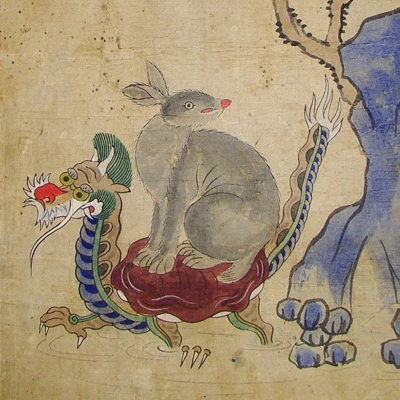
Even though Japan ignores and discriminates against Korea with anti-Korean sentiment, we have never openly antagonized them. Rather, the whole generation's 'blindly following' (부화뇌동), adding the trot craze of the elderly as if pouring oil on the fire of some young people who are excited to follow the original and embrace all Japanese culture, is the completion of anti-Korean sentiment inherited from generation to generation. Koreans who embrace the ghost of colonial rule and admire and worship pro-Japanese politicians must realize that they are becoming the driving force behind Japan's illusion that it is still controlling the former colonial ruling people beyond its own borders. The government and institutions that outwardly say they should aim for an equal and equivalent relationship between Korea and Japan must check whether the singularity of biological genes expressed within their members is turning the national system. Think about the difference between Koreans who publish books that are not read and Japanese who use anti-Korean sentiment as an enlightenment genre to seek mental domination both internally and externally. Who will win the race, the tortoise or the hare?
댓글
( 0 / 500 )
man88
8
글을 읽으며 일본 사회에 남아 있는 혐한 정서가 단순한 감정이 아니라 역사와 사상이 겹겹이 쌓인 결과라는 점을 다시 생각하게 되었습니다. 다만 감정적인 부분을 조금 더 절제하면 더 설득력 있는 글이 될 것 같습니다.
( 0 / 500 )
李秀
6
일본의 근대화 서사와 혐한 담론을 연결해 설명한 부분이 흥미롭습니다. 특히 탈아론이 현대 혐한 담론과 이어진다는 지적은 생각해 볼 가치가 있다고 느꼈습니다.
( 0 / 500 )
Hyejin
5
혐한이 단순한 인터넷 문화나 일부 극단적인 사람들의 문제가 아니라 역사적 인식과 연결된 현상이라는 점을 짚어준 부분이 인상적입니다. 읽으면서 한일 관계의 구조적 문제를 다시 생각하게 되었습니다.
( 0 / 500 )
문진성
5
일본 근대화 담론과 탈아론, 그리고 오늘날 혐한 서적까지 이어지는 흐름을 설명한 부분이 흥미로웠습니다. 다만 자료와 사례가 조금 더 추가되면 좋을것 같습니다.
( 0 / 500 )
SugarBoy
4
한일 관계를 바라보는 한국인의 복잡한 감정을 잘 드러낸 글이라고 생각합니다. 읽는 내내 불편함과 공감이 동시에 느껴졌고, 결국 우리 스스로 역사 인식을 더 깊이 가져야 한다는 생각이 들었습니다.
( 0 / 500 )
Oxford
4
혐한을 단순히 감정적으로 대응하기보다 역사적 배경을 이해해야 한다는 문제 제기는 의미 있다고 생각합니다. 독자 입장에서도 생각할 거리를 많이 던져주는 글입니다.
( 0 / 500 )
wonderland
3
일본의 혐한 담론뿐 아니라 한국 사회의 대응 방식까지 함께 돌아보게 만드는 글이었습니다. 감정적 반응을 넘어서 어떤 태도가 필요한지 고민하게 됩니다.
( 0 / 500 )
낭랑18세
2
한일 관계의 역사적 맥락을 길게 짚어 준 점은 좋지만, 일부 주장은 다소 과격하게 느껴지기도 합니다. 역사적 사실과 해석을 조금 더 구분해 주면 독자가 이해하기 더 쉬울 것 같습니다.
( 0 / 500 )
minjoon
0
일본 사회의 혐한 문제를 지적하는 취지는 공감합니다. 다만 일본 내부에도 다양한 의견이 존재한다는 점을 함께 다루면 글의 균형이 더 살아날 것 같습니다.
( 0 / 500 )
신고내용
신고내용을 선택해주세요
회원비난/비하/욕설글 및 댓글도배성 게시물저작권 침해/불법자료 유출허위사실유포개인정보 유출.사생활 침해무단광고/홍보음란물 및 도박 불법 광고물범죄행위 관련 글불법행위 관련 소개물품 판매 및 사기글악성코드 및 스파이웨어 유포기타 사유 및 운영진 판단


비밀번호를 잊으셨나요?
Sign in with Google
All information provided by us is free of charge and is for the public good.