品

Corea든 Korea든, 품격이 먼저다
Whether Corea or Korea, dignity comes first.
Whether Corea or Korea, dignity comes first.
Now
지금
751 Diaspora
Heritage
유산
Humanity
인문
Mirengsi
未冷尸
Politics
정치
Media
언론
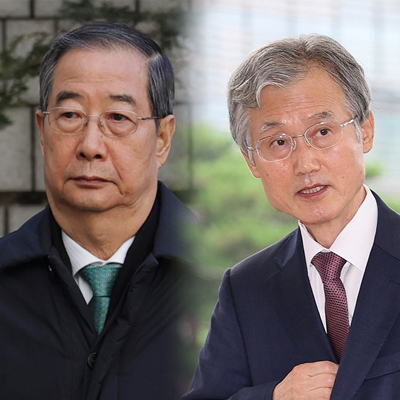
징역 15년을 선고받은 한덕수 전 국무총리의 대법원 상고심은 구속기간 만료 하루 전인 11월 19일에야 두 번째 전원합의체 심리를 진행할 예정.

뉴욕 컬럼
칼럼
飛上
The rebellion is not over, Cho Hee-dae's judicial rebellion

0
2026. 11. 11
- The December 3rd martial law was an act of insurrection that destroyed democracy and constitutional order; while the military rebellion was thwarted by public resistance, accountability is still ongoing.
- The judiciary, led by Chief Justice Cho Hee-dae, is delaying the trials of those responsible for the insurrection, potentially leading to the release of defendants, and has shown inexplicable behavior, particularly in the Han Deok-soo case, by postponing deliberations until just before the expiration of the detention period.
- This severely undermines the judiciary's neutrality and fairness, obstructing the accountability of insurrectionary forces and potentially being criticized as an unconstitutional act that aids their political resurgence.
- The clash between the Lee Jae-myung government's efforts to restore constitutional order and the judiciary's trial management can be interpreted as the judiciary neutralizing the government's constitutional duties based on popular sovereignty.
- Chief Justice Cho Hee-dae must disclose the specific reasons for the trial delays in the Han Deok-soo case and identify those responsible, and the judiciary's decision-making process and the circumstances of trial delays related to the insurrection must be transparently revealed through a parliamentary investigation.
The December 3rd martial law was a clear act of insurrection that attempted to destroy South Korea's democracy and constitutional order. The acts of blockading the National Assembly, the representative body of the people, with military force, suppressing political activities and freedom of the press, and attempting to suspend the functions of constitutional institutions were grave crimes that threatened the very existence of the democratic republic. Fortunately, the military insurrection was thwarted by the resistance of the people and the swift response of the National Assembly, but that does not mean the insurrection is over. The judicial accountability of not only the forces that planned and executed the insurrection but also those who aided or cooperated with it is still ongoing. But what are the people witnessing now? The judiciary, which should judge the insurrection, is instead delaying the trials of those responsible for it, leading to the possibility of the defendants' release. In particular, the actions of the judiciary led by Supreme Court Chief Justice Cho Hee-dae have reached a level that cannot be dismissed as merely a matter of trial delays or administrative judgment. Does Cho Hee-dae's judiciary truly intend to judge the insurrectionists? Or is it using its judicial authority to open an escape route for the insurrectionary forces?
According to a Kyunghyang Shinmun report on November 10, 2026, the Supreme Court appeal trial of former Prime Minister Han Duck-soo, who was sentenced to 15 years in prison in the appellate court on charges of engaging in important duties during the insurrection, is scheduled to hold its second full bench deliberation only on November 19, one day before the expiration of his detention period. The Supreme Court had already referred this case to the full bench on August 5, but substantive deliberations have not been sufficiently conducted since then. Consequently, if the detention period expires on November 20, there is a high possibility that Han Duck-soo will be released without a final verdict.
Is this the normal appearance of the judiciary?
Han Deok-soo is not a mere witness or an peripheral figure. The appellate court sentenced him to 15 years in prison, acknowledging charges that he was involved in establishing the procedural appearance of declaring martial law and participated in discussions about blocking major institutions and cutting off power and water to media outlets. However, the Supreme Court has delayed its judgment until the expiration of his detention period, failing to uphold the spirit of speedy trial stipulated by the Special Act on Rebellion. What is even more difficult to understand is the inconsistency in trial management shown by Chief Justice Cho Hee-dae. While emphasizing the importance of speedy trials in election law cases, why does this speed not apply to rebellion cases that sought to destroy the constitutional order? As the Democratic Party pointed out, the '6·3·3 principle' emphasized by the Supreme Court and the speedy trial provisions of the Special Act on Rebellion must also be respected in rebellion cases. If the judicial timetable varies depending on the political nature of the case or the defendant's status, the judiciary's neutrality and fairness will inevitably be seriously questioned.
Of course, a trial requires sufficient deliberation. However, the justification of sufficient deliberation cannot be a免罪符 (exemption) for indefinitely delaying a trial. Especially if the expiration of the detention period was already foreseeable, the Supreme Court should have adjusted the deliberation schedule accordingly and proceeded with the necessary procedures. If the judiciary neglects a problem that it could have fully managed with its own authority, leading to the release of the defendant, it cannot attribute that responsibility to issues of law and procedure. Now, it is necessary to examine the actions of Supreme Court Chief Justice Cho Hee-dae not as isolated incidents but in a broader context. During the December 3rd martial law, what role did the judiciary play as the last bastion of constitutional protection? The Chief Justice has explained that he recognized the unconstitutionality of martial law and protected the independence of the judiciary. However, what role the judiciary, as a constitutional body, should have actively played during a national crisis like martial law is still subject to scrutiny. The subsequent series of actions, including the conflict surrounding the refusal to re-nominate Supreme Court justice candidates, the Supreme Court's response to judicial reform, the handling of trials related to rebellion, and the delay in the Han Duck-soo case, raise questions about whether the Cho Hee-dae judiciary is truly responding to the historical demand for the restoration of constitutional order after the rebellion.
There is a more serious question that needs to be raised here.
Is Cho Hee-dae the head of the judiciary who delays the trials of those involved in the rebellion, or is he an actual accomplice to the rebellion, using the judiciary's power to aid the political survival of the rebel forces? A judgment of criminal complicity requires evidence of specific actions, intent, and causality. Therefore, Cho Hee-dae's individual criminal responsibility cannot be definitively asserted as an established fact. However, the suspicion that his complicity should be investigated and clarified, and his political and constitutional responsibility for the actions he performed as the head of the judiciary, are separate issues. Even if he did not directly participate in the rebellion, if there were actions that intentionally obstructed the clarification of responsibility of the rebel forces and used judicial power to aid their release and political resurgence, that is not merely a matter of trial management. It is an act that obstructs the restoration of constitutional order after the rebellion, and can itself be evaluated as a serious unconstitutional act of abusing the authority of a constitutional institution.
From this perspective, the delay in the Han Duck-soo case cannot be taken lightly. This is because the judiciary itself is creating a situation where key figures involved in the rebellion can avoid legal responsibility or be released from custody. It is not a problem that will end with the release of one person. If the expiration of the detention period and trial schedules of other defendants related to the rebellion, such as Lee Sang-min, follow Han Duck-soo, it could result in the perpetrators of the rebellion escaping the law one after another. If so, who benefits from this? It provides an opportunity for the forces that committed the rebellion to evade judicial responsibility, and it makes it difficult for the Lee Jae-myung government, which was launched after the rebellion, to restore constitutional order and normalize the state.
The Lee Jae-myung government faces the historic task of restoring the national system that collapsed after the December 3rd insurrection and normalizing constitutional democracy. However, if the efforts of the government, elected by the people, to restore constitutional order and the judiciary's management of trials directly clash, and if the judiciary exercises its authority in a way that allows for the release of those responsible for the insurrection, this cannot be seen as a mere policy conflict between the government and the judiciary. If the judiciary, through its authority, nullifies the constitutional duties of a government formed by popular sovereignty, it would be difficult to avoid criticism that this is a political counterattack against the government and the constitutional order, and a rebellion using judicial power.
The independence of the judiciary and its checks on the government are essential elements of democracy. However, judicial independence does not grant the authority to protect forces that have destroyed the constitution. There is a clear difference between a judiciary that checks the government and a judiciary that obstructs the investigation into those responsible for the insurrection. Furthermore, if the judiciary provides procedural convenience to those responsible for the insurrection while resisting institutional reforms aimed at restoring constitutional order by prioritizing its organizational authority, the public will inevitably perceive this not as judicial independence but as the political exercise of judicial power. Insurrection does not only recur through military force. If a constitutional body uses its authority to absolve responsibility for an insurrection and obstruct the restoration of a democratically constituted constitutional order, that too is a serious threat to democracy. Therefore, it is now time to move beyond merely demanding an explanation from Chief Justice Cho Hee-dae.
First, the specific reasons for referring the Han Deok-soo case to the full bench and then delaying the substantive review, as well as who is responsible, must be clarified.
Second, the circumstances under which the principle of speedy trial in the Insurrection Special Prosecutor Act was effectively not upheld, and the reasons for not taking appropriate measures despite fully anticipating the possibility of release due to the expiration of the detention period, must be explained.
Third, the judiciary's response during the December 3rd emergency martial law and Chief Justice Cho Hee-dae's subsequent actions must be comprehensively verified. If necessary, a parliamentary investigation should thoroughly uncover the judiciary's decision-making process and the reasons for the delay in trials related to the insurrection.
Fourth, it must be investigated whether the delay in trials was the result of administrative decisions or a deliberate exercise of authority intended to produce favorable outcomes for specific defendants. If intentional obstruction and official misconduct are confirmed, corresponding legal and constitutional accountability must be enforced.
The judiciary is the last bastion protecting the Constitution of the Republic of Korea. If that bastion collapses, where can the people seek protection for their constitutional rights? If the judiciary fails to judge insurrection and instead opens an escape route for those responsible for it, the very reason for the judiciary's existence will be shaken. Cho Hee-dae must not hide behind the title of Chief Justice of the Supreme Court. He must not block the public's legitimate suspicions by invoking judicial independence. He must responsibly answer to the people for the authority he exercised and its consequences. The 12·3 insurrection has not yet been historically concluded, as the judicial judgment against those responsible for it has not ended. If there is judicial complicity that enables the political resurgence of insurrectionary forces, it must also be uncovered. The restoration of democracy is impossible without the liquidation of insurrection. The judiciary must not be an exception.
댓글
( 0 / 500 )
ula90
7
내란 세력에 대한 책임 규명이 정치적 이해관계에 따라 흔들려서는 안 됩니다. 국회도 정쟁에 머물지 말고 필요한 국정조사와 제도적 검증을 추진해야 합니다. 누구도 법 위에 있을 수 없다는 민주주의의 원칙을 이번에는 반드시 바로 세워 주시기 바랍니다.
( 0 / 500 )
Donald
10
선거법 재판에서는 신속성을 강조하면서 내란 관련 재판에서는 왜 다른 잣대를 적용하는가. 법 앞에 누구나 평등해야 한다는 원칙은 대법원장에게도 예외가 아니다. 조희대 대법원장은 재판 지연의 경위와 책임을 국민 앞에 분명히 설명해야 한다.
( 0 / 500 )
Anan
8
내란은 국회 앞에서 군인들이 철수했다고 끝난 것이 아닙니다. 헌정질서를 파괴하려 한 세력에 대한 사법적 심판이 완결되어야 비로소 내란 청산이 이루어지는 것입니다. 사법부가 국민의 기대에 부응하고 있는지 엄중하게 돌아봐 주시기 바랍니다.
( 0 / 500 )
paradise
7
조희대 대법원장은 사법부 독립이라는 말 뒤에 숨어 국민의 정당한 의혹을 외면해서는 안 됩니다. 내란이라는 헌정질서 파괴 사건의 재판마저 지연 논란에 휩싸였다면 대법원장으로서 책임을 통감하고 그 경위를 명확히 밝혀야 하지 않겠습니까? 사법부의 권위는 직위가 아니라 국민의 신뢰에서 나옵니다.
( 0 / 500 )
革命77
6
내란은 군홧발을 앞세운 순간에만 존재하는 것이 아니다. 헌법을 파괴한 세력에 대한 사법적 심판을 지연시키고 책임을 회피할 통로를 만든다면 그것 역시 민주주의에 대한 중대한 위협이다. 사법부가 국민의 신뢰를 회복하려면 먼저 스스로의 행적부터 투명하게 밝혀야 한다.
( 0 / 500 )
komodo
5
사법부의 독립은 존중받아야 하지만 그 독립이 국민의 감시와 책임으로부터 자유롭다는 의미는 아닙니다. 특히 내란 관련 재판이 지연되는 이유와 그로 인해 발생하는 결과에 대해서는 대법원이 명확하게 설명해야 한다고 생각합니다.
( 0 / 500 )
曲筆
5
12·3 내란을 막아낸 것은 국민과 국회였지만, 내란을 완전히 청산하는 일은 사법부의 몫입니다. 그런데 사법부가 오히려 책임자들의 재판을 지연시킨다는 의혹을 받는다면 심각한 문제입니다. 조희대 대법원장은 더 이상 침묵하지 말고 국민께 납득할 만한 설명을 내놓아야 합니다.
( 0 / 500 )
Tomson
4
헌법을 수호해야 할 대법원장이 내란 관련 재판의 지연을 둘러싼 의혹조차 해소하지 못한다면 사법부의 존재 이유를 국민께 어떻게 설명하겠습니까? 조희대 대법원장은 사법부 독립을 방패 삼지 말고 자신의 재판 행정과 의사결정에 대해 국민 앞에 책임 있게 답변하기 바랍니다.
( 0 / 500 )
상진
4
사법부가 권력으로부터 독립해야 한다는 원칙에는 동의합니다. 그러나 그 독립은 헌법과 민주주의를 지키기 위한 것이지 사법 권력 자체를 보호하기 위한 것은 아닙니다. 내란 관련 재판의 지연 과정에 문제가 있었다면 철저히 조사하고, 책임이 확인되는 부분은 반드시 책임을 물어야 합니다.
( 0 / 500 )
同志愛
3
법은 누구에게나 공평하게 적용되어야 합니다. 일반 사건에서는 신속한 재판을 강조하면서 국가의 존립을 위협한 내란 사건에서는 일정이 지연된다면 국민께서 의문을 갖는 것은 당연하지 않겠습니까? 사법부 스스로 신뢰를 훼손하는 일이 없기를 바랍니다.
( 0 / 500 )
홍조
2
사법부 독립은 존중되어야 하지만 그것이 사법부의 무책임이나 불투명한 권한 행사를 보호하는 방패가 되어서는 안 된다. 한덕수 사건을 비롯한 내란 재판의 지연 경위와 의사결정 과정을 국회가 철저히 살펴야 한다. 의혹은 덮을수록 커지고 진실은 밝혀야 신뢰가 회복된다.
( 0 / 500 )
kokoria
1
국민이 목숨 걸고 지켜낸 민주주의를 사법적 절차의 이름으로 훼손해서는 안 된다. 사법부는 권력 위에 군림하는 조직이 아니라 헌법과 국민의 기본권을 수호하는 기관이다. 내란 세력에 대한 책임 규명과 사법부의 자기개혁, 어느 하나도 미룰 수 없는 시대적 과제다.
( 0 / 500 )
신고내용
신고내용을 선택해주세요
회원비난/비하/욕설글 및 댓글도배성 게시물저작권 침해/불법자료 유출허위사실유포개인정보 유출.사생활 침해무단광고/홍보음란물 및 도박 불법 광고물범죄행위 관련 글불법행위 관련 소개물품 판매 및 사기글악성코드 및 스파이웨어 유포기타 사유 및 운영진 판단


비밀번호를 잊으셨나요?
Sign in with Google
All information provided by us is free of charge and is for the public good.