品

Corea든 Korea든, 품격이 먼저다
Whether Corea or Korea, dignity comes first.
Whether Corea or Korea, dignity comes first.
Now
지금
751 Diaspora
Heritage
유산
Humanity
인문
Mirengsi
未冷尸
Politics
정치
Media
언론
이 글은 LA 이승우 변호사의 기고 글입니다.

뉴욕 컬럼
칼럼
blueSky
Wonhyo's Tathagatagarbha (One Mind) thought and peace and unification on the Korean Peninsula

0
2026. 10. 14
- The Awakening of Faith in Mahayana goes beyond the Alayavijnana doctrine of Yogacara, presenting the 'Tathagatagarbha' (Buddha-nature) as the basis for ultimate enlightenment, free from defilements, which Wonhyo interpreted as a self-pure mind filled with infinite merit.
- While Xuanzang's Yogacara hierarchically classified consciousness to rationalize social strata, Wonhyo criticized this, emphasizing equality through the cyclical relationship between Alayavijnana and the eye-consciousness.
- Wonhyo's thought aimed for people-centered equality, offering an accessible path to enlightenment instead of complex doctrines, ultimately expanding into the Tathagatagarbha idea, which yearned for a peaceful, unified Silla free from violence.
- The author points out that the 'ignorance' concept in The Awakening of Faith in Mahayana suggests that Article 3 of the current constitution's territorial clause could act as an 'impulsive delusion' in inter-Korean conflict, proposing constitutional amendment based on effective control and peaceful unification through mutual understanding.
- Emphasizing Wonhyo's 'reconciliation' approach, the author argues that North and South Korea must understand each other's positions, strive for a peaceful, unified Korean Peninsula akin to the 'Tathagatagarbha' free from defilements, and focus on resolving current issues rather than past ones.
The Awakening of Faith in Mahayana is a book written by the Indian Bodhisattva Ashvaghosha around the 5th century CE, with the intention of strengthening faith in Mahayana. Although it is based on Yogacara philosophy, it does not stop at Alaya-vijnana, the highest value of Yogacara, but asserts the idea of One Mind. Wonhyo said that One Mind is nirvana, and nirvana is Tathagatagarbha. The difference between Alaya-vijnana and Tathagatagarbha in Yogacara is that both are based on a storage consciousness that contains the same memories, but Alaya-vijnana emphasizes that it is the basis of enlightenment and nirvana, as well as the basis of defilements. Tathagatagarbha is the idea that it is the basis of enlightenment and nirvana, and there can be no defilements. In his commentary on The Awakening of Faith in Mahayana, Wonhyo concretized the purpose of The Awakening of Faith in Mahayana by defining Tathagatagarbha as a mind full of infinite merits. He made the perfectly pure mind, which is of a different dimension from Alaya-vijnana, that is, the mind whose defilements have completely disappeared, the standard for practice.
Xuanzang (602-664), the protagonist of Journey to the West, a well-known Tang Dynasty monk, was a master of Yogacara. The content of Yogacara explains in detail the first cause and process to clarify where and how human suffering, ultimately death, came from. The process of reaching death in Yogacara is as follows: ignorance, volitional formations, consciousness, name-and-form, six sense bases, contact, feeling, craving, clinging, becoming, birth, and old age and death. This is expressed as the twelve links of dependent origination. In modern terms, it refers to the process from ignorance to unconscious intention, unconscious judgment, form and concept, six sense organs (eyes, ears, nose, tongue, body, consciousness), contact, sensation, love, attachment, existence (self), birth, and then aging and death. In particular, the independent school of Yogacara was established in the process of classifying the judgment function in more detail.
Looking at it, it's like this: when our sensory organs—eyes, ears, nose, tongue, body, and mind—encounter an object, they each produce eye-consciousness, ear-consciousness, nose-consciousness, tongue-consciousness, body-consciousness, and mind-consciousness. The processes of seeing, hearing, smelling, tasting, feeling, and judging are defined as the first five consciousnesses. Mind-consciousness acknowledges the existence of consciousness that operates independently of the first five consciousnesses and is classified as the sixth consciousness. The sixth consciousness also integrates information from the first five consciousnesses. The source of these six consciousnesses is the Manas-consciousness, also known as self-consciousness. It is the fundamental consciousness (judgmental faculty) that distinguishes between 'I' and 'you.' This consciousness is based on the Alaya-consciousness, a storehouse consciousness. It is where all information about human thoughts and actions is stored. It is where both the elements of defilement and the elements of enlightenment coexist. The enlightenment of the Yogacara school is a matter of how the defiling elements of the Alaya-consciousness can settle down without agitation. The primary concern of the Yogacara school is not to eliminate defilements through practice, but to quiet them. In other words, for the Yogacara school, the Alaya-consciousness is both the foundation of enlightenment and the cause of suffering through defilements. Ultimately, the greatest challenge is to discover the Alaya-consciousness and maintain tranquility through continuous meditation. They conclude that the enlightened one is not agitated, and the agitated one is not enlightened.
At that time, Master Xuanzang interpreted this method of Indian Yogacara interpretation as a hierarchical system that divides the sensory organs into upper and lower levels. The first five consciousnesses (eye, ear, nose, tongue, body consciousness) are considered lower than mind-consciousness, which is lower than Manas-consciousness (self-consciousness), which in turn is lower than Alaya-consciousness (storehouse, subconscious). This is not merely a classification of conscious activities; politically, it can be understood as a way to elevate the authority of the Tang imperial court. Ultimately, the Alaya-consciousness can be understood as the emperor with the highest potential for enlightenment, while the Manas-consciousness, mind-consciousness, and the first five consciousnesses can be understood as officials and common people. It can be seen as a means to rationalize the social structure and hierarchy of the time.
Xuanzang, from his studies in India until his return and work on translating scriptures, received active financial support from Emperor Taizong and Emperor Gaozong. Therefore, Xuanzang's systematized interpretation of Yogacara Buddhism is understandable. The term 'pasahyeonjeong' (破邪顯正), often used in our political circles, comes from Xuanzang's interpretation of Yogacara. It was coined by Xuanzang. It declares that Alayavijnana should be considered the highest value and that Buddhist practice should center around it. The other five or six consciousnesses and Manas-vijnana (self-consciousness) were regarded as perverse. However, in Buddhism, which advocates human equality, can Xuanzang's way of thinking truly be considered orthodox? Wonhyo's Panbiryangnon criticizes Xuanzang's systematized interpretation of Yogacara. 'Biryang' means logic (proof), and 'pan' means criticism. In other words, it refers to a treatise that criticizes Xuanzang's logic and method of argumentation regarding Yogacara. It addresses the inherent limitations of Xuanzang, who received financial support from the imperial family, specifically how to equalize the systematization and grading of various consciousness functions.
In Panbiryangnon, Wonhyo did not systematically grade consciousness from eye-consciousness to the eighth consciousness, Alayavijnana, but instead proposed a cyclical hermeneutics where Alayavijnana circularly influences eye-consciousness. This was a revolutionary idea at the time, equalizing rather than grading the consciousnesses. The idea that Alayavijnana, the highest consciousness, would again influence the lowest eye-consciousness was an impossible way of thinking in China at the time. This was partly due to the authority of Xuanzang, but also because it could be considered an insult to the emperor, who had to maintain supreme political authority. The Tang Dynasty can be seen as an era that sought to control the populace through Buddhist thought. It is worth remembering that political power tried to control even the minute details of religion in this way. I believe that even today, only the form has changed, but it is not significantly different.
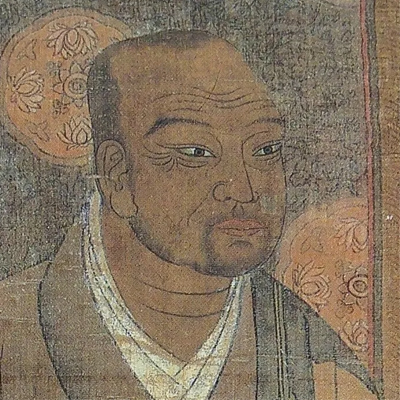
In contrast, Wonhyo's thought can be seen as centered on the people, not the king. The fact that he sang the Muaega in his later years, was called Bokseong Geosa, and gave up all vested interests to evangelize among the common people was based on this idea of equality. Wonhyo did not teach Buddhism in a difficult way. He did not teach that enlightenment could only be attained by studying doctrine, participating in specific religious rituals, and meditating. He taught that anyone could go to paradise simply by chanting Amitabha Buddha. This is Pure Land Buddhism. He put forward the easiest way to immediately relieve the common people who were tired of life, that is, to immediately bring peace of mind, rather than difficult theories. This is because the common people could immediately accept it. His acts of sleeping with Princess Yoseok, giving birth to Seolchong, growing his hair, and drinking alcohol were all means to get closer to the common people, and a teaching that there is a path to enlightenment not only in temples but also in the secular world. If we consider Wonhyo as the ideological foundation of Unified Silla, the first unified nation of our people, it is clear that the people-centered ideology, which valued and based itself on the people, was the foundation. He was a figure who used Buddhism not as a tool for the rulers' governance, but only for the happiness of the common people. It is very fortunate that such a figure illuminated the ideological dawn of the first unified Korean nation. This is because today's Korean democracy is ultimately based on the people-centered ideology.
Wonhyo defined truth as being without views and without establishment. He defined it as having nothing more to discard and nothing more to fill. And he used "jinyo," meaning true and constant, to refer to truth. This aligns with the view of truth held by Ashvaghosha Bodhisattva. Although Ashvaghosha Bodhisattva recognized jinyo as truth, he did not use it as a term representing the highest state or enlightenment. Instead, he used the term "ilsim" (one mind) to denote the highest enlightenment, and used "jinyomun" (gate of jinyo) instead of jinyo. And as its counterpart, he posited "saengmyeolmun" (gate of birth and death).
This insight reveals that once truth or suchness is put into language, it is no longer suchness itself. This aligns with Cantor's concept of infinity, which demonstrated differences even within the idea of infinity. It's a proof that the infinity of integers is smaller than the infinity of real numbers. While there's a one-to-one correspondence between the infinity of even and odd integers, for real numbers, even if you try to establish a one-to-one correspondence with integers, there will always be one more real number greater than the corresponding integer. Therefore, it has been proven that the infinity of real numbers is greater than the infinity of integers. This is the core of Cantor's diagonal argument and set theory.
I believe that the concept of infinity, once put into language, inevitably becomes differentiated, even if it inherently implies no distinction due to the limitations of language. This is because of the limitations of language. Buddhism also begins with the realization of the limitations of language. When one realizes that language cannot represent truth, wisdom blossoms. This is called Prajna. The Prajna in the Prajnaparamita Sutra refers to this very meaning. It means recognizing facts as they are, free from the constraints of language. In other words, the concept of infinity—that there are no limits, so both sides cannot be divided, objects cannot be differentiated, and there must be equality—the moment it is put into language, it reveals differentiation, contrary to the content of the original concept. Ashvaghosha and Wonhyo are thought to be individuals who thoroughly grasped these limitations of language.
Ashvaghosha understood that the One Mind has two gates: the Gate of Suchness and the Gate of Arising and Ceasing. His goal was to return to the state of the One Mind through the tension and communication between these two gates. Simply put, the Gate of Suchness refers to good thoughts and actions, while the Gate of Arising and Ceasing refers to unwholesome thoughts and actions. Achieving the One Mind is possible when the state of the Gate of Suchness continuously outweighs the Gate of Arising and Ceasing. Ashvaghosha describes this process as perfuming the Gate of Arising and Ceasing through the Gate of Suchness. This refers to the process where good thoughts and actions gradually and slowly transform unwholesome thoughts and actions.
One might ask if "Ilsim," the main concept of the Awakening of Faith in Mahayana, is also a language. However, literally translated, this word means "one mind." It was not a term used within Buddhism at that time. And conceptually, it does not mean truth. It merely points to the experienced world of truth that cannot be expressed in words. The Awakening of Faith in Mahayana states that Mahayana means Tathata (suchness), Tathata means Ilsim (one mind), Ilsim means Nirvana (extinction), and Nirvana is Tathagatagarbha (Buddha-nature). It is an infinite world premised on absolute equality. If this is applied to humans and society, it would be a state of endless peace.
Regarding what Tathagatagarbha is, Wonhyo states in his commentary on the Mahayana-sraddhotpada-sastra to prevent misunderstanding: "This is stated to prevent worldly people from misunderstanding Tathagatagarbha. Tathagatagarbha is a mind filled with infinite merits, a state devoid of even an inch of unwholesome thought or action." This statement warns against some people confusing Tathagatagarbha with Alaya-vijnana, interpreting it as both the seed of Suchness and the seed of defilements. Considering Wonhyo's kind interpretation to dispel such misunderstandings of Tathagatagarbha, it becomes clear what the Mahayana-sraddhotpada-sastra is based on and what its ultimate goal is. It is precisely a mental world composed of infinite good merits, without even an inch of bad thoughts or defilements. This presupposes that there should be no linguistic or physical violence within Silla society. Furthermore, considering that it was the time when the great feat of unifying the Three Kingdoms was being achieved, it presupposes that for Wonhyo, Unified Silla should be a Tathagatagarbha world and a completely peaceful nation. I believe he envisioned a Unified Silla free from any violence, internal strife, or war.
His ideas must have instilled in most people at the time, regardless of whether they were from Goguryeo, Baekje, or Silla, the understanding that the world of One Mind and Tathagatagarbha is a world without violence. I believe Wonhyo inspired non-violent peace in the people of Unified Silla through his Tathagatagarbha thought. The fact that Baekje and Goguryeo fell, and Silla, after expelling the Tang Dynasty in 676, remained a unified nation for 259 years until its fall in 935, suggests that a central ideology clearly existed, and Wonhyo's One Mind and Tathagatagarbha thoughts were widely accepted by the people of Unified Silla. So, from the perspective of a practitioner, how exactly did Wonhyo reconcile disputes? His method is well-illustrated in his work, Sipmunhwajaengnon. Although there are various sects within Buddhism, and the way Buddhism is understood differs according to perspective and position, these are ultimately just glimpses of a larger world of truth. Since everyone is expounding only one aspect of the ultimate truth, if everyone were to change their perspective, there would be more than enough understanding. He also chose a method of resolving disputes by moving beyond confrontational language and viewing problems from a higher dimension. I will introduce the specific contents of the 10 disputes on another occasion. However, what must be remembered is that Wonhyo's method of reconciling disputes is one of integration (hoetong). It involves excluding one-sided claims, understanding the opponent's position (empathy), viewing the problem from a higher, holistic dimension, and enabling mutual integration.
The commonality between Sipmunhwajaengnon and Tathagatagarbha thought is that they both encourage thinking on a higher dimension. I believe that Sipmunhwajaengnon's emphasis on empathy, making one realize that their own assertion is just one aspect of the whole, and Tathagatagarbha thought's postulation of a world of infinite merit free from all defilements, a world of eternal peace, are the same approach to problem-solving. Both postulate an ideal world beyond present experience, that is, a world of absolute peace. However, such a peaceful world is still a world to be experienced in reality.
Here, we need to consider how South Korea is currently trying to resolve the differences in positions between North and South Korea, and whether it is attempting to resolve them at a higher level, like the Sipsimhwajaengnon or the Tathagatagarbha thought of the Daeseung Gisinron. I will examine this focusing on the most basic constitutional provisions. Currently, South Korea's constitution has a territorial clause. Article 3 states that the territory of the Republic of Korea consists of the Korean Peninsula and its adjacent islands. This is an ineffective phrase. Rather, it becomes a potential seed of conflict between North and South Korea. I believe it is an ideological provision that differs from reality and potentially harbors the possibility of war. In fact, the Constituent Assembly Constitution also contained this provision, and Syngman Rhee repeatedly advocated for a northern invasion before the Korean War. I think it was an impulsive claim.
As mentioned earlier, Buddhism states that human suffering begins with ignorance through the twelve links of dependent origination. Ignorance refers to a lack of understanding of the truth. And it is said that in that state of ignorance, there are three subtle delusions: ignorance-karma-impression, the impression of the perceiver, and the impression of the perceived. All are subtle thoughts close to the subconscious. The impression of the perceiver is the subjective, meaning the thought that 'I' exist independently, and the impression of the perceived is the objective, meaning the thought that 'you' exist independently. And ignorance-karma-impression is a thought where the distinction between 'I' and 'you' has not even arisen. Here, 'impression' (thought) refers to thoughts accumulated from past experiences. The Daeseung Gisinron defines even this ignorance-karma-impression as a subtle affliction. And from ignorance-karma-impression, impulsive forces and potential desires sprout, providing the impetus for action without any rational thought process.
I believe that Article 3 of the Constitution, the territorial clause, enables the Korean people to have impulsive ideas about unification. I believe that Syngman Rhee's continuous主張 for an invasion of the North before the Korean War was due to Article 3 of the Constitution's territorial clause. Given South Korea's military strength at the time, his claims can only be seen as impulsive. Furthermore, the Awakening of Faith in the Mahayana states that following these three delusions, human suffering continues through the inherited consciousness, the discriminating consciousness, and attachment. Inherited consciousness refers to the continuous, unconscious arising of past bad thoughts; discriminating consciousness refers to further distinguishing these arisen thoughts, deepening discrimination towards objects; and finally, attachment to arisen thoughts or objects repeats suffering.
The most urgent task for peaceful unification in South Korea is to limit Article 3 of the Constitution, the territorial clause, to areas under effective control. This is where constitutional amendment is needed. It also involves recognizing the subtle delusion of ignorance and clearly defining the current border between North and South Korea. Furthermore, it means no longer instigating disputes over territorial issues. The method is simple: do not bring up any past issues with North Korea at this point. Even if new incidents occur, respond with peaceful methods, not violent ones. Finally, for the establishment of peace between North and South Korea, do not cling only to the South Korean way. We must put ourselves in North Korea's shoes.
Finally, it is about redefining the concept of unification. We need to recall Wonhyo's understanding of the Tathagatagarbha as mentioned in the Daeseung Gisinron. For Wonhyo, the Tathagatagarbha is the one mind (ilshim), a state of nirvana where all defilements have disappeared, a world filled with infinite merits, and a state of peace free from all afflictions. I believe our unification should also become the world of Tathagatagarbha that Wonhyo envisioned. Even after unification, the Korean Peninsula must remain free from any unrest, civil war, or war. This principle should be reaffirmed in a constitutional amendment. Not only peaceful unification, but the constitution should clearly state that the Korean Peninsula must remain peaceful even after unification. To satisfy this, we must constantly strive. We must be able to think from North Korea's perspective and exercise the wisdom to solve problems based on current events and facts, not the past. If we have a firm belief in peaceful unification and a firm principle for a peaceful Korean Peninsula even after unification, I believe the best foundation for Korean Peninsula unification policy has been laid. And what we need to do is to send friendly messages and implement policies that encourage North Korea to communicate with South Korea. If these efforts accumulate, I am confident that peaceful unification between the two Koreas and peace on the Korean Peninsula will surely be achieved.
댓글
( 0 / 500 )
民衆改革
6
원효의 일심과 여래장 사상을 오늘날 한반도 평화통일의 문제와 연결한 점이 참으로 인상적입니다. 통일은 어느 한쪽의 이념과 체제를 다른 쪽에 강요하는 일이 아니라, 서로의 차이를 인정하고 폭력과 적대감을 넘어서는 과정이어야 합니다.
( 0 / 500 )
이민호
6
평화가 통일의 수단인 동시에 통일의 궁극적인 목적이라는 말씀에 깊이 공감합니다. 다만 헌법 개정은 안보와 통일의 헌법적 책무까지 함께 살피며 신중하게 추진해야 할 것입니다.
( 0 / 500 )
Oscar_W
7
남북한의 갈등을 해결하려면 상대방을 굴복시켜야 한다는 생각부터 내려놓아야 합니다. 원효의 십문화쟁론이 서로 다른 주장을 더 큰 차원에서 이해하고 회통하려 했듯이, 남북관계도 상대의 입장을 헤아리는 데서 출발해야 합니다.
( 0 / 500 )
타미르
5
이승우 변호사님, 원효대사의 일심과 여래장 사상을 한반도 평화통일이라는 오늘의 과제와 연결해 주신 통찰에 감사드립니다. 특히 통일 그 자체보다 통일 이후에도 전쟁과 폭력이 없는 사회를 만들어야 한다는 말씀에 깊이 공감합니다.
( 0 / 500 )
김치
5
헌법 제3조의 영토조항을 평화통일의 관점에서 재검토하자는 문제 제기는 가볍게 넘길 일이 아닙니다. 영토에 대한 선언적 권리와 현실의 평화적 공존 사이에 어떤 긴장이 있는지 진지하게 논의할 필요가 있습니다. 헌법은 대립을 고착하는 문서가 아니라 국민의 생명과 평화를 지키는 약속이어야 합니다.
( 0 / 500 )
고고준
5
통일이라는 이름으로 또 다른 분쟁을 준비하는 것이 아니라, 통일 이후에도 전쟁이 없는 한반도를 준비해야 한다는 주장에 동의합니다. 남북이 서로를 인정하고 대화의 문을 다시 열 수 있도록, 지금부터 작은 신뢰를 쌓아 가야 하겠습니다.
( 0 / 500 )
Ellie
4
통일이라는 이름으로 또 다른 분쟁을 준비하는 것이 아니라, 통일 이후에도 전쟁이 없는 한반도를 준비해야 한다는 주장에 동의합니다. 남북이 서로를 인정하고 대화의 문을 다시 열 수 있도록, 지금부터 작은 신뢰를 쌓아 가야 하겠습니다.
( 0 / 500 )
Daniel
4
기독교인의 입장에서도 이 글의 평화와 화해의 정신에 깊이 공감합니다. 예수님께서 원수를 사랑하고 화평하게 하는 자가 복이 있다고 가르치셨듯이, 남북한도 증오와 대결을 넘어 서로를 이해하고 용서하는 길을 찾아야 합니다. 통일은 어느 한쪽의 승리가 아니라 한반도에 사는 모든 사람의 생명과 존엄을 지키는 평화의 과정이어야 합니다.
( 0 / 500 )
Min_lee
3
상대를 굴복시키는 것이 아니라 상대의 입장을 이해하고 더 큰 차원에서 화합을 모색하는 자세야말로 지금 남북관계에 꼭 필요한 정신이라고 생각합니다. 깊이 있는 글을 통해 평화통일의 본질을 다시 생각하게 해 주셔서 감사합니다.
( 0 / 500 )
올드보이55
2
종교는 달라도 평화를 향한 가르침은 서로 통하는 것 같습니다. 원효의 일심과 여래장 사상이 추구하는 화합의 정신은 기독교의 사랑과 이웃에 대한 섬김의 정신과도 맞닿아 있습니다. 상대방을 굴복시키기보다 이해하고, 과거의 원한보다 미래의 평화를 선택하는 것, 그것이 남북한 모두가 실천해야 할 신앙인의 자세이자 한반도 평화통일의 출발점이라고 생각합니다.
( 0 / 500 )
신고내용
신고내용을 선택해주세요
회원비난/비하/욕설글 및 댓글도배성 게시물저작권 침해/불법자료 유출허위사실유포개인정보 유출.사생활 침해무단광고/홍보음란물 및 도박 불법 광고물범죄행위 관련 글불법행위 관련 소개물품 판매 및 사기글악성코드 및 스파이웨어 유포기타 사유 및 운영진 판단


비밀번호를 잊으셨나요?
Sign in with Google
All information provided by us is free of charge and is for the public good.