品

Corea든 Korea든, 품격은 이름보다 먼저다
Whatever the name—Corea or Korea—dignity comes first.
Whatever the name—Corea or Korea—dignity comes first.
Now
지금
751 Diaspora
Heritage
유산
Humanity
인문
Mirengsi
未冷尸
Politics
정치
Media
언론
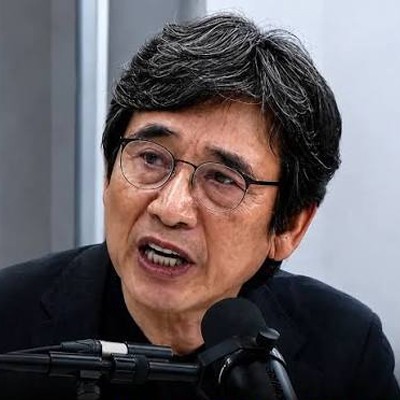
누가 당신에게 해석 권력의 독점을 주었나. 아무도 없다.

뉴욕 컬럼
칼럼
Robert.kim
No one has given Yoo Si-min a monopoly on interpretation.

0
2026. 09. 28
- Yoo Si-min monopolized "interpretive power" within the democratic and progressive camps, presenting his logic as truth, but in reality, he contributed to dividing and inciting the internal faction.
- His criticism was sharper towards internal colleagues than external enemies, a consistent pattern seen from the Kim Dae-jung and Roh Moo-hyun administrations to the Lee Jae-myung government.
- His dualistic attitude—cautious with the powerful and harsh with the weak—reveals the emptiness of his intellectual pretense, as he used his interpretive monopoly to pathologize opponents.
- Ultimately, as an "interpretive monopolist," he is merely an "attention-seeker" craving public adoration, and his intellectual posturing has devolved into incitement, eroding the faction from within.
Yoo Si-min, who gave you the monopoly on interpretive power? No one. You have merely declared that you have occupied that position yourself for a long time. In the public discourse of the democratic and progressive camp, you have always stood as an 'interpreter,' and you have made it so that your interpretations were accepted as truth. However, the reality of those interpretations was closer to a monopoly on interpretation than a sharing of knowledge. The analogies and diagnoses that came from your mouth became slogans of incitement, and those slogans, in turn, became a knife that divided the camp from within. You have repeated this structure for decades.
You claim to have presented your logic in the so-called democratic progressive camp. However, the actual effect of that logic has always been closer to incitement and the destruction of the camp. The method of first defining colleagues within the camp rather than enemies outside, and then packaging that definition with moral superiority. This method was not significantly different during the Kim Dae-jung era, the Roh Moo-hyun era, and now the Lee Jae-myung administration.
Ahead of the 1997 presidential election, you concluded that Kim Dae-jung's chances of winning were close to zero, and instead wrote that Cho Soon should be put forward. In a 1999 Dong-A Ilbo column, you stated that public support for the president had hit rock bottom, and that the ruling party had taken down its signboard just two years after experiencing the joy of a horizontal transfer of power. You also chastised the president for not listening to the voices of intellectuals who warned against the 'curtain of human relations' that blinded the president. It is said that you later apologized for that criticism to Mrs. Lee Hee-ho in Donggyo-dong. However, that apology could not undo the remnants of interpretation you had already sown. The sharpness that should have been directed at the dictatorship and conservatism outside the camp was, in fact, wielded more easily and more often against those in power within the same camp.
The same pattern continued during the Roh Moo-hyun administration. You defended Roh Moo-hyun's grand coalition plan, saying, “If the commander says charge, shouldn't we go, even if it's not this mountain?” It sounded like words of loyalty, but that loyalty was selective. Your voice grew louder not in moments of unity that the camp needed, but in moments of division where you could seize interpretive control. While using Roh Moo-hyun as symbolic capital, you always tried to keep the ultimate authority of interpretation surrounding that symbol close to you. As revealed in the 1980 statement dispute with Shim Jae-chul, past wounds were recalled when needed, and you tried to hold the interpretive rights to that recall as well.
However, it was different when facing the actual opponent. In the 'prosecutorial surveillance' dispute that continued from 2019 to 2020, you repeatedly stated, specifically targeting Han Dong-hoon, that he had looked into the Roh Moo-hyun Foundation's accounts. Through Alileo and radio, that suspicion became public conviction. But the suspicion was not true. In January 2021, you posted an article on the foundation's website, stating, 'I judge that the suspicion was not true,' and politely apologized to the prosecutorial officials. You admitted to having caused suspicion of surveillance with an unproven allegation. Even after that apology, Han Dong-hoon's side said they had 'already suffered great damage from false instigation' and would consider necessary measures. Ultimately, the defamation conviction was upheld. A fine of 5 million won. Jin Joong-kwon said at the time, 'If you have any shame, apologize and reflect. I cannot understand the attitude of a person who inflicts pain on others and then asks the other party to apologize first.'
Aren't you ashamed of how you cowered before Han Dong-hoon during the Yoon Suk-yeol administration? You pour harsh words and criticism on your own camp, but when facing opponents like the conservatives and prosecutorial power, you only back down after legal pressure mounts. That's not courage; it's calculation. Interpretive power is harsh on the weak and suddenly cautious with the strong. This asymmetry shows how hollow your pretense of being an intellectual is.
The same play is being repeated in the current Lee Jae-myung administration. In June 2026, you said the president's confidence was excessive. You said that the core supporters wanted an expansion, but the president tried to redevelop. You said that 'vulgar demolition specialists' were deployed to the critical public sphere to attack the normal cells of the democratic reform camp. You even used the analogy that the ruling party was suffering from an autoimmune disease, where immune cells attack their own cells instead of external bacteria. Although it was a veiled criticism of the derogatory terms and attacks directed at pro-Roh and pro-Moon factions, the actual effect was clear: branding the expansion of the government in its first year as betrayal, and new interpreters as mercenaries. Prime Minister Kim Min-seok's statement that 'criticizing the president with excessive language and attitude can shake the entire faction' was because his remarks were not simply harsh criticism, but were interpreted as a declaration of war that would fracture the faction.
In September, he went a step further. Regarding the president's explanation of prosecutorial reform, he said, 'It is completely different from the prosecutorial reform we envisioned, the Democratic Party's position, and what we called our pledges,' and 'We have deceived the public until now.' This statement prompted the Blue House to express regret for the first time and even consider legal action, calling it a distortion of facts. You would say that this criticism became freer after leaving the Roh Moo-hyun Foundation. However, that freedom always points in the same direction: dissecting the weaknesses of his own ruling faction with the most provocative sentences, and allowing those sentences to spread through YouTube and fandom.
함돈균을 비롯한 일부 평론가들의 평가가 중요한 이유가 여기에 있다. 함돈균은 당신의 ‘후단협’ 발언을 평론의 관점에서도 “비열했다”가 적절한 표현이라고 했다. 공격 대상의 아킬레스건을 맥락 없이 끌어오는 행위, 논리의 겉모습은 매끈하지만, 어조와 무의식이 가치를 갉아먹는 비평. 그는 당신을 아주 비열한 형태의 비판을 하는 평론가로 규정했다. 지식의 유통망을 특정 채널에 독점시켜 대중의 정신세계를 그 안으로만 흐르게 한다는 지적도 같은 맥락이다. 해석 권력은 설득이 아니라 세뇌에 가깝게 작동한다. 우호 세력을 당신의 비유 체계 안으로 끌어들이고, 그 비유를 거부하는 사람은 ‘철거 전문’, ‘촉법 평론가’, ‘자가면역의 원인’이 된다. 반대자는 논쟁의 상대가 아니라 병리적 존재가 된다. 그것이 당신이 진영 안에서 목소리를 키워 온 방식이다.
A self-proclaimed progressive intellectual. Well, what would a real intellectual say if they saw you? An intellectual assumes their interpretation can be wrong and applies the same standard even in the face of power. You are the opposite. Your interpretation is always yours, and the length of your standard changes depending on the opponent. You call young debaters and new supporters within your camp vulgar and crude, and belatedly post an apology in the face of prosecutorial power. You accuse Kim Dae-jung of being surrounded by sycophants and Lee Jae-myung of deceiving the public. The common thread in all those sentences is one thing: that you must still be at the center of the stage.
Writer Yoo Si-min, you are merely an attention-seeker who just wants to engage in politics, be recognized by the public, and have the public enthusiastically respond to your voice. The writer who writes books, the chairman who led the foundation, and the commentator on YouTube – only the names of their professions were different, but the core of their desire is the same. To become the sole interpreter, monopolize the interpretation of the times, and wish for applause for that interpretation. When that desire comes out clothed in the language of progress, people mistake it for knowledge. However, knowledge becomes propaganda the moment it is monopolized, and propaganda, when repeated, undermines the camp from within.
Who gave you the monopoly on interpretation? No one. You seized it yourself, and you've been tearing down your own side to maintain that position. What's shameful isn't that fact, but your face, still believing that this is the duty of an intellectual.
댓글
( 0 / 500 )
DinDin
9
정확한 지적이라고 봅니다. 문제는 유시민이 무슨 말을 했느냐보다, 자신의 해석을 마치 진영 전체가 받아들여야 할 정답처럼 만들어 온 데 있습니다. 지식인은 해석을 독점하는 사람이 아니라 끊임없이 자신의 해석을 검증받는 사람이어야 합니다.
( 0 / 500 )
Emily
7
가장 공감되는 대목은 ‘해석의 독점’이라는 표현입니다. 유시민의 말이 언제나 틀렸다는 이야기가 아니라, 그의 비유와 규정이 진영 내부에서 너무 쉽게 권위가 되어버렸다는 것이 문제입니다. 누구도 그에게 시대의 해설자 자리를 위임한 적은 없습니다.
( 0 / 500 )
marinboy
6
진영 밖의 권력에는 날카로운 언어를 쓰면서 진영 안의 사람들에게는 훨씬 더 가혹한 잣대를 들이대는 현상이 반복된다면, 그것 역시 비판적으로 살펴봐야 합니다. 비판의 강도가 아니라 비판의 기준이 일관적인지가 지식인의 신뢰를 결정합니다.
( 0 / 500 )
Eulji6
6
말을 잘하고 글을 잘 쓴다고 해서 그 사람의 해석이 곧 진실이 되는 것은 아닙니다. 오히려 언어를 잘 다루는 사람일수록 자신의 말이 사람들의 판단에 미치는 영향을 더 엄격하게 성찰해야 합니다. 유시민에게도 예외가 될 이유는 없습니다.
( 0 / 500 )
x7
5
유시민의 가장 큰 영향력은 지식의 양이 아니라 언어를 만들어내는 능력에서 나왔다고 생각합니다. 문제는 그 언어가 상대를 설명하는 수준을 넘어 상대를 규정하고 낙인찍는 순간입니다. 민주주의에서 해석은 하나가 아니라 서로 경쟁해야 합니다.
( 0 / 500 )
kang59
5
정말 핵심을 찌른 글입니다. 유시민의 문제는 비판했다는 사실 자체가 아니라, 자신의 해석을 진영의 기준처럼 만들려 했다는 데 있습니다. 누구도 특정 지식인에게 진보의 해석권을 위임하지 않았습니다. 이제는 그 권위 자체를 검증할 때입니다.
( 0 / 500 )
Evaluation
5
유시민의 가장 큰 영향력은 지식의 양이 아니라 언어를 만들어내는 능력에서 나왔다고 생각합니다. 문제는 그 언어가 상대를 설명하는 수준을 넘어 상대를 규정하고 낙인찍는 순간입니다. 민주주의에서 해석은 하나가 아니라 서로 경쟁해야 합니다.
( 0 / 500 )
Sally
4
결국 이 글이 던지는 질문은 유시민 개인에 대한 호불호가 아니라고 봅니다. 누구든 오랫동안 진영의 대표 해설자처럼 군림하면 그 영향력 자체가 검증의 대상이 되어야 합니다. 민주진보 진영에도 특정 인물의 해석을 정답처럼 소비하지 않는 성숙한 공론장이 필요합니다
( 0 / 500 )
열화
3
동의합니다. 진영 내부의 비판은 필요하지만, 특정 인물을 악으로 규정하고 자기 해석에 동조하지 않는 사람을 문제 있는 존재로 몰아가는 순간 비판은 권력이 됩니다. 유시민 역시 자신이 행사해 온 그 언어의 권력에서 자유롭지 않습니다.
( 0 / 500 )
woojoo
2
‘누가 당신에게 해석 권력의 독점권을 주었나’라는 질문이 오래 남습니다. 민주주의 사회에서 정치와 역사를 해석하는 권리는 특정 작가나 논객의 소유물이 아닙니다. 유시민도 수많은 목소리 가운데 하나일 뿐이며, 이제는 그 목소리 역시 냉정하게 검증받아야 합니다.
( 0 / 500 )
최유미
1
유시민이 주장하는 바를 모르겠고 자신의 추측이 맞다고 생떼를 부리는 것 같다. 누구를 위해서 뭘 위해서 대통령을 흔들어대는지 모르겠다.
( 0 / 500 )
radichelove
삭제된 내용입니다
( 0 / 500 )
신고내용
신고내용을 선택해주세요
회원비난/비하/욕설글 및 댓글도배성 게시물저작권 침해/불법자료 유출허위사실유포개인정보 유출.사생활 침해무단광고/홍보음란물 및 도박 불법 광고물범죄행위 관련 글불법행위 관련 소개물품 판매 및 사기글악성코드 및 스파이웨어 유포기타 사유 및 운영진 판단


비밀번호를 잊으셨나요?
Sign in with Google
All information provided by us is free of charge and is for the public good.