品

Corea든 Korea든, 품격은 이름보다 먼저다
Whatever the name—Corea or Korea—dignity comes first.
Whatever the name—Corea or Korea—dignity comes first.
Now
지금
751 Diaspora
Heritage
유산
Humanity
인문
Mirengsi
未冷尸
Politics
정치
Media
언론
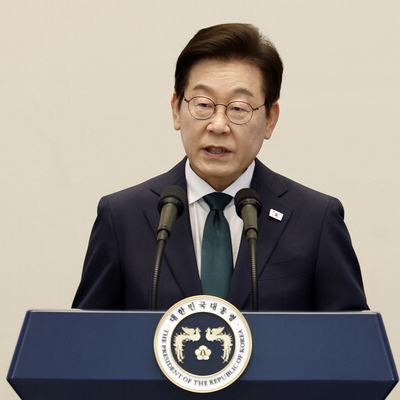
9월 18일 대통령이 고개를 숙인 기자회견.

뉴욕 컬럼
칼럼
andante
Why does progress bite progress?

0
2026. 09. 21
- The internal attacks on the President's apology reveal the self-contradictory behavior of an entrenched progressive faction, using reform as a pretext to maintain power and influence.
- From the literati purges and factional strife of the Joseon Dynasty to modern political history, a recurring pattern of internal division and mutual slander has depleted national strength and invited crises, and this is repeating today.
- Internal factional conflicts cause us to neglect essential tasks like resolving livelihood issues and responding to national crises, ultimately benefiting the external vested interests that should be the target of reform.
- True progressives, instead of attacking each other, should leverage the apology from power as a catalyst for reform, focusing on driving tangible change for the people's livelihoods and the nation's future.
추석을 하루 앞둔 이 밤, 대통령이 고개를 숙인 사과가 온라인 커뮤니티와 방송, 당내 발언 속에서 다시 조롱과 의심의 재료가 되는 풍경을 보면 가슴이 먼저 먹먹해진다. 국민 앞에 “부족했다”라고 말한 사람을 향해, 같은 진영이라 불리던 이들이 칼을 거두지 않는 이 장면은 정쟁이 아니다. 이 땅의 역사가 여러 차례 반복해 온 병증이다. 왜 진보는 진보를 공격하는가. 무능 때문만은 아니다. 더 아픈 진실은, 한때 개혁을 자처하던 세력의 일부가 이미 자리를 지키고 체면을 지키며 영향력을 재생산하는 보수력으로 굳어버렸다는 데 있다. 진보의 가면을 쓴 기득권은 정권 교체 그 자체를 목표로 삼지 않는다. 그들은 정권이 바뀌어도 자신의 발언권과 도덕적 독점권이 흔들리지 않기를 원한다. 그래서 대통령이 낮아질수록, 사과할수록 더 세게 밀어붙인다. 낮아진 상대는 공격하기 쉽고, 사과는 약함의 증거로 재해석되기 때문이다.
This habit did not emerge yesterday. The Sarim of Joseon appeared by criticizing the Hungu faction, but after taking power, they turned on each other. The Muo Sahwa, Gapja Sahwa, Gimyo Sahwa, and Eulsa Sahwa all used the pretext of "righteous scholars" eliminating "corrupt scholars." The conflicts between the Dongin and Seoin, Namin and Bukin, and Noron and Soron initially seemed like disputes over scholarship and righteousness. However, as time passed, it became a survival game to determine who was purer and who was orthodox. When the Dongin attacked the Seoin in front of King Seonjo, when the Bukin cut down the Namin during King Gwanghaegun's reign, and when Hwangguk was repeated during King Sukjong's reign, the nation's military strength, finances, and the people's livelihood were all secondary to those struggles. Even before the Imjin War broke out, political factions sought out the faults of opposing parties rather than working together to prevent the signs of war. Even while the Japanese invaders were crossing the sea, the court debated who was right. Even before the Byeongja Horan, the justifications for advocating for war (cheokhwa) and peace (juhwa) often became pretexts for factional infighting. The results are as known. The internal sword first削 the nation, and foreign powers entered through that gap.
The same pattern was repeated on the brink of national ruin. It wasn't just a conflict between the enlightenment faction and the conservative faction. Even within the enlightenment faction, moderates and radicals called each other traitors, and when the Independence Association was dissolved, intellectuals suspected close comrades more than foreign powers. In the dying days of the Korean Empire, the language of Wi-jeong Cheok-sa (anti-foreign, pro-Confucian) and the language of enlightenment each became tools to prove the purity of their own camps. The habit of competing over 'who is more patriotic' rather than saving the nation ultimately exhausted the power to protect national sovereignty.
The liberation space was no exception. Independence activists who had together hated imperial Japan split within the provisional government. Syngman Rhee and Kim Gu, the left and the right, and the left within the left, branded each other as opportunists, compromisers, and spies. What began first in the liberated homeland was not unity to push out foreign powers, but an internal trial to determine who held the legitimate lineage of the nation. The winner of that trial did not necessarily become the winner for the people's livelihood. The sword of division did not come only from the outside. The split that first occurred on the inside embraced that sword.
Modern party history has also failed to cure this habit. After 4.19, the Democratic Party split into old and new factions and collapsed on its own, and the military regime used that division as an opportunity. The camaraderie between Kim Dae-jung and Kim Young-sam, who together fought against military dictatorship, also fractured when they reached the threshold of power. The three-party merger in 1990 is remembered as a realignment on the conservative side, but the democratic camp has also spent decades thereafter branding each other as traitors over 'who is the purer democrat.' The split of the Uri Party during the Roh Moo-hyun impeachment crisis seemed like an expansion of reform, but it was also the beginning of forces from the same root defining each other as outdated. The chasm between the pro-Moon and pro-Lee factions, extending from the late Moon Jae-in administration to the Lee Jae-myung era, is the latest version of that old habit. Analogies like 'reconstruction' rather than 'expansion,' and diagnoses like 'autoimmunity' attacking the core support base, sound like new language, but their content resembles the 'samunnanjeok' (disturber of Confucian order) branding of Joseon factional strife. The declaration that 'you are not on our side' merely borrows the name of reform.
The press conference on September 18th clearly revealed that point again. President Lee Jae-myung attributed the drop in approval ratings to “ultimately my own shortcomings,” stated that “the people are always right,” and drew a line by saying he had no intention of seeking re-election. He even asked for the special prosecutor to focus on uncovering the truth by removing the clause allowing for the withdrawal of charges. This could be a politically calculated rhetoric. However, at least in form, it was an act of kneeling before the people. Yet, on the same day, Gyeonggi Province Governor Choo Mi-ae said, “Trust is built only when actual reforms, not just words, are achieved.” The diagnosis that the weakening of prosecutorial reform led to a drop in approval ratings had already been repeated for several days. The demand to push harder for reform itself is the language of progressives. The problem is that this language, at the same time as the President’s apology, is being used like a shield to neutralize the apology itself. When public sentiment is shaken within the ruling power, the person who is first to draw a sword, but then deflects responsibility when facing livelihood and financial controversies in the local government they are in charge of, is seen by many supporters not as principled but as self-serving politics.
The actions of some lawmakers, including Jeong Cheong-rae and Kim Yong-min, are also along the same lines. Their strong statements regarding the speed of prosecutorial reform, police oversight, and personnel standards stimulate the clarity of their supporters. However, when this clarity fails to be the driving force for reform and instead becomes a check that disrupts the coordination between the party, government, and presidential office, it is no longer reform but an internal power struggle within the faction. The language of Yoo Si-min and Kim Eo-jun permeates longer and deeper. When sentences that sound like intellectual criticism belittle the President's apology and become fuel for ridicule in some communities, knowledge already becomes incitement. The habit of ridiculing power that apologizes is not compassion for the weak. It is the delusion that one stands above morality. This delusion was always present even when the Sarim (scholarly elite) attacked each other. It is the conviction that “I am public, and you are private.”
What good does this division do for reforming the country, revitalizing the economy, and maintaining our status as a developed nation? It does no good. Public sentiment regarding real estate remains sharp, personnel blunders continue to erupt, and the clocks of semiconductors, energy, exchange rates, and security tick on, regardless of internal factional struggles. What the public wants is not a trial to determine who is the purer progressive. It is about whether housing prices are easing, whether young people have jobs, whether power relinquishes its privileges, and whether the nation stands sovereign in the face of external pressures. Internal factional infighting obscures these questions. The more they are obscured, the easier it is for the remaining conservative establishment and some media outlets to frame it as 'they are just tearing each other apart.' This is akin to the factional struggles of Joseon, which ultimately benefited external relatives, powerful families, and later, foreign powers.
What is even more frustrating is the sense that old external forces are seeping into the cracks of this internal division. The remnants of pro-Japanese collaborators, the language of the vested-interest media, the Shincheonji and Unification Church networks already on trial for alleged political-religious collusion, and the surrounding money and organizations joining in to undermine the president – these circumstances are difficult to dismiss as mere rumors. In investigations into political-religious collusion, leaders of religious organizations have been indicted, and allegations of illegal political funds and mobilization of followers have been revealed. The problem is that even these investigations are consumed solely as 'whose side are you on?' While progressives tear each other apart, the vested interests and pseudo-powers, who should be the targets of reform, gain an advantage. It is a paradox where destroying the president becomes protecting the vested interests. It is like when, on the eve of national ruin, factions called each other traitors, while the forces truly eroding the nation were outside of that struggle.
The surest way for progressives in this land to betray themselves is to turn comrades into enemies under the guise of reform. The habit of scholars attacking scholars, the habit of the provisional government distrusting each other, the habit of opposition parties splitting opposition parties, the habit of pro-Roh, pro-Moon, and pro-Lee factions labeling each other as outdated is not ideology. It is the inertia of holding onto power. When we say progressives are becoming conservative, it does not mean their ideology has shifted to the right. It means the instinct of the vested interests, which has swallowed the language of reform, remains.
Nevertheless, the end of this article should be hope, not a curse. What our ancestors left behind was not a record of factional victories, but a desire for the nation to endure. The records of factional strife are extensive, and the number of nations that collapsed because of it was not just one or two. Despite this, the reason this nation rose again is that the desire to connect the nation barely remained, more so than the habit of attacking each other. Instead of ridiculing the President's apology, it is the citizens' duty to monitor whether that apology truly leads to real reform. Whether it's Choo Mi-ae, Jung Chung-rae, Yoo Si-min, or an internal party member, discerning whether their statements advance the people's livelihoods, sovereignty, and future, or are merely shouts to confirm their own positions, is the self-examination of progressives.
Now is not the time to tear each other apart. It is time to raise our bowed heads and watch whether those hands actually dismantle vested interests. The desire for history not to repeat itself, the hope that this nation will prosper, even with the care of our ancestors. As long as that desire remains, division will ultimately become insignificant before public sentiment.
댓글
( 0 / 500 )
조성철
7
진보가 진보를 공격하는 순간 개혁의 동력은 내부 소모전으로 바뀝니다. 비판은 필요하지만 동지를 적으로 만드는 순간부터 개혁은 멈춥니다. 지금 필요한 것은 누가 더 순수한가를 가리는 경쟁이 아니라, 국민의 삶을 실제로 바꾸는 성과를 만들어내는 일이라고 봅니다.
( 0 / 500 )
do_hyun
10
조선의 당쟁부터 현대 정치의 계파 갈등까지 반복되는 장면이 참 씁쓸합니다. 명분과 원칙을 앞세우지만 결국 자리를 둘러싼 경쟁으로 변질되면 국민은 뒷전으로 밀립니다. 진보라면 먼저 자기 진영의 권력욕과 도덕적 우월감부터 돌아봐야 합니다.
( 0 / 500 )
이민혁
8
대통령의 사과가 마음에 들지 않을 수 있고 개혁의 속도가 부족하다고 비판할 수도 있습니다. 그러나 사과하는 순간마저 조롱의 대상으로 삼는 것은 비판과는 다른 문제입니다. 잘못을 바로잡도록 요구하되, 그 과정에서 정권 자체를 무너뜨리는 데만 몰두해서는 안 됩니다.
( 0 / 500 )
dany
6
‘진보가 보수화된다’는 말의 의미를 다시 생각하게 하는 글입니다. 이념의 문제가 아니라 개혁을 말하면서 자신의 영향력과 지위를 지키려는 순간 기득권의 행태가 나타난다는 지적이 와닿습니다. 서로에게 칼을 겨누기보다 개혁의 결과로 국민에게 답해야 할 때입니다.
( 0 / 500 )
最强童顔
6
결국 국민이 평가하는 것은 누가 더 진보적인 말을 많이 했느냐가 아니라 삶이 얼마나 달라졌느냐일 것입니다. 집값, 일자리, 경제, 안보와 주권 같은 현실의 문제 앞에서는 진영 내부의 선명성 경쟁이 아무런 답이 되지 못합니다. 개혁의 기준을 다시 국민에게 돌려야 합니다.
( 0 / 500 )
marina
5
같은 진영 안에서 서로를 향해 ‘배신자’라는 낙인을 찍기 시작하면 정치가 아니라 종파 싸움이 됩니다. 진보의 가치가 민주주의와 개혁이라면 내부의 다양한 목소리를 인정하면서도 공동의 목표를 잃지 않아야 합니다. 국민은 내부 전쟁보다 국정의 결과를 기다리고 있습니다.
( 0 / 500 )
열화
4
진보의 가장 큰 적은 때로 보수가 아니라 진보 내부의 오만일 수 있습니다. 개혁을 주장하면서도 자신만 옳다는 확신에 빠지면 결국 국민과 멀어집니다. 비판과 견제는 필요하지만 그 목적은 상대를 쓰러뜨리는 것이 아니라 더 나은 국정을 만드는 데 있어야 합니다.
( 0 / 500 )
Eulji6
4
역사에서 당파 싸움이 남긴 교훈은 분명합니다. 명분을 앞세운 내부 분열이 반복되면 정작 나라의 문제를 해결할 힘이 사라집니다. 지금도 마찬가지입니다. 누가 진짜 진보인가를 따지기보다 국민에게 무엇을 해냈는지를 놓고 평가해야 합니다.
( 0 / 500 )
한라산
2
결국 역사는 누가 상대 진영을 가장 많이 공격했는지를 기억하지 않을 것입니다. 국민의 삶을 얼마나 바꾸었고, 기득권을 얼마나 실제로 개혁했으며, 나라의 미래를 얼마나 준비했는지를 기억할 것입니다. 진보가 진보답게 남으려면 자기 진영부터 끊임없이 성찰해야 합니다.
( 0 / 500 )
U_love90
1
대통령이 고개를 숙였다는 사실보다 중요한 것은 그다음입니다. 사과가 보여주기인지, 실제 변화로 이어지는지를 냉정하게 지켜보면 됩니다. 사과마저 조롱하고 정치적 공격의 소재로 삼는 것은 감시와 비판의 본래 목적에서 벗어날 수 있습니다.
( 0 / 500 )
최유미
0
공감합니다. 가장 무서운 적은 내부에 있다라는 생각이 듭니다. 불법계엄 개입 및 옹호하고 선거법 위반한 국힘당 의원들만 신난 상황입니다. 아직 해결해야 알 개혁들도 남았있습니다. 검찰, 언론 개혁이 이뤄진 대한민국을 꼭 보고 싶어요.
( 0 / 500 )
신고내용
신고내용을 선택해주세요
회원비난/비하/욕설글 및 댓글도배성 게시물저작권 침해/불법자료 유출허위사실유포개인정보 유출.사생활 침해무단광고/홍보음란물 및 도박 불법 광고물범죄행위 관련 글불법행위 관련 소개물품 판매 및 사기글악성코드 및 스파이웨어 유포기타 사유 및 운영진 판단


비밀번호를 잊으셨나요?
Sign in with Google
All information provided by us is free of charge and is for the public good.