品

Corea든 Korea든, 품격이 먼저다
Whether Corea or Korea, dignity comes first.
Whether Corea or Korea, dignity comes first.
Now
지금
751 Diaspora
Heritage
유산
Humanity
인문
Mirengsi
未冷尸
Politics
정치
Media
언론
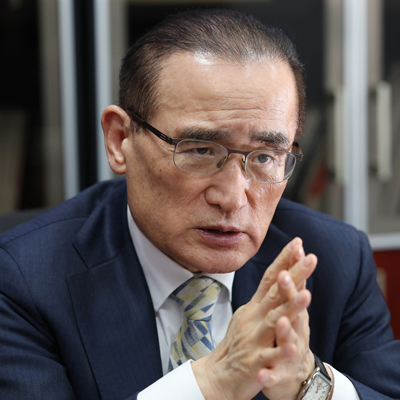
위성락 국가안보실장, 대통령직속 국가안전보장회의 상임위원장

뉴욕 컬럼
칼럼
Robert.kim
A question for Wi Sung-lac: Is that conviction in the national interest?

0
2026. 09. 10
- Director Wi Sung-rak's realism tends to limit Korea's independent diplomatic activities by making the ROK-US alliance the fundamental axis of its foreign policy.
- His diplomatic experience solidified his belief in "persuading the US first," but this acts as a self-imposed limitation, delaying the restoration of Korea's autonomous decision-making power.
- The delay in OPCON transfer and the inclusion of unification policy within the alliance coordination framework weaken Korea's decision-making power, effectively capping its national interests in Washington.
- Alliance-first thinking may not appear ideological, but it actually undermines the autonomy of Korean diplomacy and leads to the detrimental narrowing of national interests as defined by a small elite.
- Ultimately, Director Wi Sung-rak's realism, by pursuing only short-term stability and choosing a path where Korea remains a subordinate partner in the alliance, hinders the long-term recovery of sovereignty and the realization of national interests.
I ask Director Wi Sung-rak again. Do you believe your convictions are unconditionally correct? I'm talking about the conviction that the ROK-US alliance is the fundamental axis of diplomacy, that approaching North Korea without prior coordination with the US is dangerous, and that the transfer of wartime operational control (OPCON) comes with the caveat of 'not damaging the cooperative system.' You call it realism. However, the term realism often becomes not the authority to interpret reality, but the authority to fix reality. The reality you have fixed is the scope of South Korea's maneuverability allowed by the alliance. If moving within that scope is called national interest, then the upper limit of national interest is already drawn in Washington, not Seoul.
You are a career diplomat who has served as Director-General for North American Affairs, Chief Representative for North Korean Nuclear Affairs, Minister-Counselor at the Korean Embassy in the US, and Ambassador to Russia. Your resume is not light. In the field of the North Korean nuclear crisis, sanctions, the Six-Party Talks, and ROK-US working-level consultations, you must have seen how easily South Korea's independent breakthroughs stalled. I understand that this experience made the sentence 'We must persuade the US first' into a conviction. The problem is that you don't distinguish whether that sentence is a summary of experience or a self-limitation learned from experience. Experience can be wisdom or a shackle. While the pragmatism based on the alliance has been repeated for decades, South Korea may have strengthened its defense, but it has not fully regained its decision-making power. As long as wartime operational control remains with a foreign commander, the final button for war and peace is not in our hands. To treat that fact only as something to manage and repeatedly say 'now is not the time' is not prudence but procrastination.
National interest is not just about avoiding today's conflicts. It is also about ensuring that Korea can determine its own destiny tomorrow. You always postpone the latter. Nuclear-powered submarines and reprocessing rights are achievements. The restoration of Korea-US and Korea-Japan relations can also be an achievement. However, these achievements are more about increasing stakes within the alliance. Increasing stakes is different from restoring agency. If the alliance sets the rules even with increased stakes, Korea will only become a more capable junior partner. A capable junior partner is praised in diplomatic circles. What the people want is not praise, but the right to decide.
The recovery of wartime operational control is not the destruction of the alliance. It is the minimum condition for making the alliance equal. The phrase 'within the scope that does not damage cooperation' sounds balanced, but in reality, it is a mechanism that leaves the speed of recovery to the convenience of the alliance. Saying that it will be transferred when conditions are met hides who defines those conditions. The longer the list of conditions, the further away the transfer becomes. Combined exercises, intelligence assets, nuclear umbrella, wartime supplies, adjustment of US military posture, domestic political risks. If the US holds that list, Korea will always be a country that is 'preparing.' Preparation is endless. Sovereignty is not a gift that comes after preparation is complete. Sovereignty is the act of embracing self-determination even under imperfect conditions. If you wait for perfect conditions, the conditions will forever belong to the other party.
Unification is the same. You were right to raise an issue when China referred to the two Koreas as 'two states.' It is a self-contradiction to write unification into the constitution and then tolerate two states. However, unification is not achieved by correcting expressions. The attitude of postponing dialogue until after persuading the US, lamenting that North Korea is not responding, and dismissing independent channels as dangerous is not a unification policy but rather division management. Division management is maintaining the status quo, and maintaining the status quo means that Korea internalizes the order of the strong. The judgment that Kim Jong-un has no immediate intention to come out may be correct. However, even if that judgment is correct, it does not give the right to confine all of Korea's attempts toward North Korea within the framework of alliance coordination. Keeping the door open even when the other party is not moving is not romanticism but strategic autonomy. If you close the door and blame the other party, the key to the closed door is always outside.
Lee Jae-myung's ambidextrous diplomacy was a test in that regard. Placing both alliance-oriented and independent factions under one roof was a design to simultaneously achieve trust with the US and restoration with North Korea. However, if you, as the head of the NSC, align North Korea's pace with the US clock, the two hands become one, not two. Even if the president speaks of 'dignified diplomacy as a sovereign nation' and 'breaking away from excessive reliance on the US military,' if alliance risk acts as a filter at the implementation stage, those words become hollow. What the public sees is not the president's statements but the inertia of the national security advisor. Inertia overrides policy, and coordination overrides decision. At that point, diplomacy becomes the risk aversion of a bureaucratic organization, not the will of the state.
You have criticized the breakthrough of the autonomous faction as amateurism, subservience to domestic politics, and ideological. Some of that criticism is valid. North Korea's nuclear issue will not be resolved by emotion alone, wartime operational control will not come with slogans alone, and national interests will not be protected by anti-American rhetoric alone. However, alliance-firstism is also an ideology. It just doesn't look like an ideology. This is because it is hidden within technical terms, risk management, and the timetable of 'now is not the time.' It is not fair to criticize ideology only when it appears to be an ideology, and to call alliance logic common sense when it appears to be common sense. If the malady of Korean diplomacy is partisanship and populism, then the professionalism that makes the alliance a sanctuary is also a malady. A sanctuary kills debate, and when debate dies, national interest is reduced to the definition of a few elites.
This reduction becomes clearer whenever troop deployments, burden-sharing, and transactional diplomacy come into play. Trump-style diplomacy treats alliances not as norms but as invoices. When the package of defense costs, contributions to the Middle East, export regulations, and security cooperation is bundled together, 'alliance management' easily becomes a language of coordination rather than a language of refusal. Coordination sometimes reduces damage. However, if coordination becomes a habit, Korea remains a country that bargains down items on an invoice, and cannot become a country that challenges the invoice itself. National interest is not the art of bargaining, but the setting of the agenda. Pragmatism that cannot set the agenda is merely efficiently executing the other party's agenda.
I acknowledge that your true intention is not to side with Lee Jae-myung, Trump, or Kim Jong-un. You side with the realism you define. That realism overestimates the costs Korea would incur if it were to confront the United States, and underestimates the long-term costs Korea incurs by remaining in the subordinate structure of the alliance. Short-term costs are visible: tariffs, security vacuums, and the threat of diplomatic isolation. Long-term costs are not easily visible: the absence of decision-making power, the exhaustion of the drive for unification, and the habits created by accumulating 'later.' If only visible costs are placed on the scale of national interest, the scale will always tip towards maintaining the status quo. You call that tilt balance.
Balance is not a static state. It is the act of shifting the center between sovereignty and alliance, unity and deterrence, autonomy and cooperation. Currently, Korea's center has been fixed on cooperation for too long. A fixed center may seem stable, but in reality, it is like a body with only one muscle developed. In a crisis, that body moves only in familiar directions. If the familiar direction aligns with America's strategy, Korea survives; if it deviates, Korea is dragged along. To avoid being dragged, other muscles must be used in peacetime. The recovery of wartime operational control is that muscle. An independent channel with North Korea is that muscle. The institutional habit of maintaining the alliance while preventing it from becoming a pre-approval box for all agendas is also that muscle.
You might retort, 'Are you telling us to ignore the United States?' No. Diplomacy that ignores the United States is close to suicide. However, persuading the United States and getting permission from the United States are different. Persuasion is the language of a主體 (subject), and permission is the language of a從屬者 (subordinate). Your sentences often reproduce the structure of permission while speaking of persuasion. If the premise 'It's impossible unless the United States accepts it' is repeated, Korea's creativity is designed only within the scope of American acceptance. That design is safe. However, a country that only pursues safe designs cannot fulfill its historical tasks. Resolving division and recovering wartime operational control are not inherently safe tasks. If they are postponed until they become safe, the tasks do not disappear; they merely become a debt for the next generation.
Therefore, there is no need to conclude that your beliefs are wrong. Those beliefs are partially correct. Alliances are necessary, amateur breakthroughs are dangerous, and if domestic political strife undermines diplomacy, national interests are harmed. However, partial correctness does not equate to overall correctness. The inference that wartime operational control can be postponed because alliances are necessary does not hold. The inference that unification efforts can be confined within the alliance framework because North Korea is stubborn also does not hold. The mirror image of the ideological diplomacy you are wary of is management diplomacy that takes the alliance as an absolute premise. If that management diplomacy is now hindering Lee Jae-myung's diplomacy, what is hindering it is not the opposition party or the United States, but the schedule within the Blue House.
I ask again. Do you call it a national interest for Korea to remain a subordinate partner in an alliance, or do you call it a national interest to maintain the alliance but reclaim unstable sovereignty? If you do not choose the latter, your words are not a path for national interest, but rather a path where the alliance draws the boundaries of national interest. Just because that path is familiar does not mean it is right. A familiar path makes the country comfortable, but the path that makes it comfortable often erodes sovereignty. Wartime operational control must be recovered. Efforts for unification must be made even before America's permission. As long as you believe that only the status quo and alliance relations are important, the more capable you are, the more you become someone who firmly fixes Korea's upper limit. Capable fixing is not betrayal. But just because it's not betrayal doesn't mean it's a national interest. National interest is recovery, not fixing.
댓글
( 0 / 500 )
coco
10
동맹의 필요성을 인정하는 것과 동맹이 한국의 운신 폭을 정하도록 맡기는 것은 전혀 다른 문제입니다. 미국과의 공조가 중요할수록 한국이 스스로 결정할 수 있는 영역도 넓혀야 합니다. 전작권 회수와 독자적 대북 채널을 동맹 파기로 몰아가는 순간, 주권은 언제나 ‘나중에’로 밀려날 수밖에 없습니다.
( 0 / 500 )
正義
8
위성락 실장의 현실주의는 단기적 위험을 설명하는 데는 능숙하지만, 그 현실을 바꾸기 위한 전략에는 얼마나 적극적인지 묻게 됩니다. 미국과의 조율이 중요하다는 말이 반복될수록 한국 외교의 독자적 판단은 뒤로 밀립니다. 동맹을 지키는 것과 미국의 허락을 기다리는 것은 다릅니다.
( 0 / 500 )
68jongman
7
전작권 회수에 매번 조건을 붙이고 대북 접근에는 사전 조율을 강조한다면, 한국은 언제까지 준비만 하는 나라로 남아야 합니까. 동맹은 필요하지만 동맹이 한국의 주권을 대신할 수는 없습니다. 위성락 실장이 말하는 신중함이 결국 현상 유지를 위한 논리로 작동한다면, 그 신중함 자체를 비판적으로 검토해야 합니다.
( 0 / 500 )
이상준
6
위성락 실장의 현실주의가 단기적 위험을 줄이는 데는 의미가 있겠지만, 현실을 바꾸지 못하는 현실주의는 결국 현상 유지의 논리가 됩니다. 미국을 설득하는 것과 미국의 허락을 기다리는 것은 다릅니다. 한국 외교가 이제는 동맹 관리에 머물지 않고, 우리 국익의 의제를 직접 설정하는 단계로 나아가야 한다는 지적에 공감합니다.
( 0 / 500 )
automan
6
전작권 전환을 말할 때마다 조건을 붙이고, 대북 접근을 말할 때마다 사전 조율을 강조한다면 과연 언제 한국의 결정권은 온전히 회복될 수 있겠습니까. 동맹은 유지하되 전쟁과 평화에 관한 최종 판단은 우리가 책임지는 구조가 되어야 합니다. 주권은 완벽한 조건이 갖춰진 뒤 받는 선물이 아니라, 스스로 책임지고 행사하는 권리입니다.
( 0 / 500 )
piccolo
5
이 글의 핵심은 반미가 아니라 주권과 동맹의 관계를 다시 묻자는 데 있다고 봅니다. 미국과 협력하지 말자는 것이 아니라, 협력하지 않으면 아무것도 할 수 없다는 사고에서 벗어나자는 것입니다. 북한과의 대화도, 전작권 회수도, 통일을 향한 노력도 한국의 장기 국익이라는 기준에서 판단해야 합니다.
( 0 / 500 )
이진석
4
관료의 신중함은 필요하지만, 신중함이 결단을 대신해서는 안 됩니다. 동맹의 신뢰를 지키는 일과 한국의 자율성을 확대하는 일은 양자택일이 아닙니다. 오히려 대등한 동맹을 만들려면 한국이 자기 목소리와 책임을 더 분명히 해야 합니다. 익숙한 관리의 길을 넘어 주권 회복의 길을 고민해야 한다는 문제 제기가 묵직하게 다가옵니다.
( 0 / 500 )
Ryan90
5
위성락 실장의 문제는 동맹을 중시한다는 데 있지 않습니다. 동맹을 중시하는 것이 곧 한국의 독자적 선택을 줄여야 한다는 논리로 이어지는 데 있습니다. 미국과 협력하되 한국의 의제를 스스로 설정하고, 전작권 회수와 남북 대화의 주도권을 적극적으로 추진해야 합니다.
( 0 / 500 )
2000ksh
4
현실주의는 현실을 냉정하게 보는 태도이지, 현실을 영원히 바꿀 수 없다고 선언하는 태도가 아닙니다. 미국의 동의를 얻는 데 익숙해진 외교가 한국의 독자적 판단을 제약한다면, 그 현실주의는 스스로 비판받아야 합니다.
( 0 / 500 )
radichelove
1
왜 시대정신과 역사의식이 중요한지를 다시 한번 생각해보는 좋은 기회입니다. 주체성과 주도권을 위임하거나 방임했을때 근본적 문제해결은 이루어질 수 없고 그런 민족과 국가에게 미래는 선명하지 않습니다. 이제 것 위성락안보실장은 보여준 것이 있다고 보여지지 않습니다.
( 0 / 500 )
Jeong Byeon_72828
0
문재인 대통령 이 남북 관계를 파괴시킨 원인이 미국을 너무 의식핸 결과 였다고 봅니다. 위성락 실장님은 시대 정신을 분별하시고 잘 해결해주실 수 있기 바랍니다.
( 0 / 500 )
신고내용
신고내용을 선택해주세요
회원비난/비하/욕설글 및 댓글도배성 게시물저작권 침해/불법자료 유출허위사실유포개인정보 유출.사생활 침해무단광고/홍보음란물 및 도박 불법 광고물범죄행위 관련 글불법행위 관련 소개물품 판매 및 사기글악성코드 및 스파이웨어 유포기타 사유 및 운영진 판단


비밀번호를 잊으셨나요?
Sign in with Google
All information provided by us is free of charge and is for the public good.